





During the war in the Middle East, gold did something unexpected. Just as risk was rising and oil prices were pushing higher, gold did not rally. Instead, it dropped, pulling back from recent highs. That move alone raised a simple question: if this is a classic safe-haven environment, why did gold sell off?
What we saw was not just a reaction to war or macro uncertainty, but a mix of dollar strength, margin pressure, and positioning in the paper market.
To understand what comes next, it is necessary to look beyond the price move and focus on what is happening underneath.
After an abnormal move like this, price alone does not tell the full story. What matters more is how positioning changes. In this case, the shift has been quite clear. Large players who were positioned long on gold before the drop started reducing their exposure. That selling pressure helped accelerate the move lower.
Extreme selling does not mean the trend is over. In many cases, it reflects short-term repositioning rather than a full change in long-term outlook. When sentiment reaches these levels, it signals that weaker positions have already been cleared out.
This is why following “smart money” behavior can be more useful than reacting to price alone. Instead of focusing only on the drop, it helps to ask a different question. Who is selling, who is buying, and what does that shift in positioning tell us about what could happen next?
Beyond price movements, another part of the story is starting to draw attention. Recent actions by major countries suggest that where gold is stored is becoming just as important as how much is held.

One of the most interesting parts of the story is France. They reduced the gold exposure held in the United States and shifted it back toward Europe. This move raises a bigger question about trust and control. When a major holder prefers to keep its reserves closer to home, it shows that custody and access are as important as gold itself.
It looks quite reasonable at first. The gold held in the US was described as “non-standard,” and it was said to be easier to sell it and buy new compliant bars in Europe. On paper, that sounds like a logistical decision.
Gold of that purity and format has always been accepted globally, which makes the reasoning feel weak. This is where the discussion shifts from logistics to something deeper. In fact, countries are becoming more cautious about where their reserves are held.
France is not being viewed in isolation. As one of the largest gold holders in the world, Germany keeps a portion of its reserves abroad. The fact that this is now being debated publicly suggests a wider shift. It is no longer just about storage efficiency, but about sovereignty, access, and long-term security of reserves.
This discussion is not entirely new. Similar questions around gold reserves, trust, and monetary systems have appeared before, especially during periods of global tension and financial uncertainty.
A useful historical comparison comes from the 1960s, when pressure on US gold reserves began to build under the gold standard. At the time, countries started converting dollar holdings into physical gold, which eventually led to the end of the system in 1971.
This is not a direct prediction of a similar outcome today, but it highlights how shifts in reserve behavior can signal bigger changes in the financial system.
While today’s system is very different, the underlying idea still matters. When large countries start questioning where their gold is held or how secure their reserves are, it tends to attract attention. It means that gold is not just a trading instrument, but still a strategic asset.
Most investors look at gold as a single price on the screen. That price is largely driven by financial markets, not physical supply and demand.
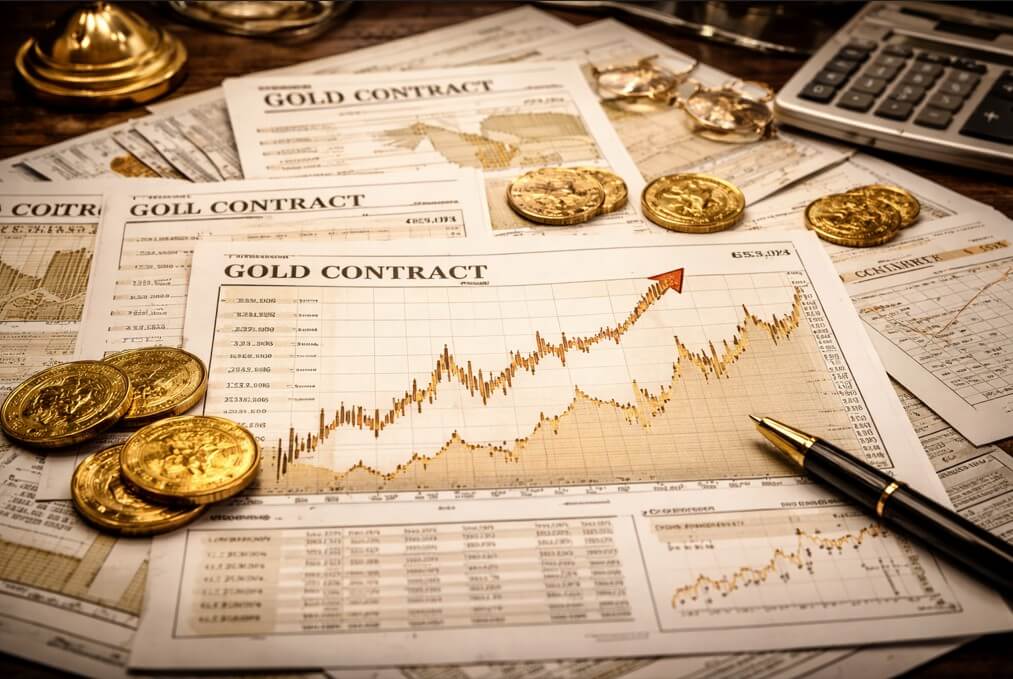
The gold price most people follow comes from futures markets, especially exchanges where contracts are traded in large volumes. Each contract represents physical gold, but in practice, only a small portion ever results in actual delivery. The majority are simply financial positions based on price direction.
During sharp moves, selling in these paper markets can accelerate quickly. Large flows, margin calls, and positioning shifts can push prices lower, even if physical demand remains stable or strong. This is why the price on the screen can sometimes move independently from what is happening in the real market.
This does not mean the system is broken or manipulated. It simply means that price discovery is dominated by financial flows, especially in the short term. In periods of stress, paper markets can drive the move, while physical demand plays a slower, secondary role.

While Western markets were focused on the selloff, the picture looks different in other regions. Some signals suggest that longer-term demand may still be building under the surface.
Recent market signals point to a more constructive view from Chinese institutions. Gold ETF flows in China have remained relatively resilient compared to Western markets, and trading activity has held up well. That means there is still steady demand building in the background.
Another important development is regulatory. Major Chinese insurance companies have reportedly been allowed to allocate a portion of their portfolios to gold. Even a small percentage of allocation can translate into significant demand when applied to large balance sheets.
Taken together, these signals support a wider trend. Institutional demand for gold outside the West appears to be growing, not shrinking. This aligns with a broader shift toward reserve diversification and a gradual move away from heavy reliance on dollar-based assets.
Gold traded around $4700 per ounce as of 10 April 2026. The metal is caught between two opposing forces. In the short term, macro conditions such as the dollar and interest rates can create pressure. In the longer term, structural demand and shifts in the global financial system continue to build a different kind of support.
To read the market correctly and predict the next move, we need to understand both sides.
|
Factor |
Short-Term Impact on Gold |
Long-Term Impact on Gold |
What to Watch |
|---|---|---|---|
| US Dollar Strength | Stronger dollar reduces international demand and weighs on price | Sustained dollar dominance may delay upside | DXY trend, safe-haven flows into USD |
| Interest Rates | Higher rates increase opportunity cost of holding gold | Rate cuts later can become a strong catalyst | Fed policy expectations, bond yields |
| Sovereign Selling | Countries may sell gold to defend currencies or fund imports | Usually temporary, not structural | Emerging market reserves, energy import stress |
| Central Bank Buying | Limited short-term price impact | Strong long-term support for gold | Official sector purchase data |
| Reserve Diversification | Slow-moving, not immediately visible in price | Reduces reliance on dollar-based reserves | Policy shifts from emerging economies |
| Institutional Demand (Asia) | May not offset Western selling immediately | Builds steady long-term accumulation | ETF flows, China allocation trends |
| Macro System Trust | Not always priced in immediately | Can drive long-term demand for gold as a store of value | Geopolitical tensions, financial system risks |
In the short term, gold remains sensitive to macro pressure. A strong dollar and higher interest rates can continue to limit upside. At the same time, forced or strategic selling by some countries can add temporary downside pressure.
However, the longer-term picture looks different. Central bank demand, reserve diversification, and growing institutional interest outside the US prove that the current conditions supporting gold have not disappeared.
Sign up in seconds for free, access your platform, and start trading with ease.

 $200 Oil Scenario: The Chain Reaction Across Markets
What happens if oil hits $200? See the impact on global markets, sectors, inflation, and which industries could win or lose.
Detail Biggest Manipulations in Financial Market History
Financial markets have seen their share of manipulation over the years. Here are seven of the biggest cases in modern history.
DetailThen Join Our Telegram Channel and Subscribe Our Trading Signals Newsletter for Free!
Join Us On Telegram!


