




Precious metals don’t always move together. Gold can rally, while silver stays flat if industrial demand looks weak. Platinum, even though not the first metal coming to mind, can also surprise the market.
A ratio against gold makes it easier to see what’s really happening. Is gold genuinely strong, or is silver simply underperforming? Is platinum catching up, or is gold just pulling away? These are the kinds of questions ratios answer quickly.
The ratio shows how much of another metal equals one ounce of gold. The formula: Gold/Metal Ratio = Gold price (per oz) ÷ Metal price (per oz)
For example:
Gold/Silver Ratio = 4,500 ÷ 90 = 50. So, 1 ounce of gold buys 50 ounces of silver.
A ratio basically tells you which metal is stronger relative to the other.
Most of the ratios in this article are structured as Gold ÷ Other Metal.
1) Spotting extremes
Ratios move in ranges, then occasionally break out. When they hit extreme levels, it means the market is stretched. That’s when traders start looking for:
2) Understanding the market mood
Ratios can act like a sentiment meter.
3) Filtering fake moves
Sometimes everything rises together because the dollar drops. If both gold and silver are up, but the gold-silver ratio is rising, it means silver isn’t really participating. Gold is still the main story.
4) Finding “relative value” opportunities
If a ratio gets stretched far from its historical average, the primary questions to ask are:
Quick Takeaway
The gold-silver ratio shows how many ounces of silver it takes to buy one ounce of gold. It’s one of the oldest and most followed relative-value metrics in the metals market.
Traders like it because it’s simple, liquid, and highly reactive. Most of the time, gold and silver move in the same direction. But they rarely move with the same strength.
Gold is mostly driven by macro fear and monetary demand. Silver is different. It acts like a hybrid. It has safe-haven traits, but it is also tied to industrial demand (manufacturing, electronics, solar panels).
That’s why the ratio usually becomes a “stress measure”:
This ratio is not random. It tends to respond to a few clear themes:
The gold-silver ratio has long-term cycles, but the most valuable signals come from extreme spikes and compressions. Those moments usually reflect clear macro events.
1980: Ratio near ~15 (extreme compression)
Silver massively outperformed during the late-1970s inflation panic. It was a speculative and inflation-driven surge, and the ratio collapsed as silver went up.
2008–2011: Ratio compressed again (silver catch-up phase)
After the 2008 crisis, gold moved first as the safe-haven. Later, silver caught strong momentum as inflation expectations rose and liquidity returned. The ratio moved lower as silver outperformed during the reflation wave.
March 2020: Ratio spiked above 110 (historic widening)
This was one of the most extreme readings ever. The trigger was the COVID liquidity shock. Silver sold off like a risk asset, while gold held up as capital rushed into the safest hedge. The ratio exploded higher because silver underperformed sharply.
2024–2025: Ratio stayed elevated vs older decades (structural gold support)
Even when silver had strong rallies, gold remained firm due to persistent safe-haven demand and strong central bank buying. At the same time, silver’s industrial narrative was more cyclical, so it didn’t consistently lead. The result was a ratio that stayed “high” compared to older long-term averages, with periodic sharp drops only during silver bursts.
The gold-platinum ratio shows how many ounces of platinum it takes to match one ounce of gold. This ratio is a great way to track the balance between safe-haven demand and industrial cycles.
Gold is driven mainly by macro themes. Platinum has a different profile. It depends on industrial and jewelry demand.
When platinum strengthens relative to gold, it often signals improving industrial confidence or supply tightness. When it weakens, gold usually takes over due to fear-driven or monetary flows.
A few factors influence this ratio more than anything else:
The gold–platinum relationship is one of the best examples of “regime cycles.”
2008: platinum premium era ends (ratio shifts higher)
Before the global financial crisis, platinum often traded above gold due to strong industrial demand and constrained supply. The 2008 crisis broke that regime. Platinum, being industrial-sensitive, dropped harder than gold. Gold held up better as a trusted alternative. The ratio moved higher.
2011–2014: repeated rebounds, but weaker structure
Platinum tried to recover as markets stabilized, but demand was not as strong as the previous decade. The ratio improved at times, but gold stayed supported due to macro uncertainty.
2015–2020: platinum “discount era” becomes normal
This period established the long discount phase. Platinum consistently underperformed gold. Diesel demand weakened and platinum struggled to regain leadership. Gold remained the preferred hedge asset, keeping the ratio elevated.
2021–2025: tightening supply and substitution create catch-up episodes
Platinum started getting stronger bursts of support from two main triggers:
The gold-palladium ratio shows how many ounces of palladium it takes to match one ounce of gold.
Palladium is a demand-driven metal and trades like an industrial commodity most of the time. So, this ratio often reflects a clear story: safe-haven value vs auto-cycle demand.
Demand has been tied to gasoline vehicle auto catalysts for years. That makes it very sensitive to car production cycles, emission regulation changes, and EV adoption.
These are the main factors that affect the gold–palladium relationship:
Palladium has one of the most dramatic boom-bust cycles in the entire precious metals group.
2016–2022: palladium surge era (ratio compresses strongly)
This was the period when palladium became the star performer. In certain phases, it traded at a major premium, and the gold-palladium gap narrowed sharply. Reasons behind the rally were:
2020–2022: supply fear and peak premium behavior
Pandemic disruptions, supply fragility, and continued auto demand created extreme tightness. Palladium’s pricing became almost “scarcity-like.” The ratio stayed compressed because palladium was outperforming.
2023–2024: sharp reversal (ratio expands rapidly)
This is where the regime broke. Palladium sold off aggressively due to:
Once the market stopped fearing shortage and started pricing demand erosion, palladium lost its premium quickly. The ratio widened as gold outperformed.
2024–2025: structural downgrade narrative strengthens
The key trigger here was not a single event. It was the market accepting a structural shift:
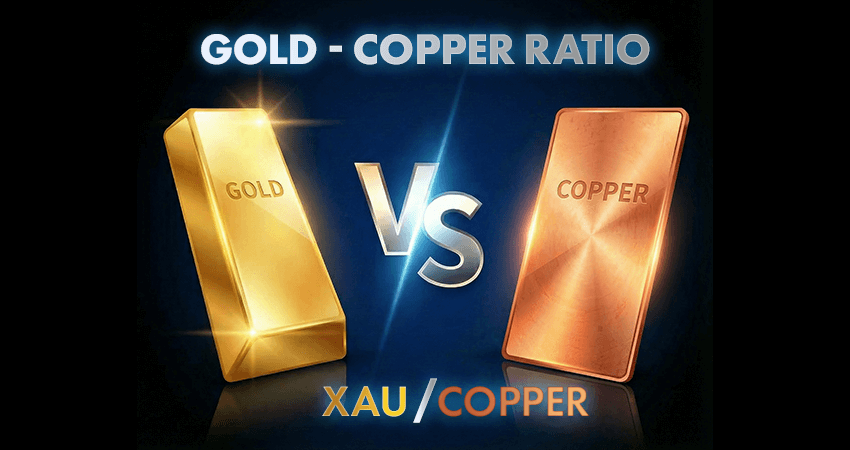
The gold–copper ratio is one of the most useful “macro ratios” traders follow.
Copper is tied to growth. Construction, manufacturing, infrastructure, and demand from China show up in pricing. So, it’s about the economy as much as it’s about the metals themselves.
When copper is strong relative to gold, risk appetite is usually healthy. When gold performs better than copper, markets are usually cautious.
A few themes drive this ratio more than anything else:
The gold–copper relationship tends to move in long waves, shaped by the global cycle.
2008–2009: crisis phase (gold leads, copper collapses)
During the global financial crisis, copper sold off as growth expectations crashed. Gold held up as capital rushed into safe havens. The gap widened, and the ratio moved strongly in gold’s favor.
2009–2011: reflation phase (copper catches up)
After major stimulus, industrial demand recovered. Copper rebounded aggressively as the world priced recovery and reflation. Gold stayed strong too, but copper’s beta was higher during that cycle. The ratio corrected as copper outperformed.
2020: pandemic shock (gold wins first, copper follows later)
Early COVID was a classic panic setup. Copper fell with growth fear. Gold rallied hard on uncertainty and policy response. Later, stimulus and reopening demand pushed copper higher, narrowing the gap in the second stage.
2021–2022: inflation and tightening era (mixed regime)
This period was more complex. Inflation supported commodities, but aggressive tightening created volatility. Copper had supply-demand support but struggled under recession pricing. Gold had support from uncertainty but faced pressure from rising real yields at times. The ratio moved in waves rather than a clean trend.
2024–2025: distortion risk increases (structural copper demand vs structural gold demand)
In recent years, the ratio became harder to read as a pure recession signal, because both sides gained structural support:
That created more “push-pull” behavior. The ratio still reflects risk mood, but it can be noisier than in older cycles.
What does it mean when the gold-silver ratio is high?
A high ratio usually means gold is stronger than silver. This often happens when markets are defensive, growth expectations weaken, or silver’s industrial demand looks soft.
What does it mean when the gold-silver ratio is falling?
A falling ratio means silver is outperforming gold. This typically happens when traders price in risk-on conditions, reflation expectations, or strong industrial demand.
Why does platinum sometimes lag gold for long periods?
Since platinum depends more on industrial demand, especially the auto sector, it has weaker safe-haven demand than gold.
Why did palladium drop so hard after 2022?
Palladium demand is heavily linked to gasoline autocatalysts, and the market started pricing:
Is the gold-copper ratio a reliable recession indicator?
In general, gold beating copper signals defensive pricing. However, short-term copper supply shocks and longer-term electrification demand can distort the signal. So, it’s useful, but not perfect.
Sign up in seconds for free, access your platform, and start trading with ease.

 $200 Oil Scenario: The Chain Reaction Across Markets
What happens if oil hits $200? See the impact on global markets, sectors, inflation, and which industries could win or lose.
Detail Biggest Manipulations in Financial Market History
Financial markets have seen their share of manipulation over the years. Here are seven of the biggest cases in modern history.
Detail Petrodollar System: Why It Still Matters
Energy markets depend on supply routes, currency systems, and trade infrastructure determine prices, inflation, and financial stability across the global economy.
DetailThen Join Our Telegram Channel and Subscribe Our Trading Signals Newsletter for Free!
Join Us On Telegram!


