




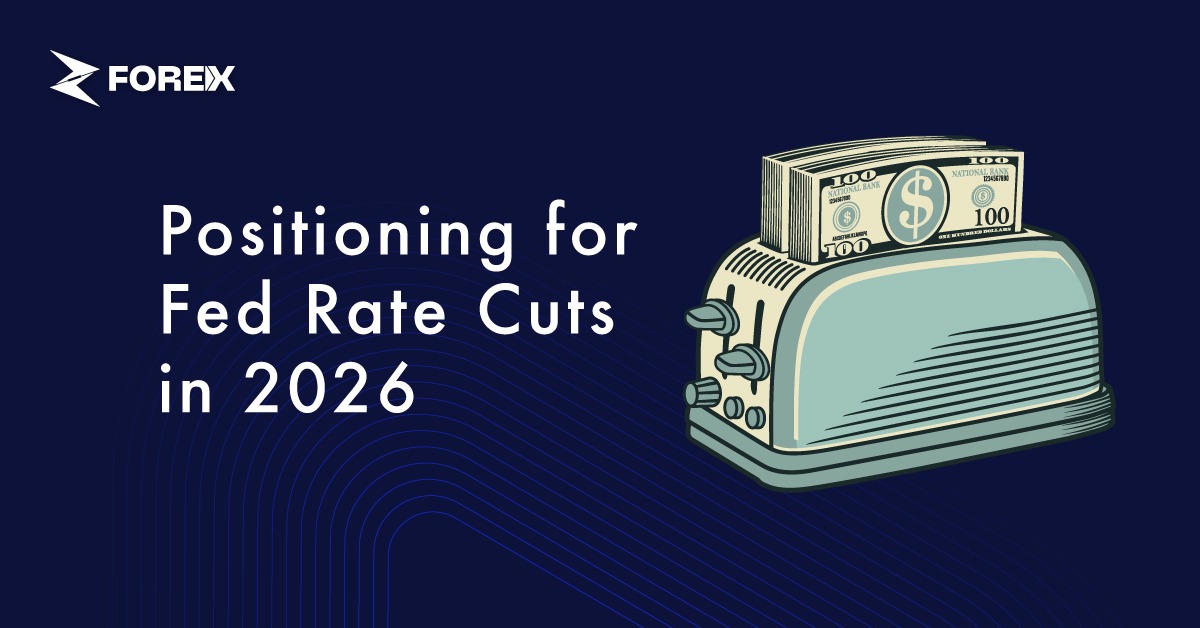
Interest rate cuts are one of the most important drivers for financial markets. Its effects can be tracked on bonds, gold, stocks, and currencies at the same time. When the Federal Reserve starts to lower rates, we can expect to see a high volume of capital flows.
In 2026, this shift is getting closer.
Inflation has slowed and the labor market remains stable. This creates a different environment from the aggressive tightening period. The focus is now on when they will start to come down.
We can even see the outcomes before the first cut happens. Investors and algorithms do not wait for the decision. Most took their position in advance. This is why expectations, probabilities, and Fed communication matter as much as the rate decision itself.
However, some sectors gain strong support from lower rates. Others may lag due to structural changes.
Inflation is no longer rising at the same pace as seen in previous years. The latest data shows clear signs of moderation. This change is one of the main reasons for potential rate cuts.
However, the full picture can be more complex. Some prices have slowed down, but others are still increasing at a steady pace. This is important because the Federal Reserve looks beyond the headline number when making decisions.
Latest Consumer Price Index (CPI) data shows that annual inflation has moved closer to the Federal Reserve’s 2% target. Energy prices played a major role in this shift. Lower oil and gasoline costs reduced overall price pressure.
This decline improves market confidence. Markets respond quickly to this trend. When inflation moves lower, expectations for future interest rates also move lower. This is why bond yields often fall, and gold prices find support during these periods.
Still, headline inflation does not tell the whole story.
Some parts of inflation move slowly. These are linked to services, housing, healthcare, and labor-related costs. Unlike energy, they do not fall quickly and create uncertainty for policymakers. Because the Fed wants to see broader and more stable progress.
This is why a single lower reading is not enough, and each new inflation report remains important. Officials look for a consistent trend over several months.
If inflation continues to ease, rate cuts become more likely. If sticky components remain strong, the timeline may move further out.
For investors, understanding these expectations and acting quickly makes a difference.
The Fed follows a framework. At the center of this framework is the 2% inflation target.
This target acts as a guide. When inflation is far above 2%, the Fed keeps policy tight. When inflation moves closer to this level, the pressure to keep rates high begins to fade.
But inflation is not the only factor.
The Fed has two main goals. These are called “dual mandate”.
Price stability refers to keeping inflation around 2%. Maximum employment means supporting a healthy labor market.
Both goals must be balanced.
If inflation is high, the Fed keeps rates elevated to slow demand. If the job market weakens too much, the Fed may lower rates to support economic activity.
In 2026, this balance is becoming easier to manage. Inflation has slowed, and unemployment has not risen sharply.
The 2% level is seen as low enough to protect purchasing power, but high enough to allow economic growth.
When inflation moves closer to this range, the Fed can begin shifting policy. This does not mean rates will fall immediately. But it opens the door.
Markets understand this process well.
Investors begin adjusting their positions before the first cut happens. Bond yields may start falling. Gold may gain strength. Currency trends may begin to change.
The Fed usually moves step by step. It watches the data. It listens to market conditions and communicates carefully to avoid shocks.
The first move is usually small. Future cuts depend on how inflation and growth evolve.
The biggest opportunities appear before the first cut. Once the easing cycle becomes obvious, many assets have already adjusted.
The timing of rate cuts depends on the Federal Reserve’s meeting cycle. Each decision is made during scheduled FOMC meetings. You can review the full timeline in the FOMC 2026 meeting schedule here.
Interest rate decisions do not surprise the market in most cases, but expectations may change gradually. Investors adjust their positions based on incoming data, central bank comments, and signals from the market itself.
Government bond yields are one of the clearest indicators. They move based on what investors expect future interest rates to be.
When markets expect rate cuts, yields tend to fall. As a result, demand for existing bonds increases.
Short-term yields usually react first. They are more sensitive to central bank policy. Longer-term yields also move, but they reflect growth and inflation expectations as well.
A steady decline in yields signals that markets are preparing for a QE cycle.
Interest rate futures provide another important signal. But future expectations can change quickly. A single inflation report or jobs report can shift the outlook. Sometimes the probability of a rate cut rises sharply within weeks.
Markets tend to price upcoming moves earlier. Investors position themselves before it happens to avoid missing the move. Waiting for the official decision may limit opportunity.
By the time the first rate cut happens, bond yields may already be lower. Gold may have already gained strength. Currency trends may already be underway.
Interest rate decisions are based on economic data. However, markets also pay close attention to politics and leadership.
Even the perception of political influence can affect bond yields, currencies, and gold. Investors want to trust that policy decisions are made for economic stability.
In 2026, this topic became more relevant due to the expected leadership transition at the Federal Reserve.
When a new Fed Chair takes office, markets begin reassessing the future path of interest rates.
If markets believe the new Chair may support lower rates, expectations can shift quickly. In many cases, price movements are faster than actual policy.
If we talk about financial stability in a country, its Central bank must be independent from the government. Because investors need to believe decisions are based on data and real conditions.
Unfortunately, political pressures can be easily detected in both big and small economies. The latest evidence is the Federal Reserve, trying to act independently of Donald Trump’s shadow. When confidence in decision-makers weakens, we see more speculative moves and volatility.
For example, investors may demand higher bond yields if they believe inflation could rise again. Currency markets may also react if confidence in long-term stability changes.
Investors are watching the tone of messages, leadership changes, and overall policy direction apart from inflation and employment data.
If markets become more confident that rate cuts are approaching, assets like bonds and gold may benefit early.
Therefore, positioning should be based on both economic trends and market expectations. Reading the broader picture of fundamental and technical signals gives valuable tips for the next phase of the cycle.
Interest rate cuts influence almost every major asset class. However, the impact is not equal. Some assets respond early. Others react later.
Bonds are directly linked to interest rates. When investors expect rate cuts, bond yields begin to fall. Because existing bonds with higher yields become more attractive. As demand increases, prices rise and yields move lower.
Short-term bonds react faster. Longer-term bonds follow as expectations become more certain.
Overall, bond markets are usually considered an early signal for future policy changes.
Lower interest rates reduce borrowing costs. This means there will be more liquidity to support businesses. Companies with strong cash flow and stable business models tend to respond better.
Not all stocks benefit in the same way, but lower rates increase the valuation potential of equity markets.
Gold becomes more attractive when interest rates fall because holding cash or bonds becomes less rewarding. So, the main reason is the opportunity cost.
Gold and other precious metals also react to expectations. Gold is usually affected by macro conditions. On the other hand, industrial metals are different. If there are production boom expectations, copper palladium and silver may rally.
Rate cuts generally reduce support for the currency over time. For example, when the Fed reduces rates, the dollar can lose some of its advantages and weaken against other major currencies.
However, such moves are not always immediate. Currency performance depends on global conditions and how other central banks respond.
Positioning for rate cuts is about preparing early. Because markets adjust before the first cut.
Key positioning points to consider:
Interest rate cuts can produce different reactions in markets. Because the reason behind the cuts matters more than the cut itself.
Below are the main scenarios investors are watching in 2026 and their typical market impact:
|
Scenario |
Probability Bias |
What It Means |
Bonds |
Stocks |
Gold |
US Dollar |
|---|---|---|---|---|---|---|
| Base Case: Gradual Cuts | Highest | 1–3 cuts as inflation cools and policy normalizes | Positive | Positive (selective) | Positive | Moderate weakness |
| Faster Cuts | Medium | Economy slows more than expected | Strong positive | Mixed | Strong positive | Weak |
| Delayed Cuts | Medium-Low | Inflation stays elevated, Fed waits longer | Negative | Mixed / Negative | Neutral | Strong |
| Aggressive Cuts | Low | Economic stress forces rapid easing | Very strong positive | Volatile | Very strong positive | Weak |
Markets are currently positioned for a rate-cut cycle in 2026. Some forecasts from economists and major research groups also see the possibility of two to three cuts. This case supports bonds, gold, and risk assets in 2026.
Scenarios are important but should be considered as a brainstorming point. Reactions in real markets and economic conditions can be different.
When is the Federal Reserve expected to start cutting rates in 2026?
There is no fixed date. Rate cuts depend on inflation and labor market data. Markets adjust expectations constantly. Investors usually position months before the first actual cut.
Which asset reacts first to Fed rate cuts?
Bonds usually react first. Yields often fall before the first rate cut happens. This reflects market expectations rather than the decision itself.
Do rate cuts always push stocks higher?
We may expect a positive sentiment on stock markets, but company fundamentals and individual performances still matter.
Why does gold often rise when rates fall?
Lower interest rates reduce returns on savings and bonds. This makes gold more attractive as an alternative store of value. Expectations of cuts can support gold even before policy changes.
How does the US dollar react to rate cuts?
The dollar often weakens when US interest rates fall. This happens because lower rates reduce its yield advantage.
Should investors wait for the first rate cut before positioning?
Many investors position earlier. It may seem less risky if you wait for the rate cut to happen, but it also means a big portion of the move may already be priced in.
What is the biggest risk when positioning for rate cuts?
The main risk is timing. If inflation remains high or cuts are delayed, some assets may reverse. This is why balanced positioning and risk management are important.
Sign up in seconds for free, access your platform, and start trading with ease.

 Oil Shock and Growing Recession Risk
Oil shock returns. What comes next for the global economy? Could rising energy prices trigger a recession?
Detail Do Oil Shocks Trigger Gold Rallies?
Oil supply disruptions push energy prices higher. Learn how oil shocks have historically influenced gold prices and investor behavior.
Detail Silver Rally Ahead? Supply Deficit Meets Rising Demand
A new silver rally may be forming as supply deficits deepen and China’s demand grows. Here’s what is driving the momentum.
DetailThen Join Our Telegram Channel and Subscribe Our Trading Signals Newsletter for Free!
Join Us On Telegram!


