




Prices are often seen as a clear reflection of facts and fundamentals. History, however, tells a more complicated story. At critical moments, markets have moved not because the numbers changed, but because positioning, access, or influence quietly tipped the balance.
The recent case highlighted by the Financial Times, where sizable oil trades appeared just minutes before a market-moving statement from Donald Trump, is not an anomaly. It sits within a long lineage of episodes where timing, scale, and intent raise the same underlying question: are markets reacting, or are they being manipulated? It’s not an easy question to answer
Anyway, let’s set that aside for a moment and look at similar episodes from the past. Here are seven of the biggest market manipulations in financial history.
Back in the late 1970s, two wealthy oil heirs, Nelson Bunker Hunt and William Herbert Hunt, became convinced that inflation would spiral out of control and paper money would lose its value. Their answer was simple: buy silver. Not a bit of it, but as much as they possibly could.
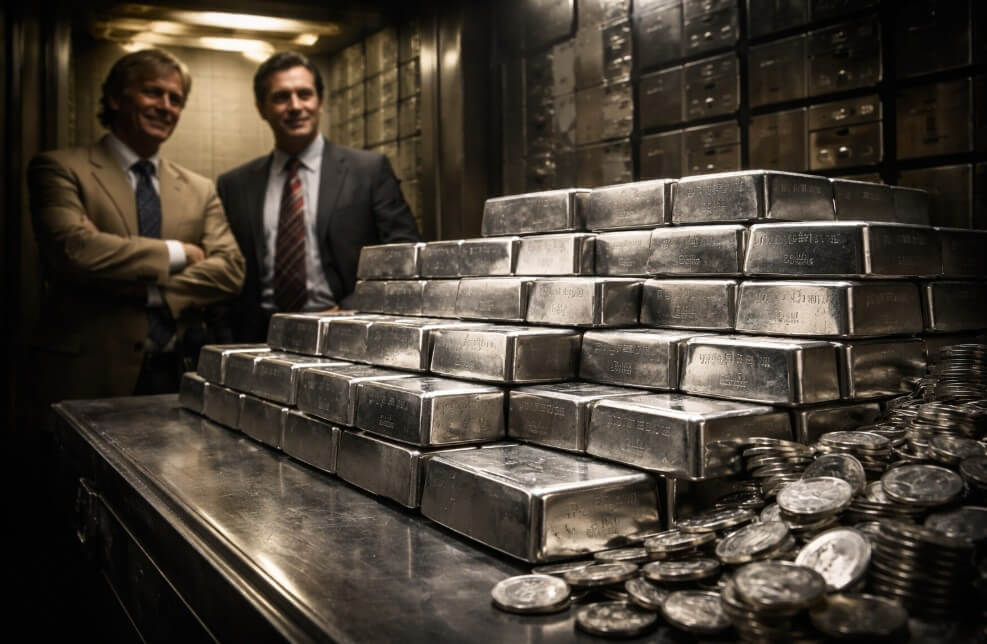
They didn’t just buy physical metal. They kept adding futures positions to the top, building a massive, leveraged bet. Over time, their holdings grew so large that they were effectively squeezing the market. Supply in the open market started to feel tight, and prices began climbing fast. What started as a macro view turned into something much bigger, a move driven by size and positioning rather than real demand.
Silver went from around $6 to nearly $50 per ounce in a very short period. At that point, everyone was watching. More traders jumped in, but the foundation of the rally was still the same: a handful of players holding a big portion of the market.
Then the rules changed. COMEX stepped in, raised margin requirements, and limited new buying. That was enough to flip the whole setup. Without fresh inflows, prices started falling, margin calls kicked in, and the decline fed on itself. Within days, the market collapsed.
It’s still one of the cleanest examples of how a market can be pushed far away from reality.
Between 2005 and 2010, something unusual happened behind one of the most important numbers in finance. The LIBOR (London Interbank Offered Rate) was supposed to reflect how much it cost banks to borrow from each other. In practice, it became something traders could quietly influence.
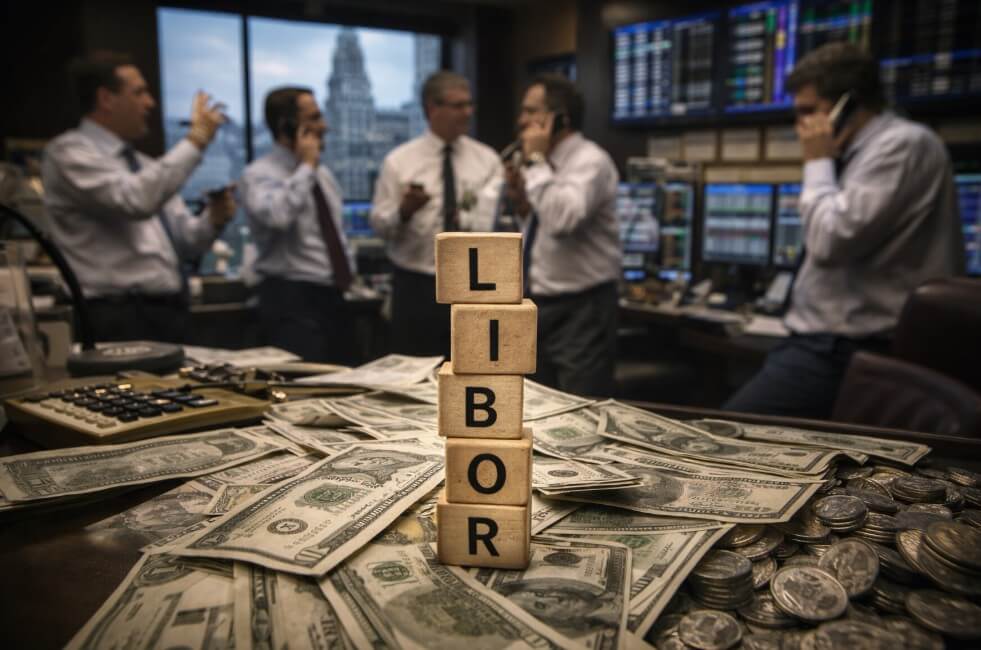
The setup was surprisingly fragile. Each day, major banks submitted estimates of their borrowing costs, and those submissions were used to calculate the benchmark. There was no actual transaction required, just what banks said they would pay. That gave room for adjustment.
At institutions like Barclays and UBS, traders started nudging those numbers. Sometimes it was to improve the outcome of their derivatives positions. During the financial crisis, it also became a way to avoid signaling stress, reporting lower rates to appear healthier than they were.
Individually, the changes looked insignificant; a fraction of a percent. However, LIBOR was tied to an enormous volume of financial products, from mortgages to complex derivatives. Small shifts at the source are translated into real money across the system.
What makes this episode different from classic market squeezes is how invisible it was. Prices didn’t spike, and charts didn’t look abnormal. The distortion sat quietly at the core, affecting everything built on top of it.
When the manipulation was exposed, the consequences were immediate. Investigations spread globally, fines reached into the billions, and the benchmark itself lost credibility. It marked a turning point, showing that even the most trusted reference points in finance can be shaped if the structure allows it.
In the late 1990s, Enron was seen as one of the most innovative companies in the market. It wasn’t just an energy firm anymore. It had transformed itself into a trading powerhouse, dealing in electricity, gas, and even weather derivatives. The growth looked impressive on paper, and investors bought into the story.

Behind the scenes, the picture was very different.
Enron was using complex accounting structures to hide debt and inflate profits. Through a network of off-balance-sheet entities, losses were moved out of sight, while revenues were recognized early using mark-to-market accounting. This allowed the company to report strong earnings even when the underlying business was under pressure.
Executives, including Jeffrey Skilling and Kenneth Lay, continued to promote the company’s outlook publicly, maintaining confidence in the stock. Insiders were gradually reducing their own exposure accordingly.
For a while, the market accepted the narrative. The stock climbed to around $90, supported by analyst ratings and investor optimism. Once questions started to surface about the company’s financials, confidence broke quickly. The structure that had been holding the story unraveled, and the stock collapsed to near zero within months.
In the run-up to the 2007–2008 crisis, markets were already fragile. Banks were under pressure, balance sheets were being questioned, and confidence was thin. That environment created the perfect setup for something traders had talked about for decades: the bear raid.
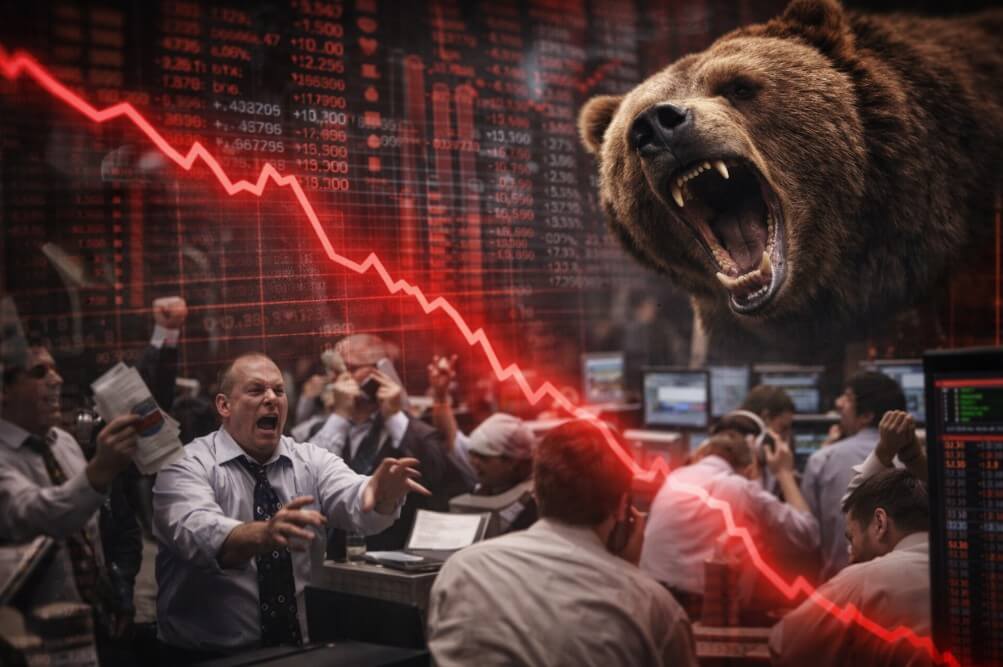
The idea is simple: large players build substantial short positions, borrow shares, and start selling aggressively into a weak market. The selling itself pushes prices lower, which then triggers fear. More participants start exiting, stop-losses get hit, and the move begins to feed on itself.
Stocks like Citigroup became prime targets. Heavy selling would appear suddenly, often during already negative sentiment, accelerating the decline. Whether fully coordinated or simply opportunistic, the effect was the same. Prices dropped faster than fundamentals alone would suggest.
There were fewer restrictions on short selling, and the removal of rules like the uptick requirement made it easier to apply pressure. Regulators later stepped in with temporary bans on short selling in financial stocks, which tells you how seriously the situation was taken.
What makes bear raids different from other forms of manipulation is how they blend into normal market behavior. Selling is part of the system, but when size, timing, and market conditions align, selling stops being just a reaction and starts becoming the driver itself.
In the mid-2010s, a different kind of market abuse came into focus. It wasn’t about pushing prices up or down, but about using the market itself as a channel to move money quietly across borders.
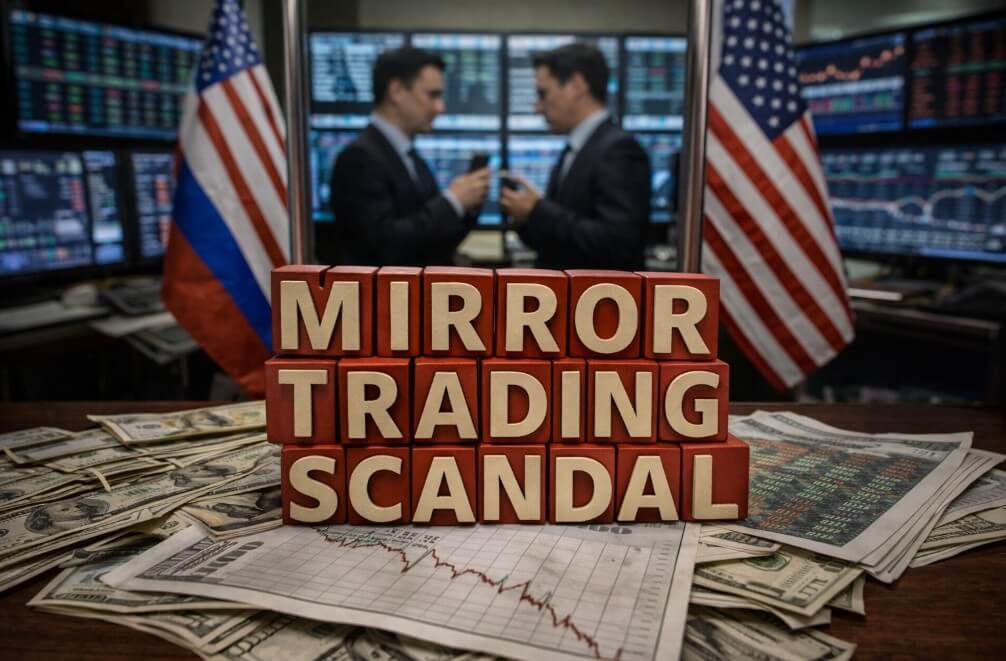
The scheme became known as “mirror trading,” and it was uncovered at Deutsche Bank. The structure was simple on the surface. A client would buy Russian stocks in rubles through one account, and almost simultaneously sell the same stocks in another market, typically in London, in dollars or euros.
On paper, these were just matched trades. In reality, they allowed large sums of money to be converted and transferred out of Russia without drawing immediate attention. The positions carried little to no market risk because both sides of the trade were aligned. The real objective was the movement of capital, not profit from price changes.
Over time, the volume added up. Roughly $10 billion was moved through this structure before regulators stepped in. Investigations revealed gaps in internal controls and compliance oversight, raising questions about how such activity continued for so long without interruption.
This case stands apart from classic manipulation stories. Prices were not being distorted in a visible way. Instead, the market was being used as infrastructure, a tool to facilitate financial flows that would have been difficult to execute through traditional channels.
In 2012, Apple Inc. was one of the most heavily traded stocks in the world, and its options market had grown just as large. Around that time, traders started noticing a pattern on expiration days. The stock would drift and settle very close to major option strike levels, particularly round numbers like $500.
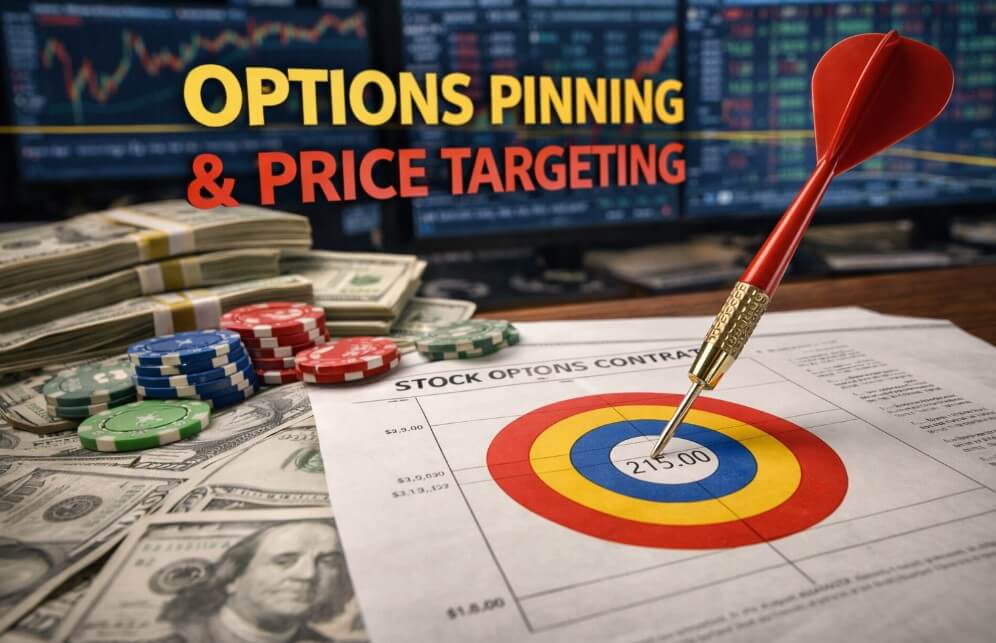
This is where the idea of “pinning” comes in. Large players with significant options exposure have an incentive to guide the price toward levels where the maximum number of options expire worthless. If enough capital is involved, even relatively small adjustments in the underlying stock can make a difference.
The process is more subtle than a classic squeeze. It often unfolds through steady buying or selling near key price levels, particularly toward the close on expiration days. As liquidity starts to fade, even modest pressure can have a bigger impact on where the stock ultimately settles.
In Apple’s case, repeated closes near important strike prices led to ongoing debate in the market. Some saw it as natural hedging flows from options dealers. Others viewed it as deliberate positioning to influence outcomes.
Fast forward to recent years, and the pattern looks more subtle but just as familiar. Instead of trying to control a market or distort a benchmark, the edge comes from timing, getting positioned just before something moves into the market.

A good example came from a report by the Financial Times. Traders placed roughly $580 million worth of oil bets shortly before a market-moving statement from Donald Trump regarding potential Iran developments. Within minutes, the news hit, and prices reacted.
At first glance, this could simply be coincidence. Large trades take place every day as part of normal market activity. When the size of a trade and its timing align with a major catalyst, however, it naturally draws attention. It leaves an open question: was it sharp insight, strong conviction, or access to information others did not yet have?
This is what modern “manipulation” tends to look like. There’s no obvious footprint, no attempt to push prices directly. Instead, the advantage comes from being early, sometimes just minutes early.
If you look at these cases side by side, the pattern is hard to ignore. Different decades, different assets, different players…
Sometimes it’s brute force, like the Hunt brothers trying to squeeze an entire market. Sometimes it’s more subtle, like adjusting a benchmark or getting positioned just minutes before a headline hits. And in some cases, it’s not even about price at all, just using the system quietly for something else.
The interesting part is how normal it all looks while it’s happening. Prices go up, prices go down, analysts find reasons, headlines catch up later.
Sometimes it’s just very good timing. Just like flipping a coin and getting heads ten times in a row.
Sign up in seconds for free, access your platform, and start trading with ease.

 Petrodollar System: Why It Still Matters
Energy markets depend on supply routes, currency systems, and trade infrastructure determine prices, inflation, and financial stability across the global economy.
Detail Why Precious Metals Softened During War
Precious metals weakened during the war as investors moved into cash. Liquidity need, margin calls, and shifting positioning explain the market reaction.
DetailThen Join Our Telegram Channel and Subscribe Our Trading Signals Newsletter for Free!
Join Us On Telegram!


