




The nature of financial markets brings both risks and opportunities due to their constant potential to change direction.
When prices move fast, emotions tend to take over, and actions become less structured. Traders who stay calm during volatile periods protect their capital and make clearer choices.
Volatility defines how fast and how far prices move within a given period. It reflects the balance between fear and confidence in the market.
High volatility often appears during economic data releases, central bank decisions, or unexpected global events. These moments can create sharp price swings and test a trader’s emotional discipline.
Volatility is not the pure risk. It’s also an opportunity. When managed correctly, it allows traders to find setups with strong potential and defined risk.
However, trading in such markets requires preparation and an adaptable mindset. Setting proper stop-loss levels, limiting position size, and choosing liquid instruments can make a big difference in performance.
Fast markets test a trader’s mindset more than their strategy. Emotions like fear, greed, and frustration come into play.
When volatility increases, every big move looks like a missed opportunity. Traders rush in too late, buying near the top or selling near the bottom.
The solution is simple: trade only when your setup appears, not when others are talking about it.
Losing during high volatility often triggers revenge trading. Instead of recovering calmly, traders open more positions to “make it back.” This behavior compounds mistakes.
Step away after a loss, review the setup, and trade again only when the next signal is clear.
After a few losing trades, confidence drops. Even when the next potential opportunity appears, fear blocks execution.
The key is to follow your plan exactly, the same size, the same structure. In this way, emotions don’t decide for you.
Strong volatility can make profits look easy. One or two good trades lead to oversized positions and sudden losses.
Stay disciplined. Each trade should have the same preparation, regardless of how well the last one performed.
Headlines and social media can cause anxiety. Choose one or two trusted information sources and ignore the rest during live trading hours.
Understanding these traps makes volatility less threatening. So, you can manage your emotions with consistency rather than reacting to every price swing.
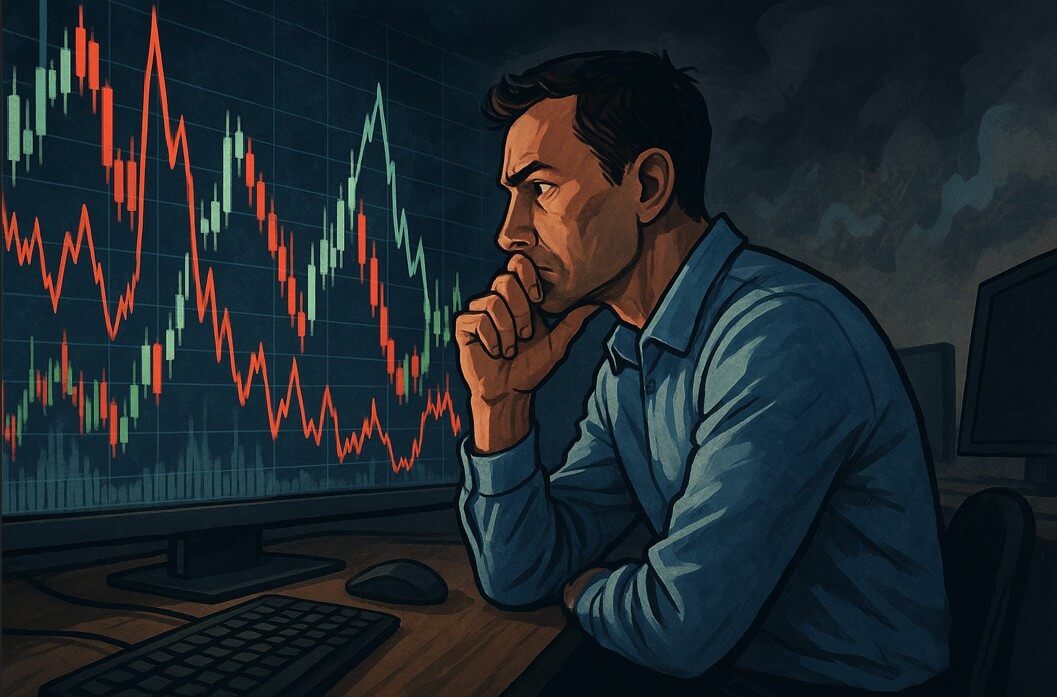
Calmness is not something you’re born with. Volatile markets can discomfort even experienced traders. Prices jump quickly, spreads widen, and news can shift sentiment within minutes.
Prepared and psychologically strong traders act with control when volatility rises.
Start your day by reviewing the market’s context. Check overnight price action, scheduled economic events, and current positions.
In practice, use a short checklist. Note key support and resistance levels, average daily range, and upcoming announcements.
Set a strict daily loss limit and a per-trade risk cap. Once either is reached, stop trading for the day. Protecting mental clarity is just as important as protecting capital.
Traders who ignore these limits often chase losses or force trades. By stepping away when the limit is hit, you give your emotions time to reset and avoid compounding mistakes.
High volatility doesn’t mean more opportunities; it often means more noise. Don’t react to every swing; wait for clean setups.
Spend more time observing how the market behaves around key levels. Observation builds intuition and improves your ability to read charts. The more patient you are, the more likely you’ll spot genuine setups.
Reducing position size during volatile periods keeps risk manageable and stress lower.
If you normally trade one lot, try cutting it in half during high-impact sessions. It’s easier to stay calm when your risk feels controlled.
After every trade (either win or loss), take a brief pause. Step back from the screen, stretch, or write a short note in your journal. Do not carry your emotions into the next decision.
Also, make sure to review the trade objectively. Did it go according to the plan? Did you manage the risk properly? These small reflections train discipline and help you maintain composure across sessions.
There are tools that help traders separate noise from information. Your decisions can become less emotional and more structured by using these indicators..
The VIX reflects expected volatility in U.S. equity markets. When it rises sharply, it signals fear and uncertainty across global assets. For traders, a high VIX often means markets are moving fast and emotions are running high.
Treat the VIX as a mood indicator. A calm reading below 15 usually points to stable conditions, while readings above 25 suggest turbulence. In high-VIX environments, reduce position size and avoid taking several correlated trades.
When fear takes over the market, avoid reacting to panic. Remind yourself that volatility is normal and temporary.
For more detail, read our guide: VIX Volatility Index Explained.
ATR measures how much an asset typically moves over a given period. When volatility increases, ATR expands. It’s a simple way to understand if a market is calm or stormy.
If ATR doubled compared to last week, your stop-loss and target should be wider, and your lot size smaller.
Big ATR values can make every candle look exciting. Don’t confuse activity with opportunity. Slow down, check if the move fits your plan, and avoid jumping into every breakout.
Tracking how far the market travels during key sessions (Tokyo, London, New York) helps spot when volatility is limited. It also shows when price has already made a large move and may start consolidating.
If London’s range is already double its average, avoid chasing new breakouts. Wait for retracements or the next session instead.
Traders often feel late when they see big moves. This fuels FOMO and emotional entries. Remind yourself that missing a move is better than entering at the wrong time.
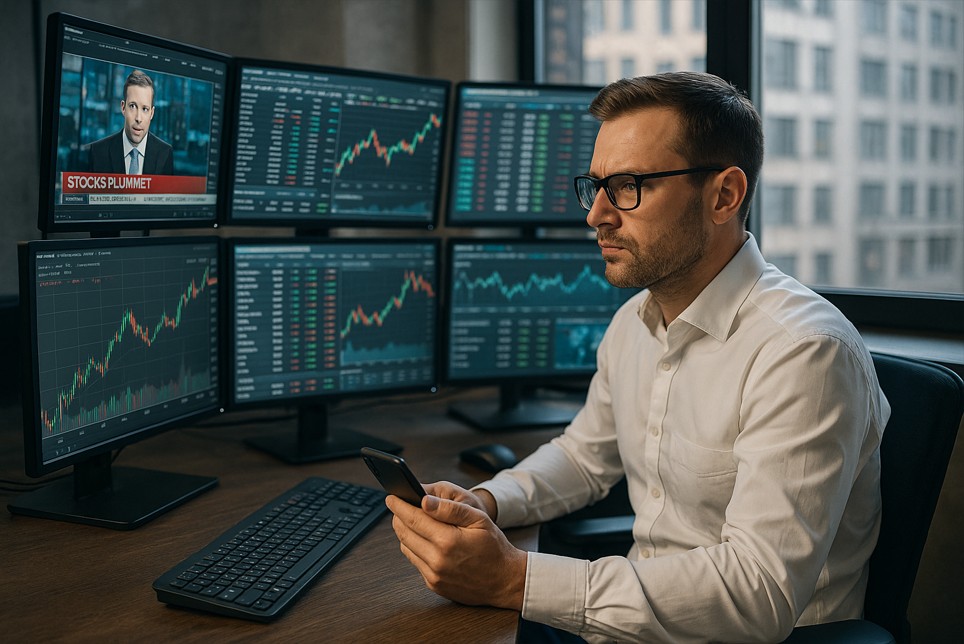
High-impact events like CPI, NFP, or central bank meetings often trigger sharp volatility spikes.
Check the calendar daily and mark red-flag events. Plan whether you’ll trade, stay flat, or wait for the reaction phase.
Preparation gives a sense of control. When you already know what’s coming, emotions stay calmer even if the market moves sharply.
For practical steps, see our related article: How to Trade in Volatility.
Managing trade size and total exposure is also a must. One of the most important foundations of this is risk management. It backs up every decision on position sizing and ensures you stay in the game even when things don’t go as expected.
For a deeper look, check out our article on why risk management matters.
Reduce how much you risk per trade. For example, if you normally risk 1% of your account, drop that to 0.5% when spreads widen and moves accelerate.
The article about position sizing shows how fixed lot sizes fail in changing conditions. Using consistent dollar risk instead of fixed lots lets you preserve your tolerance for loss.
Avoid entering with full position size when the market has already moved significantly or when your stop-loss needs to be wider than usual.
In high-volatility phases, stop-loss levels often need to be wider to reflect increased movement. But a wider stop should not mean the same size as before. If your stop doubles, halve your size so the absolute risk remains constant.
Don’t keep the size constant while allowing a larger stop. That silently increases your risk and invites bigger drawdowns.
When many instruments are bouncing or trending hard, the risk is often hidden in aggregation. You might take three positions across different markets and assume they diversify your risk.
Keep your total exposure within limits that fit your risk plan. This means knowing the maximum amount you are willing to lose across all open trades.
Do not open multiple trades without checking how they correlate or how their combined risk affects your account.
High leverage may become a psychological burden during volatility. Traders often feel pressure, start second-guessing entries, and overreact to drawdowns.
Do not treat high leverage as a way to “catch up” after a loss. It often leads to a downward spiral, draining both your risk capital and your confidence.
After a high-vol session, review when the market moved outside normal bounds, how your size fared, and whether stops or targets were respected. Then adjust your size strategy accordingly.
Do not ignore review time or rush into the next trades. Without reflection, you are likely to repeat the same mistakes and exhaust yourself emotionally.
Step 1: Mark the calendar
List the week’s high-impact events at the start of Monday. Add exact times, expected numbers, and prior readings. Set alerts 15 minutes before each event.
Step 2: Decide your stance in advance
Pick one of three: trade it, fade it later, or stand aside. Write the choice next to the event so you do not decide during the spike.
Step 3: If trading the release, cut size
Use half your normal risk per trade. Slippage widening is common. Smaller size keeps losses contained and your head clear.
Step 4: Pre-define invalidation
Place a stop where the idea is objectively wrong, not where it “feels” safe. If volatility is high, widen the stop and reduce size so account risk stays constant.
Step 5: Avoid the first impulse candle
Let the initial spike print. Wait for a pullback or a second push with lower speed. Enter only if structure is clear and spreads have cooled.
Step 6: Use OCO logic
Set bracket orders with a take-profit and a stop. This prevents emotional edits in fast tape. Do not move the stop unless new structure forms.
Step 7: Cap theme exposure
If the event is USD-centric, treat EURUSD, XAUUSD, and NAS100 as one theme. Keep total risk across them within your daily cap.
Step 8: Time-box the idea
Give the trade a life span, for example 30–60 minutes after the release. If the plan has not played out by then, flatten and reassess.
Step 9: Post-event second move
If you stood aside, watch for the snap back. Enter only if the retest holds and momentum slows. This is generally cleaner than the first spike.
Step 10: Debrief immediately
Write three lines: what worked, what failed, what to change next time. Keep screenshots of the entry, exit, and the level you used.
A trading journal is a mirror of your mindset. It helps you recognize emotional habits and strengthen your thinking process, especially during stress and high volatility.
After each trade, note the entry reason, setup, and your emotional state before and after execution.
Comments such as felt rushed, hesitated, or stayed patient reveal patterns over time.
Volatility may shift your focus and lead to mistakes. To prevent this, add short notes about market conditions.
What exactly happened? Was it a news reaction, low liquidity, or a trend continuation?
Set one review day each week. Identify repeated behaviors that cause losses or stress, such as trading bigger after wins or hesitating after losses. Then, define one clear goal to improve for the following week.
Take a screenshot before and after each trade. Visual records help you remember context and recognize similar setups later. They also make reviews faster and more objective.
You don’t need to write pages. One or two sentences per trade is enough if you do it regularly.
Your journal connects what you did with how you felt. Over time, it becomes one of the most effective tools for maintaining control, especially when the market tests your trading psychology.
How can I stay focused when prices move too fast?
Have a pre-market checklist. Know which levels and events matter before trading begins. This removes the pressure of making quick, wrong decisions.
Should I stop trading after a big win or loss?
Yes. Large swings in emotion often cloud judgment. Pause for a few hours or even a day to reset before opening new positions.
How do I deal with fear during sharp drawdowns?
Reduce your size immediately. Smaller trades lower stress and allow clearer thinking.
Is it smart to widen stops in volatile markets?
Only if you also cut position size. Wider stops without smaller size increase risk and emotional pressure.
How do I recover mentally from a losing streak?
Take a short break and analyze your journal. Focus on process accuracy, not profit. Trading small while rebuilding confidence works better than chasing recovery.
What’s the best way to prepare for high-volatility sessions?
Review the economic calendar, mark event times, and define whether you’ll trade or stay out.
How can I control impulsive trades caused by FOMO?
Set a rule: one trade idea per market per session. If you miss a move, let it go. Financial markets create endless opportunities, but discipline keeps your capital for the right ones.
Should I trade during news releases?
Only if it’s part of your plan. Use smaller size, predefined orders, and time limits. Avoid opening and closing spontaneous trades.
Sign up in seconds for free, access your platform, and start trading with ease.

 $200 Oil Scenario: The Chain Reaction Across Markets
What happens if oil hits $200? See the impact on global markets, sectors, inflation, and which industries could win or lose.
Detail Biggest Manipulations in Financial Market History
Financial markets have seen their share of manipulation over the years. Here are seven of the biggest cases in modern history.
Detail Petrodollar System: Why It Still Matters
Energy markets depend on supply routes, currency systems, and trade infrastructure determine prices, inflation, and financial stability across the global economy.
DetailThen Join Our Telegram Channel and Subscribe Our Trading Signals Newsletter for Free!
Join Us On Telegram!


