




Global markets remained under pressure as inflation fears tied to the ongoing Iran conflict strengthened the U.S. dollar and reshaped investor positioning.
The euro fell to $1.156 as traders increased expectations for ECB tightening, while the Japanese yen weakened toward the critical 160 level, raising the risk of potential intervention. Precious metals continued to decline sharply, with gold extending its multi-week selloff and silver remaining under pressure as investors shifted toward liquidity in a high-inflation environment. Sterling also broke below key support levels, reflecting broad-based dollar strength and worsening technical outlooks across major currency pairs.
| Time | Cur. | Event | Forecast | Previous |
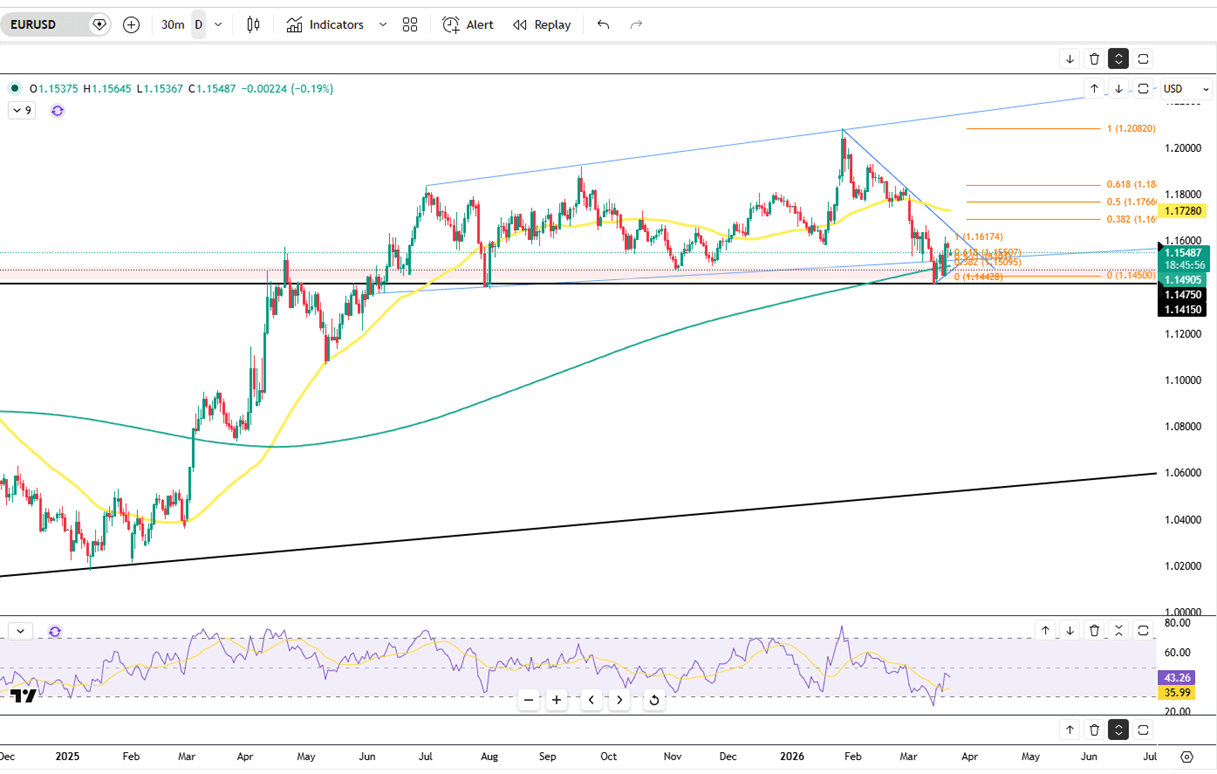
The euro dropped to $1.156 by week’s end as investors sought the safety of the US dollar amid inflation fears from the Iran energy shock. Although the ECB held rates steady, it signaled readiness to act against persistent price pressures. Traders increased tightening bets, now pricing in at least two ECB rate hikes for 2026.
For EUR/USD, the initial resistance is seen at 1.1610, while the closest support is positioned at 1.1530.
| R1: 1.1610 | S1: 1.1530 |
| R2: 1.1670 | S2: 1.1480 |
| R3: 1.1730 | S3: 1.1410 |
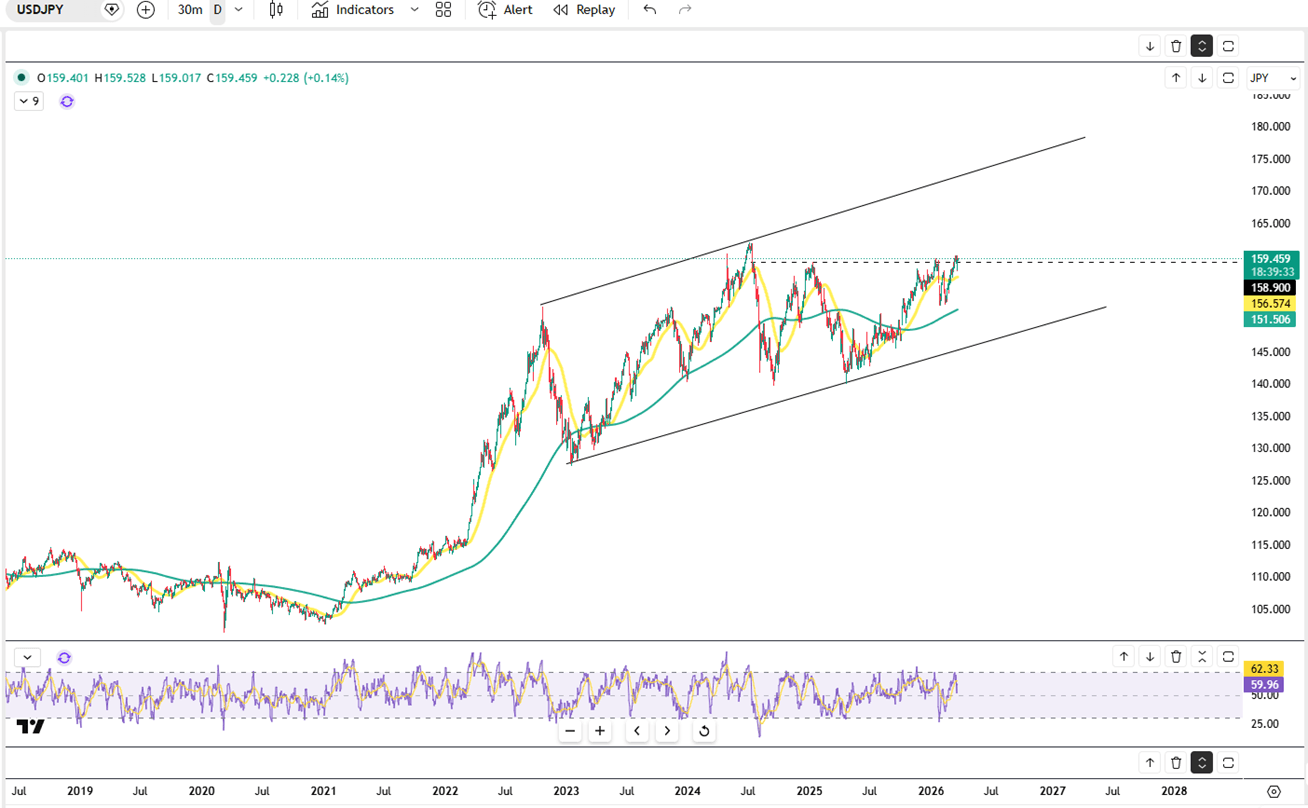
The Japanese yen slipped toward 159.5 per dollar on Monday, nearing the 160 threshold that previously triggered market intervention. Currency chief Atsushi Mimura reaffirmed the government’s readiness to act, citing the Middle East conflict and surging oil prices as significant pressures on households. While the Bank of Japan recently held rates at 0.75%, officials signaled a hawkish tilt. Governor Kazuo Ueda suggested that further tightening remains an option if the economic disruptions from the Iran conflict prove temporary.
Technically, resistance stands near 159.90, while support is firm at 158.50.
| R1: 159.90 | S1: 158.50 |
| R2: 160.50 | S2: 157.50 |
| R3: 161.20 | S3: 156.40 |
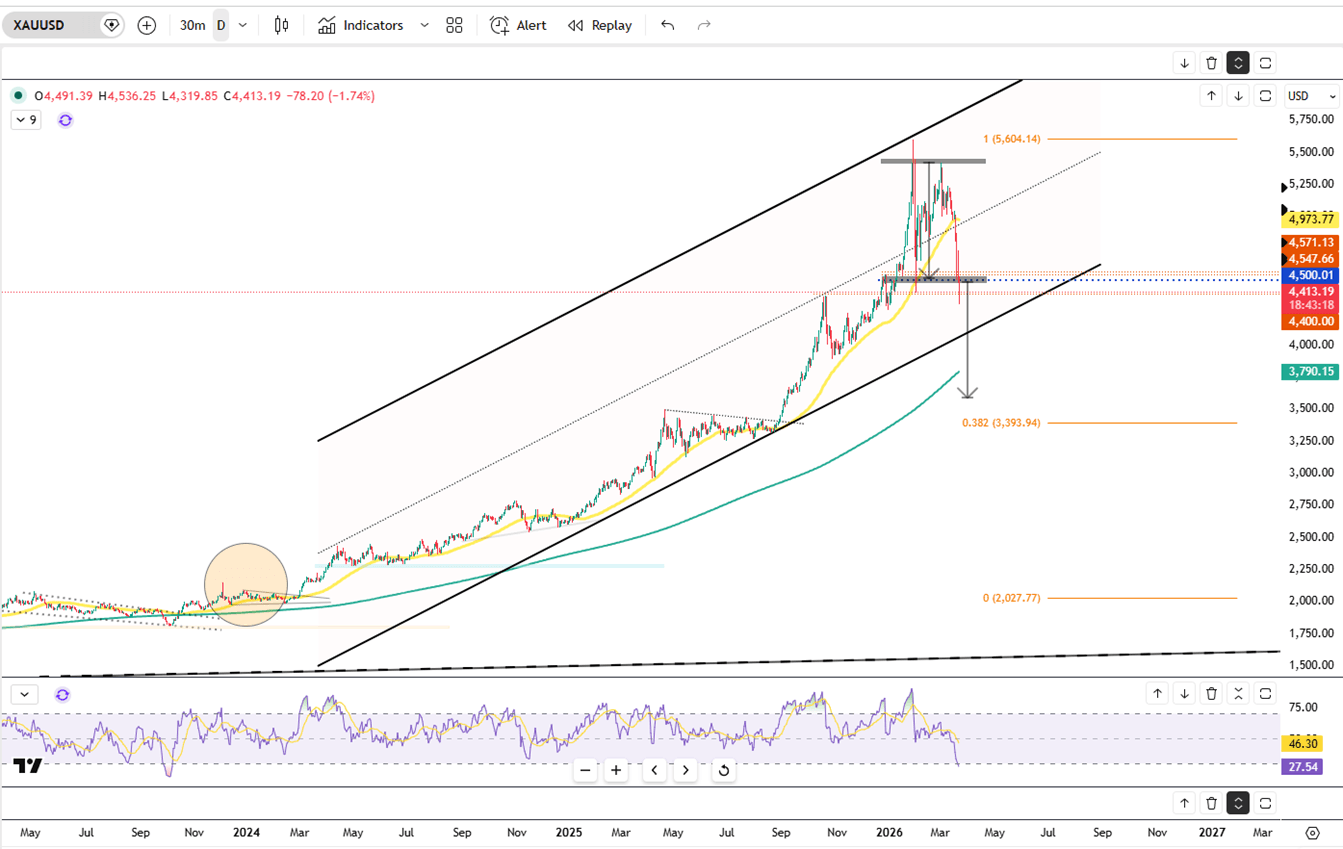
Gold fell below $4,280 per ounce on Monday, continuing a four-week selloff as the Middle East conflict heightened inflation fears and pressured major economies to provide liquidity, including via gold sales. The Iran war shows no signs of easing, with threats to energy facilities and Tehran warning of retaliation against US and Israeli targets.
Gold sees support near $4300, while resistance is around $4250.
| R1: 4250 | S1: 4300 |
| R2: 4500 | S2: 4150 |
| R3: 4550 | S3: 4000 |
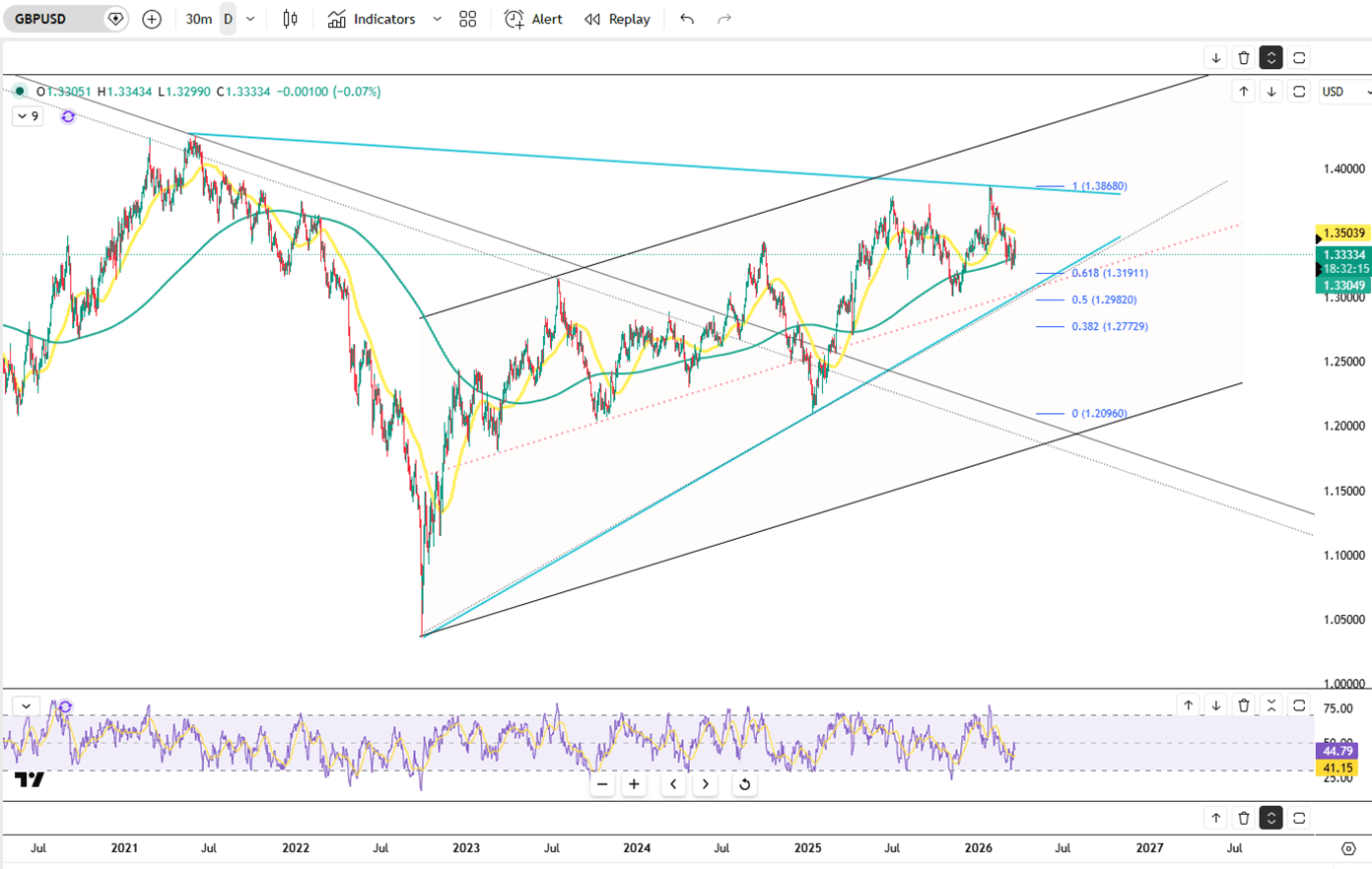
GBP/USD dropped about 0.7%, sliding below the critical 1.3300 level. This decline extends a broader retreat from the late-January peak of 1.3870, leaving the pair trading under both major daily moving averages. A decisive bearish candle confirms that the recent two-week consolidation has broken to the downside, signaling further technical weakness.
From a technical view, support stands near 1.3290, with resistance around 1.3420.
| R1: 1.3420 | S1: 1.3290 |
| R2: 1.3500 | S2: 1.3220 |
| R3: 1.3630 | S3: 1.3150 |
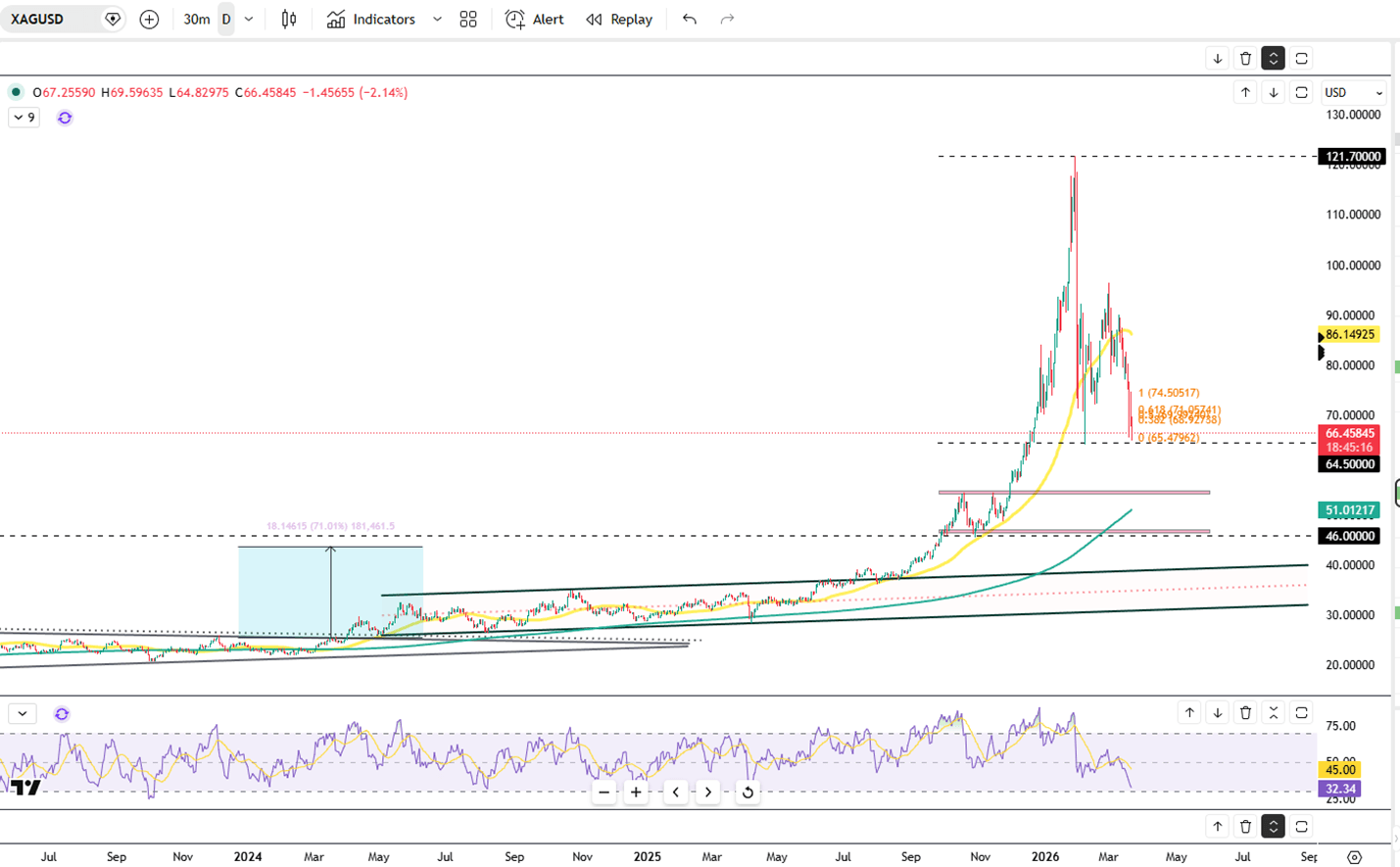
Silver trades around 61.80 as persistent Middle East tensions offer no relief. With the conflict showing no signs of de-escalation, the metal continues its steady downfall, as traders favor liquidity over traditional safe havens in the current high-inflation environment.
From a technical view, resistance stands near $68.20 while support is located around $65.00.
| R1: 65.90 | S1: 62.73 |
| R2: 67.86 | S2: 61.51 |
| R3: 69.00 | S3: 59.55 |
Markets saw a short-lived recovery after the U.S. delayed planned strikes on Iranian energy infrastructure, easing immediate geopolitical pressure.
Detail Energy Shock Drives Hawkish Shift (23-27 March)
Global markets remained under pressure as the conflict in the Middle East entered a more volatile phase, driving Brent crude past $110/barrel, which is its highest level since mid-2022.
DetailThen Join Our Telegram Channel and Subscribe Our Trading Signals Newsletter for Free!
Join Us On Telegram!


