




The euro fell toward $1.15, pressured by a stronger dollar and cautious ECB comments that signaled limited room for further easing. ECB officials emphasized data dependence as growth steadied and inflation softened.
Meanwhile, the yen hovered near 154 as the BOJ maintained its cautious tone, while the pound weakened below $1.32 on renewed BoE cut bets and fiscal concerns. Gold slipped below $4,000 amid trade optimism, and silver held firm near $49 as investors reassessed Fed policy expectations.
| Time | Cur. | Event | Forecast | Previous |
| 14:45 | USD | S&P Global Manufacturing PMI (Oct) | 52.2 | 52.2 |
| 15:00 | USD | ISM Manufacturing PMI (Oct) | 49.2 | 49.1 |
| 15:00 | USD | ISM Manufacturing Prices (Oct) | 62.6 | 61.9 |
| 17:00 | USD | FOMC Member Daly Speaks |
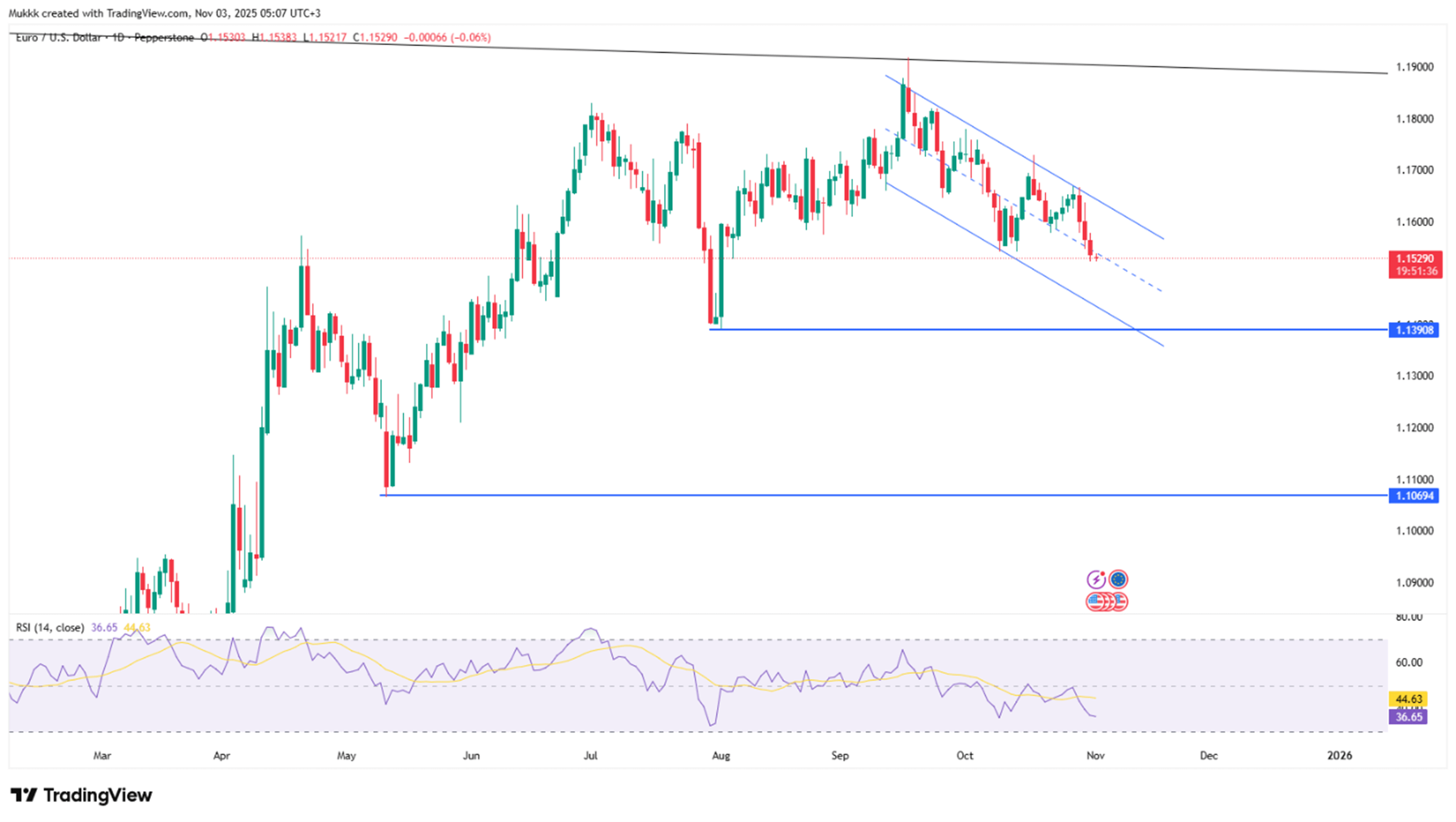
The euro fell toward $1.15, its lowest since late July, as investors digested cautious ECB guidance. Policymaker François Villeroy de Galhau said current policy is appropriate but could shift if risks rise, after the ECB held rates for a third meeting. President Lagarde signaled little scope for more easing. Despite softer inflation and steady growth, the euro weakened on a stronger dollar and lower Fed cut expectations.
Technically, 1.1480 is the key support, while resistance is seen at 1.1570.
| R1: 1.1570 | S1: 1.1480 |
| R2: 1.1650 | S2: 1.1410 |
| R3: 1.1740 | S3: 1.1510 |
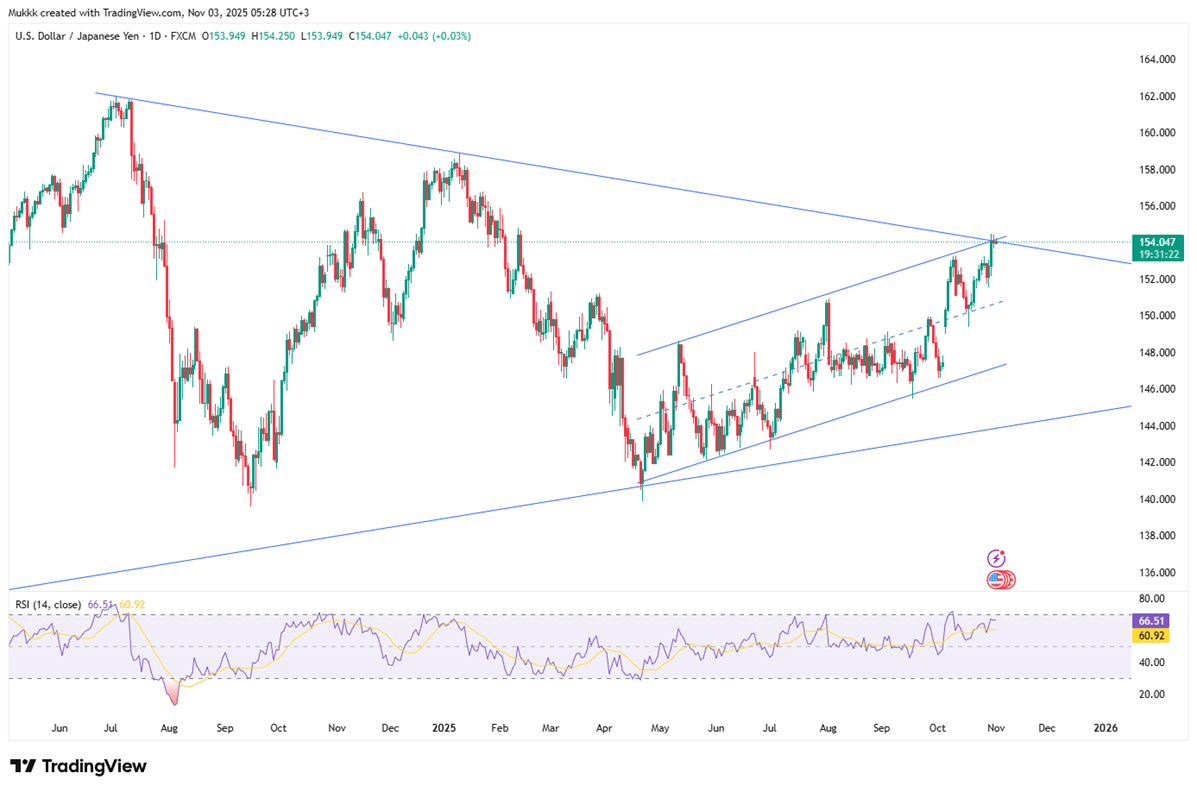
The Japanese yen traded around 154 per dollar on Monday, close to a nine-month low, amid thin holiday trading and the BOJ’s cautious approach to rate hikes, contrasting with a more hawkish U.S. Federal Reserve. Last week, the BOJ held rates steady, with Governor Ueda warning that global trade policies could affect growth and corporate profits, while leaving a December hike possible. Finance Minister Katayama also revised her view on the yen’s fair value. Investors are now focusing on upcoming wage and household spending data.
Technically, resistance stands near 154.80, while support is firm at 153.20.
| R1: 154.80 | S1: 153.20 |
| R2: 155.70 | S2: 152.00 |
| R3: 157.60 | S3: 150.40 |
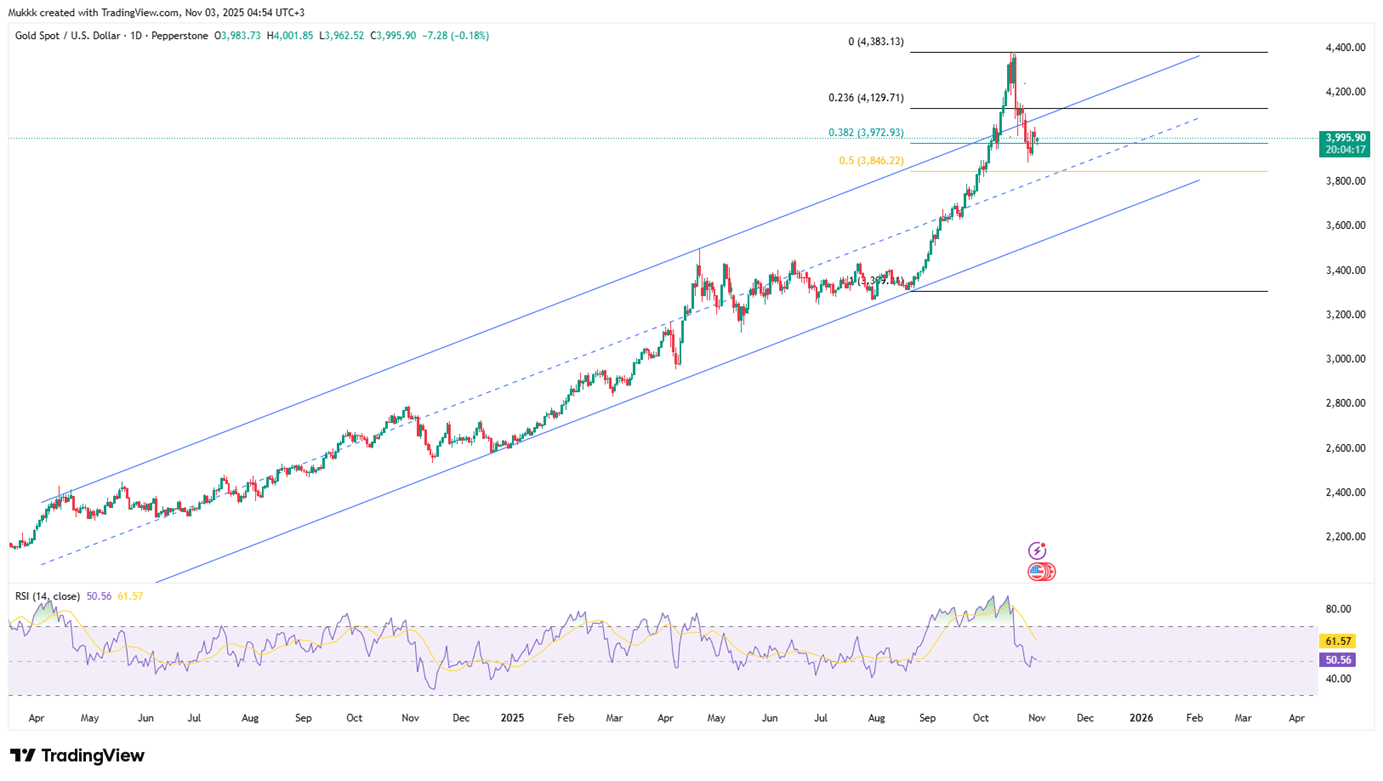
Gold fell below $4,000 per ounce, extending losses as optimism over a U.S.–China trade deal and reduced Fed cut expectations weakened safe-haven demand. While the Fed cut rates last week, Chair Powell signaled it may be the last this year amid limited data from the government shutdown. Markets now price a 70% chance of a December cut. China also removed a long-standing tax incentive on gold sales, likely dampening demand further.
From a technical perspective, support is around 3960, and resistance is at 4080.
| R1: 4080 | S1: 3960 |
| R2: 4150 | S2: 3900 |
| R3: 4230 | S3: 3845 |
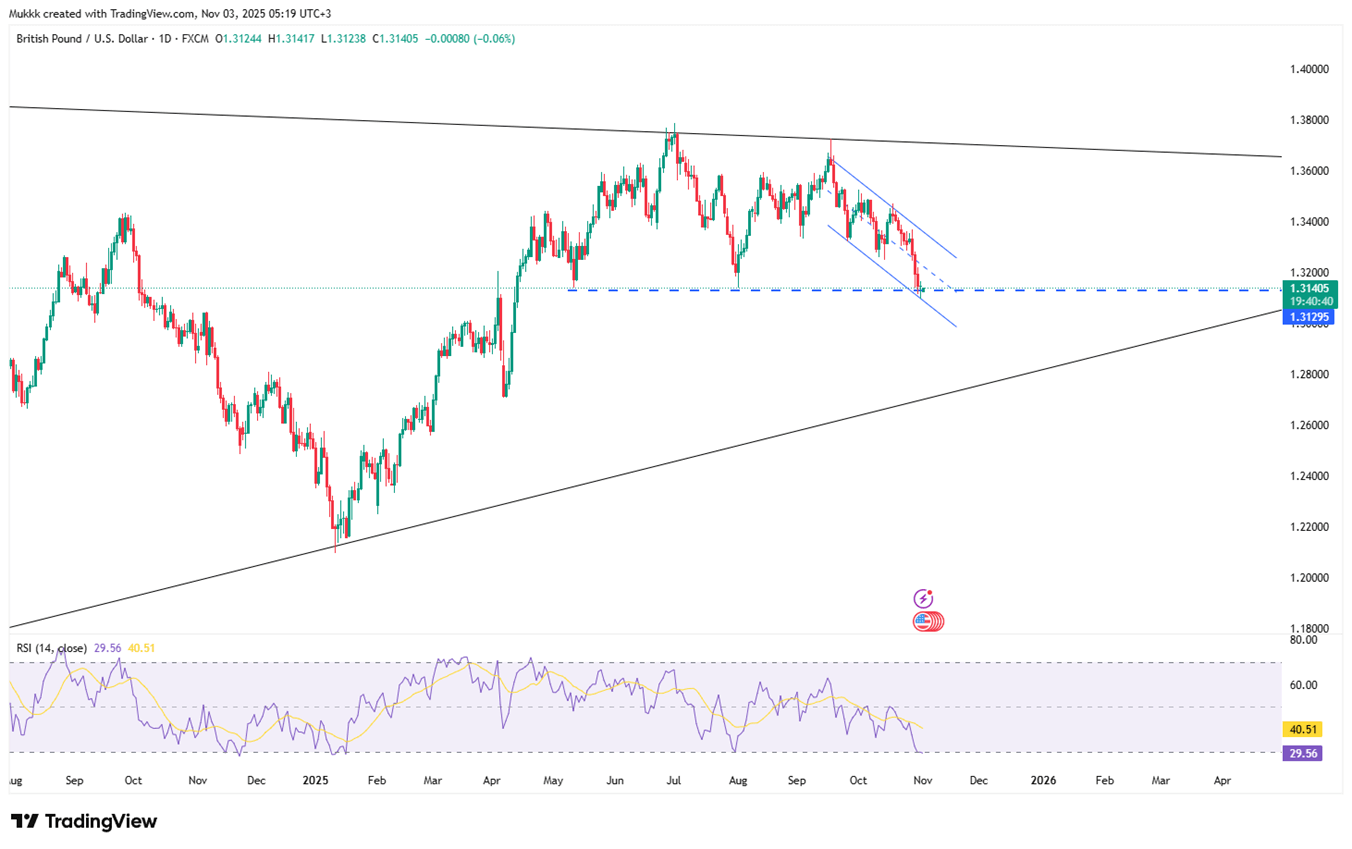
The pound fell below $1.32, its weakest since April, as a stronger dollar followed the Fed’s 25bps cut and Powell’s cautious outlook. Sterling was also pressured by rising BoE rate-cut bets and concerns that November’s budget could slow growth. Prime Minister Starmer left tax hikes open, while the OBR may lower productivity forecasts, risking a £20 billion shortfall. Softer inflation reinforced expectations of policy easing.
From a technical view, support stands near 1.3100, with resistance around 1.3180.
| R1: 1.3180 | S1: 1.3100 |
| R2: 1.3250 | S2: 1.3200 |
| R3: 1.3370 | S3: 1.2910 |
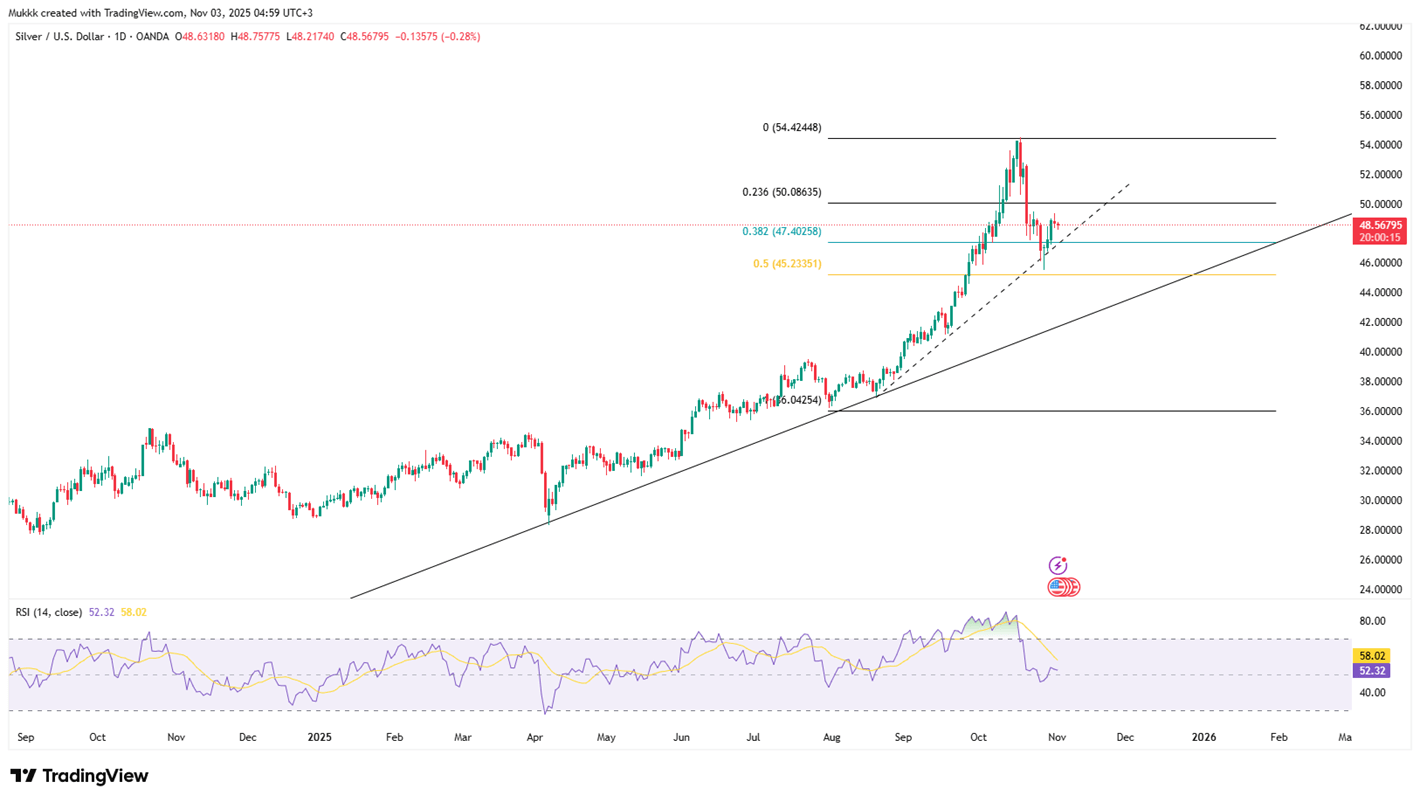
Silver steadied around $48.8 per ounce after a volatile week, as investors weighed the Fed’s policy outlook and improving U.S.–China trade relations. The Fed cut rates by 25bps last week, but Powell said further moves in December are uncertain. Markets now focus on upcoming U.S. data, including ADP jobs and ISM PMI. Over the weekend, China agreed to ease export controls while the U.S. paused tariffs, reducing safe-haven demand. Last month, silver briefly hit record highs before retreating on profit-taking.
From a technical view, resistance stands near $49.20, while support is located around $48.30.
| R1: 49.20 | S1: 48.30 |
| R2: 49.70 | S2: 47.60 |
| R3: 50.80 | S3: 47.20 |
 Hormuz Blockade Rattles Markets (09 - 13 March)
Global sentiment was dominated this week by the second week of the war with Iran and the effective blockade of the Strait of Hormuz, driving Brent crude prices above $100/barrel. Despite a catastrophic US labor report showing a loss of 92,000 jobs in February, safe-haven demand pushed the US Dollar Index to 99.1. The energy shock has ignited fears of "stagflation," particularly in Europe and Japan, as soaring fuel costs threaten to reverse recent disinflationary trends.
Detail Oil Shock Drives Dollar Higher (03.09.2026)Global markets opened the week under pressure as escalating Middle East tensions and disruptions in the Strait of Hormuz pushed oil prices above $100 per barrel.
 Trump Signals Extended Military Campaign
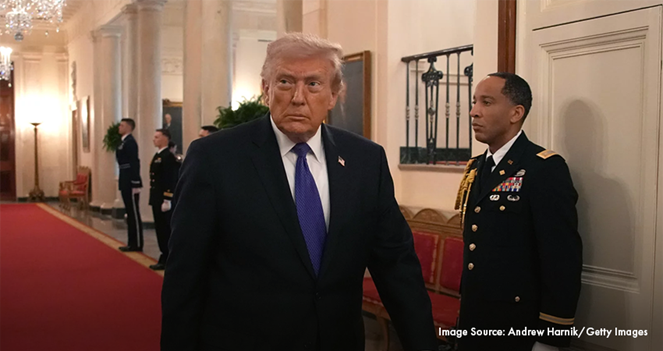
Geopolitical tensions in the Middle East have intensified following recent remarks from Donald Trump suggesting that the ongoing military campaign against Iran may last longer than anticipated. While Trump stated that early operational objectives were achieved ahead of schedule, he acknowledged that broader strategic goals could require additional time and sustained military pressure.
DetailThen Join Our Telegram Channel and Subscribe Our Trading Signals Newsletter for Free!
Join Us On Telegram!


