




Markets showed signs of stabilization as easing oil prices and tentative diplomatic signals around the Middle East reduced immediate inflation pressures.
The euro held near $1.16 as expectations for aggressive ECB tightening softened, while sterling also remained steady with fewer rate hikes priced in. In contrast, the Japanese yen weakened further amid a stronger dollar and ongoing geopolitical uncertainty. Precious metals struggled to gain direction, with gold stabilizing near $4,500 and silver holding above $71 as investors balanced easing energy costs with still-elevated inflation risks. Overall, sentiment remains cautious, with markets reacting to both geopolitical developments and shifting monetary policy expectations.
| Time | Cur. | Event | Forecast | Previous |
| 12:30 | USD | Initial Jobless Claims | 211K | 205K |
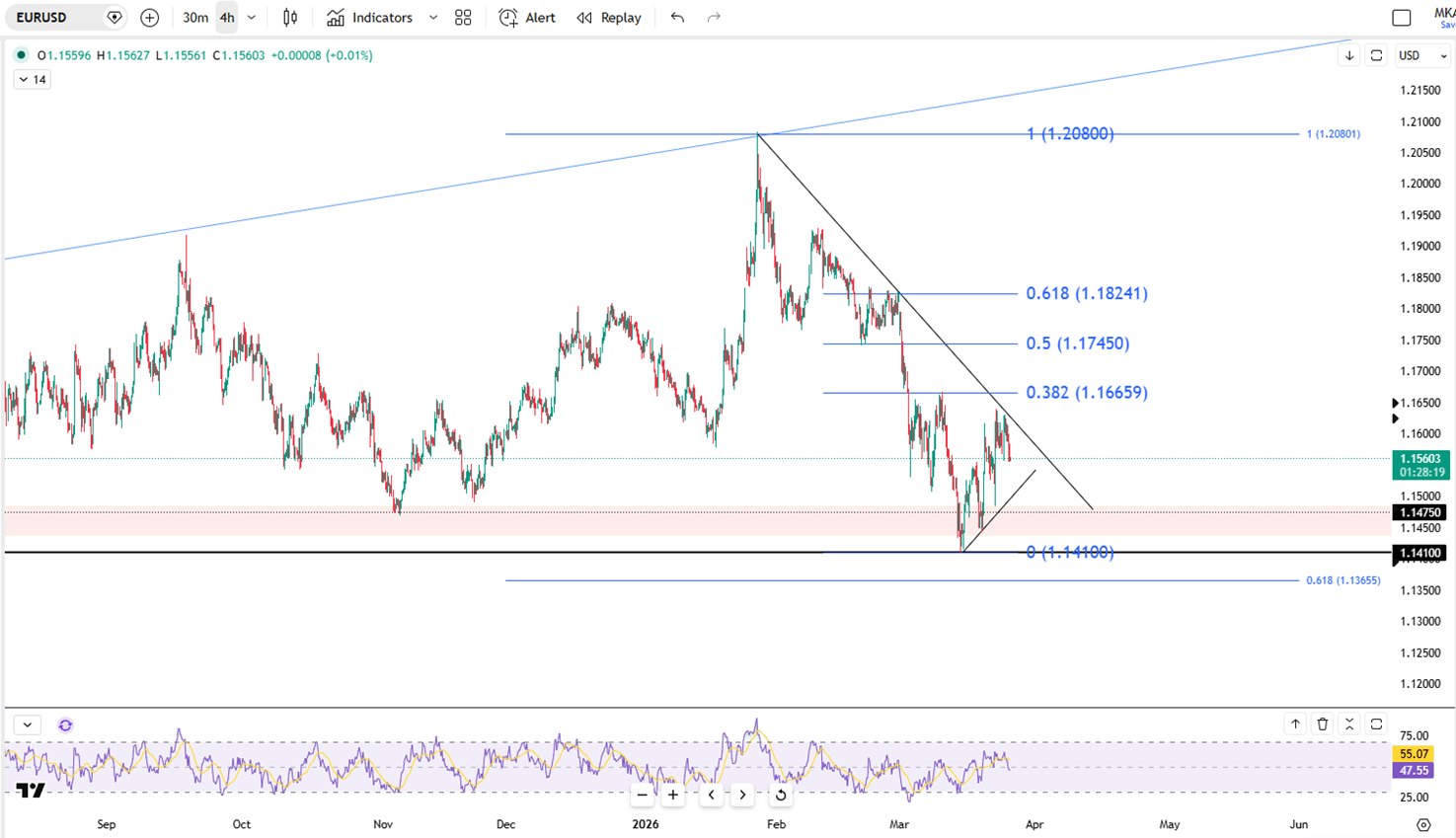
The euro held close to $1.16 as optimism grew regarding a potential U.S. peace proposal to Iran. While Tehran officially denied negotiations, skepticism was balanced by Brent crude slipping below $100, easing immediate inflation fears. Christine Lagarde signaled that the European Central Bank remains flexible, leading markets to price in fewer interest rate hikes for the remainder of the year.
For EUR/USD, the initial resistance is seen at 1.1610, while the closest support is positioned at 1.1520.
| R1: 1.1610 | S1: 1.1520 |
| R2: 1.1670 | S2: 1.1460 |
| R3: 1.1740 | S3: 1.1410 |
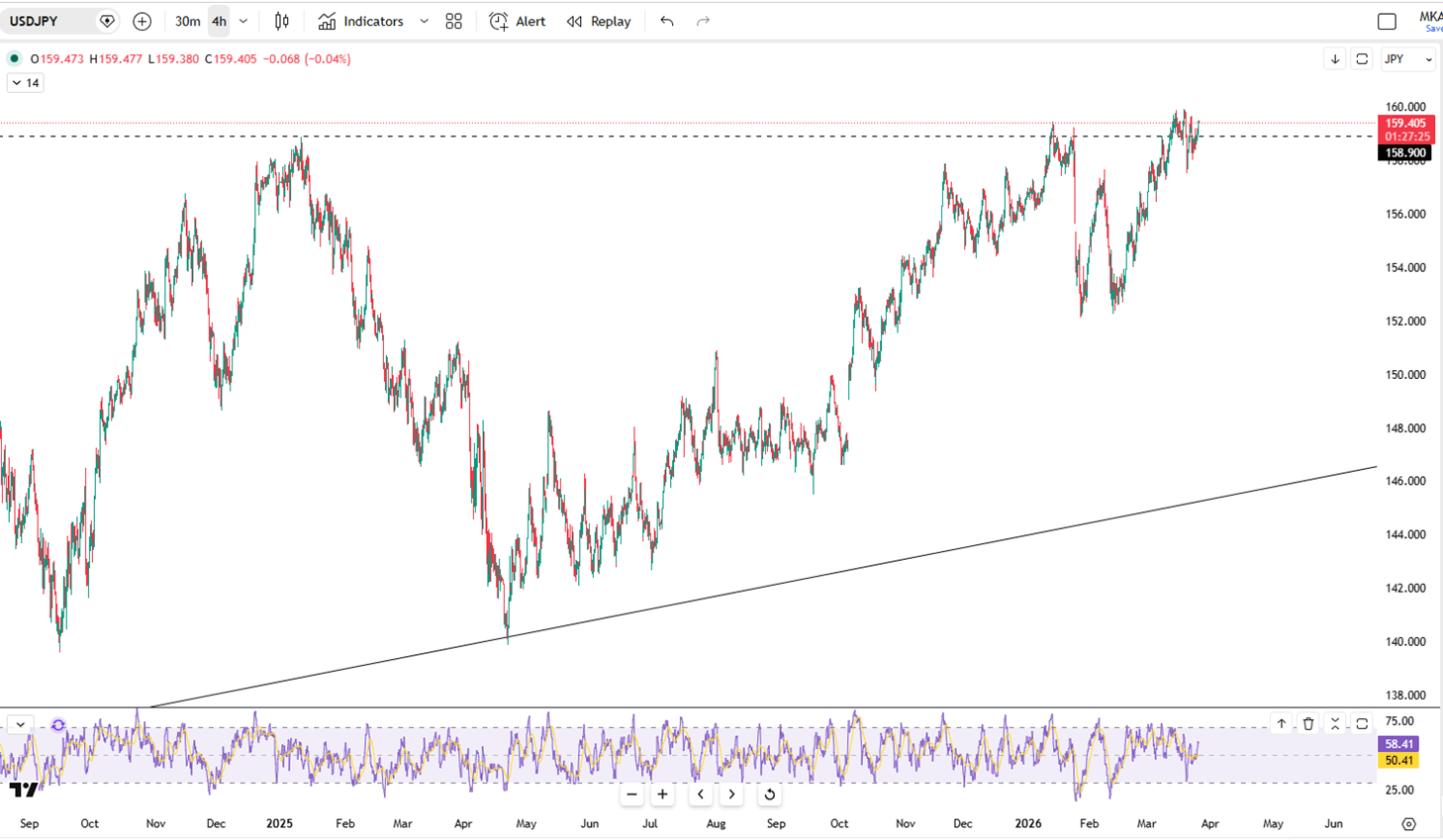
The Japanese yen weakened to approximately 159.5 per dollar on Thursday, marking its third straight session of losses as a strengthening dollar reflected deep Middle East uncertainty. Rising crude prices have intensified inflationary pressure, clouding Japan’s growth prospects. While the arrival of two tankers bypassing the Strait of Hormuz offered minor relief, a former security adviser has now recommended deploying warships to the region to protect vital shipping lanes and secure national energy interests.
Technically, resistance stands near 159.80, while support is firm at 158.80.
| R1: 159.80 | S1: 158.80 |
| R2: 160.50 | S2: 157.60 |
| R3: 161.70 | S3: 156.70 |
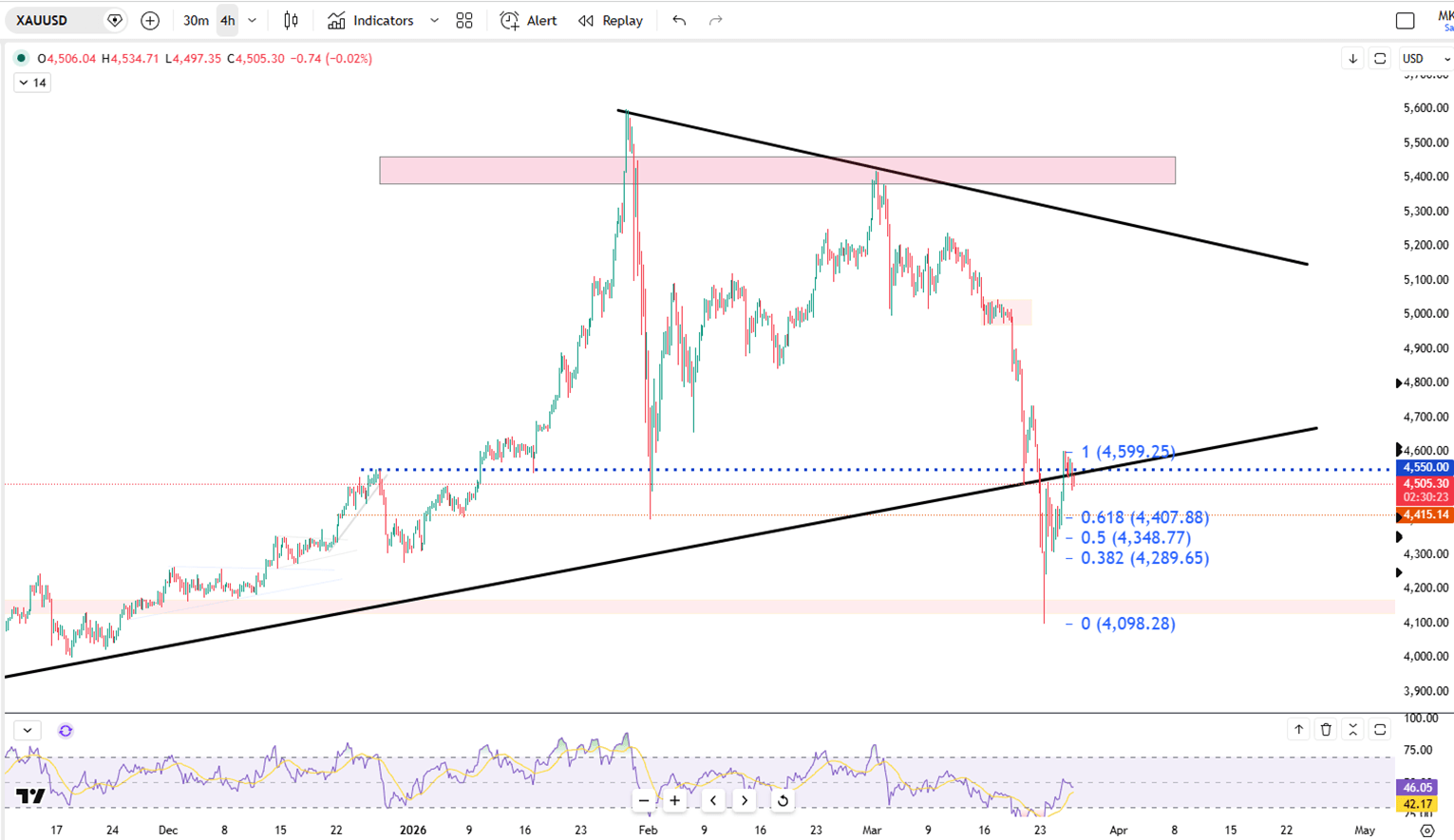
Gold remained near $4,500 per ounce on Thursday, struggling to extend its recent gains as conflicting Middle East signals unsettled markets. While Washington reports that Donald Trump sent a 15-point peace proposal via Pakistan to reopen the Strait of Hormuz, Iran has officially rejected a ceasefire, maintaining its demand for waterway control. Persistent U.S. troop deployments and high energy costs continue to fuel inflation fears, keeping gold under pressure as central banks lean toward a more hawkish policy stance.
Gold sees support near $4440, while resistance is around $4580.
| R1: 4580 | S1: 4440 |
| R2: 4650 | S2: 4370 |
| R3: 4800 | S3: 4300 |
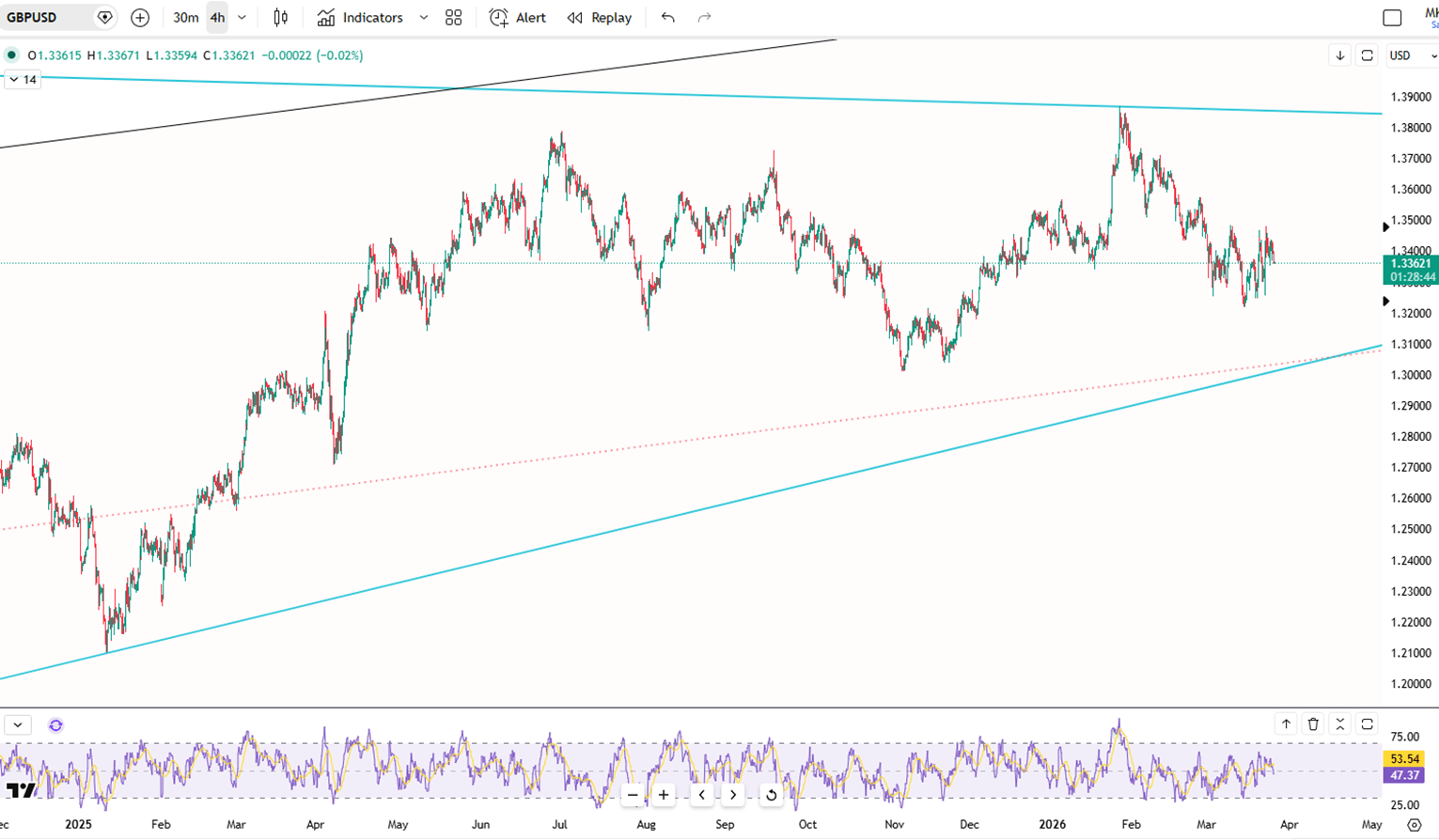
The British pound remained around $1.34 on optimism that Middle East tensions might de-escalate. Although Iran denied taking part in negotiations, market sentiment was buoyed by these diplomatic signals. Domestic February inflation data showed headline prices steady at 3%, with core CPI rising slightly to 3.2%. These pre-conflict figures had minimal impact, as investors now anticipate only two Bank of England rate hikes by year-end due to cooling oil prices.
From a technical view, support stands near 1.3290, with resistance around 1.3410.
| R1: 1.3410 | S1: 1.3290 |
| R2: 1.3500 | S2: 1.3220 |
| R3: 1.3630 | S3: 1.3100 |
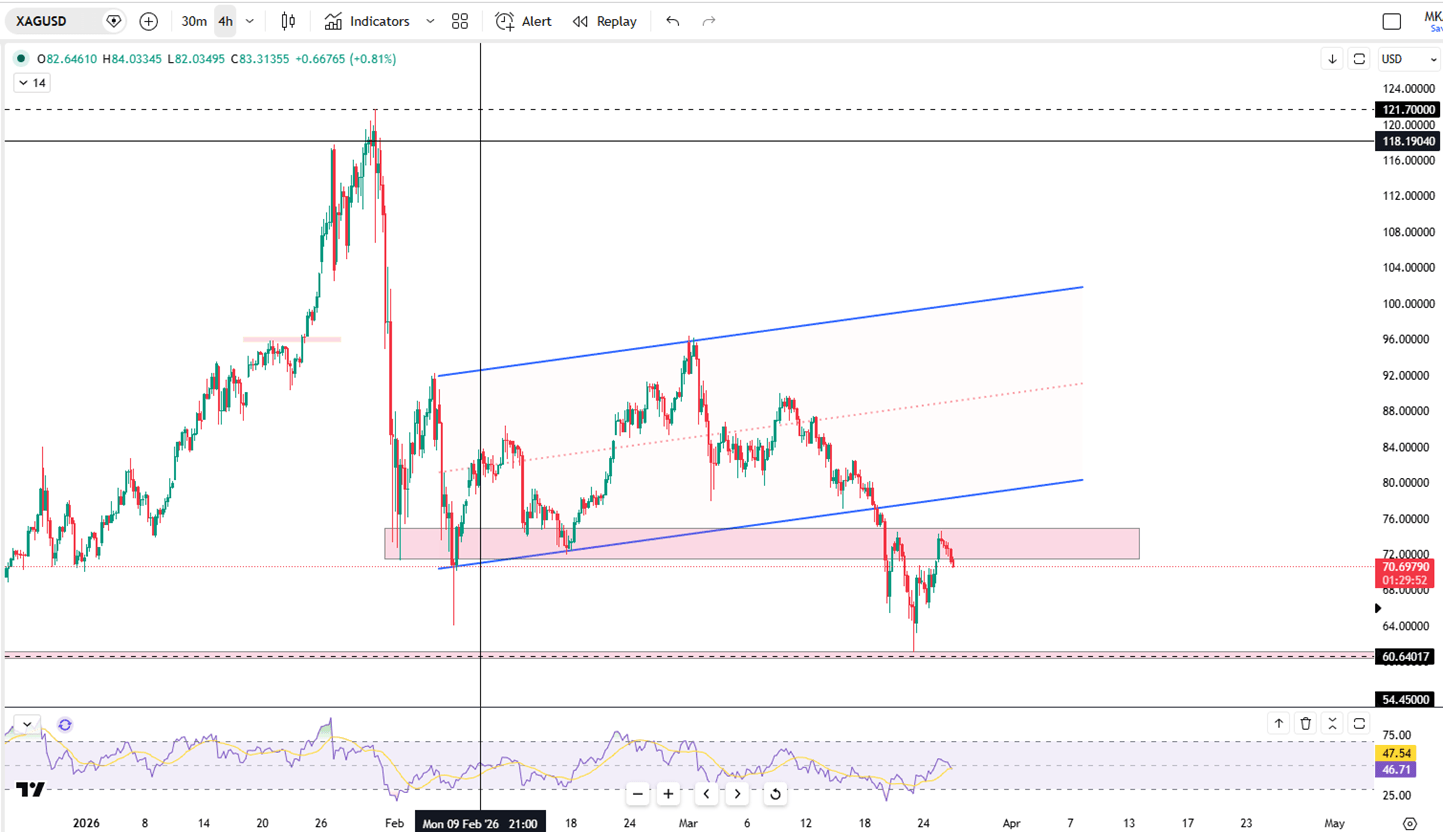
Silver prices remained above $71 per ounce on Thursday, as the market struggled to maintain momentum due to conflicting geopolitical cues. Iran continues to demand full sovereignty over the strategic waterway instead of a diplomatic compromise. This stalemate, combined with ongoing U.S. troop deployments and war-driven energy spikes, has kept inflationary pressures high and central banks hawkish, limiting silver's upside potential.
From a technical view, resistance stands near $73.60 while support is located around $70.00.
| R1: 73.60 | S1: 70.00 |
| R2: 75.20 | S2: 67.50 |
| R3: 77.60 | S3: 65.00 |
Global markets reflected a mix of economic slowdown signals and tentative geopolitical optimism.
Detail Markets Rebound After Strike Delay (03.24.2026)Markets saw a short-lived recovery after the U.S. delayed planned strikes on Iranian energy infrastructure, easing immediate geopolitical pressure.
DetailThen Join Our Telegram Channel and Subscribe Our Trading Signals Newsletter for Free!
Join Us On Telegram!


