




Global markets opened the week under pressure as escalating Middle East tensions and disruptions in the Strait of Hormuz pushed oil prices above $100 per barrel.
The surge in energy costs strengthened the U.S. dollar and weighed heavily on major currencies, sending the euro to a three-month low and pushing the yen to its weakest level in six weeks. Rising oil prices have also intensified global inflation concerns, complicating the outlook for central banks in Europe, Japan, and the United States. Precious metals showed mixed performance, with gold slipping under the weight of a stronger dollar while silver declined sharply as energy-driven inflation fears reduced expectations for near-term Federal Reserve rate cuts.
| Time | Cur. | Event | Forecast | Previous |
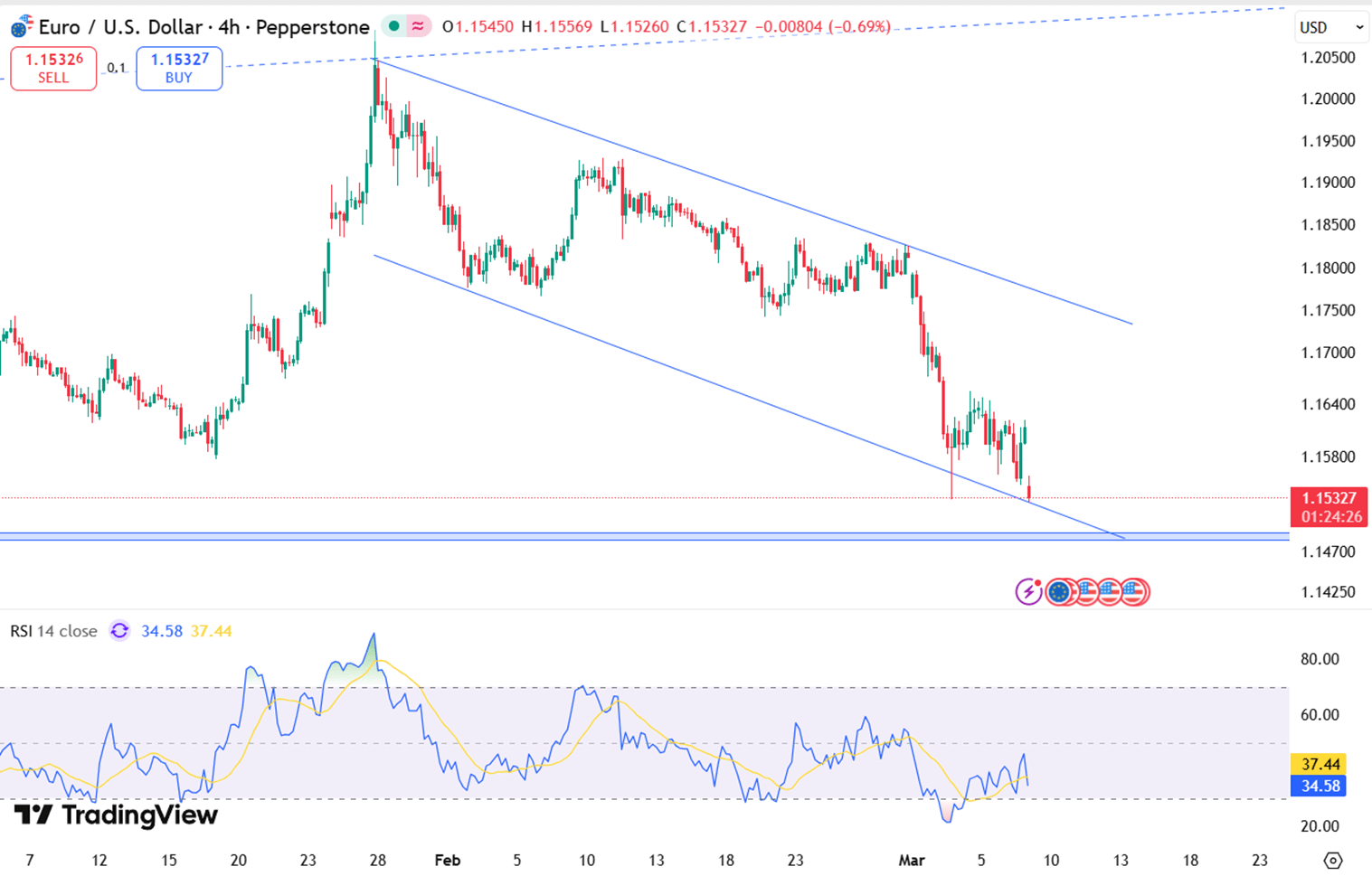
On Monday, the euro weakened to roughly $1.152, continuing its downward trend from the previous week and hitting a three-month low as investors moved toward the safety of the US dollar amid growing Middle East tensions. The conflict, now in its second week, shows little sign of easing after President Donald Trump demanded that Iran surrender unconditionally. Surging energy prices have raised fresh concerns about inflation in the eurozone, potentially pushing it above the European Central Bank’s 2% goal if the pressure persists. ECB board member Isabel Schnabel noted that while inflation is projected to meet the target over time, policymakers cannot afford to become complacent.
For EUR/USD, the initial resistance is seen at 1.1580, while the closest support is positioned at 1.1480.
| R1: 1.1580 | S1: 1.1480 |
| R2: 1.1650 | S2: 1.1420 |
| R3: 1.1710 | S3: 1.1350 |
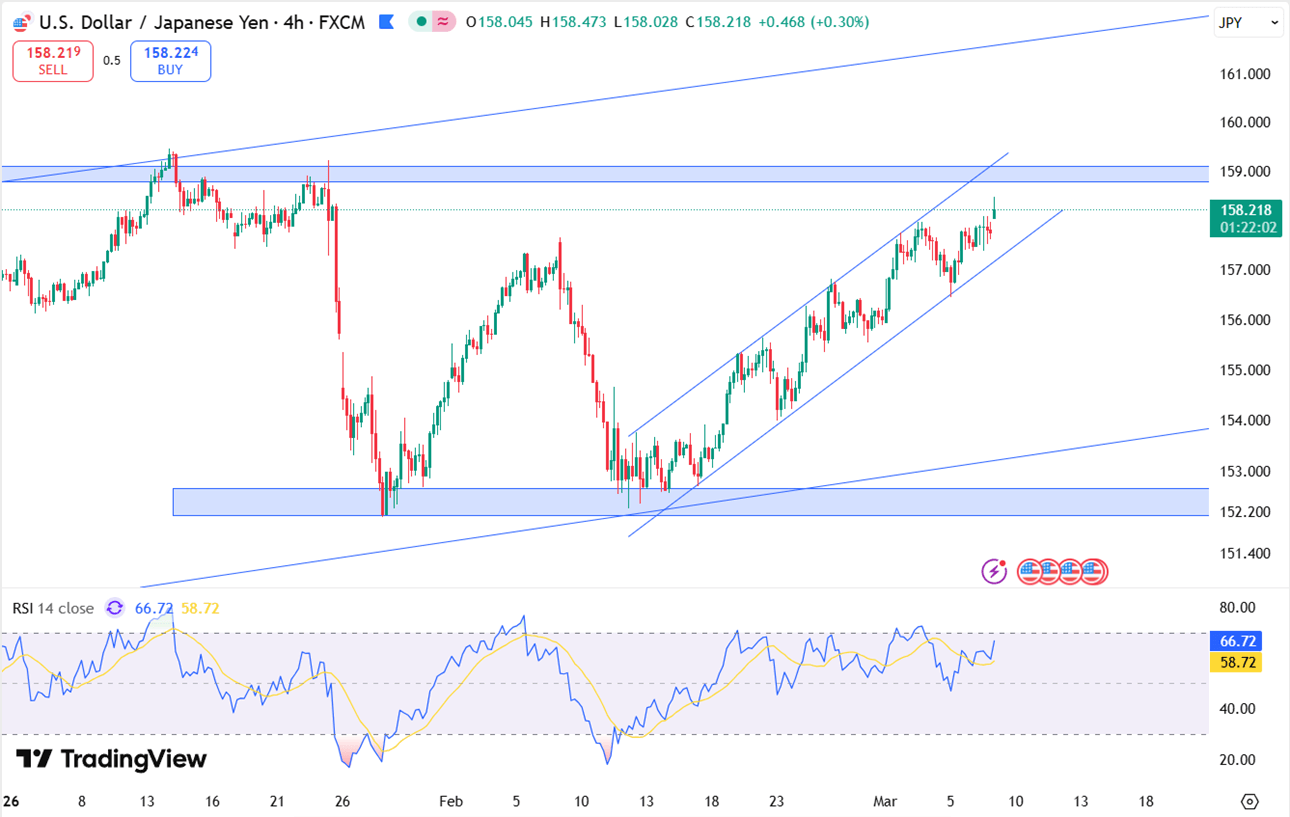
The Japanese yen weakened past 158.5 per dollar on Monday, reaching its lowest level in six weeks as oil prices surged above $100 per barrel. Escalating Middle East conflict involving the U.S., Israel, and Iran has halted shipments through the Strait of Hormuz, triggering output cuts. Japan remains acutely vulnerable to these disruptions, as 95% of its oil originates in the Middle East, with 70% passing through the blocked strait. The Japanese government is now considering tapping its strategic oil reserves to manage the ongoing energy crisis.
Technically, resistance stands near 159.00, while support is firm at 157.70.
| R1: 159.00 | S1: 157.70 |
| R2: 159.40 | S2: 157.00 |
| R3: 159.80 | S3: 156.40 |
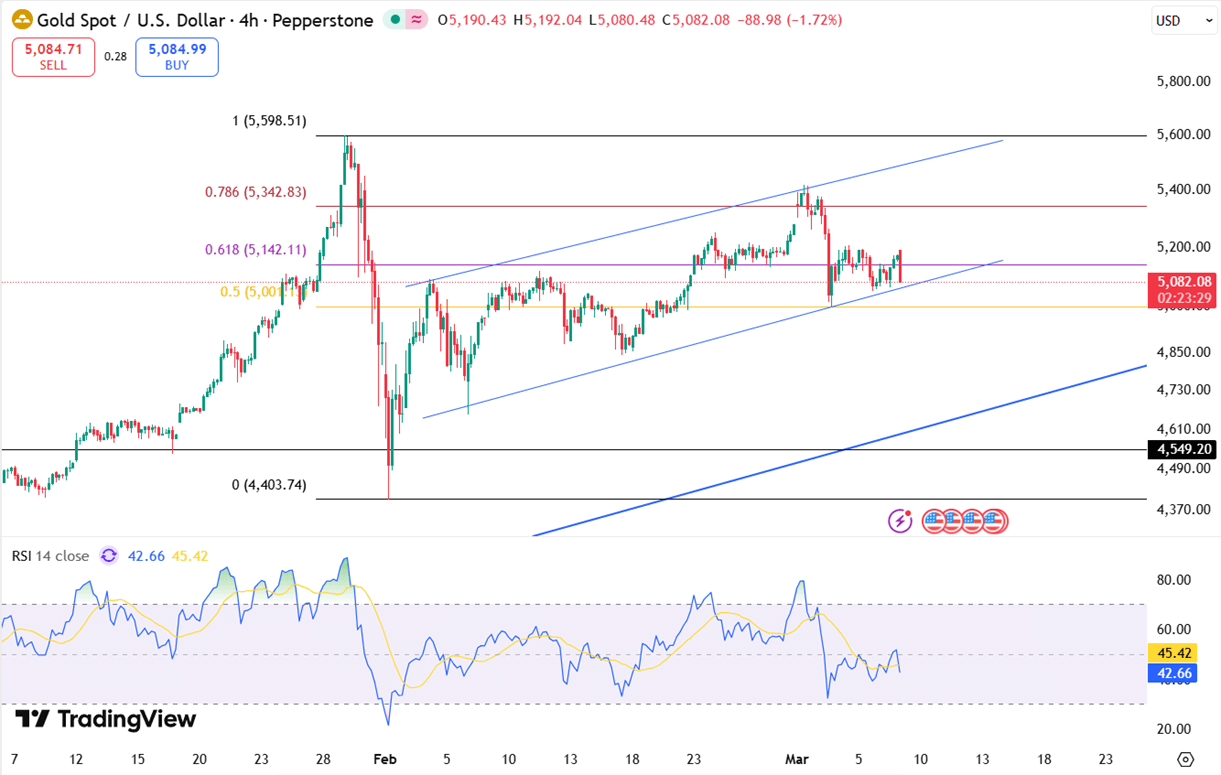
Gold prices dipped below $5,100 per ounce as a strengthening U.S. dollar and diminishing expectations for Federal Reserve rate cuts overshadowed the metal's safe-haven status. Meanwhile, crude oil surged past $100 per barrel for the first time since 2022 due to intensifying conflict involving Iran. Severe disruptions to tanker traffic in the Strait of Hormuz led major producers like Kuwait, Iraq, and the UAE to reduce output. This energy price spike threatens to heighten global inflation, further complicating the Federal Reserve's monetary policy trajectory.
Gold sees support near $5000, while resistance is around $5210.
| R1: 5120 | S1: 5000 |
| R2: 5190 | S2: 4910 |
| R3: 5270 | S3: 4840 |
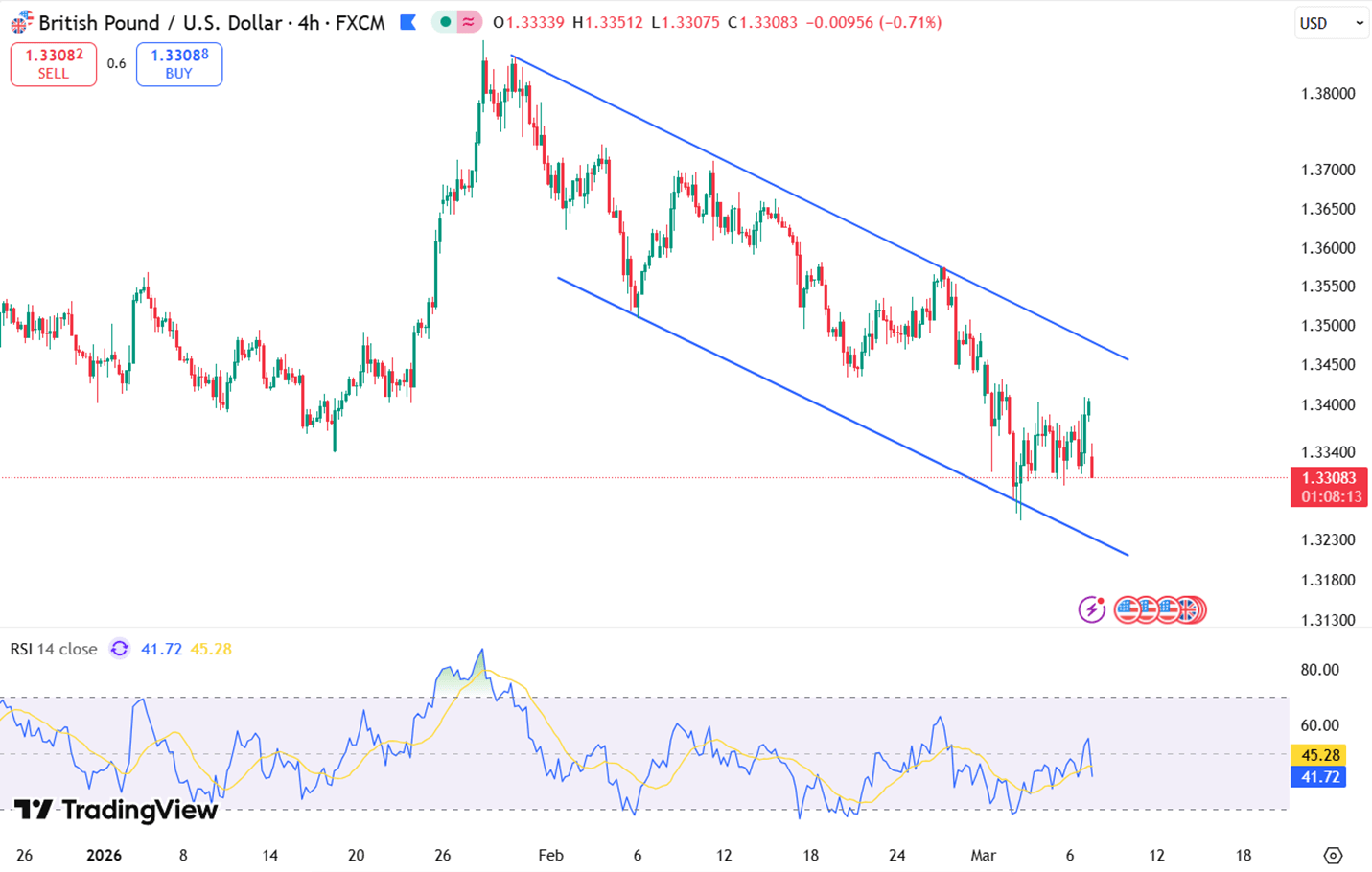
The British pound slipped toward $1.33, nearing its lowest level since December as investors weighed the economic impact of the escalating Middle East conflict. Following Israel's strike on Beirut, regional tensions have intensified, driving energy prices higher and fueling European inflation fears. The expectations for a Bank of England rate cut this month have collapsed to under 20%, down from over 80% prior to the crisis. This shift toward a more hawkish outlook reflects the growing pressure on policymakers to manage rising costs.
From a technical view, support stands near 1.3400, with resistance around 1.3250.
| R1: 1.3400 | S1: 1.3250 |
| R2: 1.3530 | S2: 1.3140 |
| R3: 1.3580 | S3: 1.3030 |
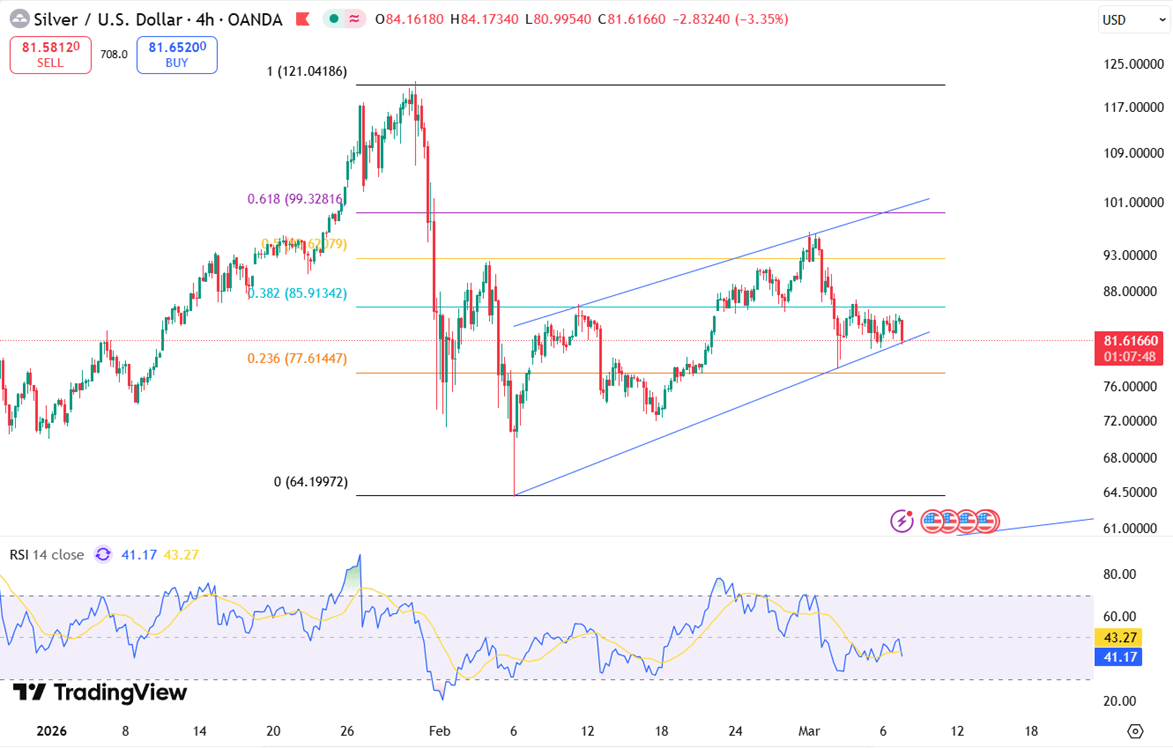
Silver fell up to 5.7% to $79.7 per ounce on Monday before recovering slightly, pressured by a stronger dollar and reduced expectations for Federal Reserve rate cuts. Meanwhile, oil surged above $100 a barrel for the first time since 2022 as the conflict with Iran disrupted shipments through the Strait of Hormuz. With about a fifth of global oil and gas supply affected, rising energy prices may fuel inflation, delay Fed easing, and weaken industrial demand for silver.
From a technical view, resistance stands near $81.50 while support is located around $78.00.
| R1: 81.50 | S1: 78.00 |
| R2: 84.20 | S2: 75.30 |
| R3: 86.50 | S3: 72.40 |
 Hormuz Blockade Rattles Markets (09 - 13 March)
Global sentiment was dominated this week by the second week of the war with Iran and the effective blockade of the Strait of Hormuz, driving Brent crude prices above $100/barrel. Despite a catastrophic US labor report showing a loss of 92,000 jobs in February, safe-haven demand pushed the US Dollar Index to 99.1. The energy shock has ignited fears of "stagflation," particularly in Europe and Japan, as soaring fuel costs threaten to reverse recent disinflationary trends.
Detail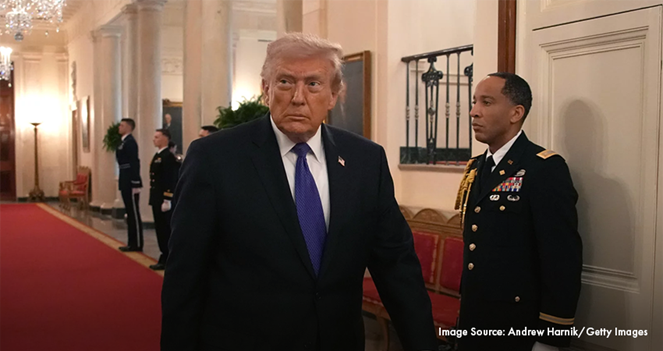 Trump Signals Extended Military Campaign
Geopolitical tensions in the Middle East have intensified following recent remarks from Donald Trump suggesting that the ongoing military campaign against Iran may last longer than anticipated. While Trump stated that early operational objectives were achieved ahead of schedule, he acknowledged that broader strategic goals could require additional time and sustained military pressure.
DetailThen Join Our Telegram Channel and Subscribe Our Trading Signals Newsletter for Free!
Join Us On Telegram!


