


Markets showed mixed signals as a softer U.S. dollar allowed EUR/USD to hold near 1.1500, with investors turning attention to upcoming Eurozone inflation and German retail data.
The Japanese yen maintained strength near the 160 level amid continued intervention warnings, while sterling weakened to multi-month lows under persistent risk aversion and rising inflation concerns. In commodities, gold attempted to recover despite being on track for its worst monthly drop in years, while silver rebounded modestly but remained under pressure. Overall, sentiment remains fragile as geopolitical tensions and shifting rate expectations continue to dominate market direction.
| Time | Cur. | Event | Forecast | Previous |
| Manufacturing PMI (Mar) | ||||
| GDP (QoQ) (Q4) | ||||
| GDP (YoY) (Q4) | ||||
| CPI (YoY) (Mar) | ||||
| Chicago PMI (Mar) | ||||
| CB Consumer Confidence (Mar) | ||||
| Jolts Job Openings (Feb) |
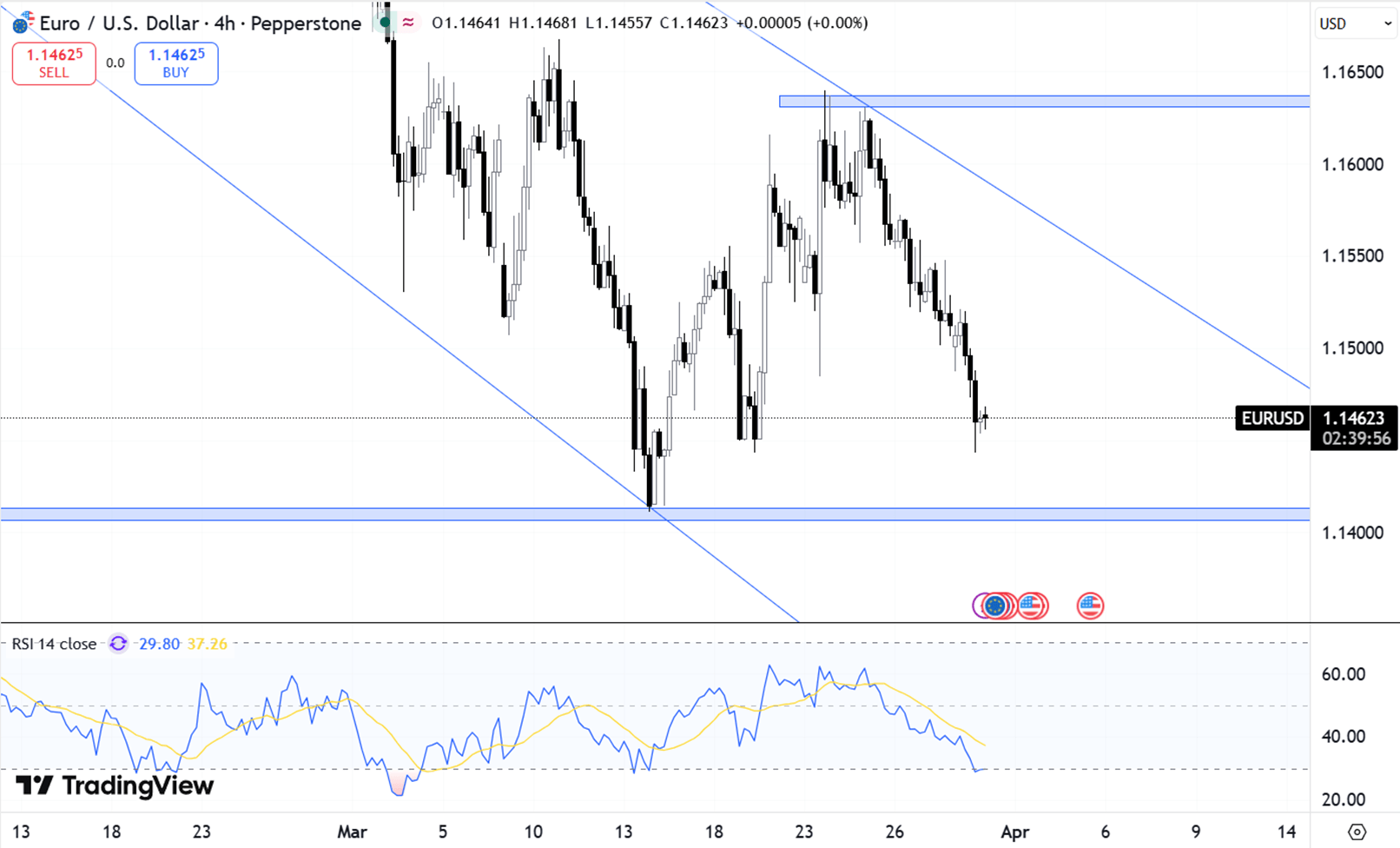
The EUR/USD pair is trading near the 1.1500 level, rebounding as the U.S. dollar softens despite persistent safe-haven demand. Investors are now shifting their focus toward upcoming German Retail Sales and Eurozone HICP inflation data for fresh directional cues. Sentiment improved following reports that Donald Trump may be open to ending the conflict with Iran without demanding the reopening of the Strait of Hormuz, which weighed on the dollar. Additionally, Fed Chair Jerome Powell noted that long-term inflation expectations remain stable, helping to temper aggressive interest rate forecasts.
For EUR/USD, the initial resistance is seen at 1.1510, while the closest support is positioned at 1.1410.
| R1: 1.1510 | S1: 1.1410 |
| R2: 1.1570 | S2: 1.1350 |
| R3: 1.1610 | S3: 1.1310 |
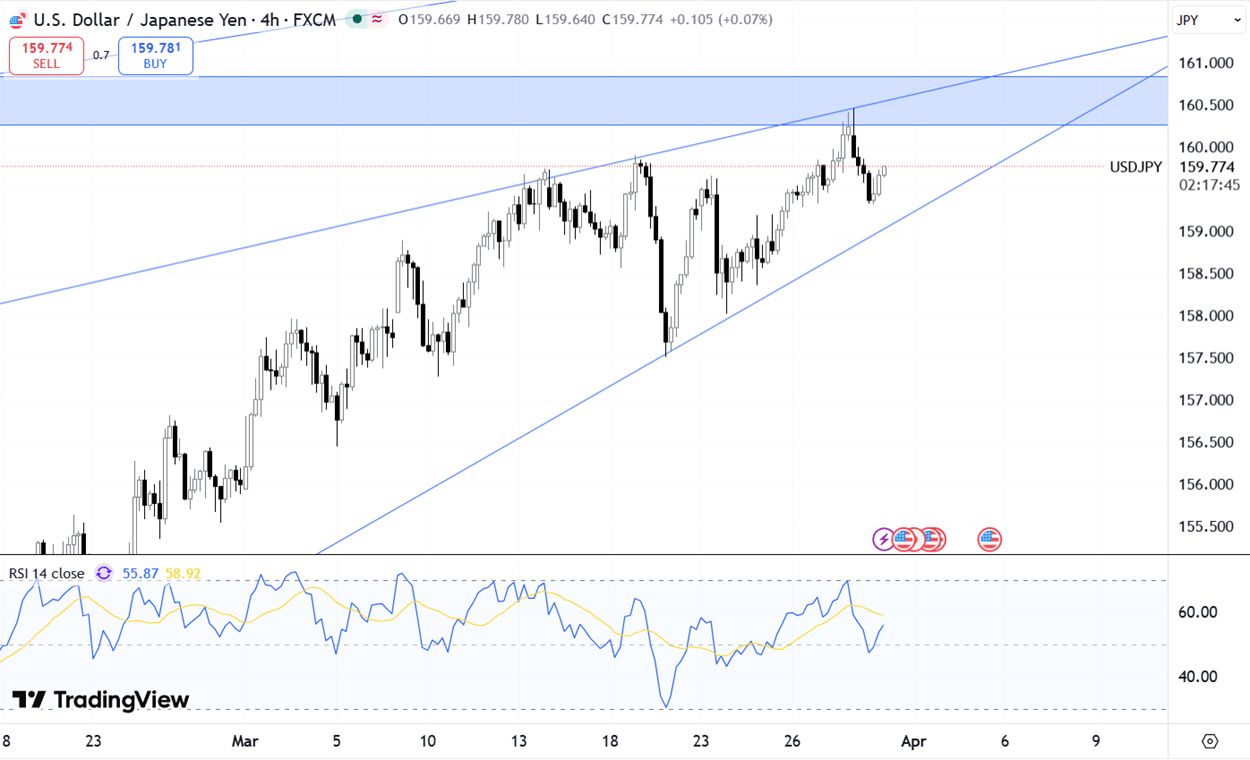
The Japanese yen settled around 159.6 per dollar on Tuesday, maintaining recent gains as intensified verbal warnings from Tokyo increased intervention expectations. Currency chief Atsushi Mimura reaffirmed that the government is prepared to act decisively, echoing recent stances from Finance Minister Satsuki Katayama.
These official cautions followed the yen’s brief slide beyond the critical 160 level, a threshold that previously triggered market intervention in July 2024. Despite this support, the currency remains pressured by surging oil prices fueled by the Middle East conflict, which disproportionately impacts Japan due to its heavy reliance on energy imports.
Technically, resistance stands near 160.50, while support is firm at 159.30.
| R1: 160.50 | S1: 159.30 |
| R2: 161.70 | S2: 158.40 |
| R3: 162.30 | S3: 157.60 |
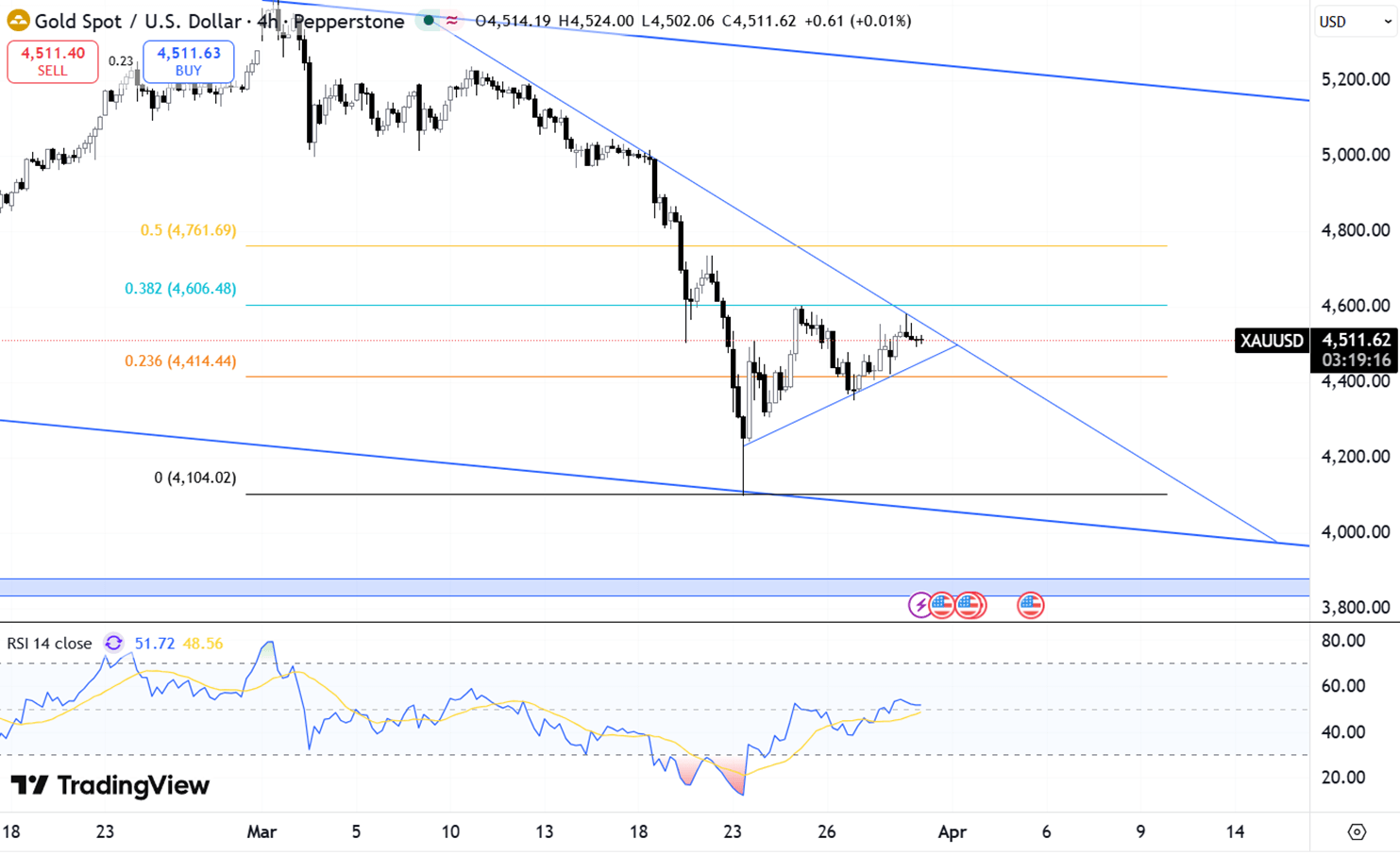
Gold climbed toward $4,600 per ounce on Tuesday as easing oil prices provided some relief, but the metal remains on track for roughly a 13% decline in March, its worst monthly performance since October 2008. Throughout the month, gold has been pressured by an oil-driven inflation shock that pushed both investors and central banks toward a more hawkish stance on interest rates. The Middle East conflict has now entered its fifth week with no signs of easing, with Iran effectively shutting the Strait of Hormuz and threatening Red Sea shipping.
Gold sees support near $4420, while resistance is around $4580.
| R1: 4580 | S1: 4420 |
| R2: 4650 | S2: 4350 |
| R3: 4720 | S3: 4260 |
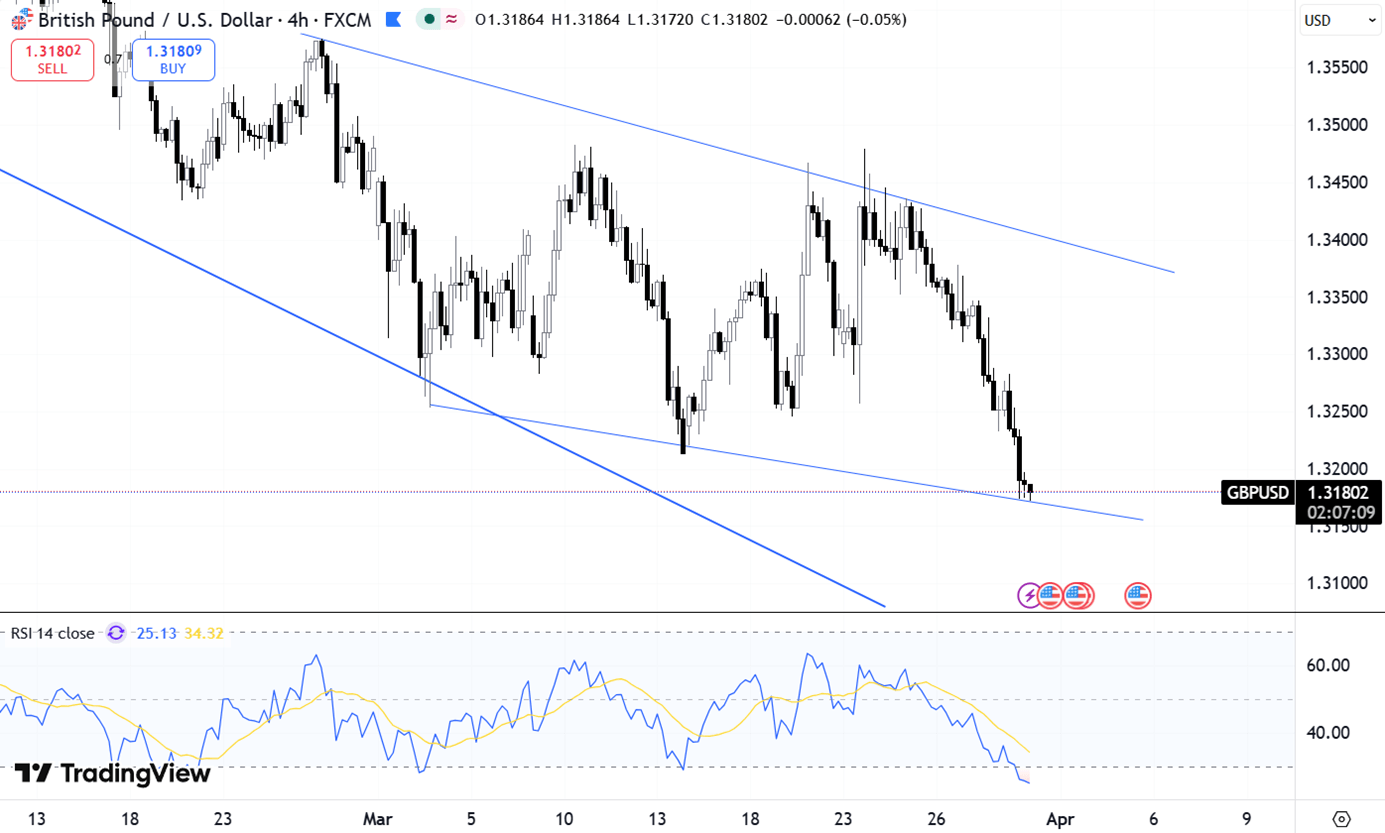
The British pound drifted toward $1.32, marking its weakest level since early December and a monthly decline of over 1%. Persistent risk aversion, fueled by potential U.S. ground operations in the Middle East, continues to overshadow nascent progress in Iran negotiations. The Bank of England’s outlook has shifted dramatically; markets now anticipate at least two rate hikes in 2026, with a 70% probability of an increase as early as next month. This hawkish turn reflects growing fears that energy-driven inflation will remain sticky.
From a technical view, support stands near 1.3100, with resistance around 1.3250.
| R1: 1.3250 | S1: 1.3100 |
| R2: 1.3300 | S2: 1.3030 |
| R3: 1.3380 | S3: 1.2970 |
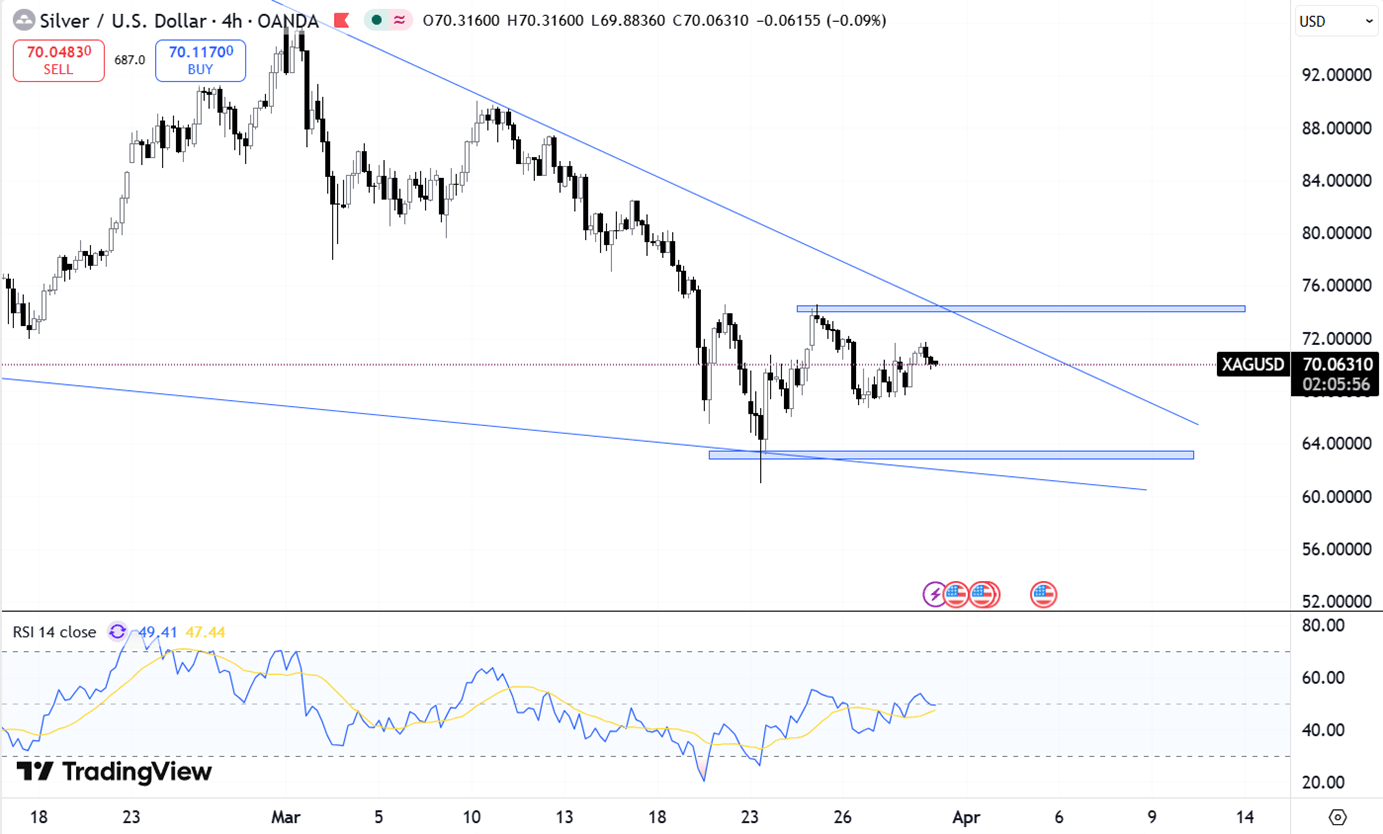
Silver climbed past $72 per ounce on Tuesday as cooling oil prices provided brief relief. Despite this recovery, the metal is set for a monthly decline exceeding 20%, marking its sharpest drop since September 2011. Throughout March, precious metals faced persistent pressure from an energy-driven inflation shock, which spurred investors and central banks to adopt increasingly hawkish interest rate expectations to counter rising costs.
From a technical view, resistance stands near $72.5 while support is located around $67.50.
| R1: 72.50 | S1: 67.50 |
| R2: 73.20 | S2: 66.00 |
| R3: 74.60 | S3: 64.40 |
Markets remain volatile as Trump orders a prolonged naval blockade of the Strait of Hormuz to pressure Iran, further restricting global oil shipments.
Detail Growth Slows, Inflation Lingers (04.28.2026)The Bank of Japan held its policy rate at 0.75% in April, keeping borrowing costs at their highest level since 1995.
Detail Oil Surge and Stalled Talks Fuel Tension (27 April – 1 May)
Global markets moved into a risk-sensitive phase this week as stalled US–Iran negotiations and renewed tensions in the Strait of Hormuz reshaped sentiment. Safe-haven demand returned as reports of naval activity and continued blockades signaled that a quick resolution remains unlikely. With the key shipping route still largely restricted, energy prices surged, feeding directly into inflation concerns and shifting expectations across currencies, commodities, and bond markets.
DetailThen Join Our Telegram Channel and Subscribe Our Trading Signals Newsletter for Free!
Join Us On Telegram!


