




Global markets remained under pressure as escalating Middle East tensions and rising energy prices strengthened the US dollar and unsettled major currencies.
The dollar index held near 99 Friday, eyeing a 1% weekly gain as Iran-Israel tensions and rising oil prices spurred safe-haven demand and expectations for delayed Fed rate cuts. The euro hovered near 1.1620 with bearish momentum building, while the yen weakened further as Japan’s heavy energy dependence amplified the impact of higher oil prices. Precious metals showed mixed performance, with gold slipping toward $5,080 under the weight of stronger yields and a firm dollar, while silver rebounded modestly despite a steep weekly decline. Sterling also remained weak near multi-month lows as geopolitical risks and downgraded UK growth prospects complicated the Bank of England’s policy outlook.
| Time | Cur. | Event | Forecast | Previous |
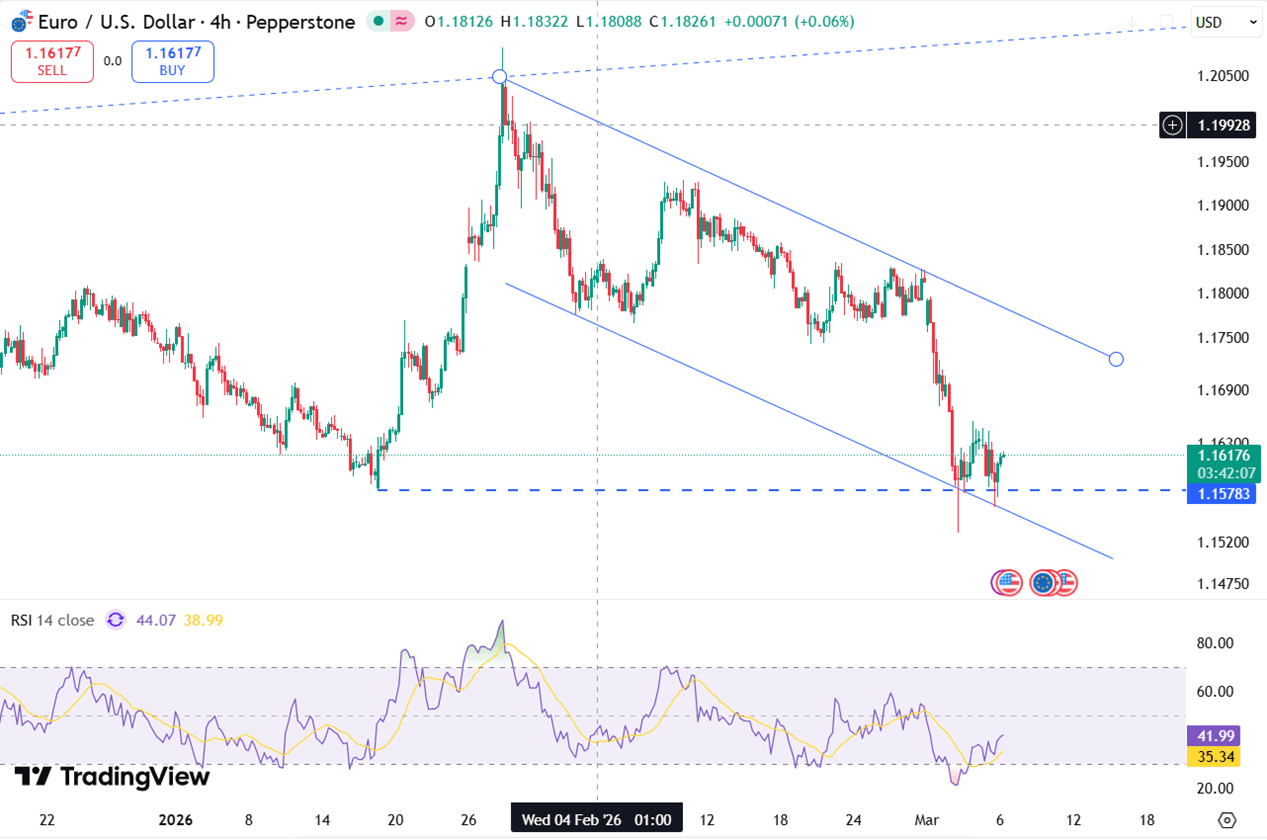
The EUR/USD pair hovered near 1.1620 on Friday, weighed down by escalating Middle East conflict and surging energy costs. With the 14-day RSI near 40, bearish momentum remains firm, suggesting further downside potential. While sticky eurozone inflation might force the ECB into a more hawkish stance, persistent geopolitical risks continue to undermine the currency's recovery efforts.
For EUR/USD, the initial resistance is seen at 1.1650, while the closest support is positioned at 1.1560.
| R1: 1.1650 | S1: 1.1560 |
| R2: 1.1710 | S2: 1.1500 |
| R3: 1.1770 | S3: 1.1450 |
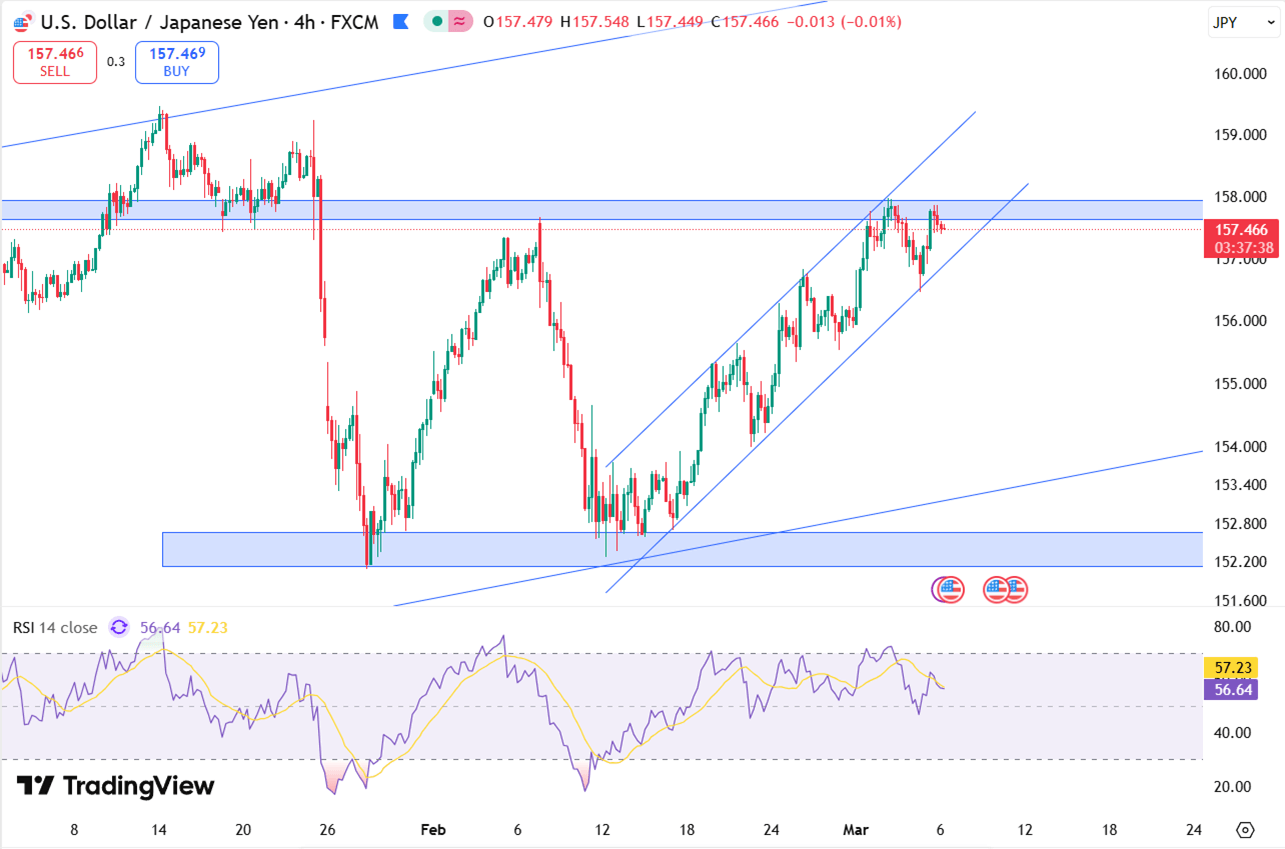
The Japanese yen hovered around 157.5 per dollar on Friday, heading for its third weekly loss as the Dollar gains on safe-haven demand. Renewed Iranian strikes and rising oil prices have hit the yen particularly hard due to Japan's heavy energy import dependence. While Governor Kazuo Ueda suggested a prolonged hold on interest rates, Satsuki Katayama confirmed that currency interventions remain a viable tool for officials.
Technically, resistance stands near 158.00, while support is firm at 156.70.
| R1: 158.00 | S1: 156.70 |
| R2: 158.70 | S2: 155.80 |
| R3: 159.40 | S3: 154.90 |
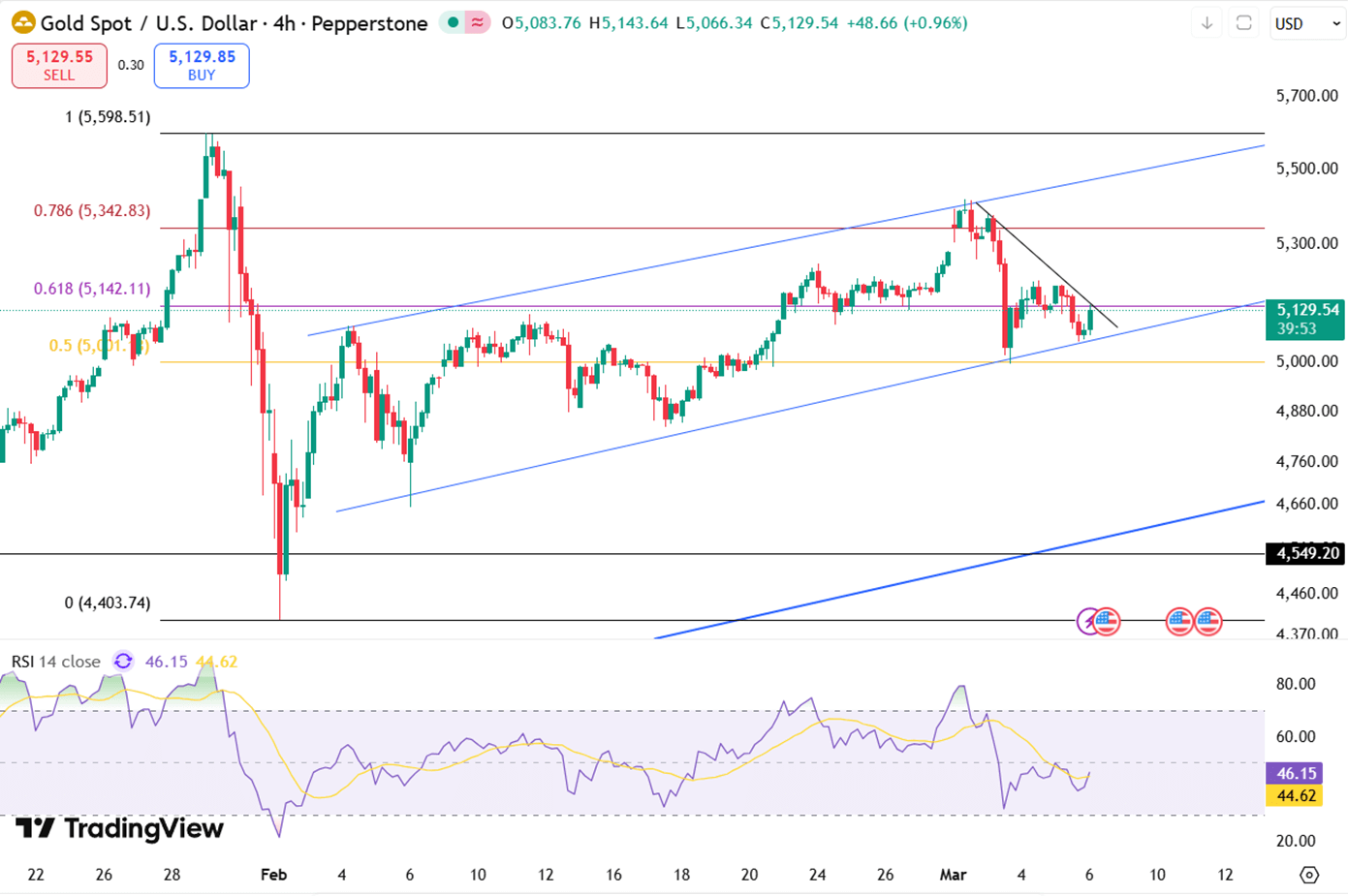
Gold traded near $5,080 per ounce on Friday, marking its first weekly decline in over a month. A strengthening U.S. dollar and higher Treasury yields outweighed safe-haven demand from the Middle East conflict. Surging oil prices have fueled inflation fears, prompting traders to trim expectations for Federal Reserve rate cuts. Strong U.S. economic data, including low jobless claims and strong services growth, further supported the Dollar and pressured the precious metal.
Gold sees support near $5200, while resistance is around $5050.
| R1: 5200 | S1: 5050 |
| R2: 5300 | S2: 5000 |
| R3: 5370 | S3: 4920 |
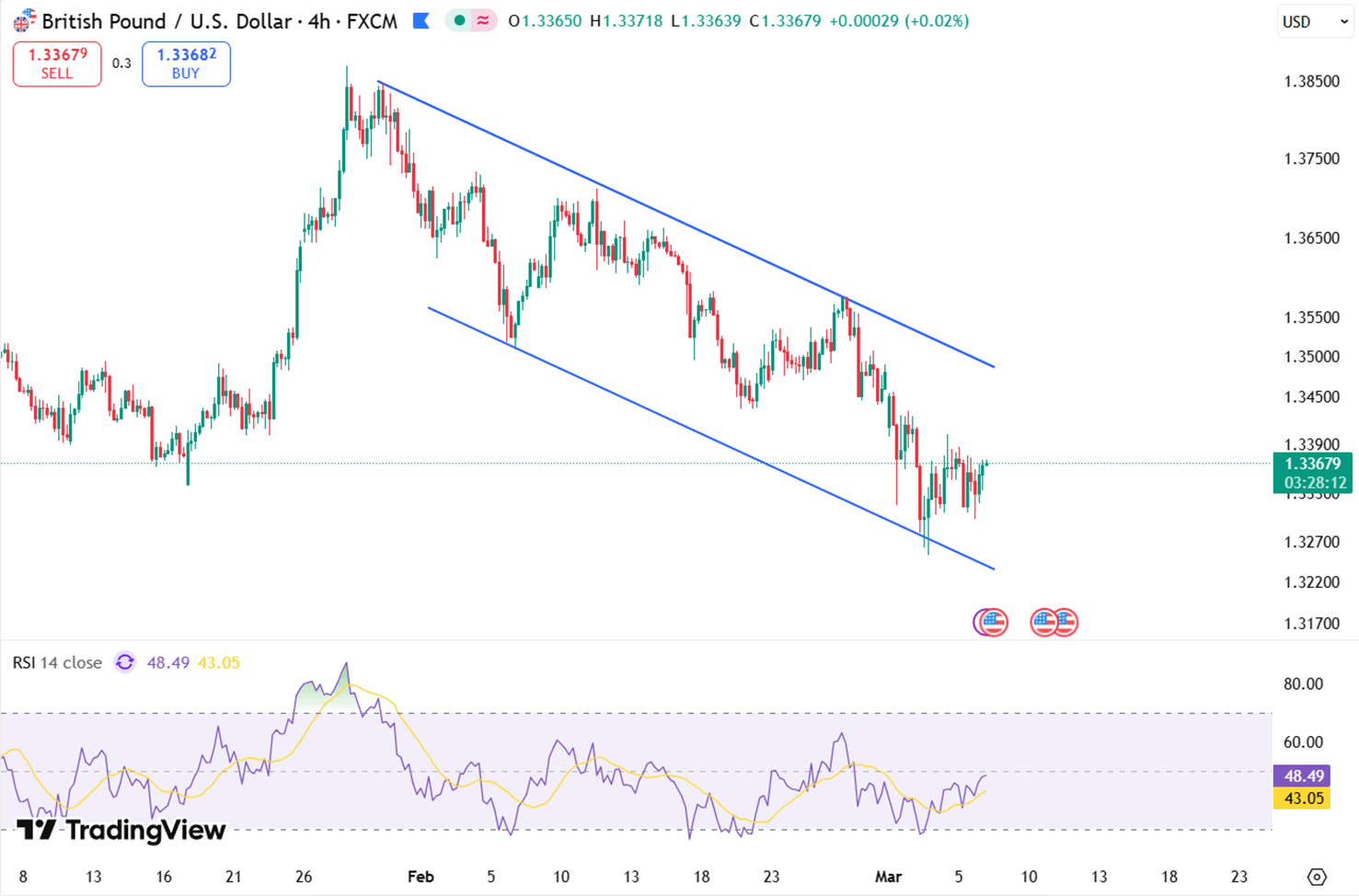
The British pound traded near $1.335 on Friday, hovering around its lowest level since early December. Sterling remains pressured by escalating Middle East tensions, including a U.S. submarine sinking an Iranian warship and NATO intercepting a missile over Turkey. These geopolitical risks, alongside surging energy costs and downgraded UK growth forecasts, have dampened expectations for near-term Bank of England rate cuts as inflation concerns mount.
From a technical view, support stands near 1.3280, with resistance around 1.3450.
| R1: 1.3450 | S1: 1.3280 |
| R2: 1.3530 | S2: 1.3140 |
| R3: 1.3580 | S3: 1.3030 |
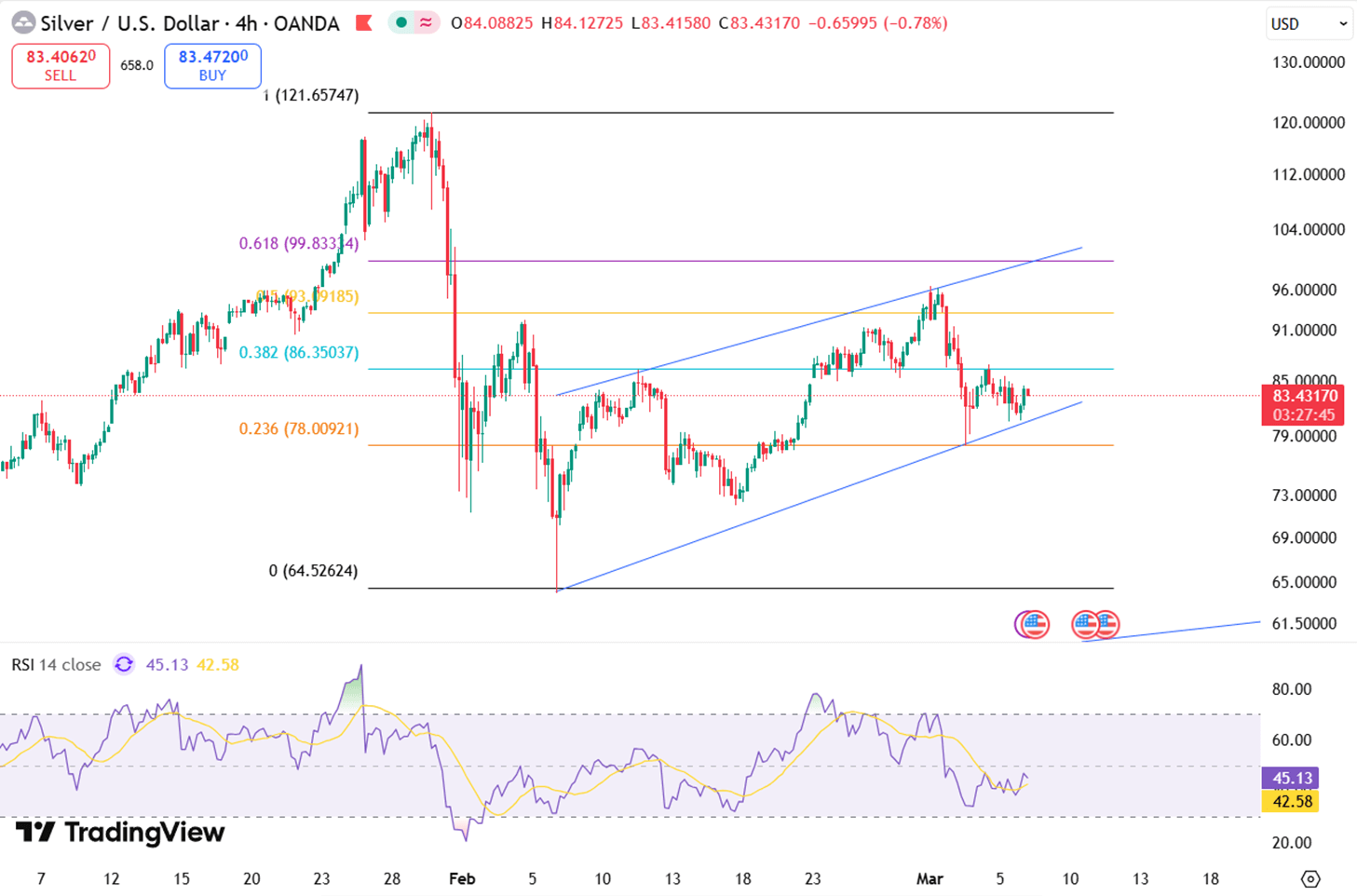
Silver climbed toward $84 per ounce as the broader precious metals complex recovered, although the metal still faced a weekly drop of more than 10%. Demand for the US dollar strengthened as the conflict in the Middle East intensified and inflation risks increased. Higher oil prices and resilient US economic indicators reinforced expectations that the Federal Reserve may postpone interest rate cuts, supporting the dollar and limiting gains in alternative safe-haven assets.
From a technical view, resistance stands near $86.80 while support is located around $81.50.
| R1: 86.80 | S1: 81.50 |
| R2: 88.40 | S2: 79.30 |
| R3: 91.50 | S3: 77.50 |
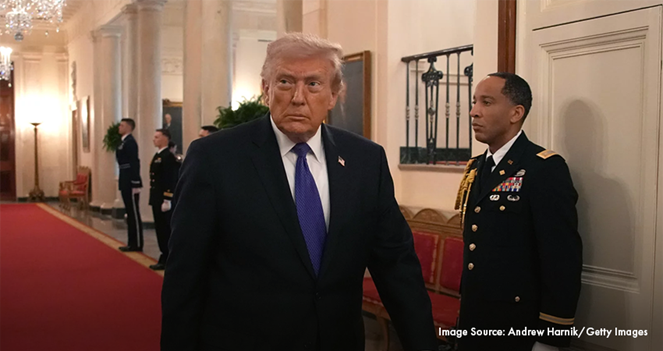 Trump Signals Extended Military Campaign
Geopolitical tensions in the Middle East have intensified following recent remarks from Donald Trump suggesting that the ongoing military campaign against Iran may last longer than anticipated. While Trump stated that early operational objectives were achieved ahead of schedule, he acknowledged that broader strategic goals could require additional time and sustained military pressure.
Detail US DST Change March 8 2026
Daylight Saving Time will change in the United States on Sunday, March 8, 2026. The trading schedule for various financial instruments will be adjusted to align with U.S. exchange hours.
DetailThen Join Our Telegram Channel and Subscribe Our Trading Signals Newsletter for Free!
Join Us On Telegram!


