


Currency markets remained volatile as ongoing Middle East tensions continued to shape global sentiment.
The euro slipped to a three-month low near $1.156 as investors favored the safety of the U.S. dollar and rising energy prices fueled inflation concerns in the eurozone. Meanwhile, the Japanese yen recovered modestly on improved domestic data and easing oil pressure. Precious metals moved higher as the dollar softened, with gold rebounding toward $5,180 and silver recovering strongly after a brief drop. Sterling also remained under pressure near multi-month lows amid geopolitical tensions and shifting expectations for Bank of England policy.
| Time | Cur. | Event | Forecast | Previous |
| 177.4B | 114.11B | |||
14:00 | USD | Existing Home Sales (Feb) | 3.89M | 3.91M |
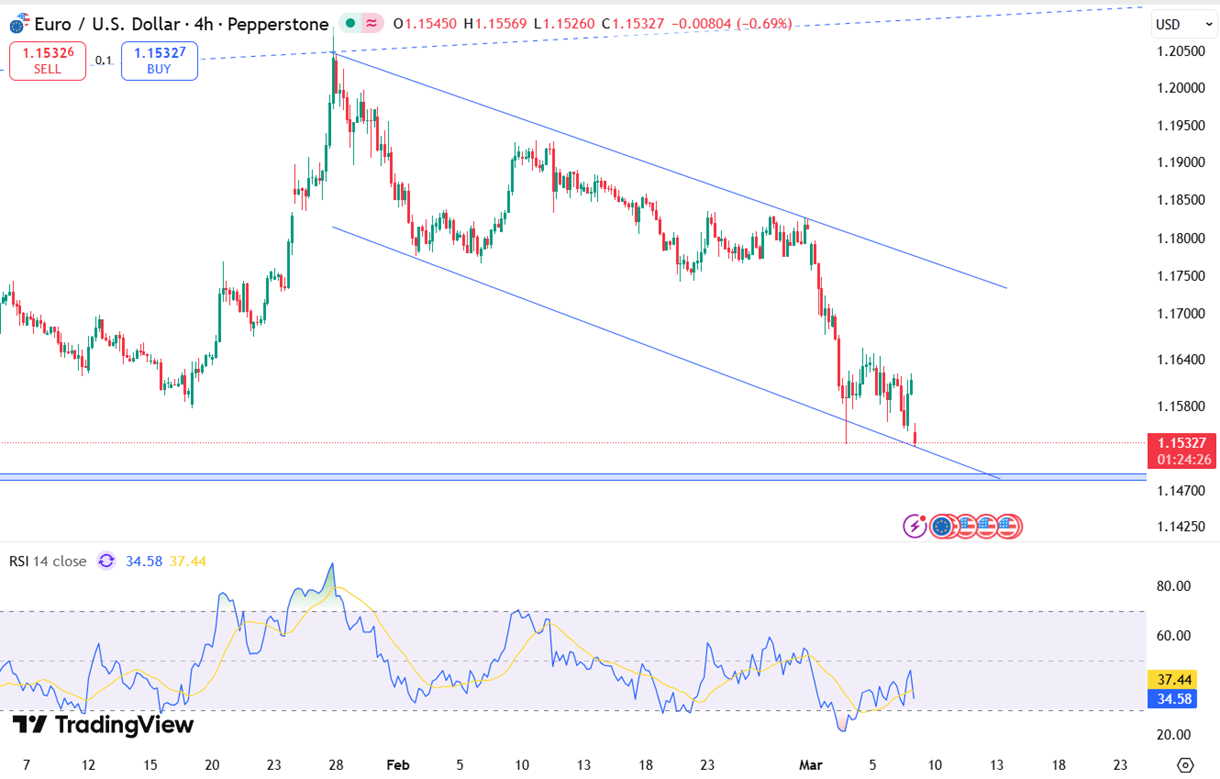
On Tuesday, the euro dropped to $1.156, a three-month low, as investors favored the US dollar amid persistent Middle East conflict. Surging energy costs have intensified eurozone inflation fears, prompting ECB official Isabel Schnabel to warn against complacency. Market expectations have shifted significantly as a result; swap markets now price in two 25-basis-point rate hikes this year, doubling the forecast from just last Friday.
For EUR/USD, the initial resistance is seen at 1.1580, while the closest support is positioned at 1.1480.
| R1: 1.1650 | S1: 1.1480 |
| R2: 1.1690 | S2: 1.1420 |
| R3: 1.1710 | S3: 1.1350 |
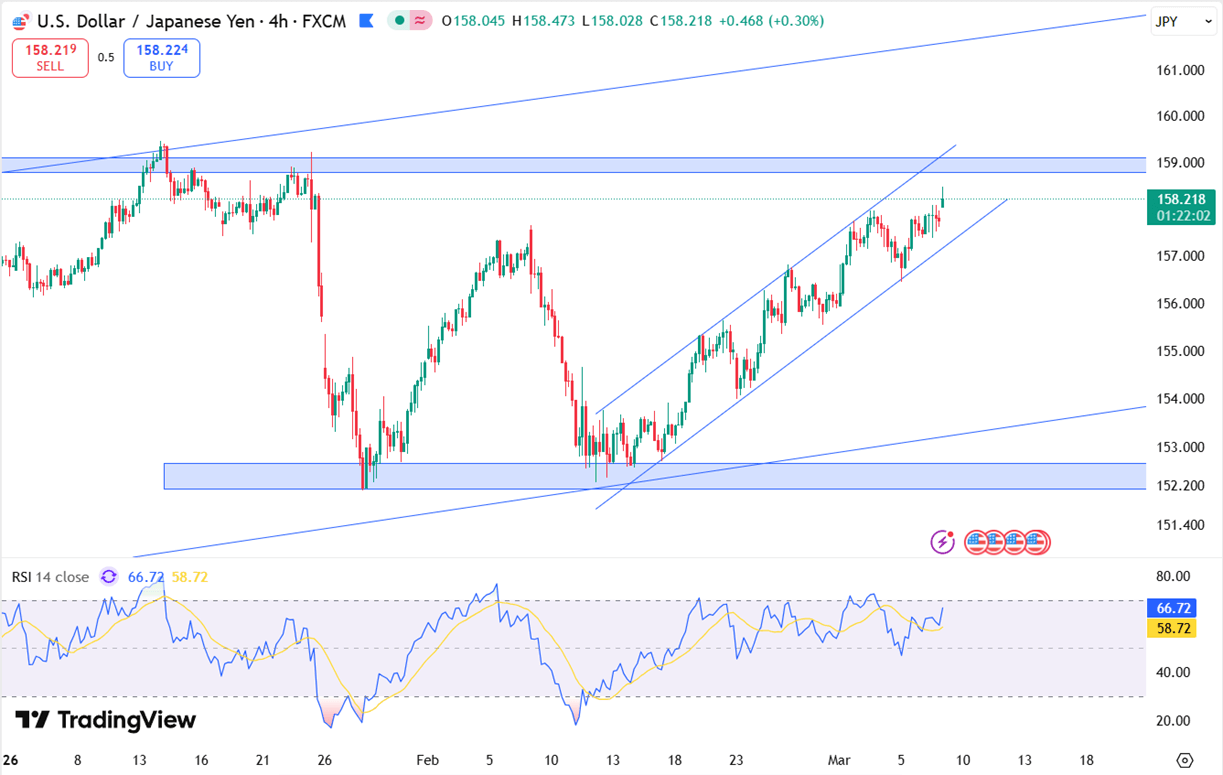
The Japanese yen strengthened to 157.6 per dollar after nearly hitting 159. Easing energy prices provided relief to Japan’s oil-dependent economy, while cooling dollar demand supported the recovery. Furthermore, strong domestic indicators, including a revised 0.3% Q4 GDP growth and rising real wages, have reinforced the Bank of Japan’s path toward continued policy normalization.
Technically, resistance stands near 159.00, while support is firm at 157.70.
| R1: 159.00 | S1: 157.50 |
| R2: 159.40 | S2: 157.00 |
| R3: 159.80 | S3: 156.40 |
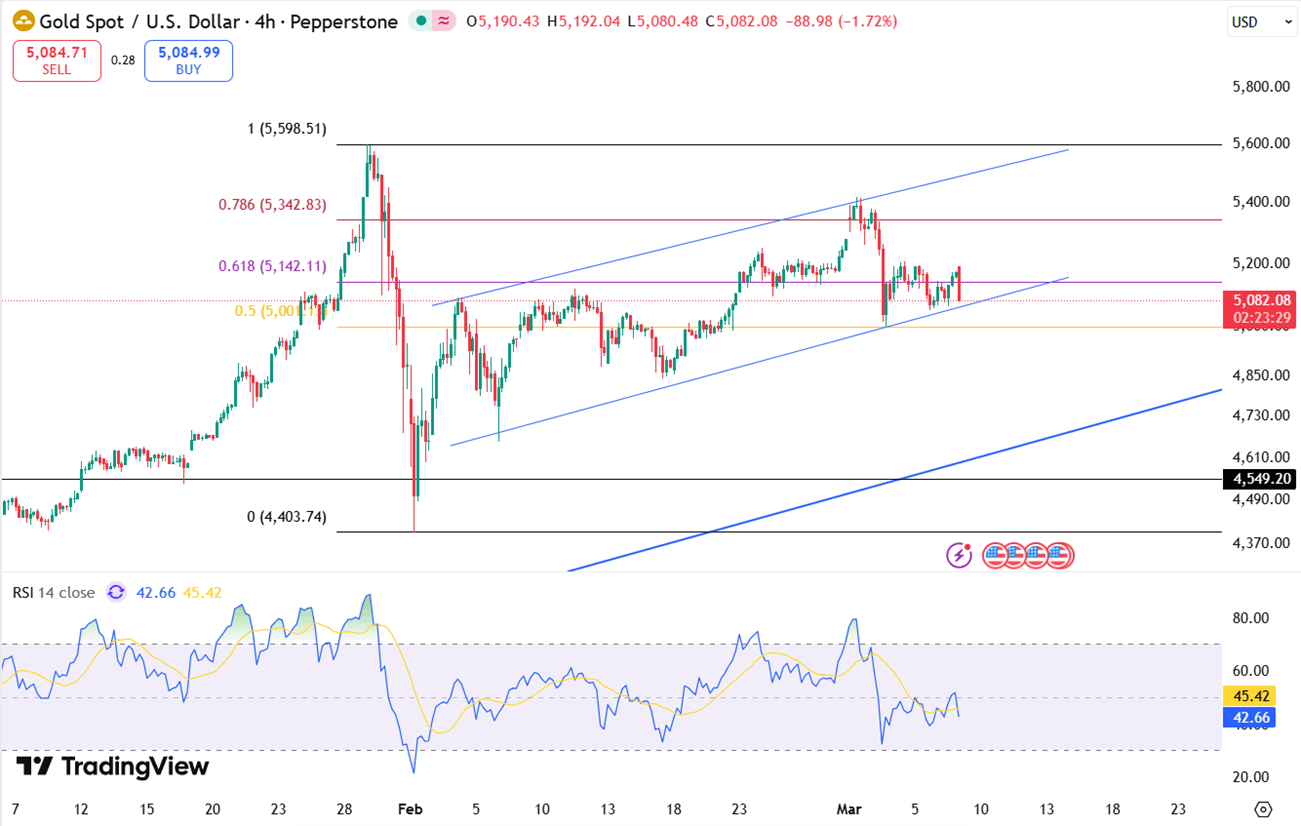
Gold climbed to approximately $5,180 per ounce, recovering from earlier losses. The dollar’s retreat and optimism over a potential end to the Iran conflict drove the rebound. Market participants now look to upcoming US CPI and PCE data for insight into Fed monetary policy.
Gold sees support near $5000, while resistance is around $5210.
| R1: 5200 | S1: 5090 |
| R2: 5230 | S2: 4910 |
| R3: 5270 | S3: 4840 |
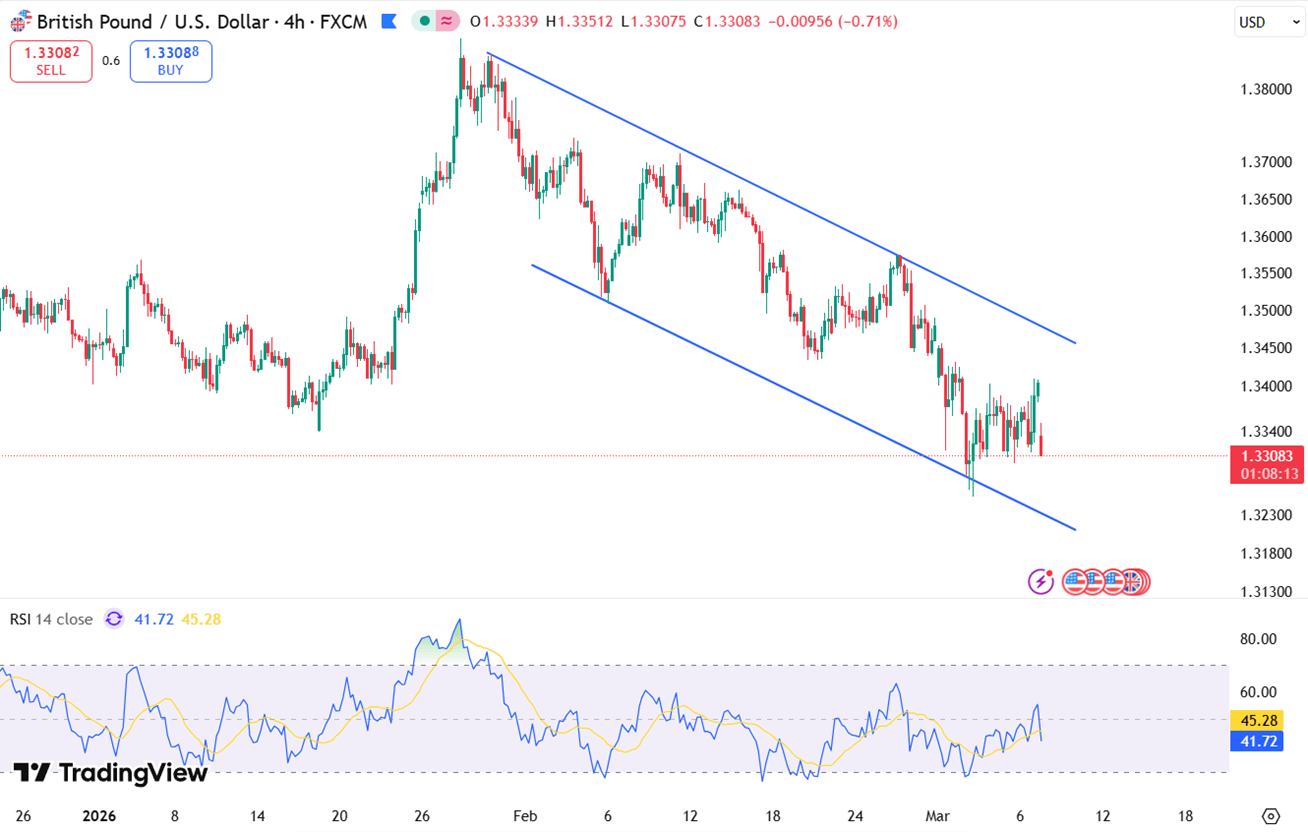
Sterling fell to $1.33, a three-month low, pressured by a surging US dollar and UK political friction. The dollar gained from safe-haven flows after President Trump demanded Iran’s unconditional surrender. Meanwhile, rising energy costs have led markets to price in a 70% chance of a Bank of England rate hike. The pound also faced pressure as Prime Minister Keir Starmer prioritized diplomatic solutions over joining initial US-Israel strikes. Trump dismissed UK plans to deploy HMS Prince of Wales, labeling Britain a “once great ally,” despite recent talks between the leaders.
From a technical view, support stands near 1.3400, with resistance around 1.3250.
| R1: 1.3500 | S1: 1.3250 |
| R2: 1.3530 | S2: 1.3140 |
| R3: 1.3580 | S3: 1.3030 |
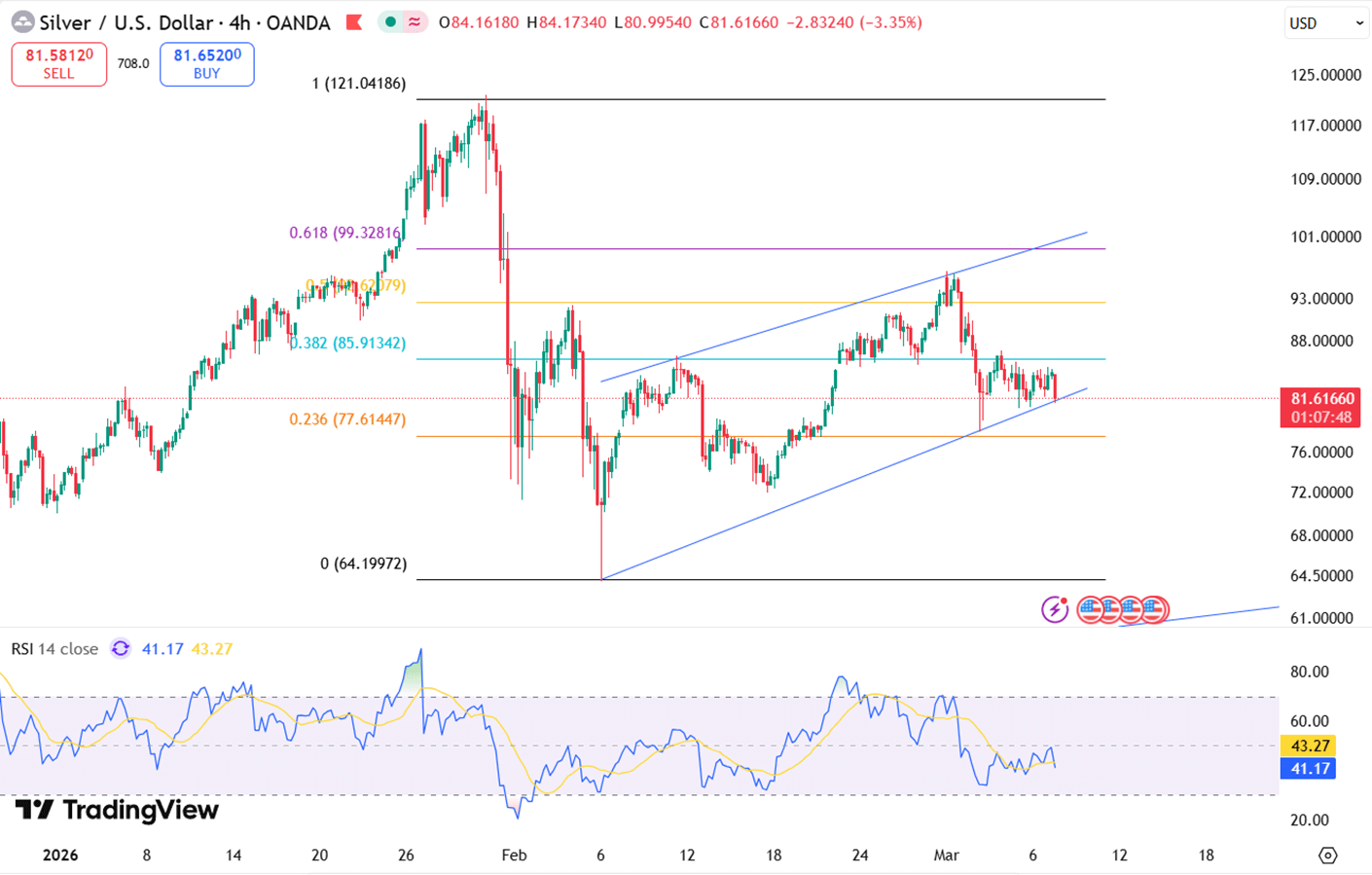
Silver climbed to approximately $89 per ounce, recovering from a brief dip below $80. This rebound was fueled by a softening US dollar and growing optimism for a swift resolution to Middle East tensions. Additionally, President Trump’s comments regarding easing oil-related pressures further supported the metal's gains.
From a technical view, resistance stands near $81.50 while support is located around $78.00.
| R1: 90.00 | S1: 85.00 |
| R2: 92.20 | S2: 80.30 |
| R3: 95.50 | S3: 77.40 |
 US Inflation Hits 3.7% as Energy Prices Surge
September’s inflation report reveals new price pressures across the US economy.
Detail Dollar Retreat Supports Metals (10.15.2026)A softer US dollar and declining Treasury yields offered some relief to financial markets as Federal Reserve officials signaled a willingness to pause rate adjustments.
Houthi missile attacks on Saudi Aramco and stepped-up Iranian strikes on tankers in Hormuz deepened worries over supply, while the IMF flagged threats to global growth from the Middle East conflict, high debt levels and a potential AI-boom reversal.
DetailThen Join Our Telegram Channel and Subscribe Our Trading Signals Newsletter for Free!
Join Us On Telegram!


