




The euro surged to a five-year high above 1.2050 as broad dollar weakness accelerated on renewed tariff threats and President Trump’s support for a weaker currency.
The yen held firm on speculation of coordinated U.S.–Japan intervention, while gold and silver pushed to fresh record levels amid trade friction, policy uncertainty, and strong safe-haven demand. Sterling also advanced toward multi-month highs as risk appetite remained resilient.
| Time | Cur. | Event | Forecast | Previous |
15:30 | USD | Cushin Crude Oil Inventories | 1.478M | |
19:00 | USD | FED Interst Rate Decision | 3.75% | 3.75% |
19:30 | USD | FOMC Press Conference |
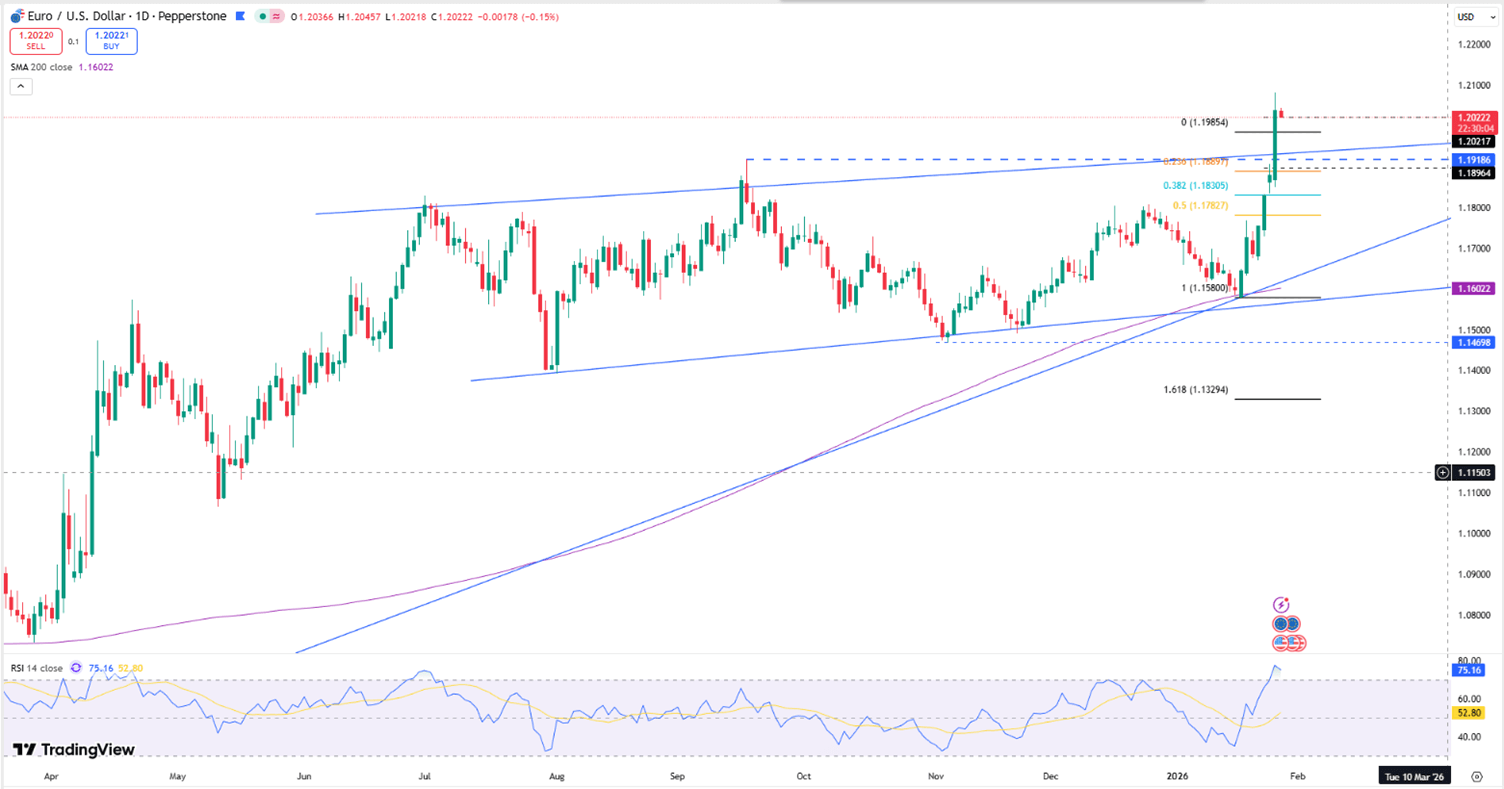
EUR/USD surged past 1.2050 on Tuesday, marking a five year peak as the U.S. dollar index tumbled to its lowest level since early 2022. The greenback’s slide accelerated after President Trump indicated he was comfortable with a weaker currency to favor the real economy. Simultaneously, his threat to hike tariffs on South Korea to 25% fueled a "sell America" trade, while the ECB’s commitment to policy stability provided a firm floor for the euro's momentum.
Momentum remains constructive, with 1.1950 in focus on the upside, while 1.1810 defines nearby support.
| R1: 1.1950 | S1: 1.1810 |
| R2: 1.2000 | S2: 1.1760 |
| R3: 1.2050 | S3: 1.1680 |
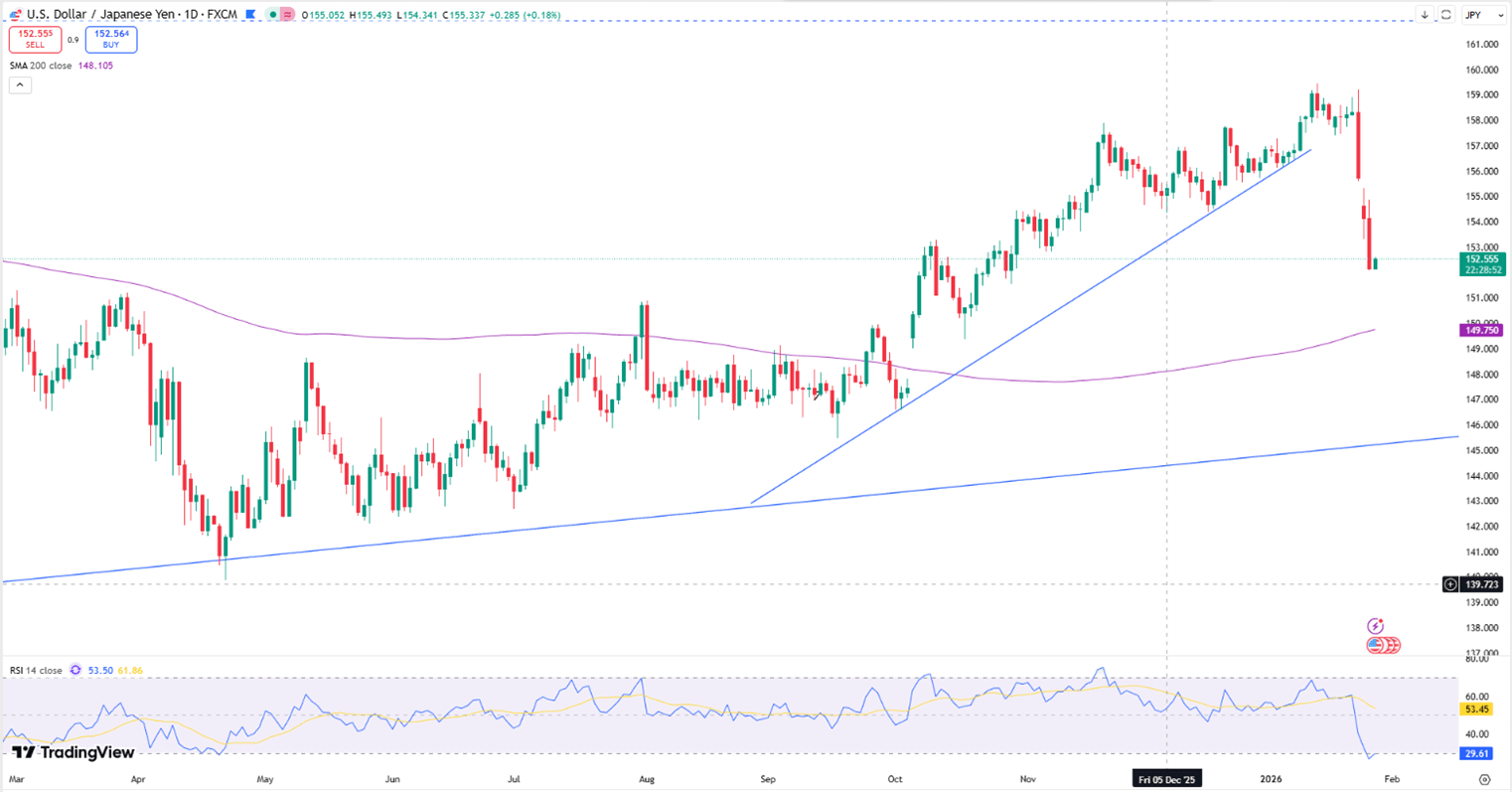
The Japanese yen traded near 152.5 per dollar on Wednesday, maintaining its strongest levels in three months after a nearly 4% gain this week. This rally stems from intense speculation that Tokyo and Washington are planning a coordinated currency intervention. Market jitters grew after the New York Fed conducted "rate checks" with dealers, a move Japanese officials suggested reflects close exchange rate cooperation with the U.S.
Technically, resistance stands near 153.20, while support is firm at 152.50.
| R1: 153.20 | S1: 152.50 |
| R2: 153.90 | S2: 151.80 |
| R3: 155.10 | S3: 150.40 |
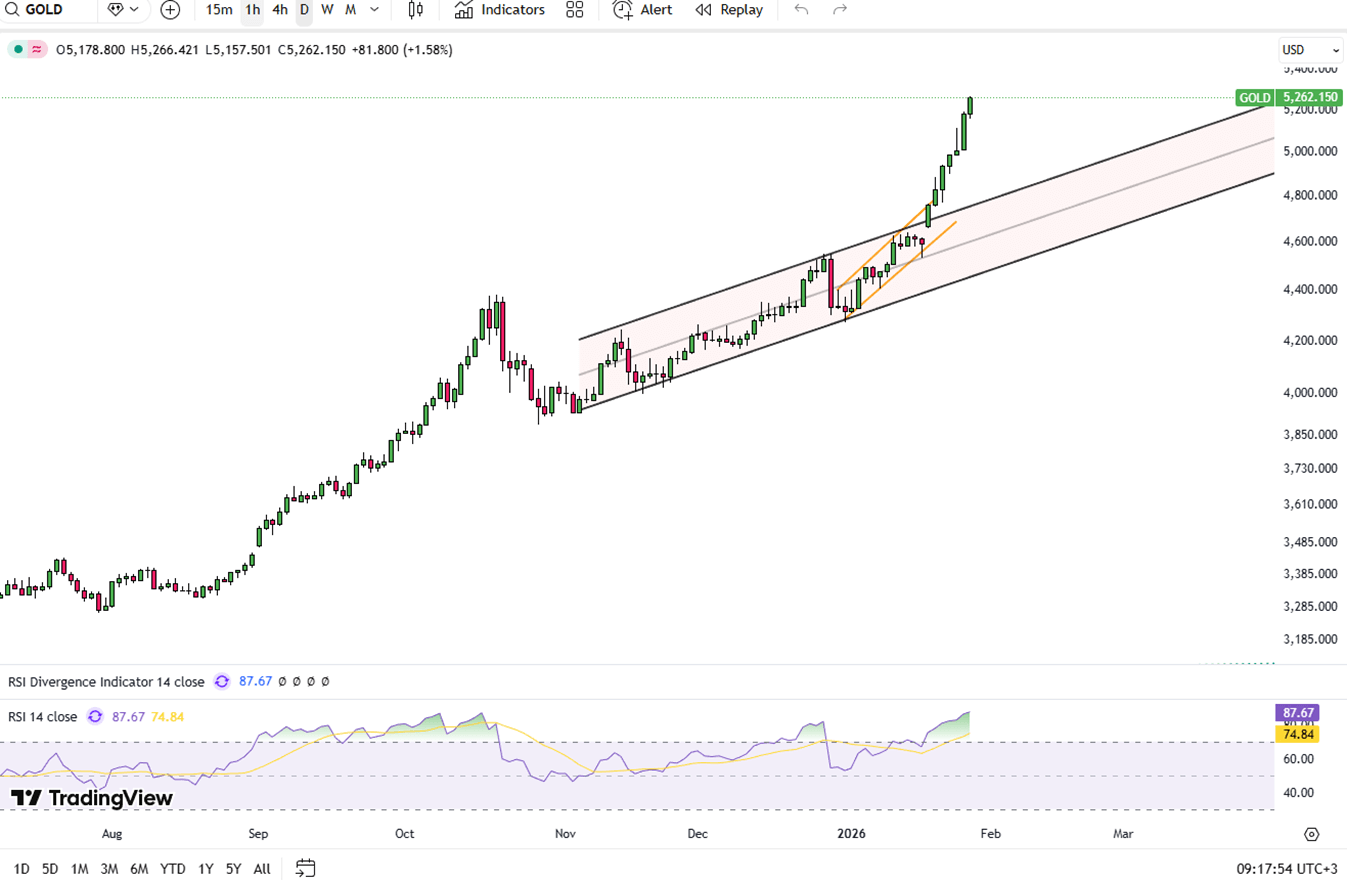
Gold prices hit a historic high above $5,200 on Wednesday as a tumbling dollar sparked a rush for safe haven assets. The rally accelerated after President Trump dismissed concerns over the greenback's four year low, expressing comfort with a weaker currency to aid exports. This nonchalant stance, combined with heightened trade friction and questions regarding the Federal Reserve’s independence, has driven gold up 18% this month alone.
Support sits near $5,247, with $5,148 as the next upside reference.
| R1: 5247 | S1: 5148 |
| R2: 5300 | S2: 5110 |
| R3: 5350 | S3: 5075 |
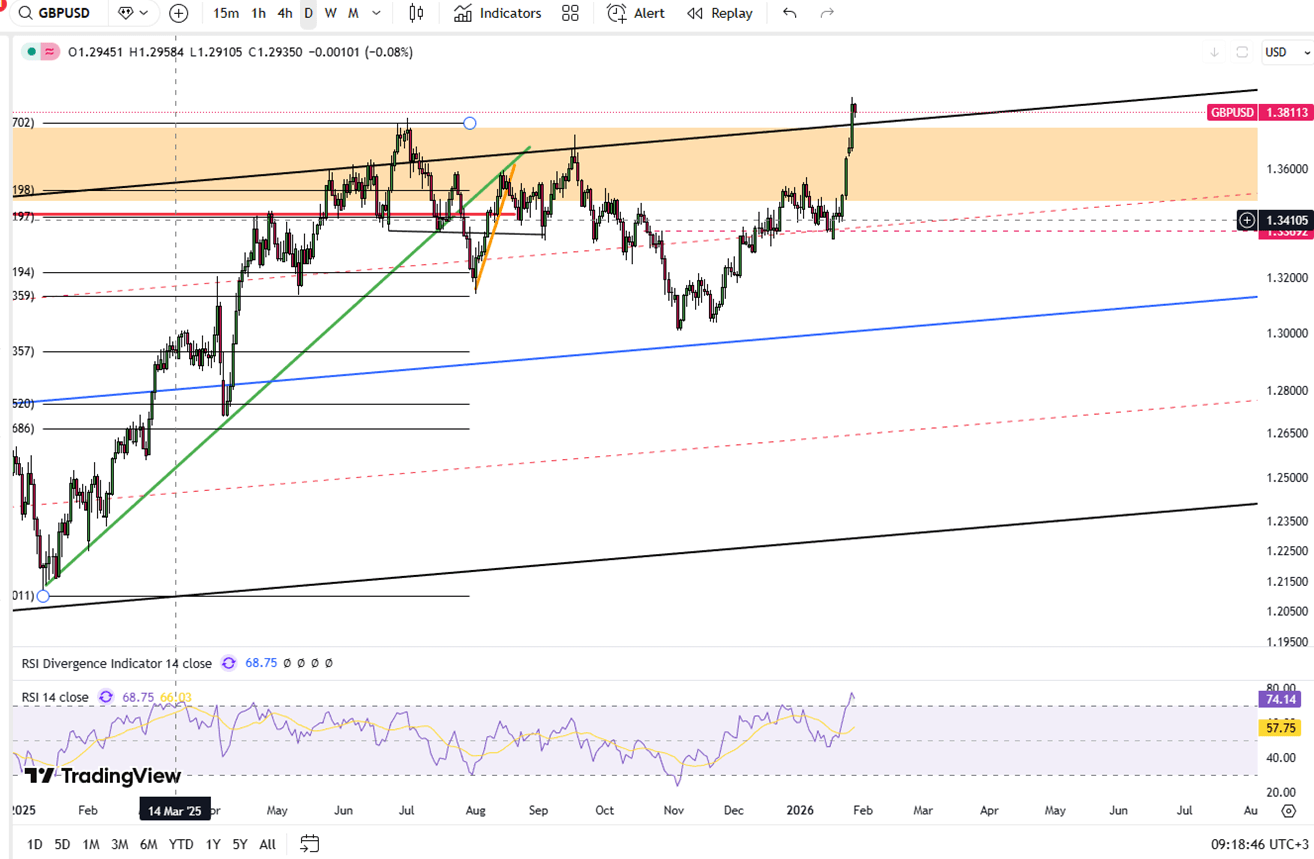
The British pound rose on Monday, testing 1.3850 for the first time since September. While the Trump administration threatened European nations with new tariffs over the Greenland dispute, markets remained optimistic that the rhetoric would de-escalate. This resilience helped the pound sustain its momentum despite lingering geopolitical uncertainty.
From a technical view, support stands near 1.3770, with resistance around 1.3800.
| R1: 1.3800 | S1: 1.3770 |
| R2: 1.3850 | S2: 1.3710 |
| R3: 1.3900 | S3: 1.3620 |
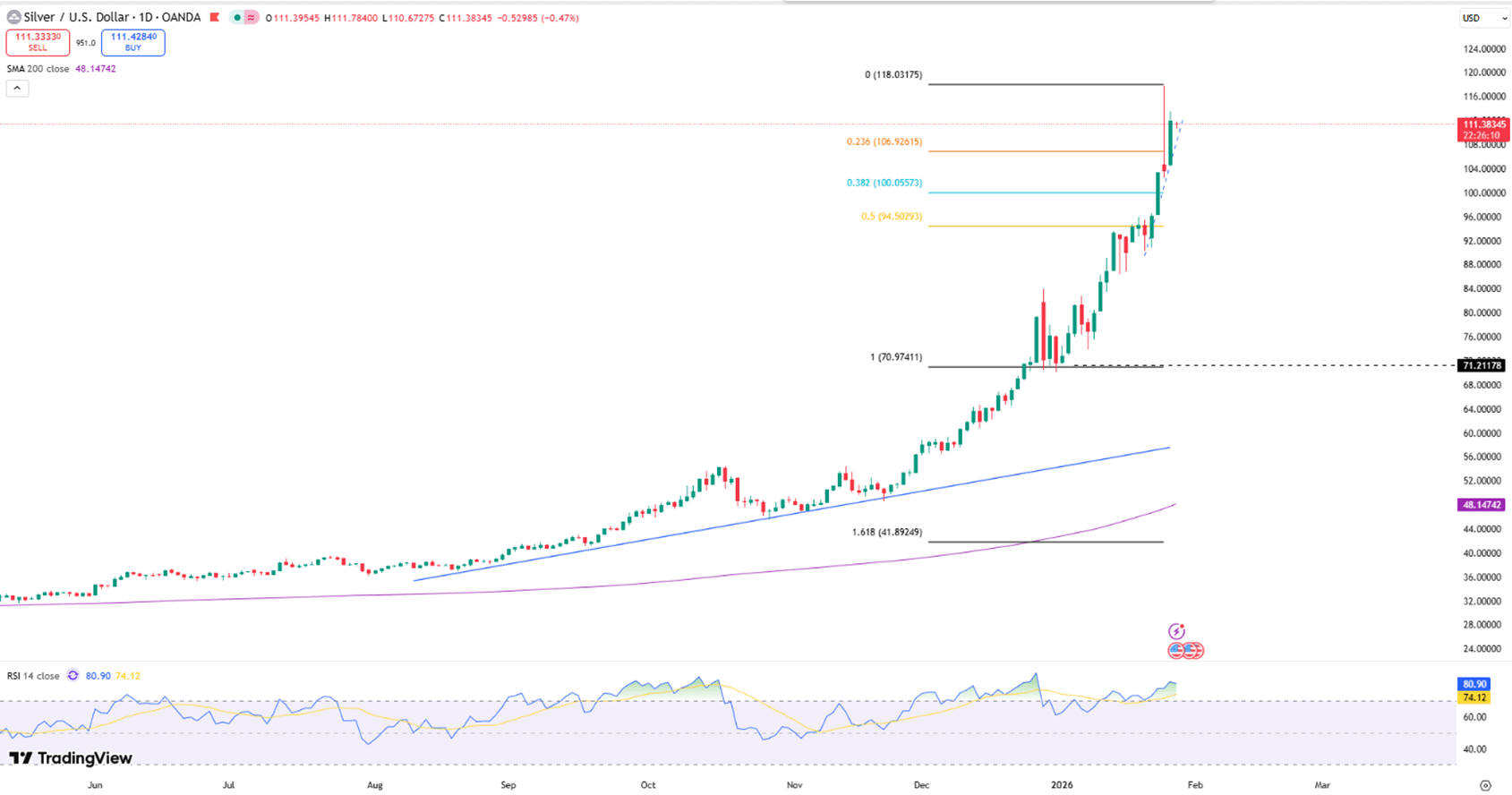
Silver climbed toward $115 an ounce on Wednesday, hitting fresh records as the dollar slid to a four-year low and investors piled into safe-haven metals. The move accelerated after President Trump downplayed dollar weakness, signaling support for a softer currency to support US exports. Policy uncertainty, including tariff threats and concerns over Fed independence, added momentum. In China, strong demand forced a major silver fund to halt trading after its premium surged. Ongoing supply deficits, Beijing’s export curbs, and heavy buying have lifted silver about 59% year to date.
From a technical view, resistance stands near $114.40, while support is located around $113.50.
| R1: 114.40 | S1: 113.50 |
| R2: 115.50 | S2: 111.60 |
| R3: 116.00 | S3: 111.00 |
The dollar index stabilized near 98.8 Thursday as a reported U.S. submarine sinking of an Iranian warship near Sri Lanka and the sixth day of the U.S.–Israeli campaign fueled fears of a prolonged, inflationary conflict.
Global markets remain dominated by geopolitical risk as escalating conflict between the United States, Israel, and Iran fuels a strong shift toward safe-haven assets. The dollar index hit 99.3 Wednesday, rising for a third day as conflict concerns fueled inflation and shifted Fed rate cut expectations from July to September.
A US court rejected Trump's tariff refund delay as the Dollar (98.5) and 10 year yield (4.04%) held gains amid Middle East escalation and inflation fears.
Then Join Our Telegram Channel and Subscribe Our Trading Signals Newsletter for Free!
Join Us On Telegram!


