


A US court rejected Trump's tariff refund delay as the Dollar (98.5) and 10 year yield (4.04%) held gains amid Middle East escalation and inflation fears.
Global markets shifted firmly into risk-off mode as escalating Middle East tensions drove investors toward safe-haven assets. The US dollar strengthened sharply on heightened geopolitical risk and surging energy prices, weighing on major currencies including the euro, yen, and pound. EUR/USD slipped below 1.1700 as evacuation orders and oil supply threats lifted inflation concerns, while the yen weakened despite renewed intervention rhetoric and mixed signals from Japanese policymakers. Precious metals remained volatile, with gold extending its rally on conflict-driven demand, even as silver lagged under the pressure of a stronger dollar and delayed Fed rate-cut expectations. Overall, geopolitical risk has overtaken macro fundamentals as the primary market driver.
| Time | Cur. | Event | Forecast | Previous |
| 10:00 | GBP | Spring Forecast Statement | ||
| 10:00 | EUR | CPI (YoY) (Feb) | 1.7% | 1.7% |
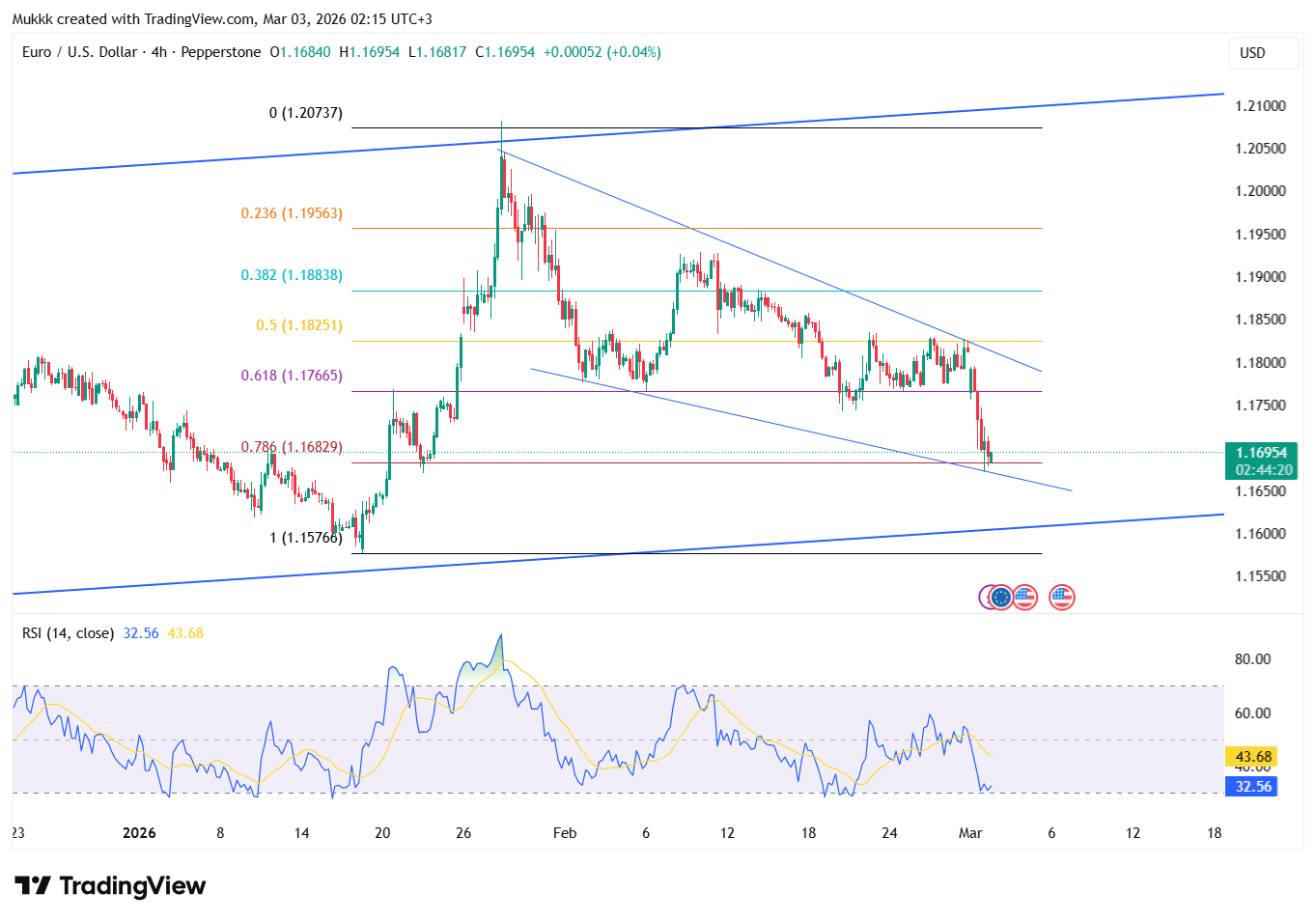
EUR/USD slipped below 1.1700 during Tuesday’s Asian session, trading near 1.1685 as the US Dollar strengthened on safe-haven demand. Heightened Middle East tensions, marked by urgent US evacuation orders, drove the Dollar higher. Also, surging oil prices fueled by military actions have raised expectations that the ECB may consider tighter policy to combat looming energy-driven inflation.
For EUR/USD, the initial resistance is seen at 1.1730, while the closest support is positioned at 1.1670.
| R1: 1.1730 | S1: 1.1670 |
| R2: 1.1770 | S2: 1.1630 |
| R3: 1.1830 | S3: 1.1580 |
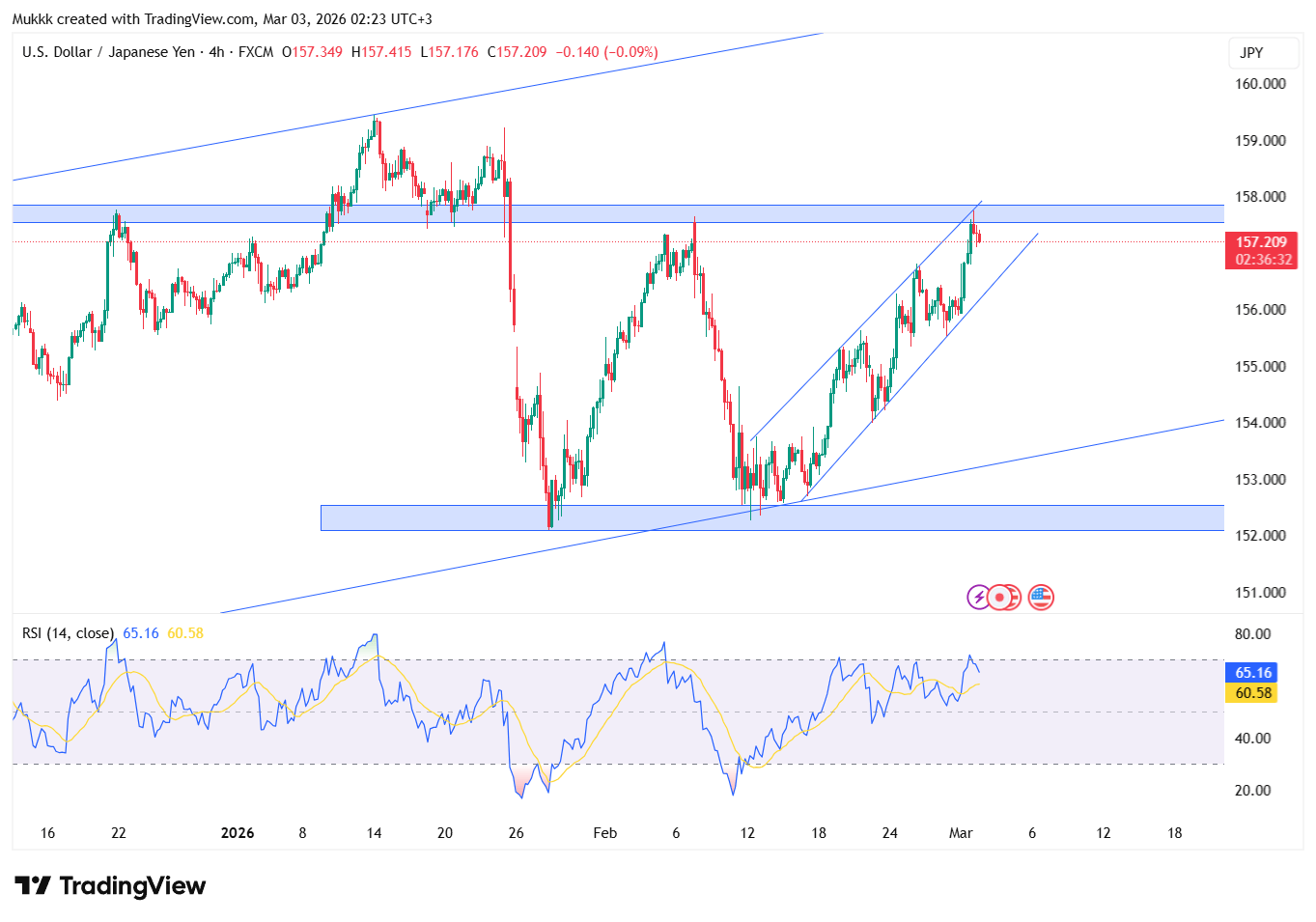
The Japanese Yen traded near 157.40 per dollar on Tuesday, pressured by rising energy costs following escalated Middle East tensions. Finance Minister Satsuki Katayama signaled that currency intervention remains an active option, emphasizing close coordination with the US. While Deputy Governor Ryozo Himino reaffirmed the Bank of Japan’s commitment to further rate hikes, he provided no specific timeline. Complicating the outlook, Prime Minister Sanae Takaichi expressed reservations about additional tightening, while the government appointed two reflationist academics to the BOJ board.
Technically, resistance stands near 157.80, while support is firm at 156.40.
| R1: 157.80 | S1: 156.40 |
| R2: 158.60 | S2: 155.20 |
| R3: 159.50 | S3: 154.50 |
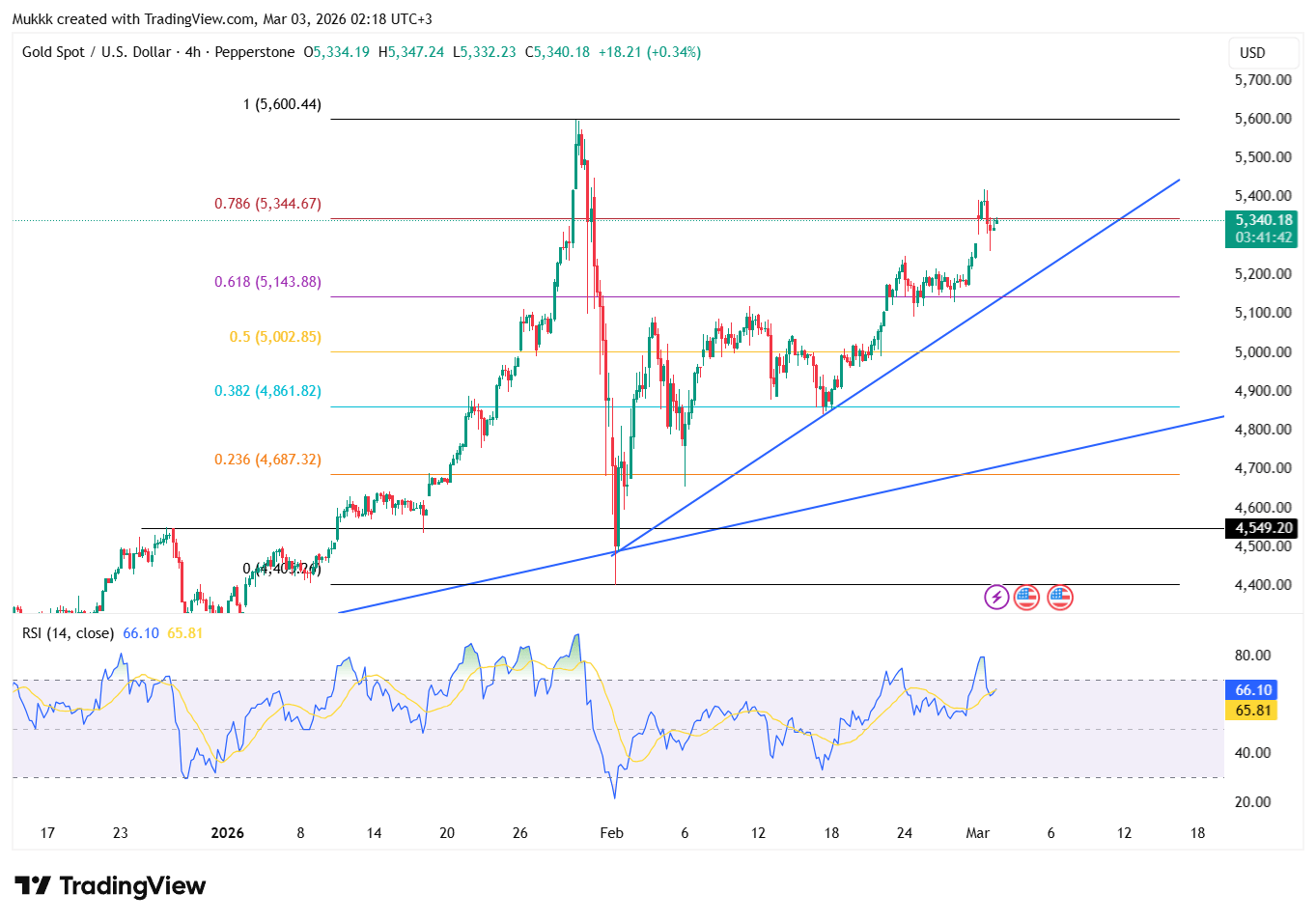
Gold climbed to $5,360 per ounce on Tuesday, marking its fifth straight daily gain as intensifying Middle East conflicts spurred safe-haven buying. President Trump signaled a prolonged military campaign, stating US strikes on Iran would persist until threats are neutralized. In response, Iran’s closure of the Strait of Hormuz and threats against maritime traffic sent oil prices surging, stoking US inflation fears. This geopolitical spike triggered a Treasury sell-off, leading markets to push back expectations for the next Federal Reserve rate cut until September.
Gold sees support near $5400, while resistance is around $5270.
| R1: 5400 | S1: 5270 |
| R2: 5480 | S2: 5200 |
| R3: 5570 | S3: 5130 |
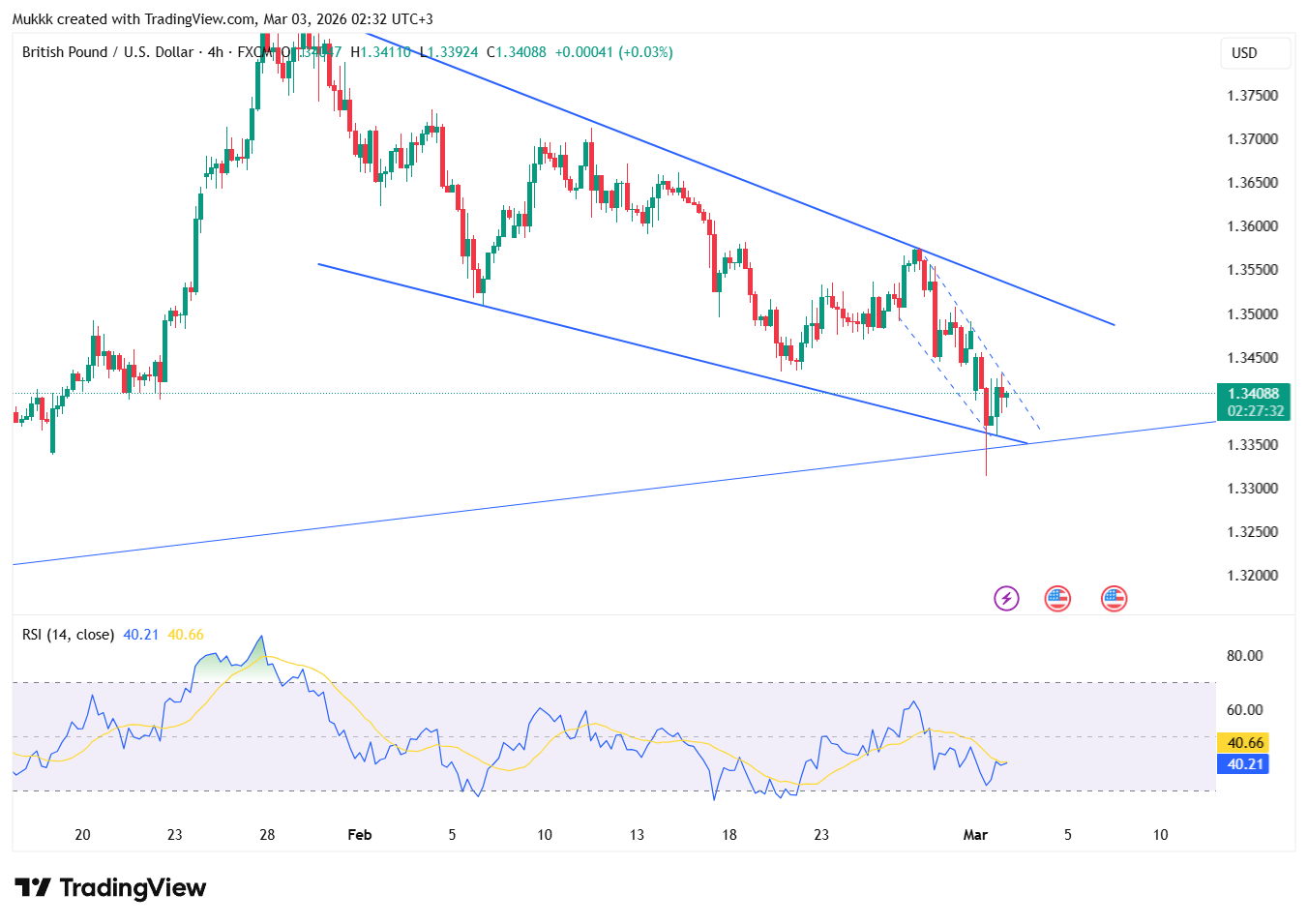
The British Pound plummeted to approximately 1.3300 in early March, reaching its lowest level since December 2025. This decline was driven by a surging US Dollar as investors sought safety following a dramatic escalation in Middle East hostilities. Over the weekend, joint US and Israeli strikes on Iran reportedly resulted in the death of Supreme Leader Ayatollah Ali Khamenei, triggering retaliatory Iranian attacks on US regional assets. Adding to the pound's troubles, the government's stability took a hit after Labour's shock by-election loss in Gorton and Denton, a seat that was supposed to be a sure win.
From a technical view, support stands near 1.3310, with resistance around 1.3480.
| R1: 1.3480 | S1: 1.3310 |
| R2: 1.3530 | S2: 1.3220 |
| R3: 1.3580 | S3: 1.3140 |
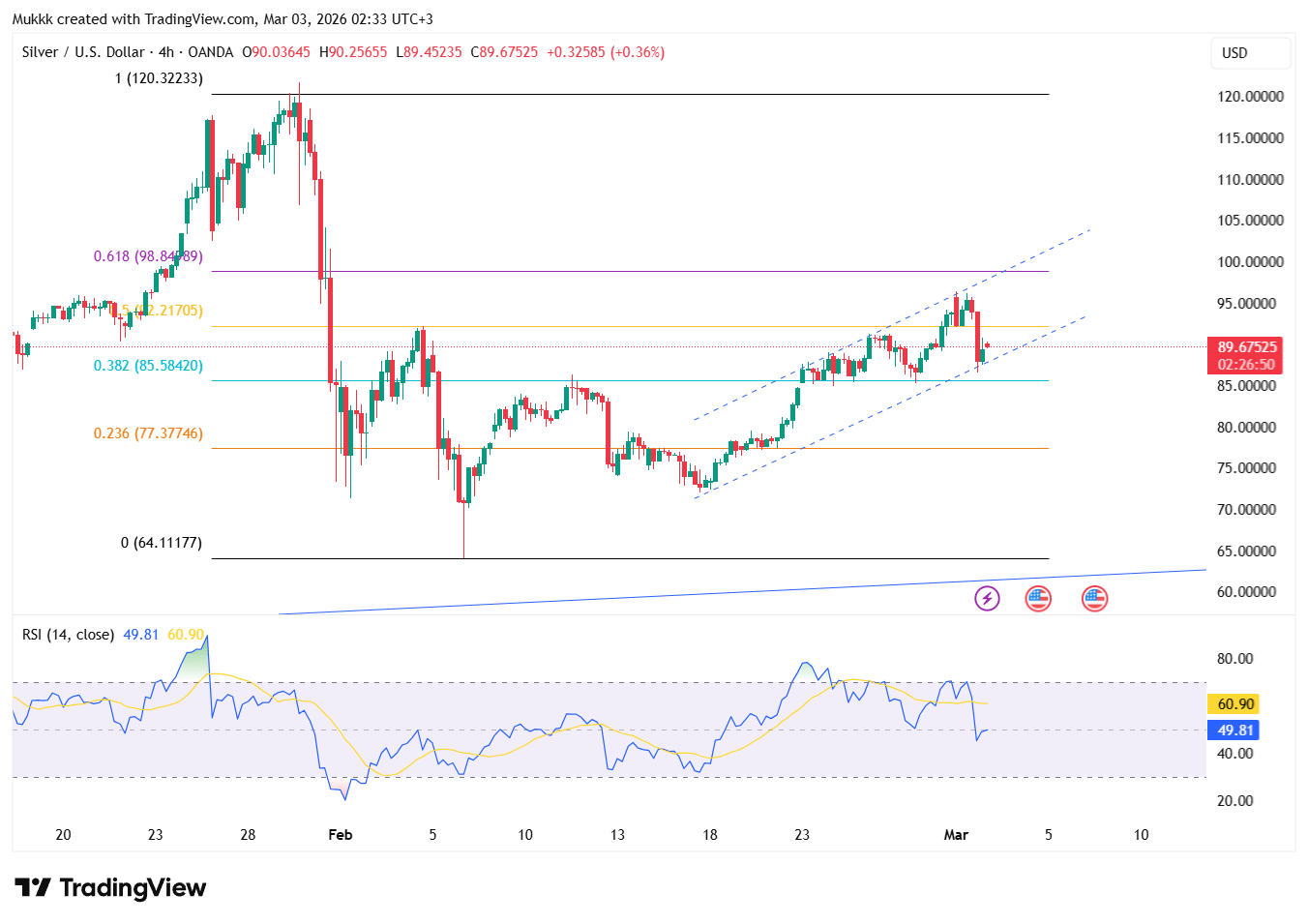
Silver remained below $90 on Tuesday, following a 5% drop as it underperformed other safe havens. A dominant US Dollar, supported by energy-driven inflation fears, weighed on the metal. Therefore, markets shifted the expected timeframe for the next Federal Reserve rate cut from July to September, though two 25-basis-point reductions are still projected for 2026. Geopolitical risks intensified as the US prepared to strike Iranian military facilities and Tehran threatened the Strait of Hormuz, halting vital tanker traffic.
From a technical view, resistance stands near $92.90 while support is located around $87.70.
| R1: 92.90 | S1: 87.70 |
| R2: 94.20 | S2: 85.30 |
| R3: 96.70 | S3: 83.20 |
 US Inflation Hits 3.7% as Energy Prices Surge
September’s inflation report reveals new price pressures across the US economy.
Detail Dollar Retreat Supports Metals (10.15.2026)A softer US dollar and declining Treasury yields offered some relief to financial markets as Federal Reserve officials signaled a willingness to pause rate adjustments.
Houthi missile attacks on Saudi Aramco and stepped-up Iranian strikes on tankers in Hormuz deepened worries over supply, while the IMF flagged threats to global growth from the Middle East conflict, high debt levels and a potential AI-boom reversal.
DetailThen Join Our Telegram Channel and Subscribe Our Trading Signals Newsletter for Free!
Join Us On Telegram!


