


Global markets remain dominated by geopolitical tensions and energy risks as the conflict in the Middle East continues to shape investor sentiment.
The U.S. dollar strengthened further, pushing the euro to a new yearly low near 1.1440, while the Japanese yen recovered slightly amid fears of possible government intervention near the 160 level. Precious metals remained under pressure, with gold hovering around the key $5,000 level and silver falling toward $80 as rising oil prices and inflation concerns dampened expectations for central bank rate cuts. Meanwhile, attention is shifting to a packed week of central bank meetings, where the Federal Reserve, ECB, Bank of England, and Bank of Canada are all expected to hold rates steady while providing guidance on inflation risks and future policy moves.
| Time | Cur. | Event | Forecast | Previous |
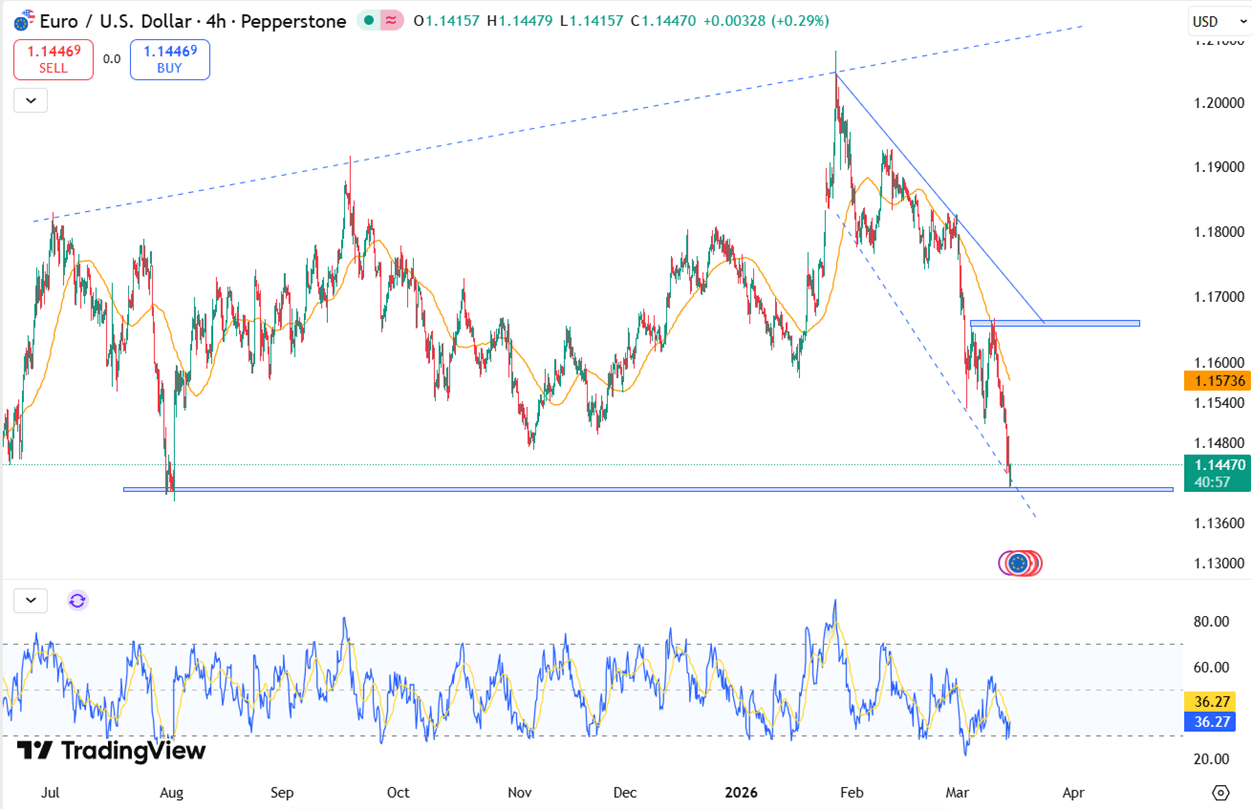
The EUR/USD remains under intense selling pressure near 1.1440, testing the 1.1430 mark for a new yearly low. A strengthening US dollar continues to draw investors as Middle East tensions sustain a climate of market caution.
For EUR/USD, the initial resistance is seen at 1.1510, while the closest support is positioned at 1.1400.
| R1: 1.1510 | S1: 1.1400 |
| R2: 1.1570 | S2: 1.1350 |
| R3: 1.1650 | S3: 1.1280 |
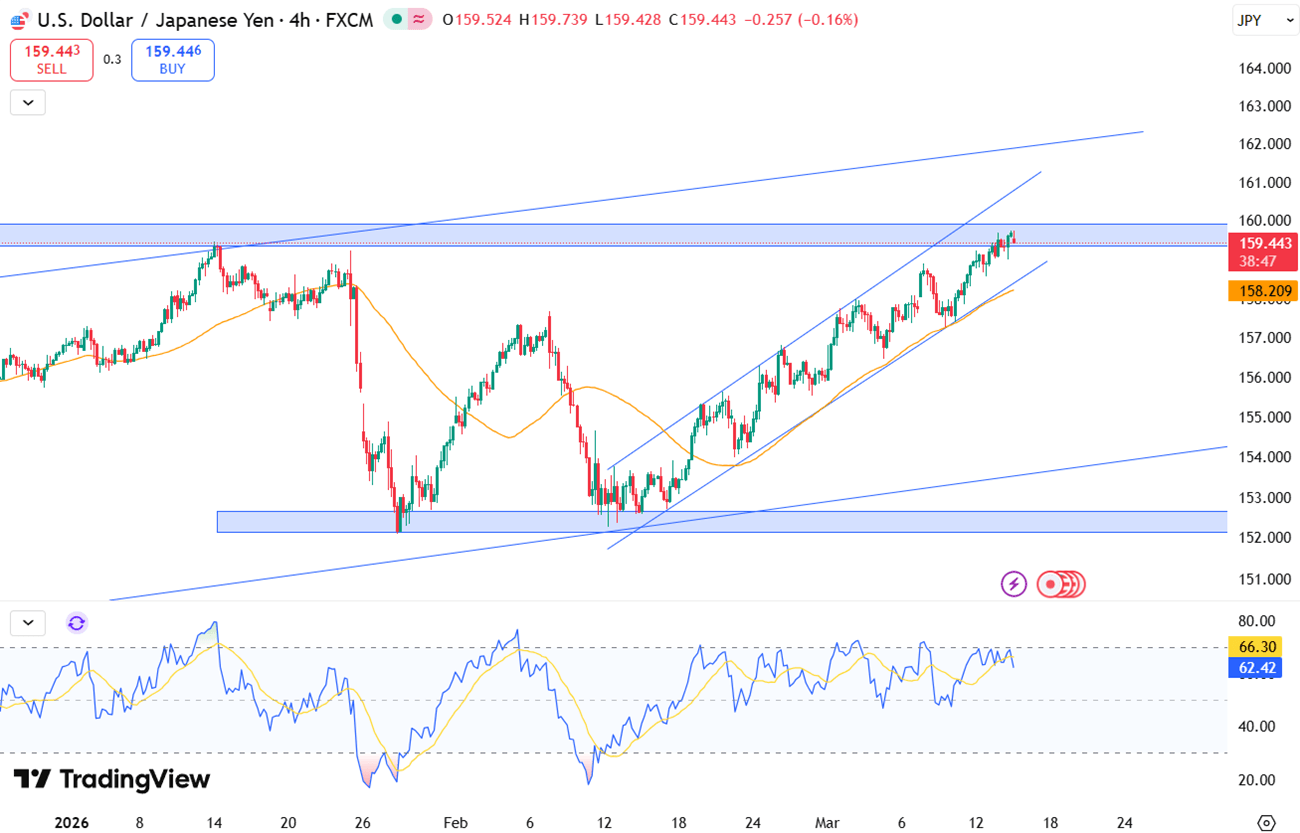
The Japanese yen strengthened past 159.5 per dollar on Monday, bouncing back as markets feared a slide beyond 160 would spark government intervention. Finance Minister Satsuki Katayama affirmed that authorities are prepared to take decisive action against excessive volatility. The yen previously suffered four weeks of losses, driven by Middle East hostilities and surging oil prices. While speculation grows regarding a U.S.-led coalition to escort vessels through the Strait of Hormuz, Japanese officials cautioned that the legal and political threshold for deploying warships to the region remains "extremely high."
Technically, resistance stands near 160.40, while support is firm at 158.30.
| R1: 160.40 | S1: 158.30 |
| R2: 161.30 | S2: 157.20 |
| R3: 162.10 | S3: 156.50 |
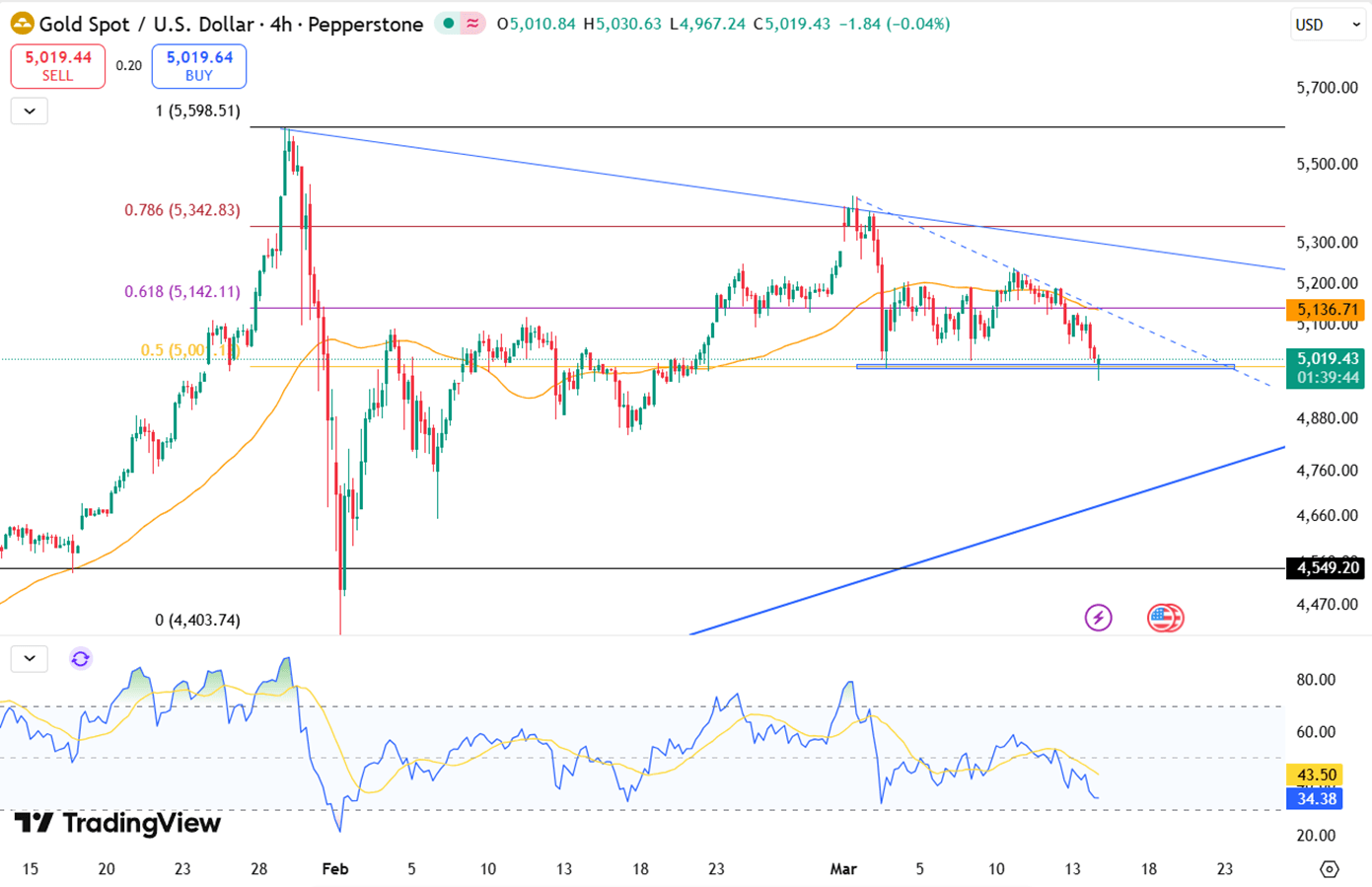
Gold traded near $5,000 per ounce, following two weeks of declines. Market volatility surged after a weekend U.S. strike on Iran’s Kharg Island oil facility, which triggered retaliatory Iranian attacks on Israel and regional energy hubs. As the conflict enters its third week, intensifying inflation and rising oil prices have dampened hopes for central bank rate cuts. These persistent inflationary pressures and higher-for-longer interest rate expectations continue to challenge gold's appeal as a non-yielding asset amid the ongoing geopolitical instability.
Gold sees support near $4950, while resistance is around $5120.
| R1: 5120 | S1: 4950 |
| R2: 5230 | S2: 4910 |
| R3: 5340 | S3: 4850 |
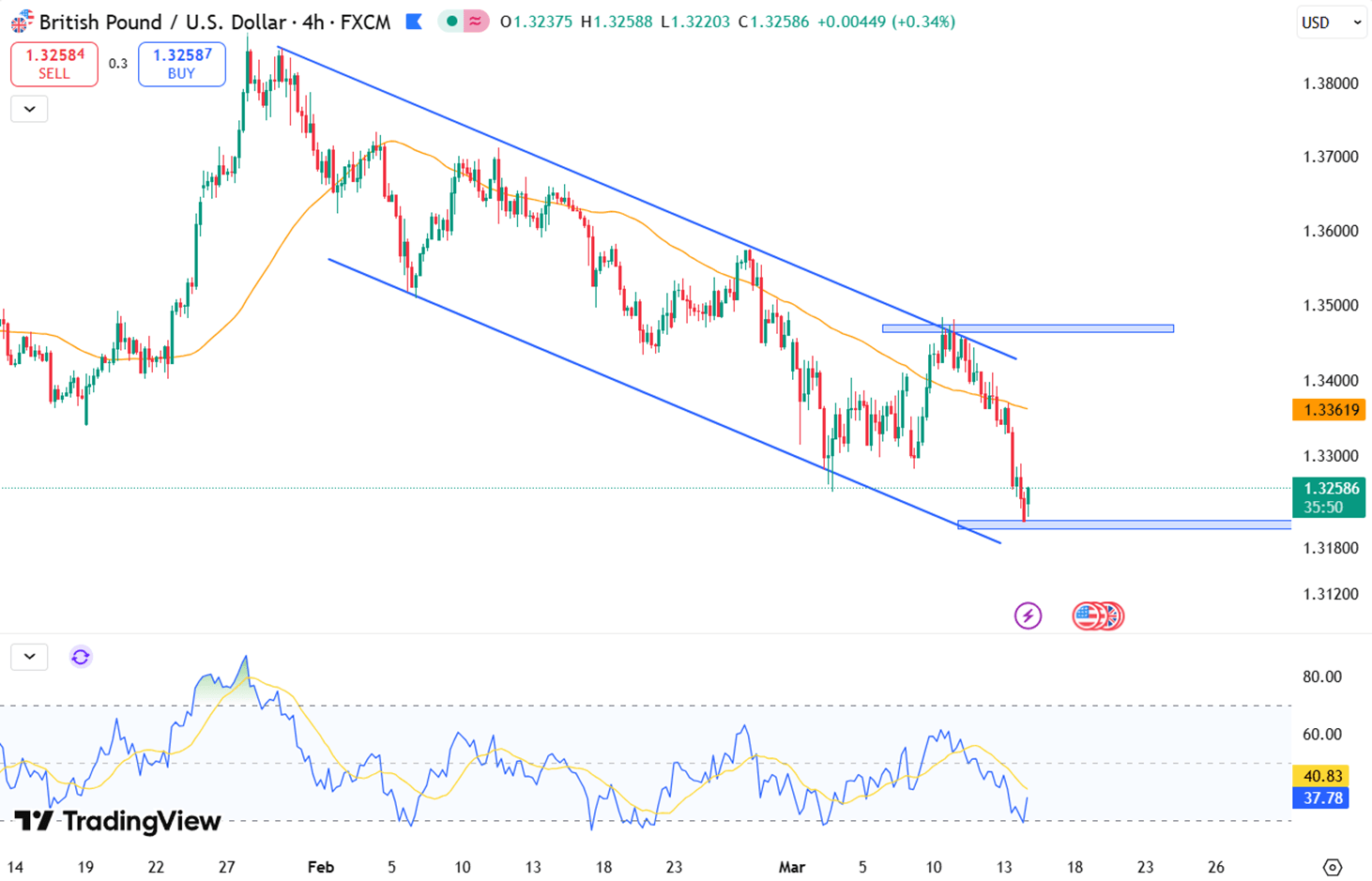
With several major central bank meetings scheduled this week, global markets are preparing for a cautious stance from policymakers. The Federal Reserve, European Central Bank (ECB), Bank of England (BoE), and Bank of Canada (BoC) are all expected to keep interest rates unchanged. However, investors will closely watch their guidance on inflation risks and the timing of potential rate cuts, as these signals could drive notable volatility in foreign exchange markets, particularly for EUR/USD and GBP/USD.
From a technical view, support stands near 1.3220, with resistance around 1.3330.
| R1: 1.3330 | S1: 1.3220 |
| R2: 1.3410 | S2: 1.3170 |
| R3: 1.3480 | S3: 1.3070 |
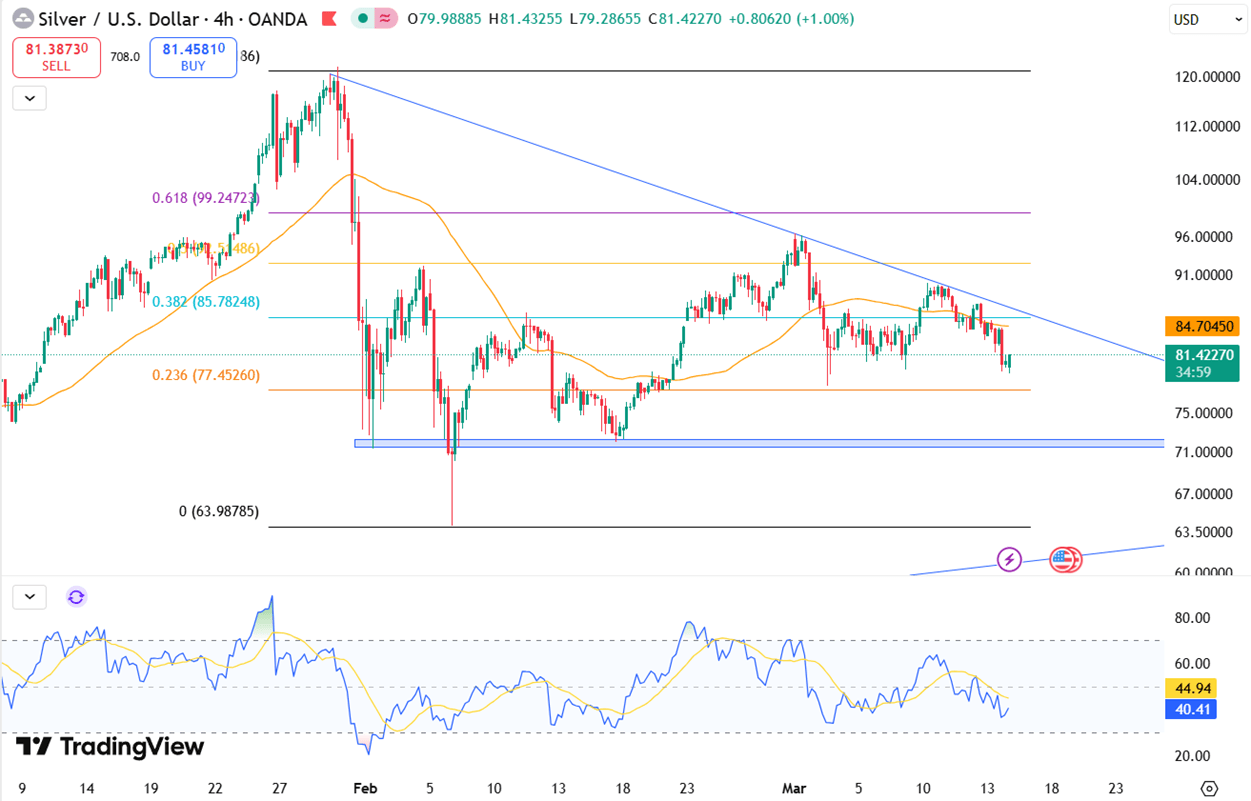
Silver fell to approximately $80 per ounce, marking its fourth straight day of losses as the Iran conflict enters its third week. Market instability remains high following a U.S. strike on the Kharg Island oil hub and warnings of further hits if Tehran blocks the Strait of Hormuz. While oil prices fluctuate, investors are weighing the impact of a potential U.S.-led international coalition designed to escort commercial vessels through the waterway and secure global energy supply lines.
From a technical view, resistance stands near $84.30 while support is located around $79.90.
| R1: 84.30 | S1: 79.00 |
| R2: 85.90 | S2: 77.10 |
| R3: 89.80 | S3: 75.60 |
A deepening sell-off in technology and artificial intelligence stocks pressured financial markets, forcing investors to liquidate precious metals holdings to cover losses elsewhere.
Escalating Middle East tensions pushed oil prices higher following a deadly drone strike on Saudi Aramco's Shaybah facility, renewing inflation concerns and expectations for further Federal Reserve tightening.
Rising oil prices renewed inflation concerns as uncertainty surrounding the US-Iran conflict and continued disruptions in the Strait of Hormuz reinforced expectations for further monetary tightening.
Then Join Our Telegram Channel and Subscribe Our Trading Signals Newsletter for Free!
Join Us On Telegram!


