




Global markets started the week cautiously as major currencies and metals consolidated after recent volatility. The dollar index held just below 97 in thin holiday trade after softer US inflation (2.4% y/y, 0.2% m/m) raised rate-cut expectations, even as strong payrolls and lower unemployment signaled a stabilizing labor market.
The euro hovered near $1.19, supported by the ECB’s calm stance on currency strength and a softer US inflation backdrop. The Japanese yen eased after weaker growth data tempered expectations for an immediate economic rebound, though intervention risks remain in focus. Gold paused below $5,030 after last week’s inflation-driven rally, with traders awaiting further Fed signals from upcoming data and minutes. Sterling stayed under pressure following stagnant UK growth figures that reinforced expectations for Bank of England easing. Meanwhile, silver slipped toward key support levels as higher-for-longer rate expectations weighed on demand, even as geopolitical risks continued to provide a safety net.
| Time | Cur. | Event | Forecast | Previous |
| China – Chinese New Year | - | - | ||
| United States – Washington’s Birthday | - | - | ||
| GDP (QoQ) (Q4) | 0.4% | -0.7% |
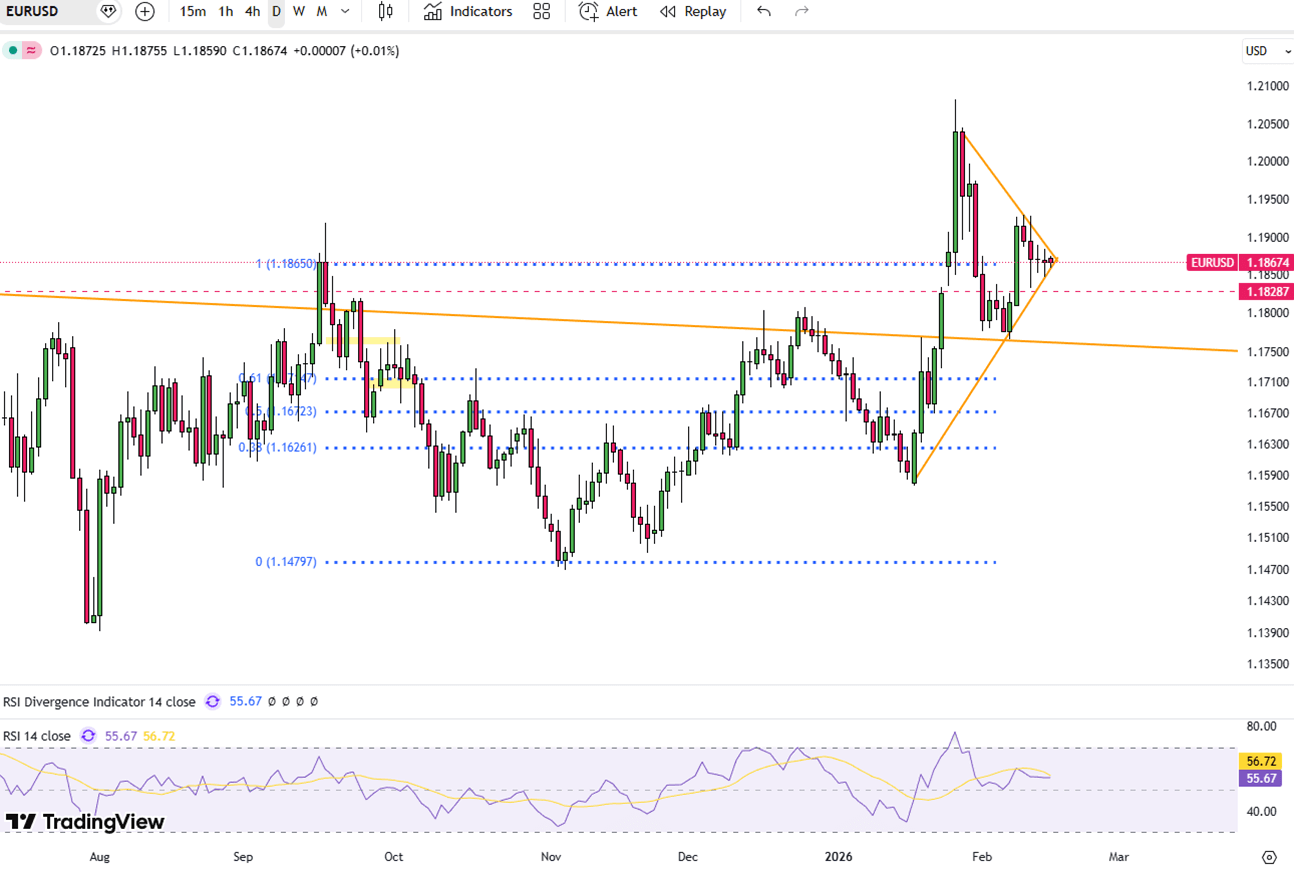
The euro hovered near $1.19, securing a modest 0.4% weekly gain and remaining within reach of its late January four-year peak above $1.20. Supporting the currency are signs that the ECB remains untroubled by its recent climb. President Christine Lagarde described the inflation outlook as being in a "good place," though she cautioned against reacting to temporary volatility. Further support came from news that Bank of France Governor François Villeroy de Galhau, a known dove, will step down in June. In the U.S., inflation cooled to 2.4% in January, while resilient job growth gave the Federal Reserve more flexibility for future easing.
For EUR/USD, the closest resistance level is at 1.1920, while the initial support is found at 1.1840.
| R1: 1.1920 | S1: 1.1840 |
| R2: 1.1970 | S2: 1.1780 |
| R3: 1.2000 | S3: 1.1730 |
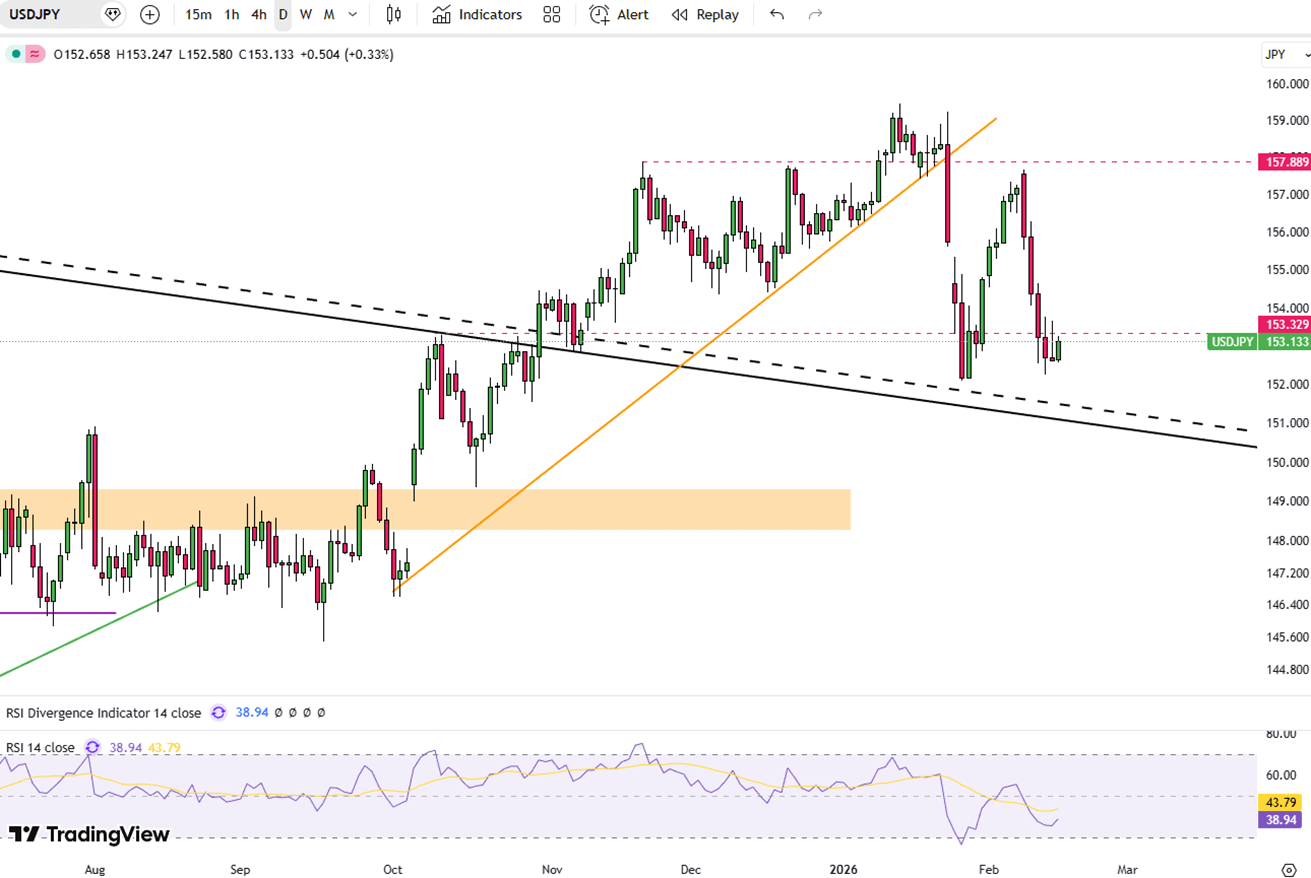
The Japanese yen slipped to approximately 153 per dollar on Monday, retreating after soft fourth-quarter growth data. Japan's economy expanded by just 0.1%, missing expectations for a more strong recovery despite a rebound from the previous quarter's contraction. Weak domestic demand remains a concern, with consumer spending rising only 0.1%. While Prime Minister Sanae Takaichi continues to advocate for proactive fiscal stimulus following her landslide win on February 8, the yen's earlier 3% weekly rally has stalled. Nevertheless, potential Bank of Japan rate hikes and intervention risks still offer underlying support.
Technically, resistance stands near 153.70, while support is firm at 152.50.
| R1: 153.70 | S1: 152.50 |
| R2: 154.50 | S2: 151.70 |
| R3: 155.60 | S3: 150.50 |
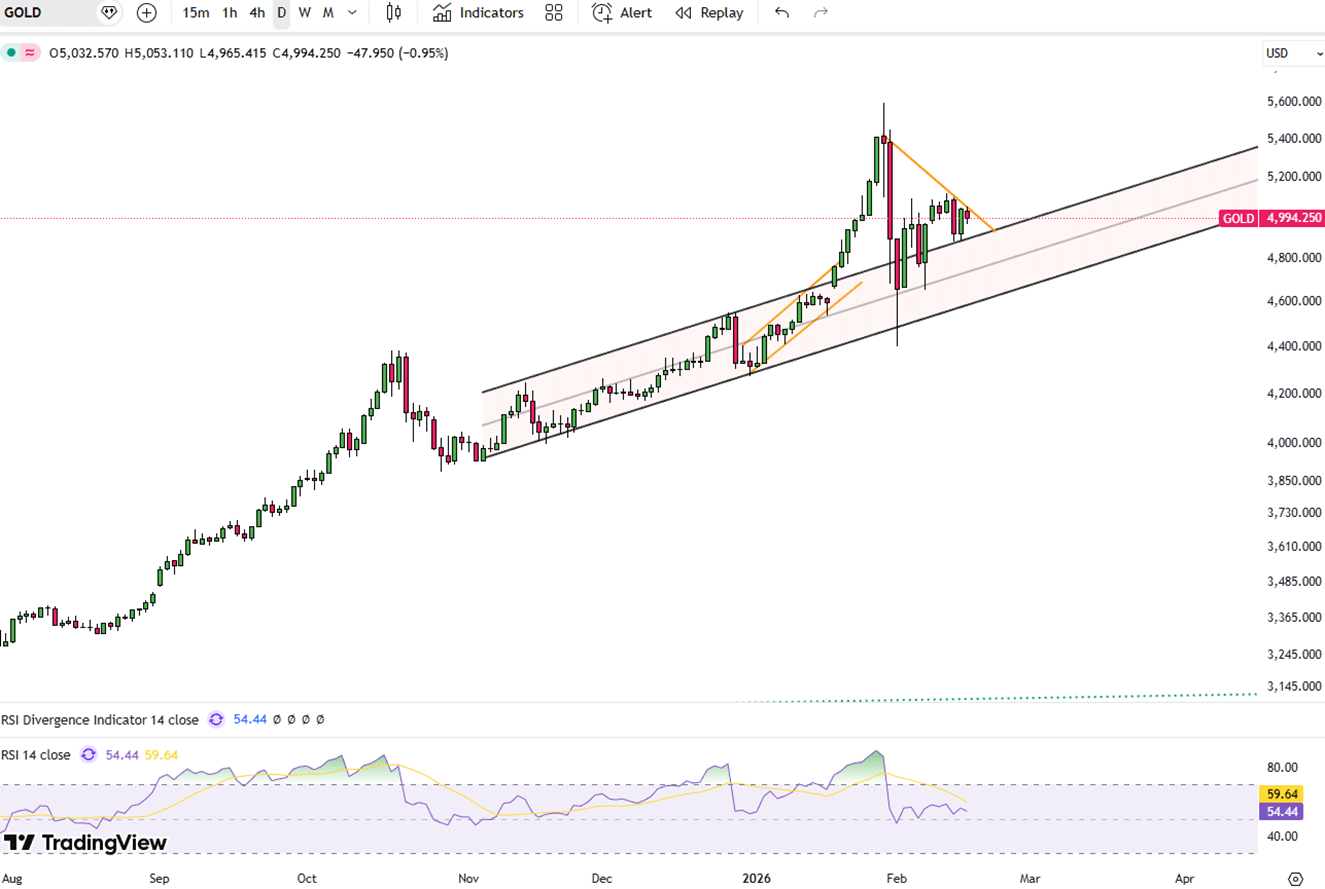
Gold slipped below $5,030 per ounce on Monday, following a 2% surge sparked by softer U.S. inflation data. The cooling price report heightened expectations for Federal Reserve rate cuts, with markets currently pricing in two reductions for 2026. Traders are now looking toward FOMC minutes, GDP estimates, and upcoming PCE data for timing cues. While U.S.–Iran nuclear talks and Ukraine peace efforts influence risk sentiment, gold remains supported by persistent geopolitical tension, central bank demand, and shifts out of sovereign bonds.
Gold sees support near $4885, while resistance is around $5000.
| R1: 5000 | S1: 4485 |
| R2: 5085 | S2: 4820 |
| R3: 5200 | S3: 4750 |
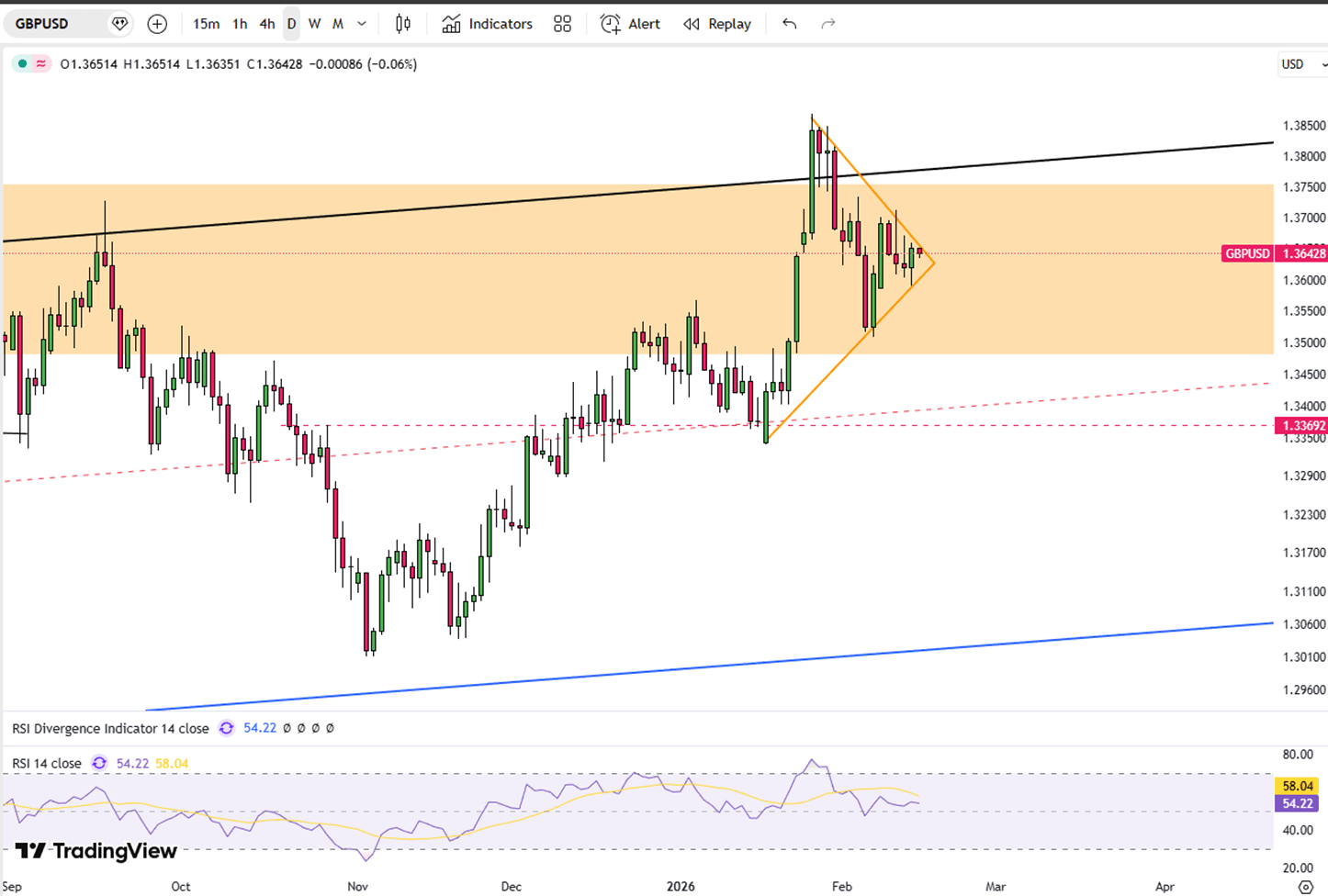
The British pound hovered near $1.36 as investors reacted to disappointing UK growth figures. The economy expanded by only 0.1% in the final quarter of 2025, falling short of forecasts and marking the slowest annual growth since early 2024. Unexpected drops in industrial output and construction underscored a fragile recovery, increasing political pressure on Prime Minister Keir Starmer. Markets are pricing in more Bank of England easing, following a recent hold at 3.75% and a dovish outlook projecting inflation toward the 2% target by April.
From a technical view, support stands near 1.3600, with resistance around 1.3670.
| R1: 1.3670 | S1: 1.3600 |
| R2: 1.3750 | S2: 1.3560 |
| R3: 1.3820 | S3: 1.3500 |
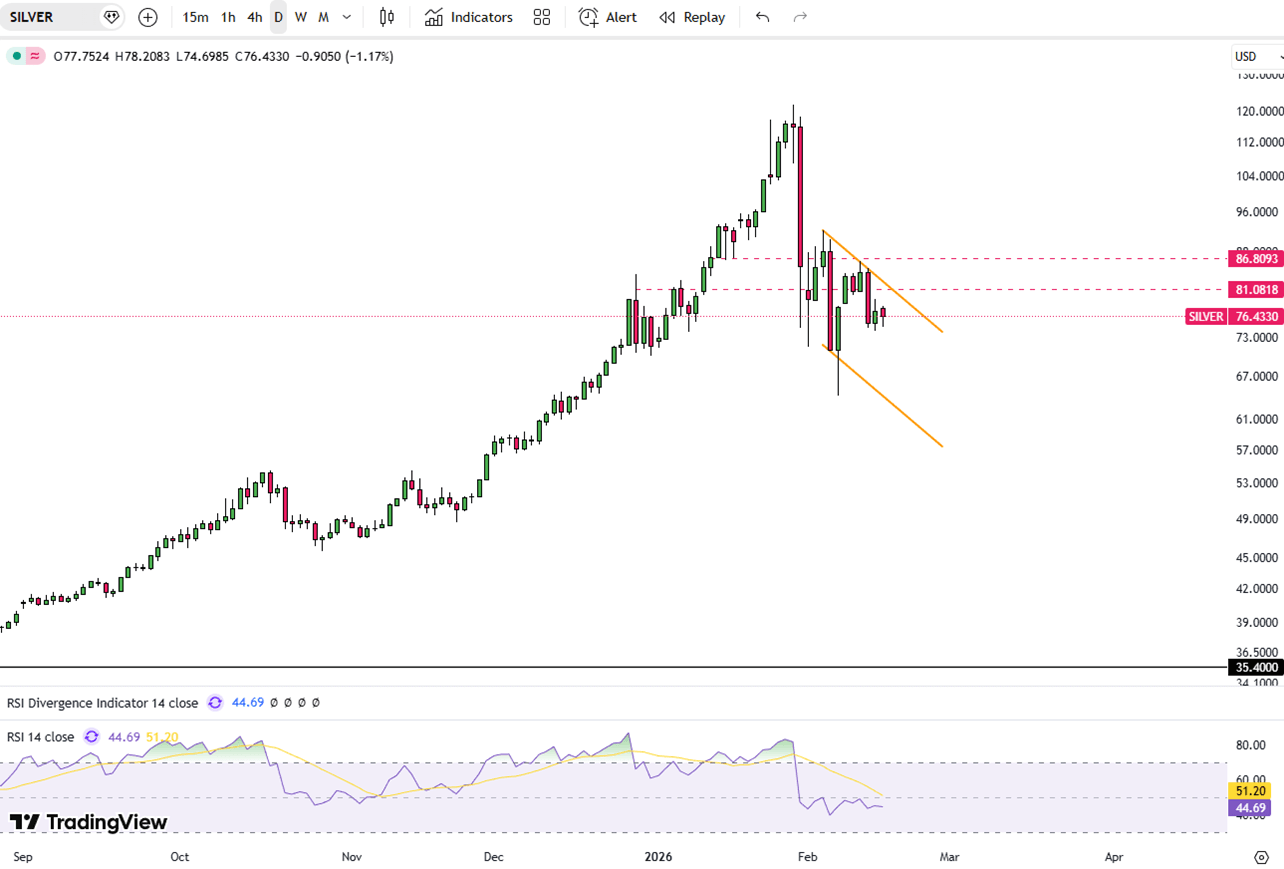
Silver prices declined toward the $75 mark to start the week, as softer U.S. inflation data failed to convince markets of a near-term Federal Reserve pivot. With interest rates likely to remain steady through April, the metal faces pressure from a stronger dollar. However, potential for military escalation between the U.S. and Iran continues to linger. This geopolitical risk could reinvigorate safe-haven buying, providing a necessary cushion for precious metals despite the current lack of dovish monetary signals.
From a technical view, resistance stands near $75.80 while support is located around $72.50.
| R1: 75.80 | S1: 72.50 |
| R2: 79.50 | S2: 70.00 |
| R3: 82.30 | S3: 69.00 |
Markets saw a short-lived recovery after the U.S. delayed planned strikes on Iranian energy infrastructure, easing immediate geopolitical pressure.
Detail Dollar Dominance Deepens (03.23.2026)Global markets remained under pressure as inflation fears tied to the ongoing Iran conflict strengthened the U.S. dollar and reshaped investor positioning.
Detail Energy Shock Drives Hawkish Shift (23-27 March)
Global markets remained under pressure as the conflict in the Middle East entered a more volatile phase, driving Brent crude past $110/barrel, which is its highest level since mid-2022.
DetailThen Join Our Telegram Channel and Subscribe Our Trading Signals Newsletter for Free!
Join Us On Telegram!


