




The US-NATO framework deal avoids European tariffs in exchange for expanded US missile deployments, mining rights, and Arctic influence in Greenland, updating the 1951 treaty while formally maintaining Danish sovereignty.
The euro pushed above 1.1740 as easing U.S.–EU trade tensions weakened the dollar despite strong U.S. growth data. The yen slipped after the Bank of Japan held rates, while gold surged to fresh highs on dovish Fed expectations and improving geopolitical sentiment. Sterling advanced toward recent highs as tariff risks faded, and silver extended its rally toward $100 amid supply constraints and strong investment demand.
| Time | Cur. | Event | Forecast | Previous |
| 0.75% | 0.75% | |||
| S&P Global Services PMI (Jan) | 52.9 | 52.5 | ||
| 51.9 | 51.8 |
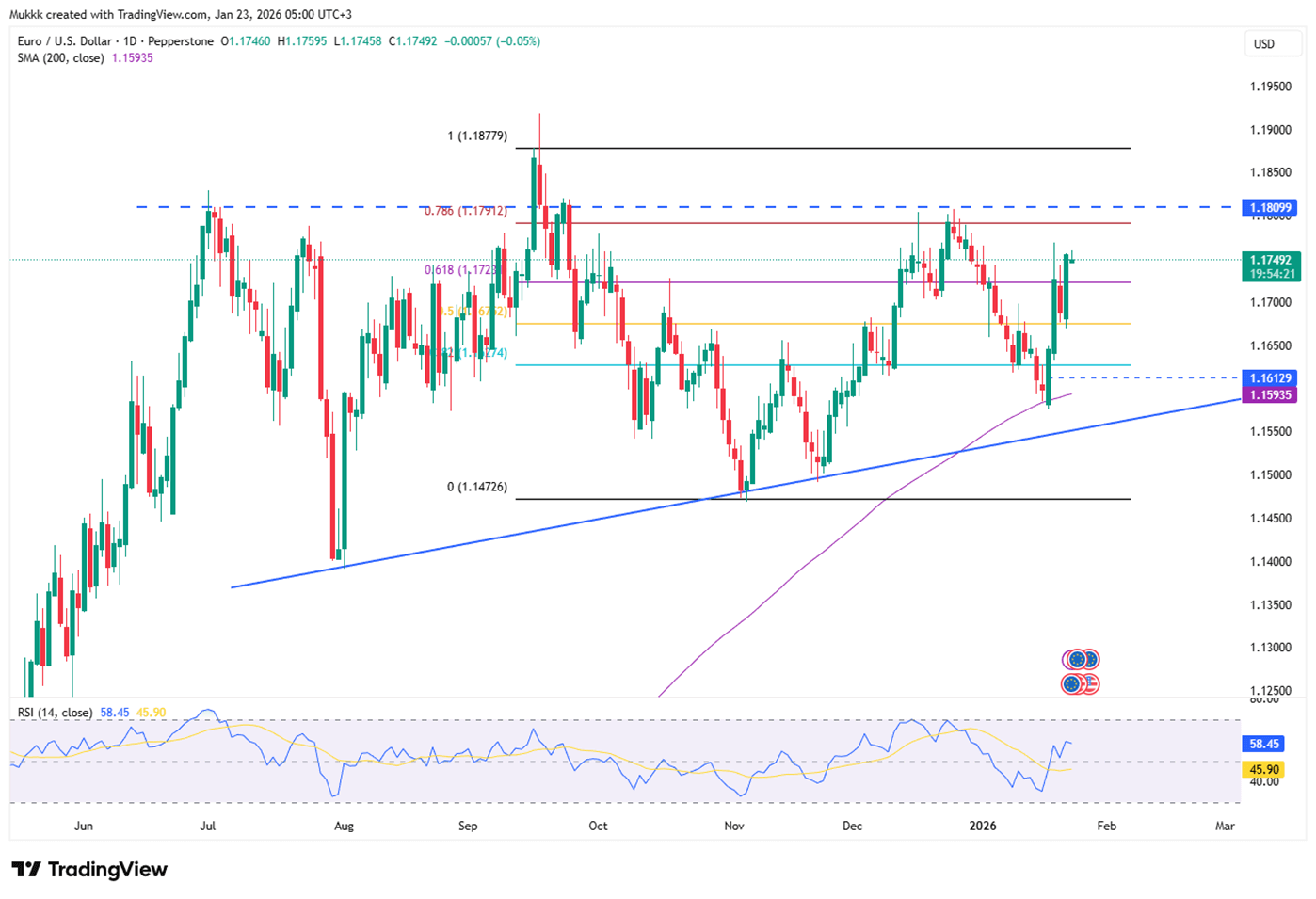
The euro climbed past 1.1740 on Friday after President Trump withdrew his tariff threats, improving market sentiment and weighing on the dollar. This move occurred despite strong U.S. economic data, including 4.4% GDP growth. Meanwhile, ECB minutes suggested inflation is nearing its target, providing additional support for the euro through a cautious, data dependent outlook.
Technical indicators suggest continued bullish momentum, with resistance near 1.1800 and support around 1.1700 and key moving averages.
| R1: 1.1800 | S1: 1.1700 |
| R2: 1.1850 | S2: 1.1670 |
| R3: 1.1920 | S3: 1.1630 |
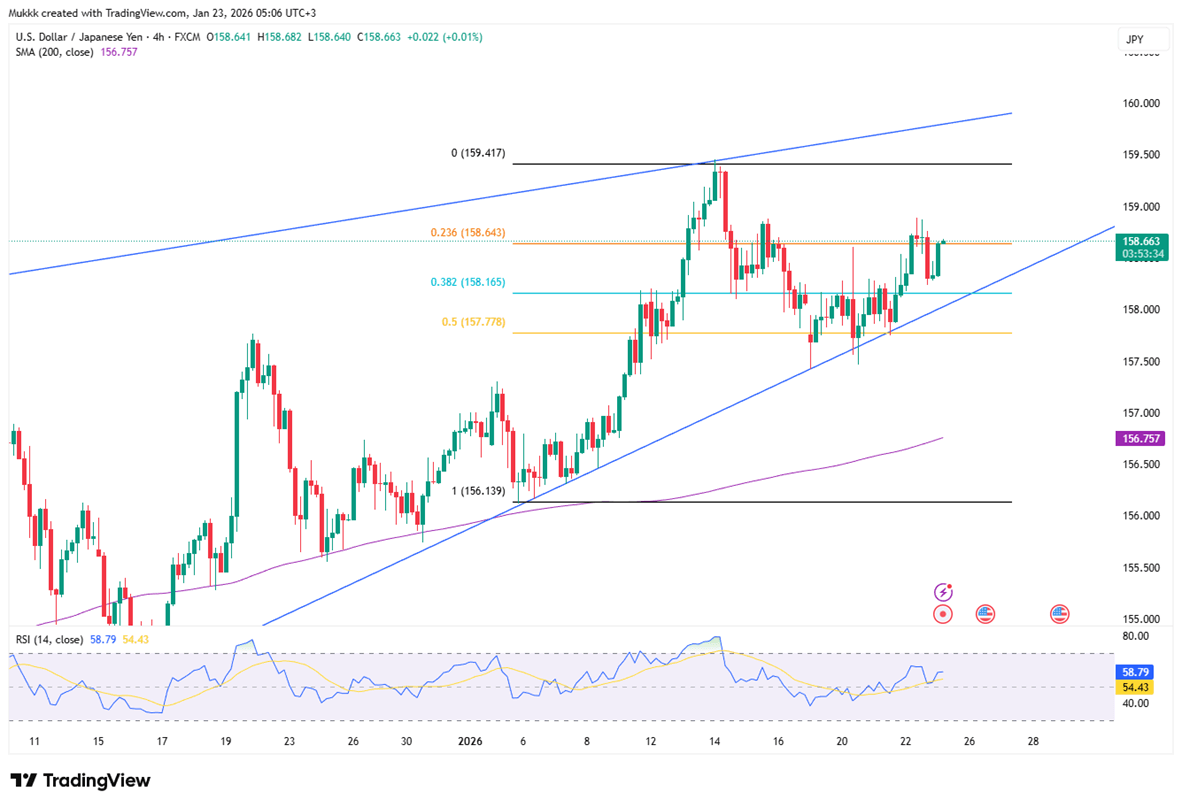
The Japanese yen fell past 158.5 per dollar on Friday after the Bank of Japan maintained interest rates at 0.75%. This widely expected hold follows December’s historic hike to a 30 year high. Although the bank raised its inflation forecasts, the yen remained under pressure due to a dissenting vote for an immediate hike and persistent fiscal uncertainty. Traders are now monitoring the 160 level for potential intervention as the February 8 snap election approaches.
Technically, resistance stands near 158.80, while support is firm at 158.20.
| R1: 158.80 | S1: 158.20 |
| R2: 159.10 | S2: 157.70 |
| R3: 159.50 | S3: 157.30 |
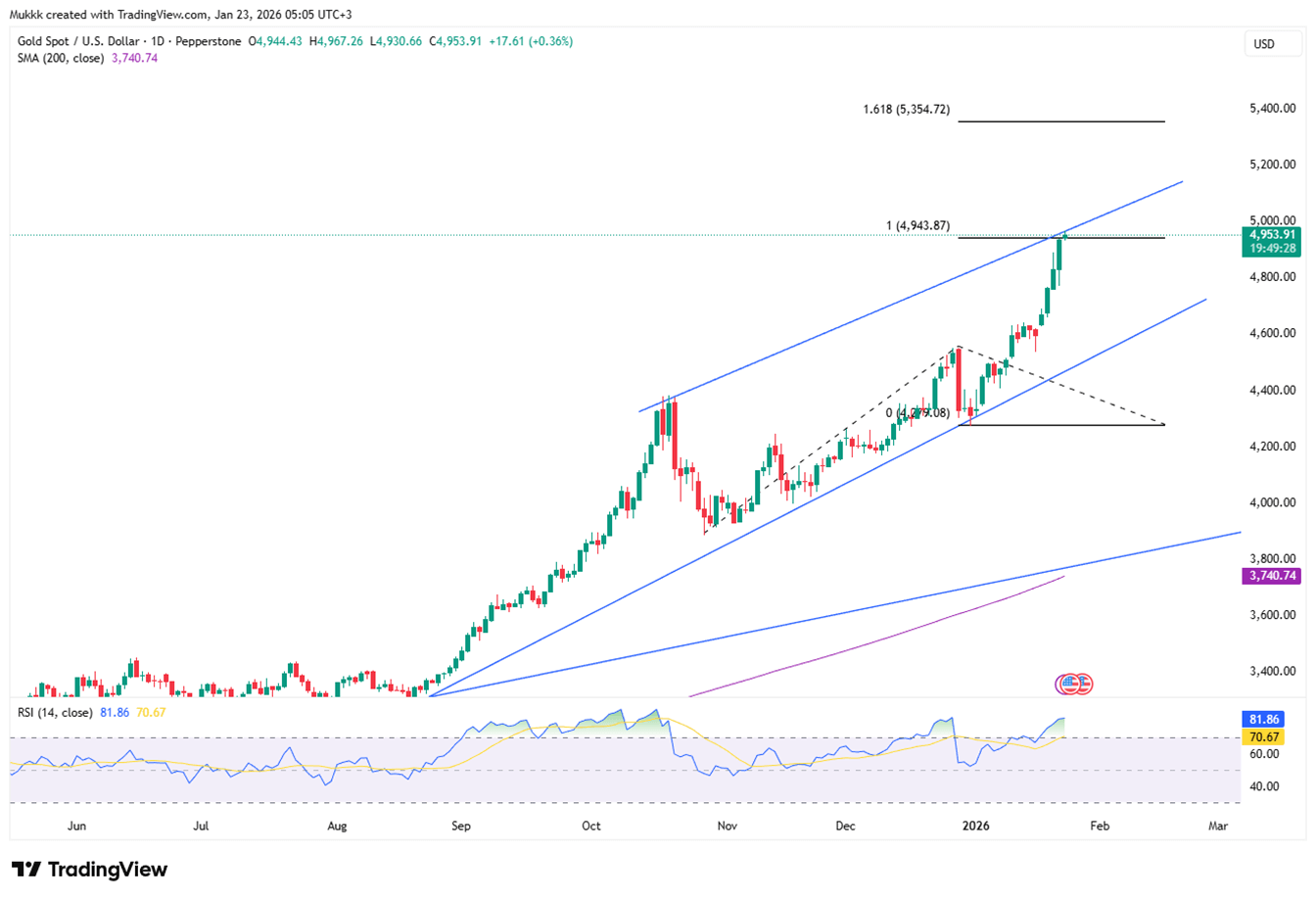
Gold prices soared past $4,950 on Friday, marking the strongest weekly performance since 2020. This rally was fueled by a weaker dollar and cooling geopolitical friction after President Trump scrapped European tariff threats following a NATO "framework" deal for permanent Greenland access. While Denmark maintains its sovereignty, the easing of trade tensions alongside firm U.S. PCE data has cemented gold's appeal. Markets are now pricing in two Fed rate cuts, supported by a shift toward a more dovish central bank leadership.
Gold sees support near $4900, while resistance is around $5000.
| R1: 5000 | S1: 4900 |
| R2: 5080 | S2: 4830 |
| R3: 5150 | S3: 4760 |
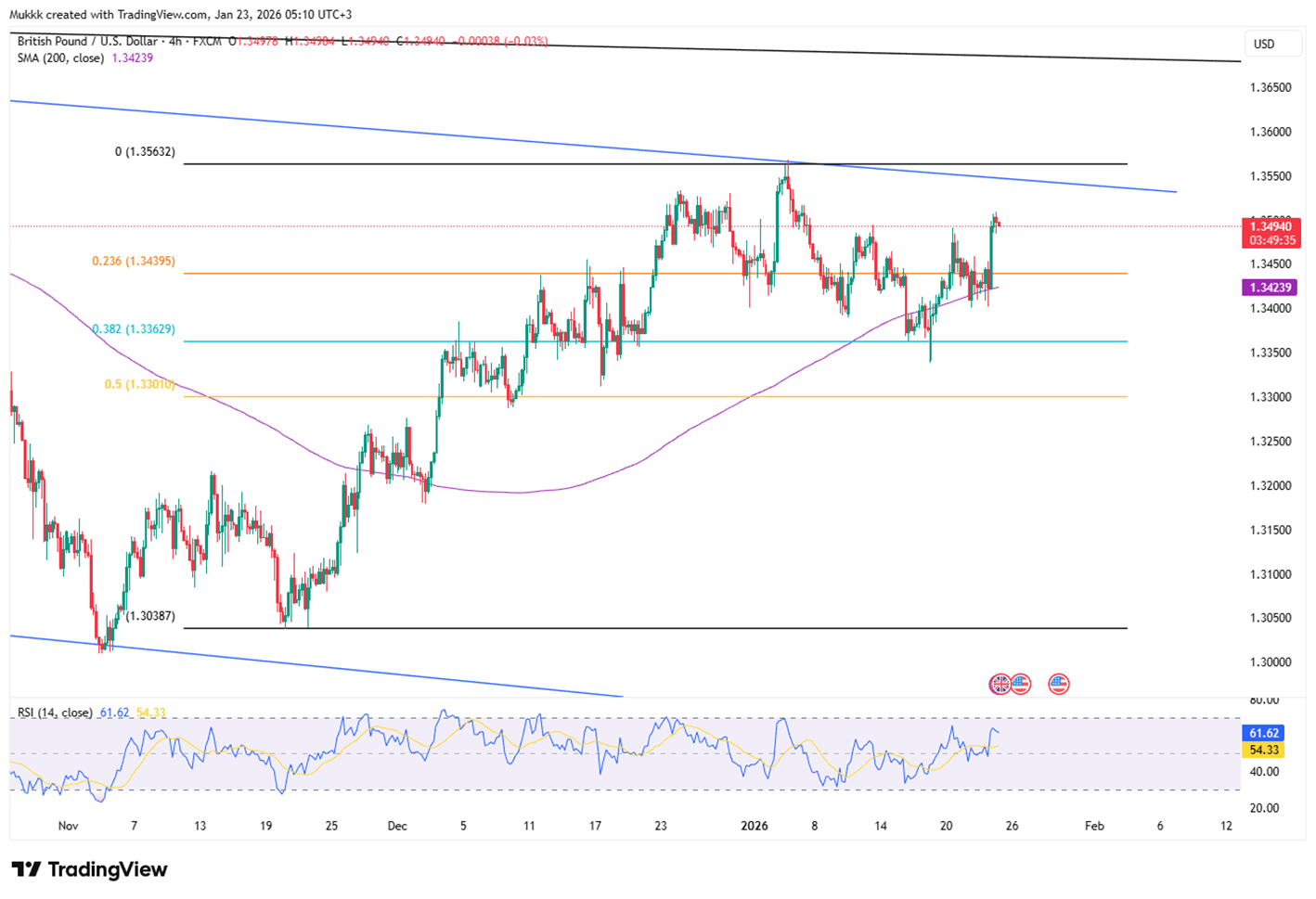
The British pound rose toward $1.3500 on Friday, its highest in over two weeks, as U.S.–Europe trade friction eased. President Trump scrapped European tariff threats following a NATO framework deal regarding Greenland. Meanwhile, UK data provided mixed support; inflation climbed to 3.4% and the budget deficit narrowed, while wage growth slowed and unemployment held at 5.1%. These factors have reduced expectations for immediate Bank of England rate cuts.
From a technical view, support stands near 1.3440, with resistance around 1.3530.
| R1: 1.3430 | S1: 1.3440 |
| R2: 1.3570 | S2: 1.3400 |
| R3: 1.3630 | S3: 1.3340 |
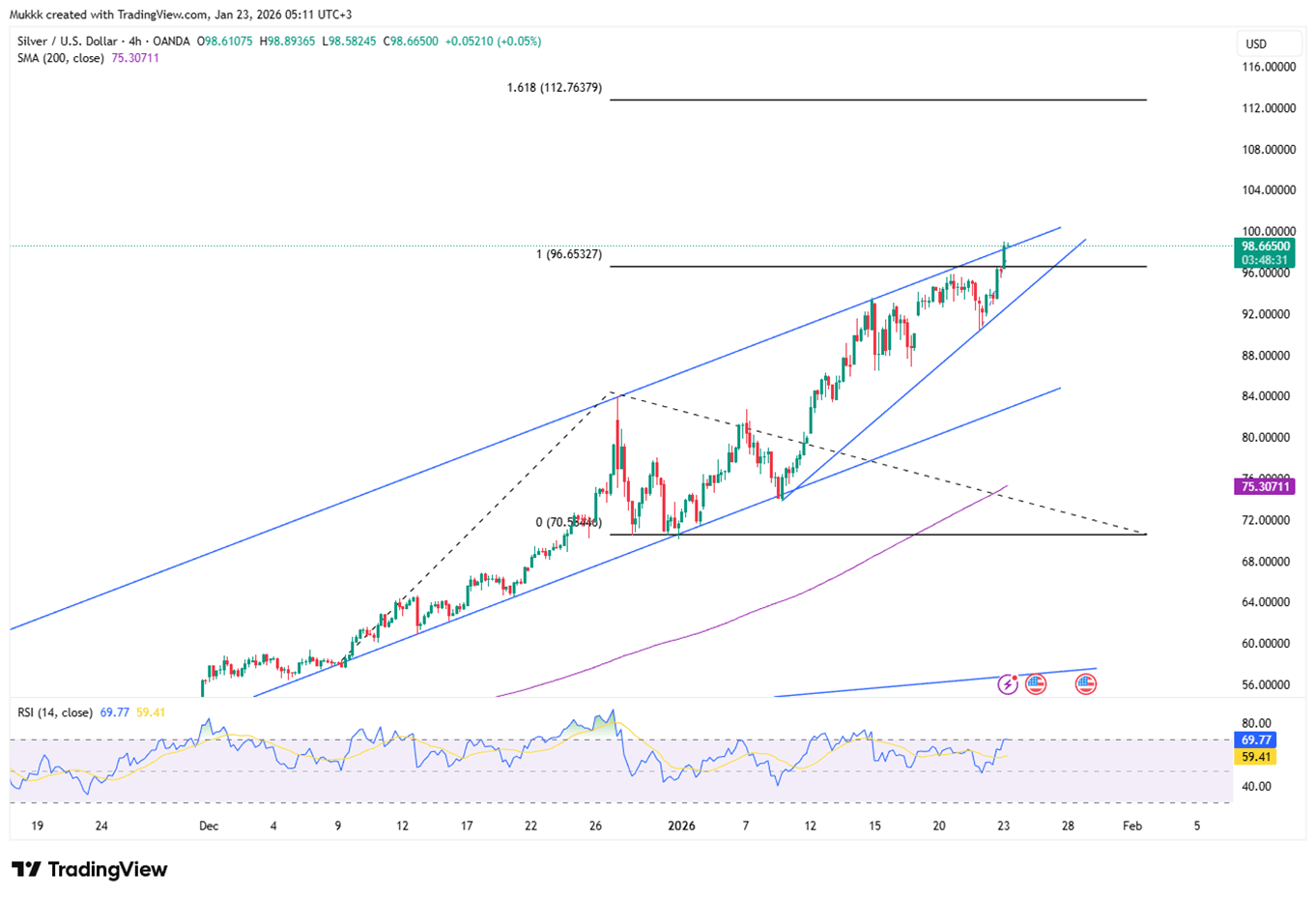
Silver surged nearly 3% toward $99 on Friday, hitting fresh record highs as a softening dollar lifted precious metals. Investors are pivoting to real assets following shifting U.S.–Europe tensions over Greenland and fears that Europe could leverage its U.S. asset holdings. While the Fed is expected to hold rates next week, markets are still pricing in two cuts later this year. A historic short squeeze, China’s new export controls, and massive retail demand continue to fuel the rally.
From a technical view, resistance stands near $100.00 while support is located around $96.40.
| R1: 100.00 | S1: 96.40 |
| R2: 102.50 | S2: 94.70 |
| R3: 105.00 | S3: 91.70 |
Global markets remain dominated by geopolitical risk as escalating conflict between the United States, Israel, and Iran fuels a strong shift toward safe-haven assets. The dollar index hit 99.3 Wednesday, rising for a third day as conflict concerns fueled inflation and shifted Fed rate cut expectations from July to September.
A US court rejected Trump's tariff refund delay as the Dollar (98.5) and 10 year yield (4.04%) held gains amid Middle East escalation and inflation fears.
 After Khamenei: Who Will Lead Iran Next?
Following the death of Supreme Leader Ali Khamenei, Iran has entered a pivotal transition phase. Senior officials in Tehran are acting swiftly to uphold the existing structure of the Islamic Republic, prioritizing continuity to head off potential internal instability. Despite these efforts, the sudden leadership vacuum has sparked intense political and military maneuvering behind the scenes.
DetailThen Join Our Telegram Channel and Subscribe Our Trading Signals Newsletter for Free!
Join Us On Telegram!


