




EUR/USD eased after the ECB held rates and signaled limited urgency for further easing, while the Yen weakened despite a BOJ rate hike.
Gold hovered near record highs on softer US inflation, and Sterling firmed as the BoE delivered a cautious cut. Silver pulled back from record levels as traders locked in profits, though easing expectations continue to offer support.
| Time | Cur. | Event | Forecast | Previous |
| JPY | BoJ Interest Rate Decision | 0.75% | 0.50% | |
| USD | Core PCE Price Index (MoM) (Oct) | 0.2% | ||
| USD | Core PCE Price Index (YoY) (Oct) | 2.8% | ||
| USD | Existing Home Sales (Nov) | 4.15M | 4.10M |
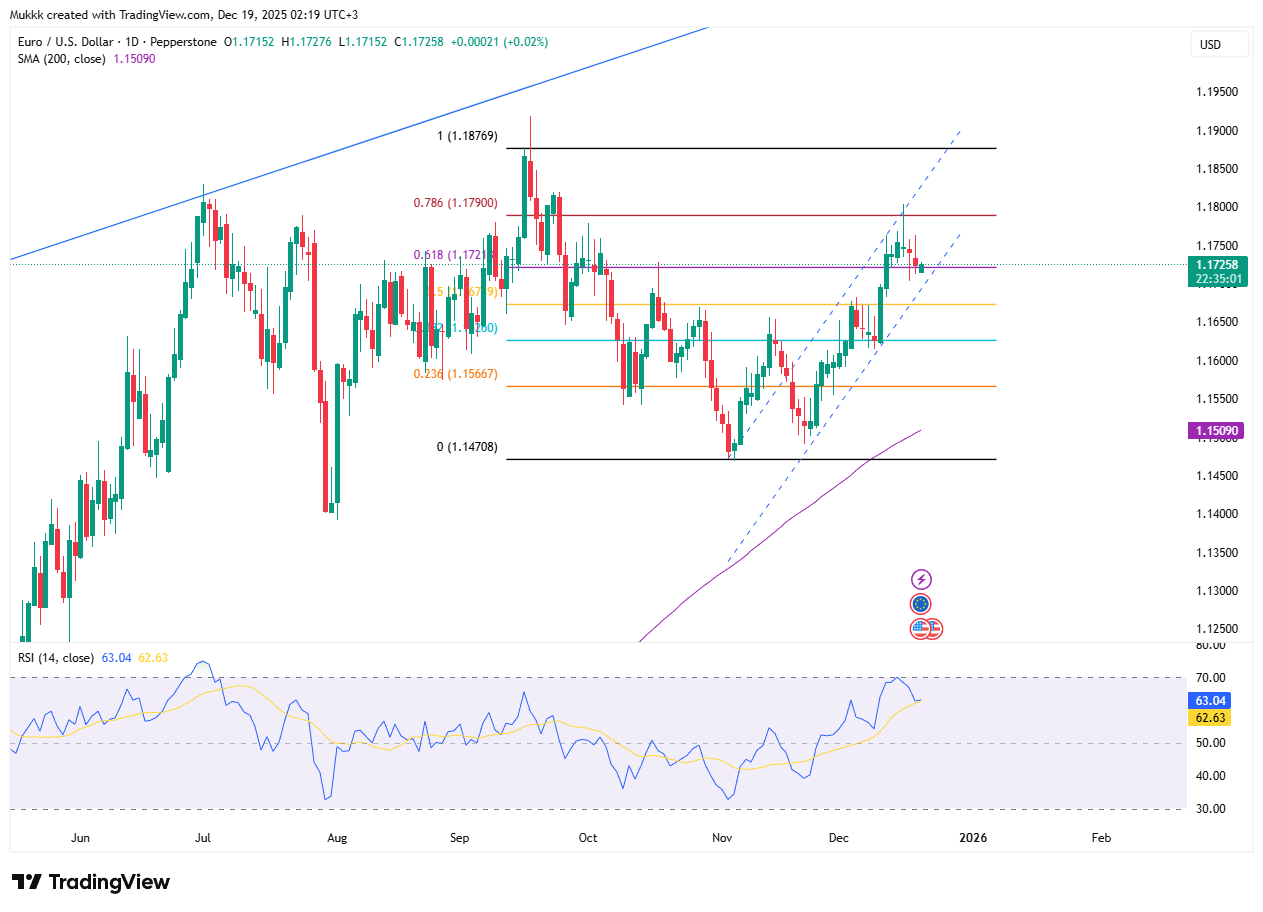
EUR/USD dipped toward 1.1720 after the ECB left interest rates unchanged, as widely anticipated. President Lagarde signaled that current levels are sufficiently neutral, dampening hopes for near term cuts. By emphasizing a data driven, meeting by meeting strategy, the central bank suggested its easing cycle might be nearing an end. This hawkish stance, combined with mixed US economic data, led to a slight pullback for the pair.
Technically, 1.1680 is the key support, while resistance is seen at 1.1780.
| R1: 1.1780 | S1: 1.1680 |
| R2: 1.1840 | S2: 1.1620 |
| R3: 1.1890 | S3: 1.1560 |
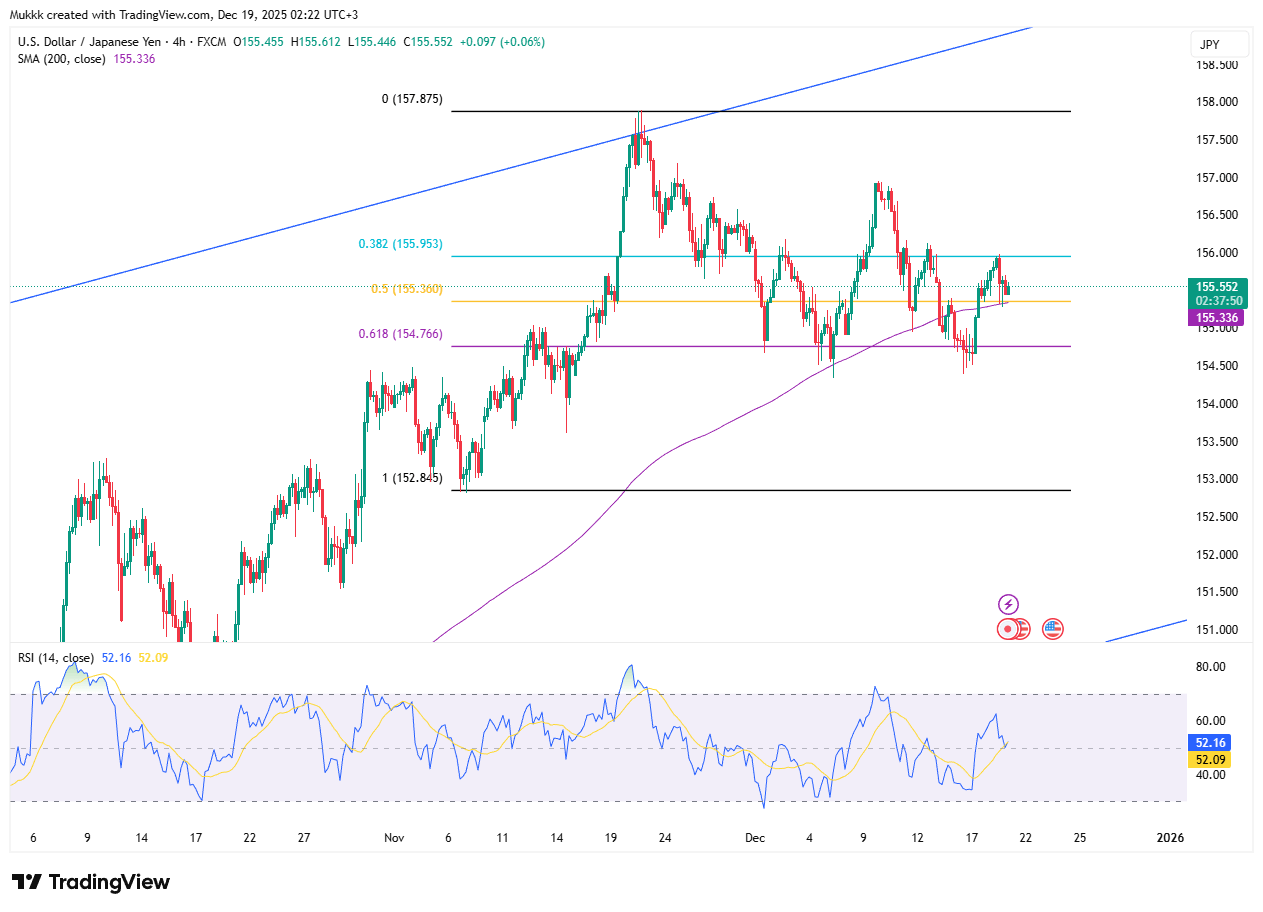
The Yen weakened to 156 per dollar on Friday, extending losses even after the Bank of Japan raised rates by 25 basis points to 0.75%, a 30 year high. While headline inflation slowed to 2.9% in November, it has exceeded the 2% target for 44 straight months. Core inflation held steady at 3%, highlighting persistent price pressures. Investors now await Governor Ueda’s guidance to determine if further tightening is planned for 2026.
Technically, resistance stands near 156.20, while support is firm at 154.70.
| R1: 156.20 | S1: 154.70 |
| R2: 156.90 | S2: 154.00 |
| R3: 157.60 | S3: 153.20 |
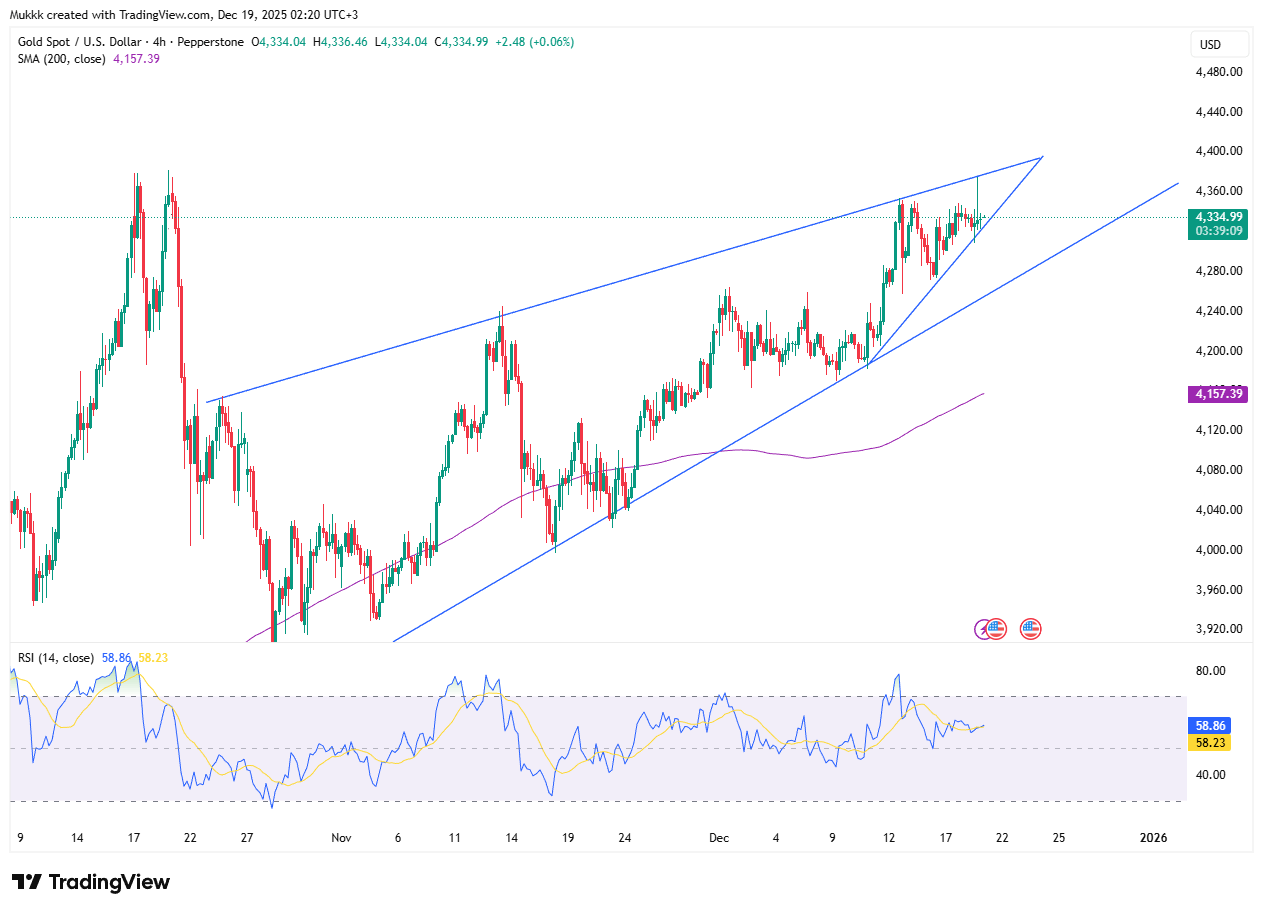
Gold traded near $4,320 on Friday, approaching its October record and eyes a second weekly gain. Prices were benefited by cooling US inflation, which reinforced expectations for further Federal Reserve rate cuts. November headline CPI slowed to 2.7%, missing the 3.1% forecast, while core inflation dropped to 2.6%, the lowest since early 2021. This softer data lowers the opportunity cost for holding non yielding assets like gold.
Gold sees support near $4285, while resistance is around $4375.
| R1: 4375 | S1: 4285 |
| R2: 4430 | S2: 4240 |
| R3: 4470 | S3: 4195 |
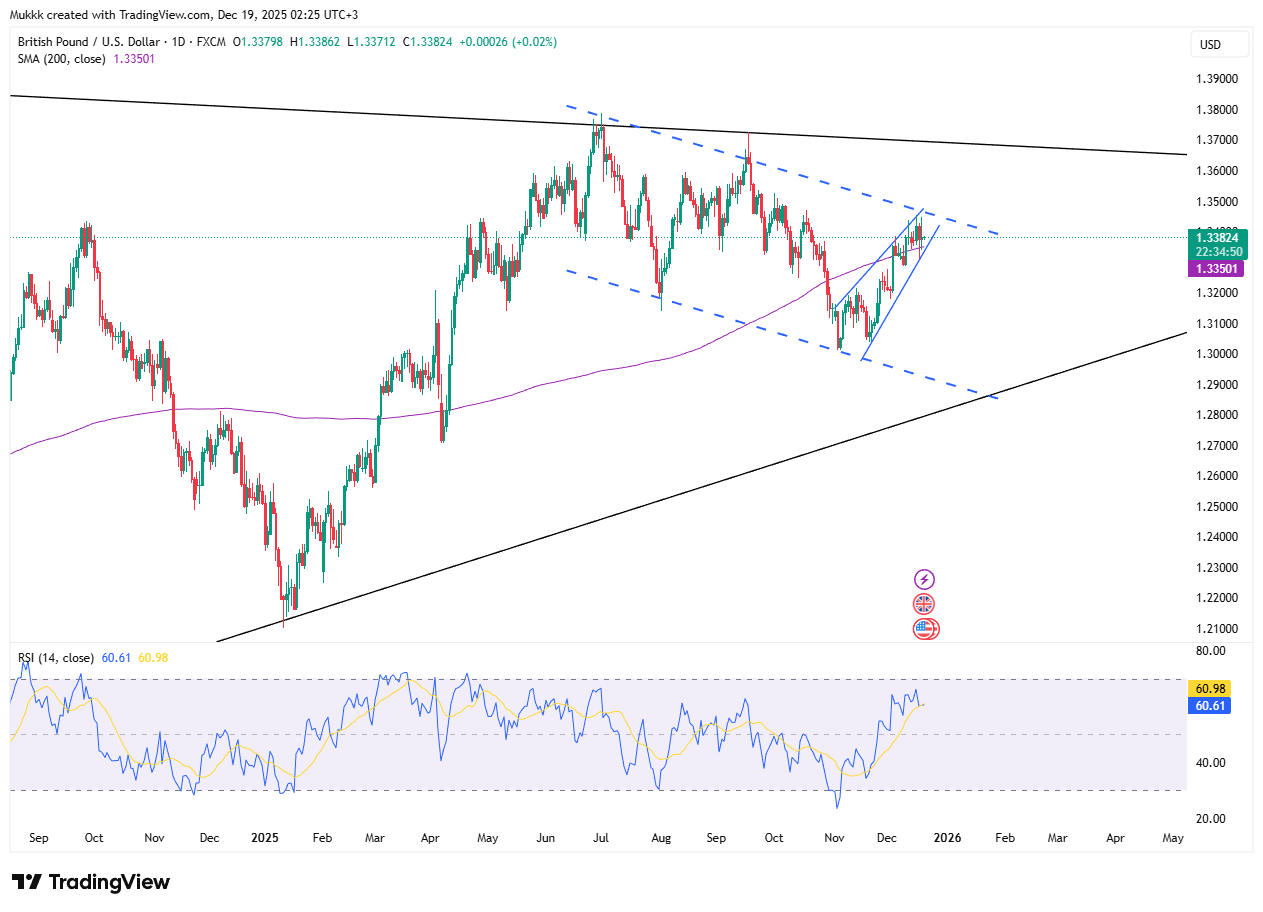
The Pound climbed after the Bank of England delivered a predicted 25 basis point rate cut. Despite the reduction, a narrow vote split and the bank's commitment to a gradual approach strengthened the currency. Policymakers signaled caution regarding future easing, leading markets to price out aggressive cuts. This shift in expectations provided support for Sterling as traders adjusted to a slower pace of normalization.
From a technical view, support stands near 1.3320, with resistance around 1.3440.
| R1: 1.3440 | S1: 1.3320 |
| R2: 1.3500 | S2: 1.3260 |
| R3: 1.3540 | S3: 1.3200 |
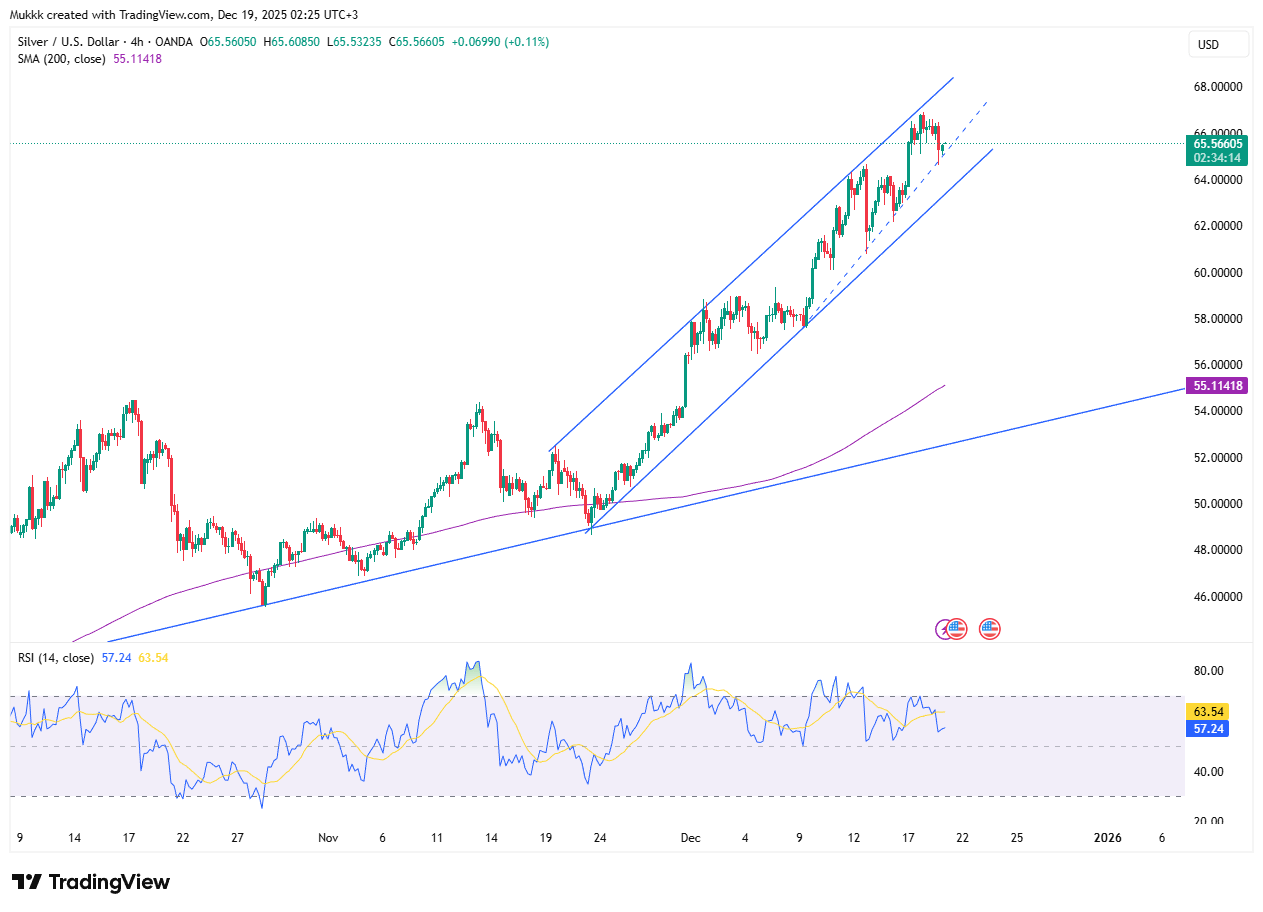
Silver prices (XAG/USD) slipped to $64.95 during Friday’s Asian session, retreating as traders locked in profits following a surge to all time highs. Despite this pullback, downside remains limited by firm expectations for 2026 US rate cuts. Cooling inflation data has reinforced the case for lower borrowing costs, which reduces the opportunity cost of holding non yielding silver and provides a floor for the metal.
From a technical view, resistance stands near $66.30 while support is located around $64.50.
| R1: 66.30 | S1: 64.50 |
| R2: 67.40 | S2: 62.80 |
| R3: 69.00 | S3: 60.90 |
Global markets remained cautious as investors weighed the economic impact of the ongoing Middle East conflict and volatile energy prices.
Currency markets remained volatile as ongoing Middle East tensions continued to shape global sentiment.
 Hormuz Blockade Rattles Markets (09 - 13 March)
Global sentiment was dominated this week by the second week of the war with Iran and the effective blockade of the Strait of Hormuz, driving Brent crude prices above $100/barrel. Despite a catastrophic US labor report showing a loss of 92,000 jobs in February, safe-haven demand pushed the US Dollar Index to 99.1. The energy shock has ignited fears of "stagflation," particularly in Europe and Japan, as soaring fuel costs threaten to reverse recent disinflationary trends.
DetailThen Join Our Telegram Channel and Subscribe Our Trading Signals Newsletter for Free!
Join Us On Telegram!


