




The U.S. dollar strengthened on Thursday as the Fed signaled fewer rate cuts ahead, citing inflation risks and geopolitical uncertainty. EUR/USD fell near 1.1465, while the yen weakened and GBP/USD slipped toward 1.3410.
Gold rebounded above $3,370 on safe-haven flows as the Israel-Iran conflict intensified. Silver held firm near multi-year highs, while traders await further central bank signals.
| Time | Cur. | Event | Forecast | Previous |
| 07:30 | EUR | ECB President Lagarde Speech | ||
| 11:00 | GBP | BoE Interest Rate Decision | 4.25% | 4.25% |
| 11:00 | GBP | MPC Meeting Minutes | ||
| 11:30 | JPY | Inflation Rate YoY | 3.6% | 3.6% |
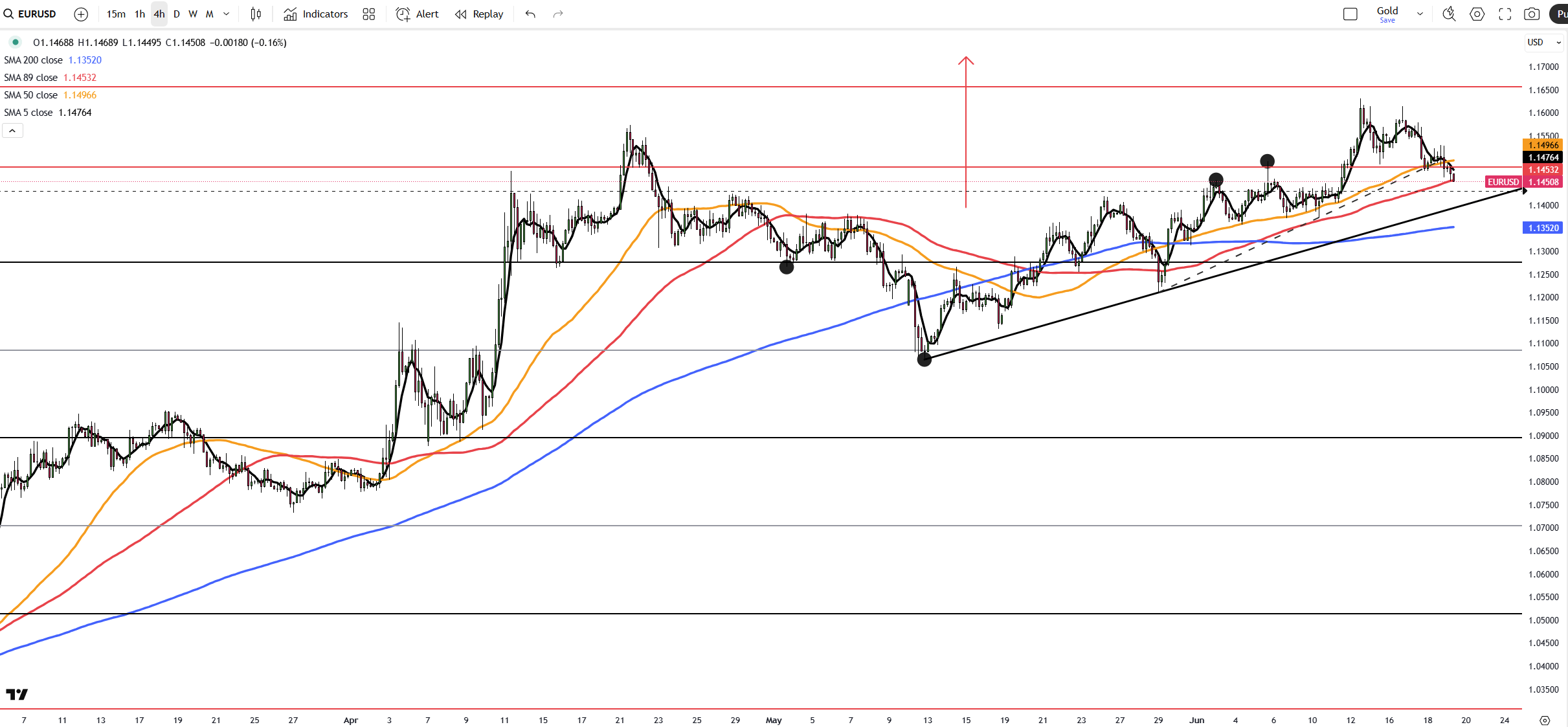
EUR/USD fell toward 1.1465 in Thursday’s Asian session, pressured by a risk-off mood as Middle East tensions rise. The focus shifts to speeches from ECB officials Lagarde, Nagel, and de Guindos for further guidance.
On Wednesday, the Fed held rates at 4.25%–4.50% and signaled a slower pace of cuts, citing inflation risks from Trump’s new tariffs. The FOMC still projects two cuts in 2025
Bloomberg reported the US may strike Iran in the coming days, raising safe-haven demand for the dollar and adding pressure on the euro. ECB’s Lagarde said rate cuts are nearly done and that the ECB is well-positioned to manage current uncertainties.
Resistance is located at 1.1475, while support is seen at 1.1415
| R1: 1.1475 | S1: 1.1415 |
| R2: 1.1515 | S2: 1.1390 |
| R3: 1.1590 | S3: 1.1350 |
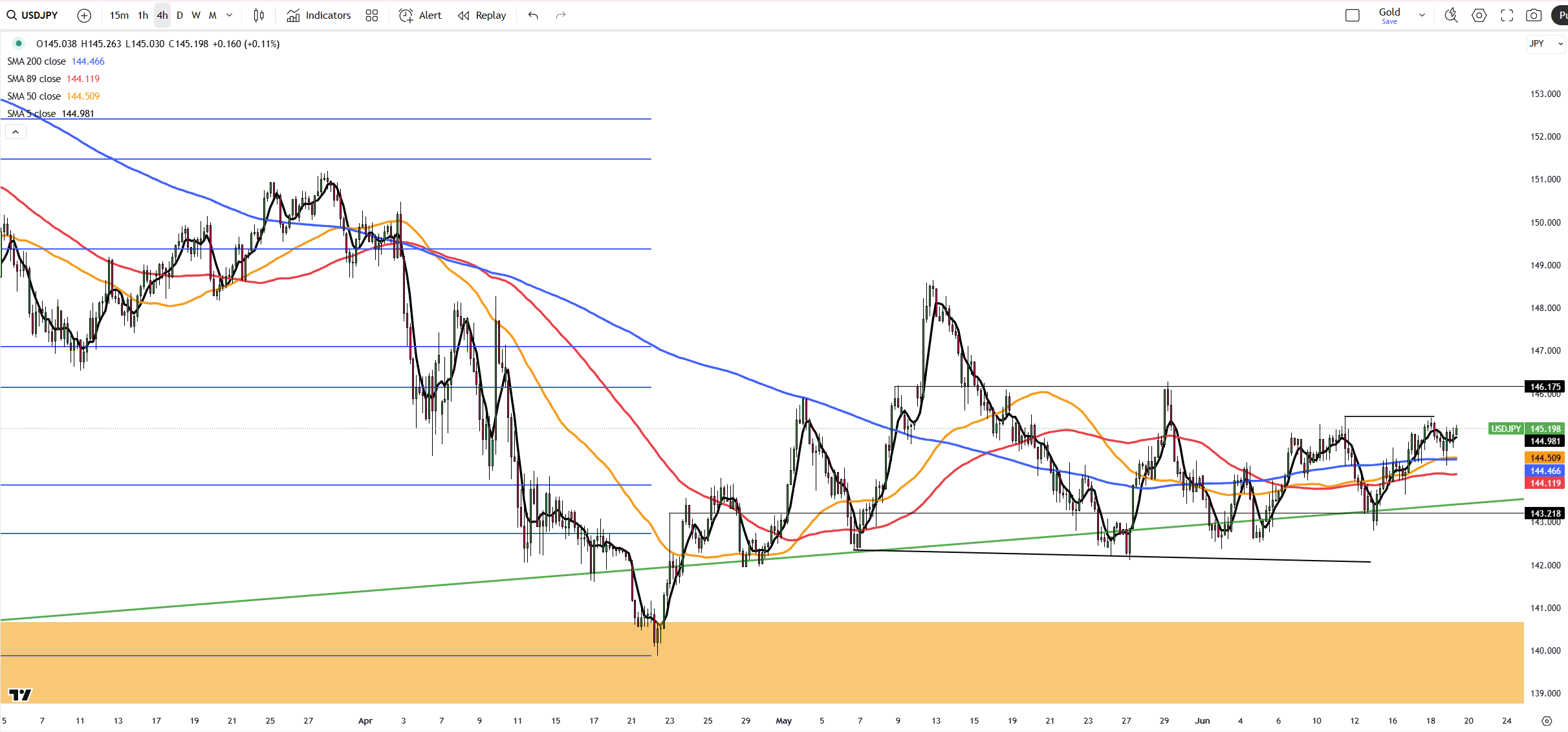
The yen weakened past 145 on Thursday, nearing a three-week low as the stronger U.S. dollar gained support from the Fed’s steady rate decision and cautious outlook. Concerns over Trump’s tariffs and Middle East tensions increased safe-haven demand for the dollar over the yen.
The BOJ also kept rates unchanged Tuesday and signaled a gradual asset reduction. Governor Ueda noted that rate hikes remain possible if inflation rises.
The key resistance is at $145.30 meanwhile the major support is located at $142.50.
| R1: 145.30 | S1: 142.50 |
| R2: 146.10 | S2: 142.10 |
| R3: 148.15 | S3: 141.50 |
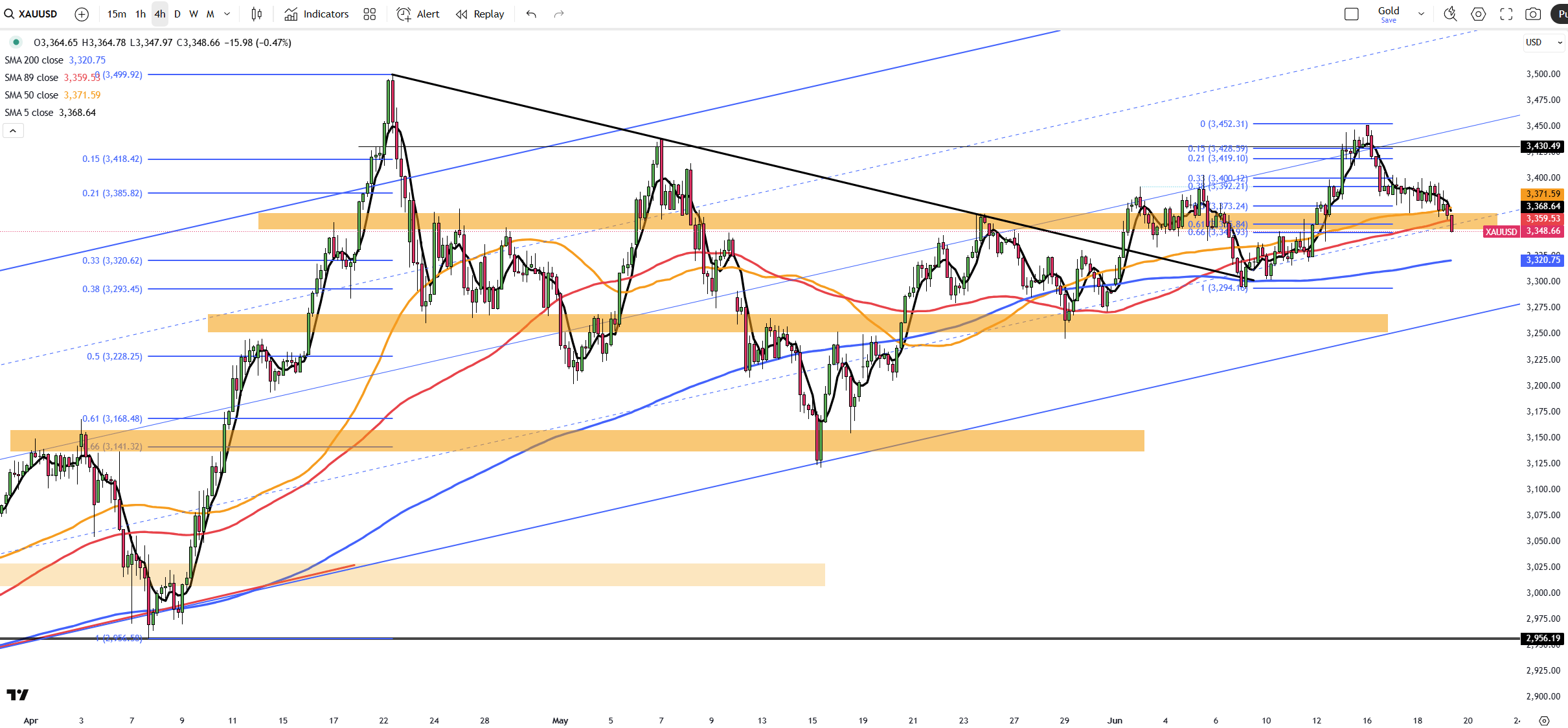
Gold rose toward $3,380 on Thursday, recovering earlier losses as safe-haven demand grew amid the escalating Israel-Iran conflict, now in its seventh day. Reports say Israel hit over 20 sites near Tehran, including nuclear and missile facilities, while the U.S. may join the strikes, raising fears of a broader war.
Meanwhile, the Fed held rates steady Wednesday but signaled two possible cuts this year, despite high inflation and slowing growth. The move followed renewed pressure from President Trump for deeper cuts.
Resistance is seen at $3,370, while support holds at $3,316
| R1: 3370 | S1: 3316 |
| R2: 3405 | S2: 3285 |
| R3: 3430 | S3: 3255 |
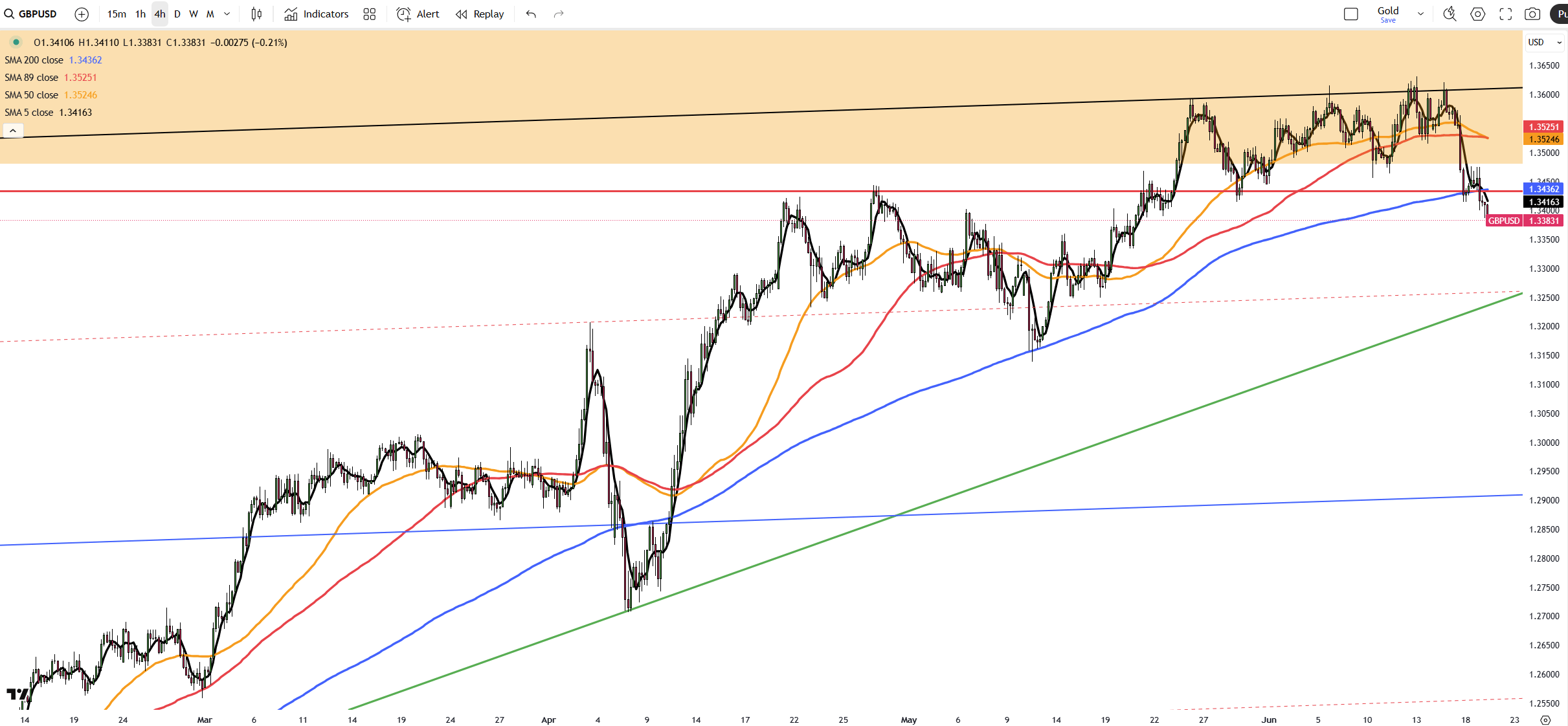
GBP/USD remains under pressure for a third day, trading near 1.3410 in Thursday’s Asian session, as safe-haven demand strengthens the US Dollar amid Israel-Iran tensions. The BoE is expected to hold rates at 4.25% today. UK inflation eased to 3.4% in May from 3.5%, in line with forecasts but still above the 2% target. Markets still price in about 48 basis points of BoE cuts by year-end.
Resistance is seen at 1.3440, while support holds at 1.3260.
| R1: 1.3440 | S1: 1.3260 |
| R2: 1.3600 | S2: 1.3165 |
| R3: 1.3700 | S3: 1.2890 |
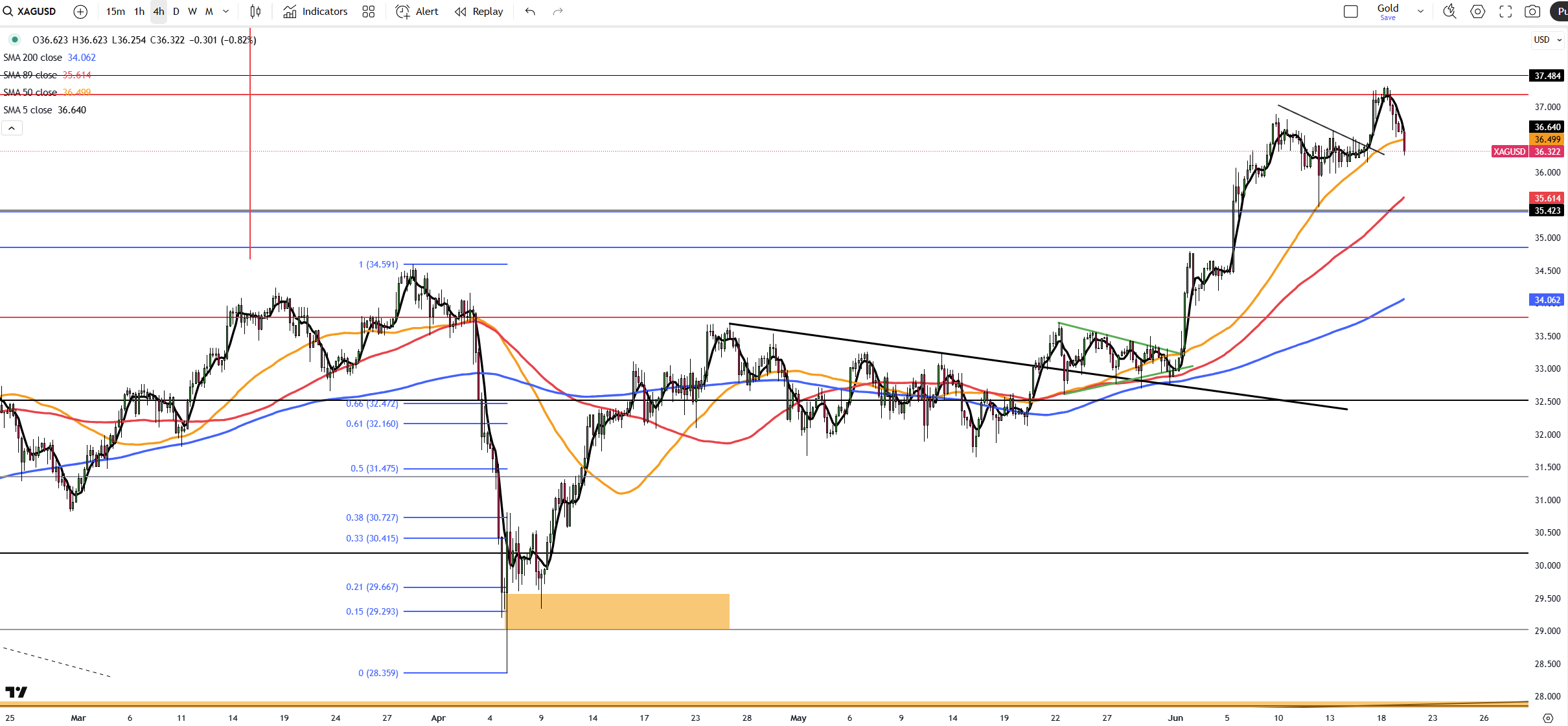
Silver holds near $36.75 in Thursday’s Asian session, steady after a slight pullback from its highest level since February 2012. The trend remains bullish, suggesting more upside. A sustained move above $36.45–$36.50 confirmed a breakout from a descending channel, forming a bullish flag. The RSI has eased from overbought, and momentum indicators support a positive near-term outlook.
The first resistance is seen at 37.50, while the support starts at 35.40.
| R1: 37.50 | S1: 35.40 |
| R2: 39.00 | S2: 34.85 |
| R3: 41.00 | S3: 33.80 |
Markets remained cautious ahead of the US Nonfarm Payrolls report, with EUR/USD edging higher on hawkish ECB signals while safe-haven demand continued to support the dollar.
Markets remained cautious as investors awaited key geopolitical updates and U.S. labor data.
Markets turned more optimistic as easing geopolitical tensions reduced safe-haven demand for the U.S. dollar.
Then Join Our Telegram Channel and Subscribe Our Trading Signals Newsletter for Free!
Join Us On Telegram!


