


U.S.–EU trade deal eased global tensions, lifting the euro and increasing risk appetite.
The EUR/USD climbed on hopes of a more diplomatic trade stance, while safe-haven demand for gold and the yen waned. Silver advanced, supported by industrial demand, and the pound found modest relief despite looming BoE rate cut bets. Traders now turn to the Fed’s decision and a busy U.S. data slate for the next catalyst.
| Time | Cur. | Event | Forecast | Previous |
| 16:00 | USD | 2-Year Note Auction | 3.786% | |
| 16:00 | USD | 5-Year Note Auction | 3.879% |
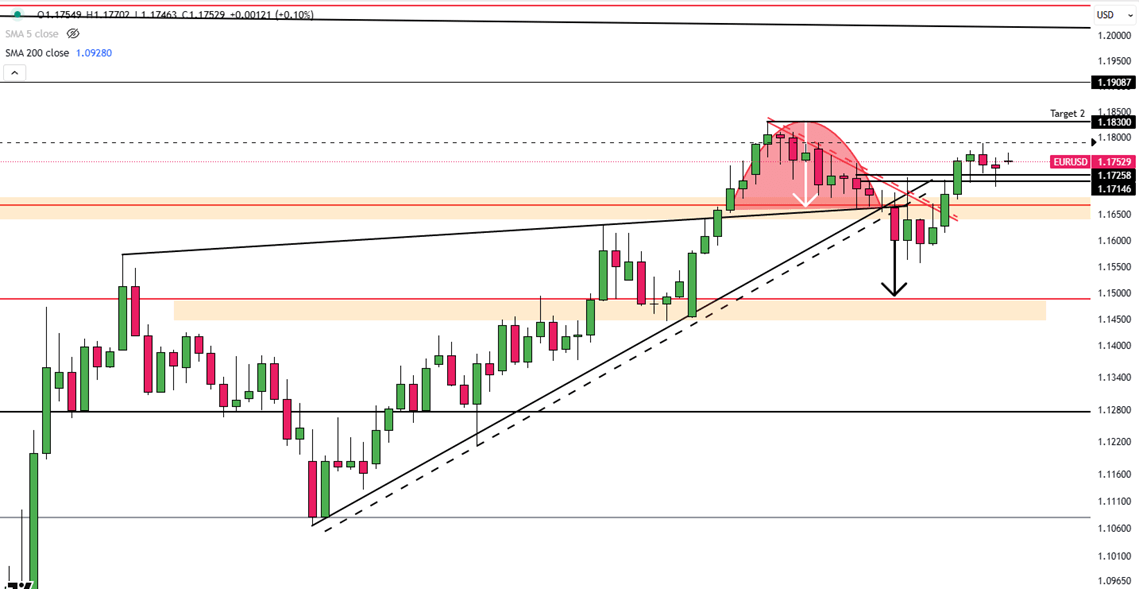
EUR/USD rose on Monday, lifted by risk-on sentiment after the U.S. and EU finalized a major trade agreement. The 15% tariff compromise, down from the threatened 30%, improved optimism over a more diplomatic trade stance, driving broad euro strength. With expectations that the Fed will keep rates steady this week and strike a cautious tone, the euro may see further gains.
EUR/USD faces resistance at 1.1830, with support at 1.1660.
| R1: 1.1830 | S1: 1.1660 |
| R2: 1.1900 | S2: 1.1590 |
| R3: 1.2000 | S3: 1.1500 |
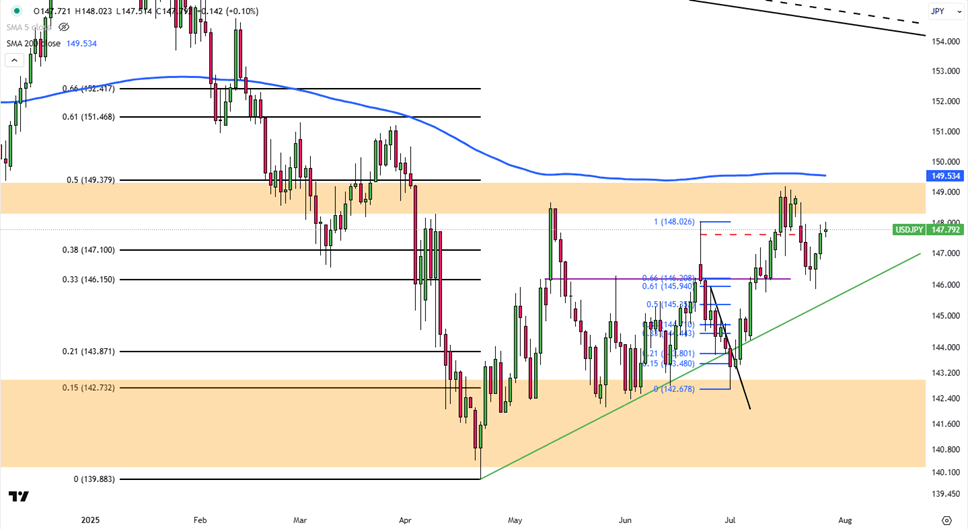
The Japanese yen weakened toward 148 per dollar, marking its third straight day of declines. Markets responded to easing trade tensions after the U.S.–EU agreement, which halved proposed tariffs to 15%. This followed recent deals with Japan and Indonesia, further dampening demand for defensive currencies. Attention now shifts to U.S.–China trade talks in Stockholm and the Bank of Japan’s upcoming decision, where no rate change is expected but an inflation outlook revision is likely.
The pair is seeing resistance at 148.50, with support at 147.50.
| R1: 148.50 | S1: 147.50 |
| R2: 149.30 | S2: 146.40 |
| R3: 150.00 | S3: 145.20 |
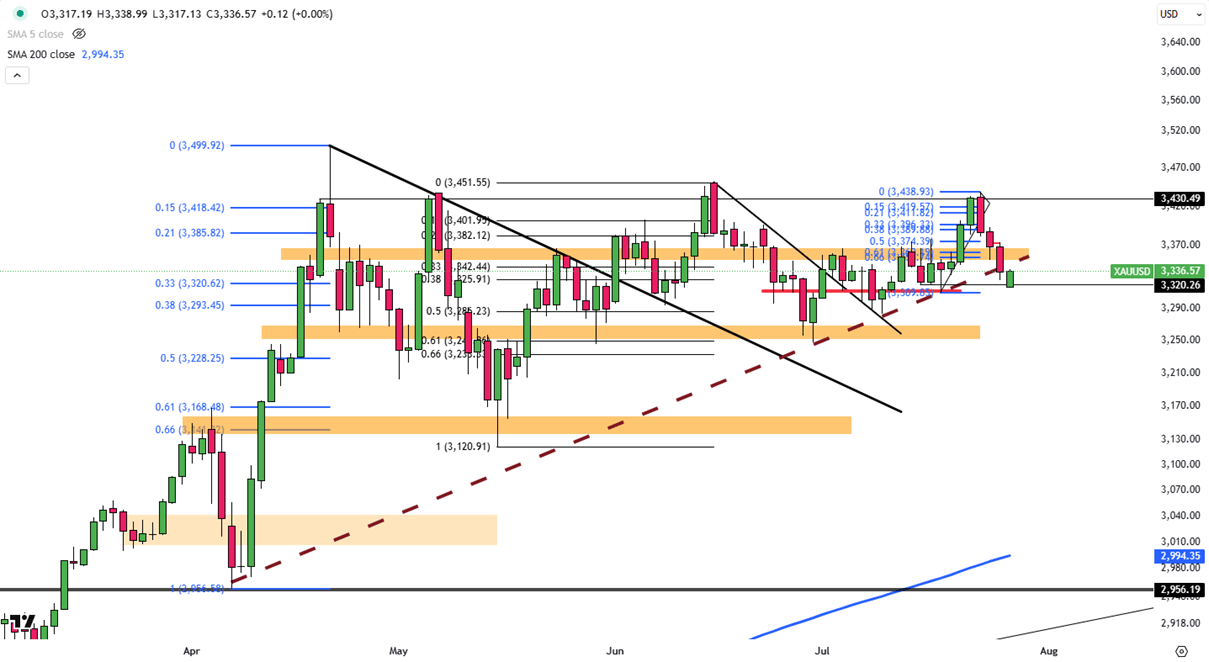
Gold is pressured by a decline in safe-haven flows. The U.S.–EU trade pact, which includes a 15% tariff and large investment pledges, mirrored elements of the earlier U.S.–Japan agreement. Attention now turns to a packed economic calendar, including the Fed meeting, JOLTS, ADP, payrolls, and PCE data. While the Fed is expected to hold rates steady, any dovish hints could reignite demand for gold.
Gold is testing resistance at $3,350, with support at $3,320.
| R1: 3350 | S1: 3320 |
| R2: 3367 | S2: 3285 |
| R3: 3420 | S3: 3250 |
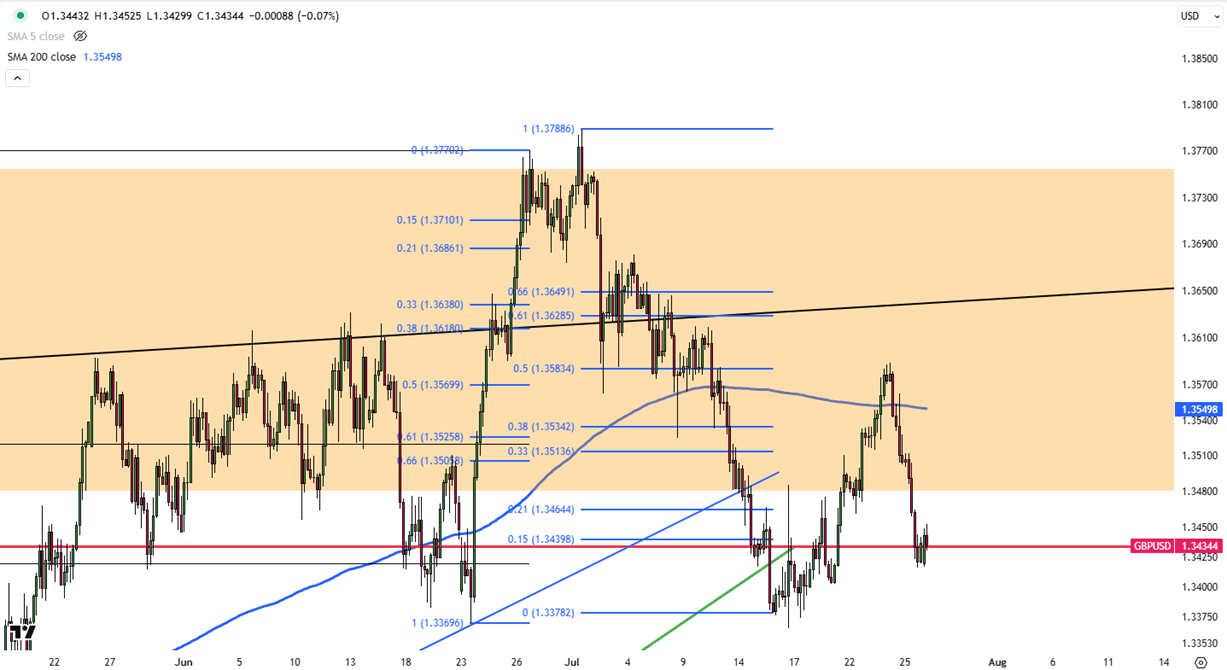
The GBP/USD pair remained range-bound during Monday’s Asian session, hovering around 1.3450 after a mild recovery from last week’s drop toward 1.3400. While the rebound signals some relief, upward momentum is limited as traders brace for a busy week of U.S. economic data, including the Fed’s policy decision, Q2 GDP, PCE inflation, and nonfarm payrolls, all of which could sway the dollar’s trajectory. The recent U.S.–EU trade deal has eased some safe-haven demand for the greenback, offering light support to sterling. Still, looming expectations of an August rate cut by the Bank of England continue to cap gains. With no major UK data on the calendar, broader dollar sentiment is likely to remain the key driver for the pair.
The pair faces resistance at 1.3480, with initial support at 1.3270.
| R1: 1.3480 | S1: 1.3270 |
| R2: 1.3600 | S2: 1.3140 |
| R3: 1.3640 | S3: 1.3380 |
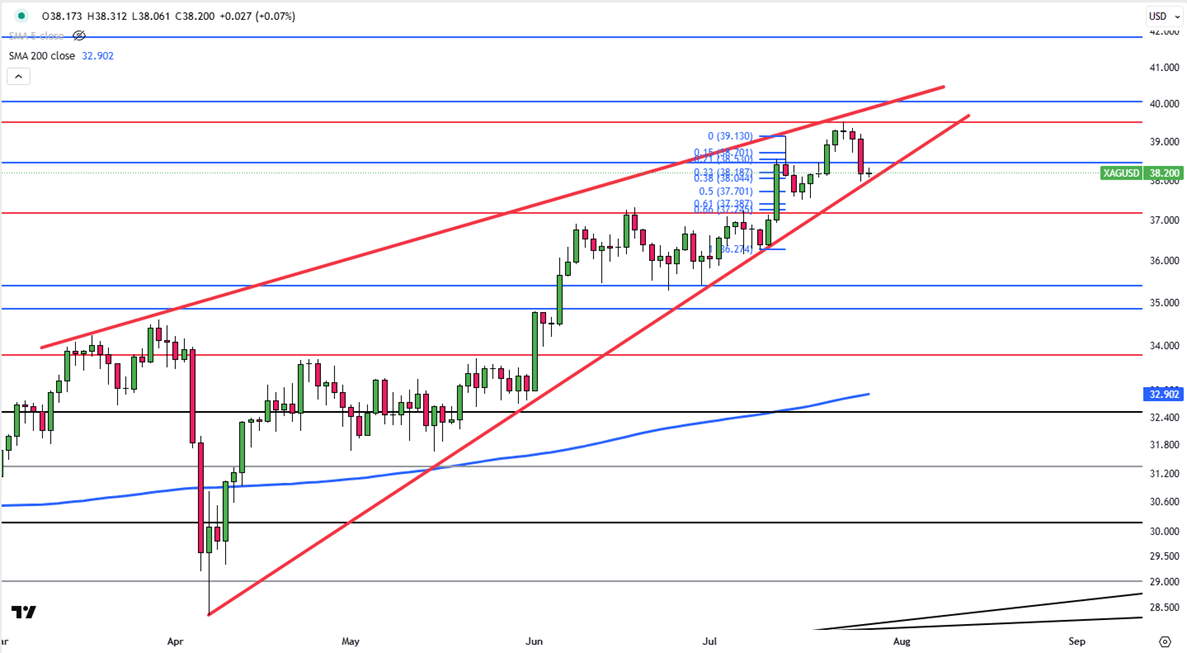
Silver gained 0.3% to trade at $38.25 per ounce Monday, supported by easing trade tensions and a modest dip in the U.S. dollar. The recent U.S.–EU agreement, which cut proposed tariffs in half, improved appetite for industrial and risk-sensitive assets. As silver benefits from both safe-haven and industrial demand, it remains supported even as gold loses momentum. Traders now await this week’s key U.S. data and Fed commentary for short-term direction.
Silver faces resistance at $39.50, with support at $37.40.
| R1: 39.50 | S1: 37.40 |
| R2: 40.10 | S2: 35.50 |
| R3: 41.90 | S3: 33.90 |
 Ceasefire Pause Eases Oil and Inflation Fears (27 – 31 July)
Global markets began the week on a more positive footing after a pause in US and Iranian military operations reduced immediate concerns over energy supplies and inflation. The United States quietly suspended its nearly two-week strike campaign against Iran late Friday, while Tehran halted retaliatory operations and entered discussions with Oman regarding the Strait of Hormuz. The developments pushed oil prices sharply lower, supporting precious metals and government bonds after weeks of pressure from rising energy costs.
Detail Fed in Focus Amid Easing Tensions (07.27.2026)Global markets began the week on a firmer footing as a pause in U.S.–Iran hostilities eased concerns over energy supplies and inflation.
Higher oil prices lifted inflation expectations, pushing the probability of a September Fed rate hike to 78%.
DetailThen Join Our Telegram Channel and Subscribe Our Trading Signals Newsletter for Free!
Join Us On Telegram!


