


Global markets began the week on a firmer footing as a pause in U.S.–Iran hostilities eased concerns over energy supplies and inflation.
Lower oil prices supported a rebound in gold and silver, while the dollar softened against the yen but remained supported by expectations that the Federal Reserve will leave interest rates unchanged this week. Investors are also monitoring the ECB's policy outlook, U.S. tariffs, and upcoming economic data for further direction.
| Time | Cur. | Event | Forecast | Previous |
| 12:30 | USD | Durable Goods Orders (MoM) (Jun) | 1.6% | -4.5% |
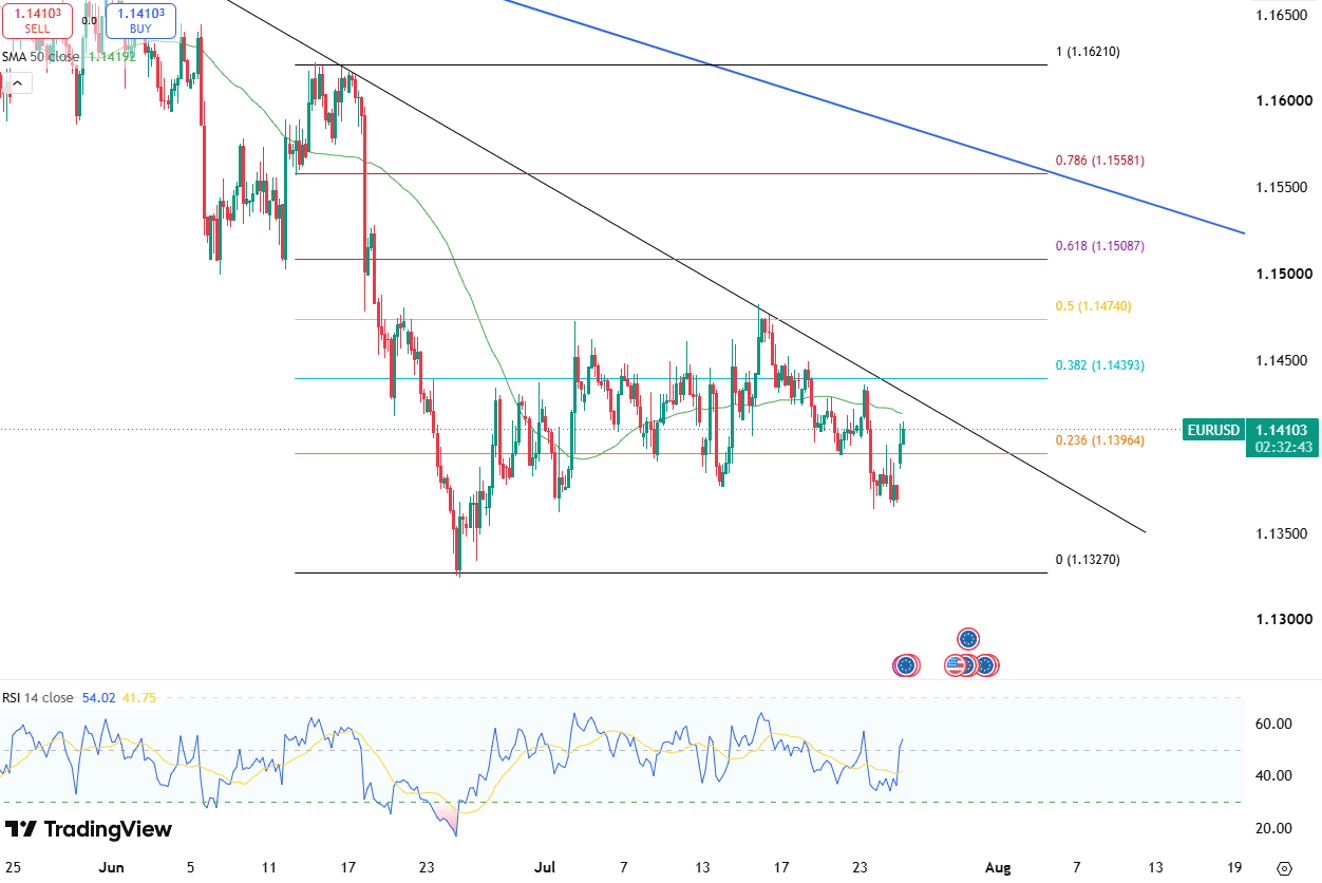
The euro traded around $1.1411, rising roughly 0.14% and keeping above key $1.1400 support following a slight bullish opening gap. While Middle East tensions and new U.S. tariffs sustained dollar demand, strong Eurozone business activity helped underpin the single currency. Although the ECB left interest rates unchanged, surging energy costs reinforced persistent inflation concerns, leaving markets anticipating a potential September rate hike as policymakers monitor incoming economic data.
The first resistance is positioned at 1.1430 while the support starts from 1.1380.
| R1: 1.1430 | S1: 1.1380 |
| R2: 1.1450 | S2: 1.1350 |
| R3: 1.1475 | S3: 1.1320 |
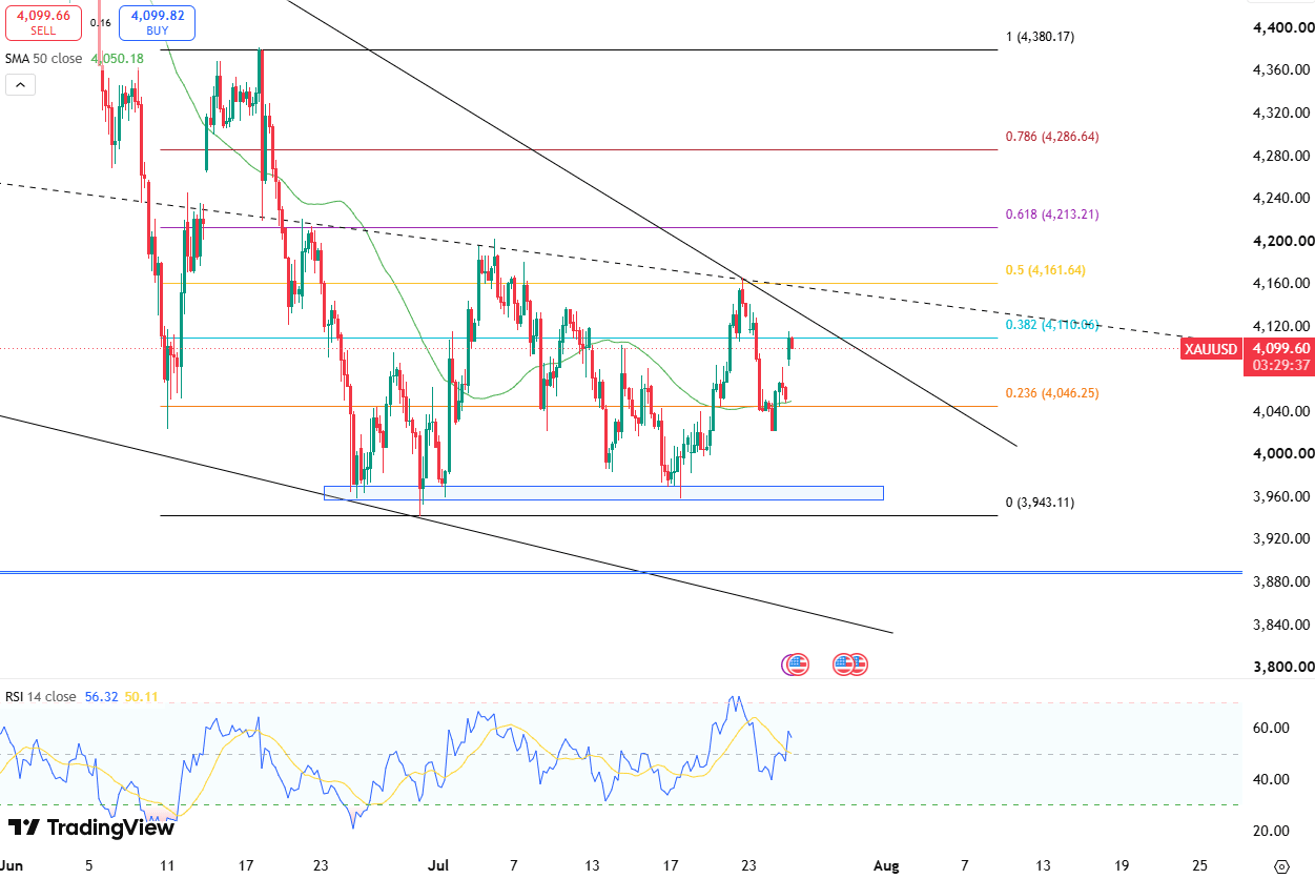
Gold rose 1% toward $4,100 on Monday, recovering from nine-month lows as a weekend pause in U.S.–Iran hostilities caused crude prices to tumble, easing energy supply and inflation worries. The U.S. quietly suspended its two-week strike campaign while Iran halted retaliatory actions and initiated talks with Oman regarding the Strait of Hormuz. Gold had struggled recently as disruptions spread from Hormuz to the Red Sea, with the Fed widely expected to hold rates steady on Wednesday before a September hike.
First resistance is seen at $4140, with initial support near $4060.
| R1: 4140 | S1: 4060 |
| R2: 4200 | S2: 4000 |
| R3: 4280 | S3: 3950 |
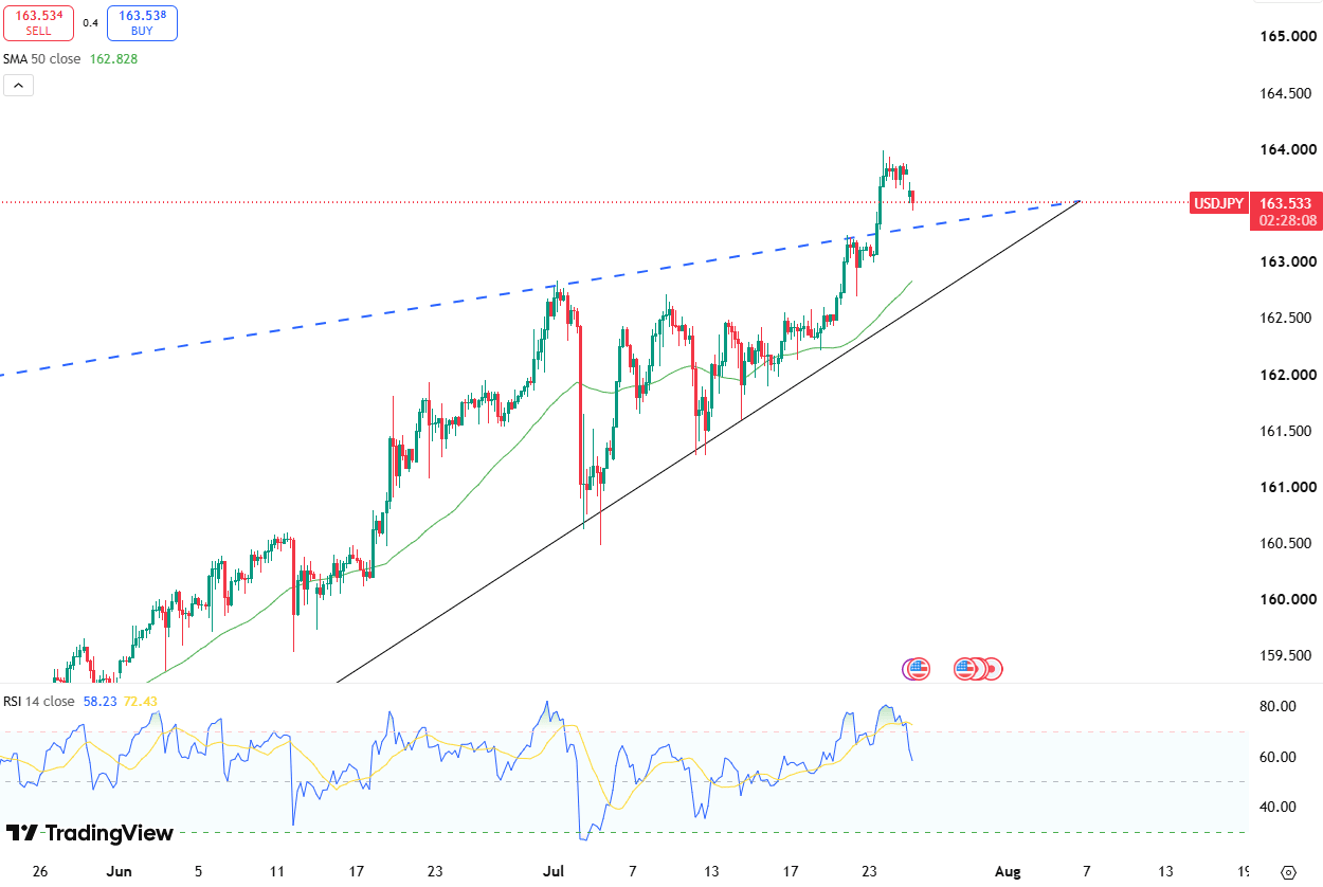
The Japanese yen advanced toward 163.5 per dollar on Monday as crude prices and the dollar retreated following a weekend pause in U.S.–Iran conflict. Although diplomatic efforts provided brief relief, Japan's heavy dependence on Middle Eastern oil leaves its economy vulnerable to energy shocks, contributing to falling approval ratings for Prime Minister Sanae Takaichi. Despite these modest gains, the yen remains near 40-year lows, with official intervention warnings providing little structural support.
Initial resistance stands at 164.00, while the first support is at 163.20.
| R1: 164.00 | S1: 163.30 |
| R2: 165.10 | S2: 162.80 |
| R3: 166.00 | S3: 162.40 |
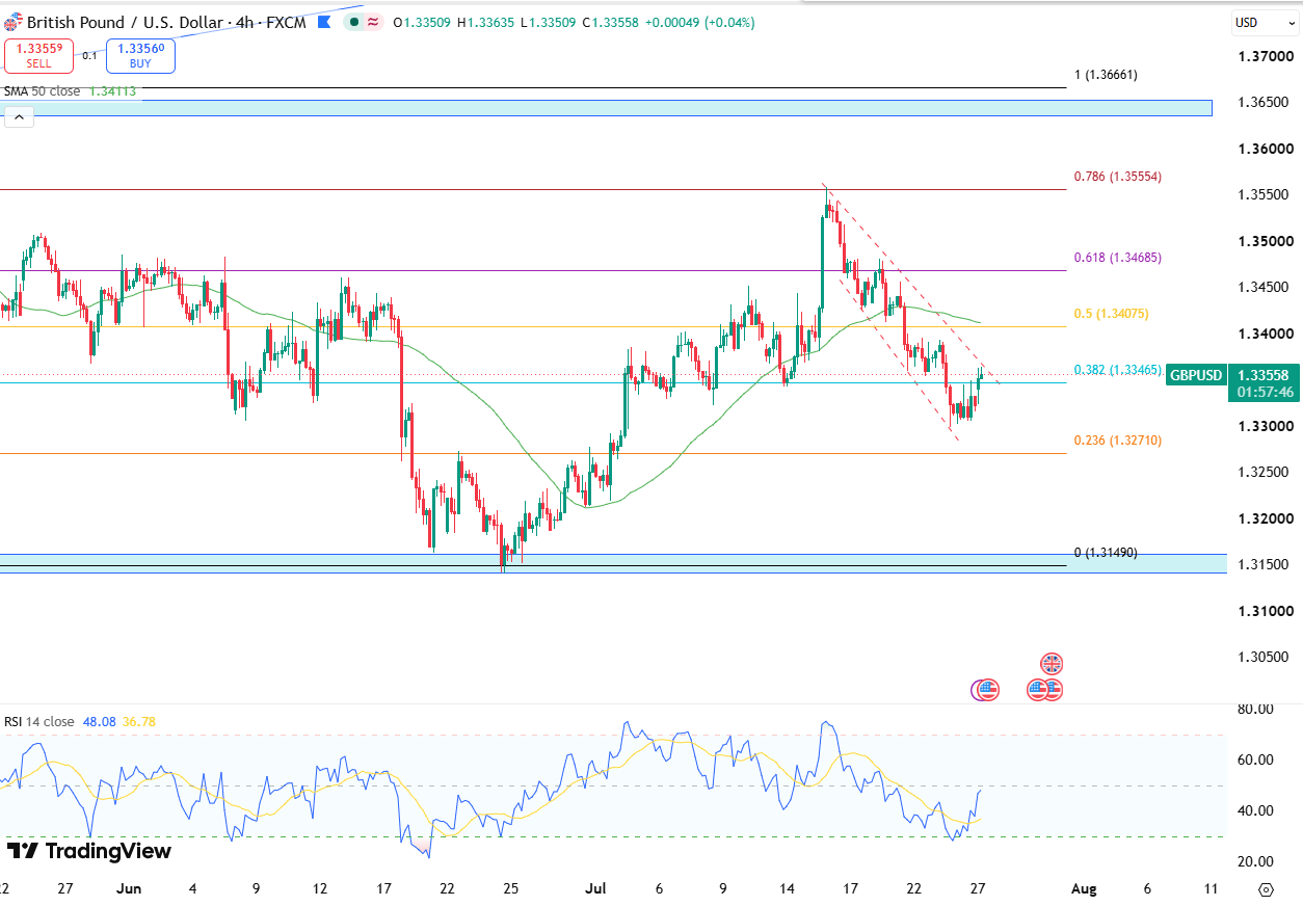
The British pound fluctuated around $1.33, remaining close to multi-week lows as safe-haven demand from Middle East friction and new U.S. tariffs sustained the dollar. Domestic economic indicators offered underlying support, as June retail sales grew 1%, driven by warm weather and World Cup spending. Furthermore, UK consumer confidence reached a six-month high, while business activity returned to growth, cushioning the currency despite broader global risk headwinds.
From a technical view, resistance stands near 1.3380, with support around 1.3300.
| R1: 1.3380 | S1: 1.3300 |
| R2: 1.3430 | S2: 1.3260 |
| R3: 1.3480 | S3: 1.3200 |
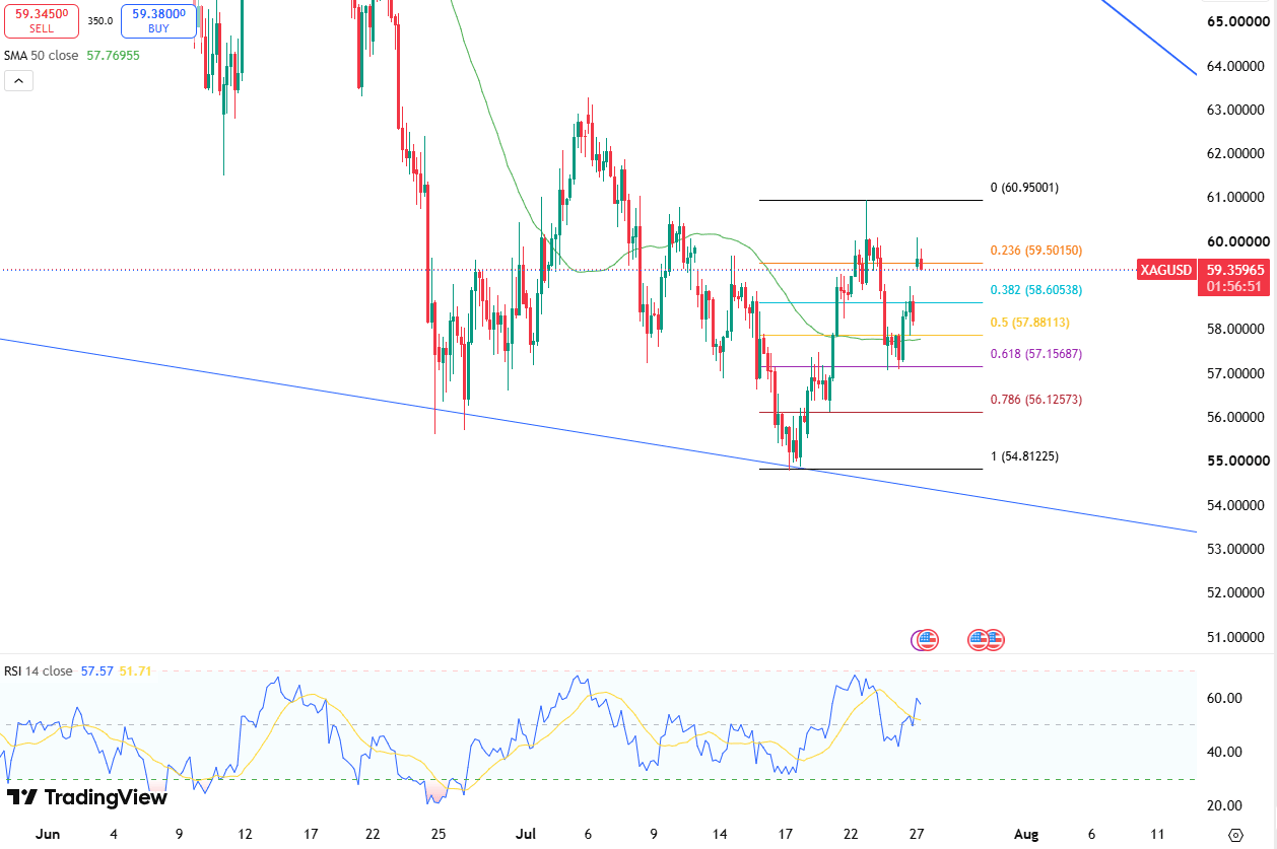
Silver rose over 2% toward $60, rebounding from eight-month lows as crude prices tumbled following a weekend pause in U.S.–Iran conflict. The U.S. suspended its two-week strike campaign while Iran ended retaliatory strikes to initiate talks with Oman regarding the Strait of Hormuz. Lower energy prices eased inflation concerns, offering immediate relief to precious metals as markets anticipate the Federal Reserve will maintain interest rates this week before a potential September hike.
From a technical view, resistance stands near $60.50, while support is located around $58.60.
| R1: 60.50 | S1: 58.60 |
| R2: 63.00 | S2: 56.50 |
| R3: 65.20 | S3: 55.00 |
Elevated oil prices and rising Treasury yields weighed on precious metals as persistent geopolitical tensions reinforced inflation concerns and expectations for further Federal Reserve tightening.
 European Daylight Saving Time (October 25, 2026)
We would like to inform you of upcoming adjustments to the trading schedule for selected instruments due to the end of Daylight Saving Time (DST) in Europe on October 25, 2026.
Detail Dollar Retreats as Safe-Haven Demand Rises (19 – 23 October)
Financial markets entered the week balancing persistent US inflation against growing concerns over equity valuations and artificial intelligence spending. The Dollar Index slipped to 101.6, recording its first weekly decline in four weeks, while safe-haven demand supported government bonds and precious metals. Despite stronger consumer and producer inflation, markets now assign an 85% probability to the Federal Reserve holding rates in October, with a 77% chance of another increase in December.
DetailThen Join Our Telegram Channel and Subscribe Our Trading Signals Newsletter for Free!
Join Us On Telegram!


