


Sentiment improved at the start of the week as hopes for a potential US-Iran agreement reduced demand for the US dollar and eased concerns over energy supply disruptions.
The euro, yen, gold, and silver all moved higher, supported by expectations that the proposed deal could reopen the Strait of Hormuz and lower regional tensions.
The British pound remained resilient despite disappointing UK retail sales and a widening budget deficit, highlighting a mixed picture across major currencies and precious metals.
| Time | Cur. | Event | Forecast | Previous |
| - | GBP | United Kingdom - Spring Bank Holiday | - | - |
| - | USD | United States - Memorial Day | - | - |
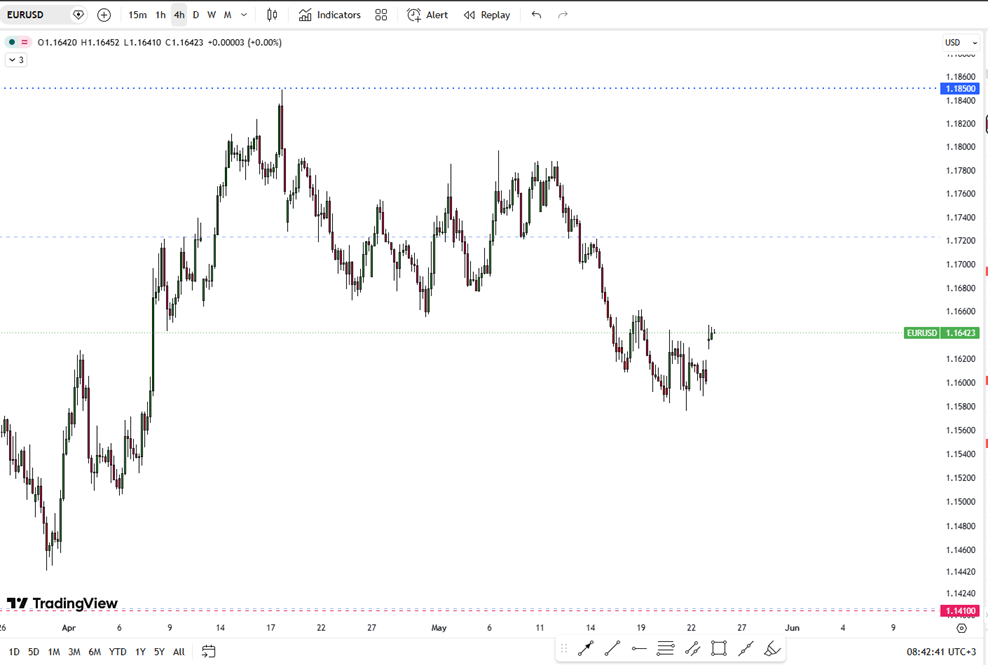
EUR/USD began the week on a firmer note as renewed confidence in a possible US-Iran agreement reduced demand for the US dollar. The pair climbed back into the middle of the 1.1600 range during Asian trading, recovering ground lost late last week.
Even so, the rebound remains in its early stages. Last Thursday’s slide to 1.1575 marked the lowest level since early April, leaving traders cautious about whether the latest advance can develop into a broader move higher.
For EUR/USD, the initial resistance is seen at 1.1660, while the closest support is positioned at 1.1580.
| R1: 1.1660 | S1: 1.1580 |
| R2: 1.1700 | S2: 1.1520 |
| R3: 1.1750 | S3: 1.1440 |
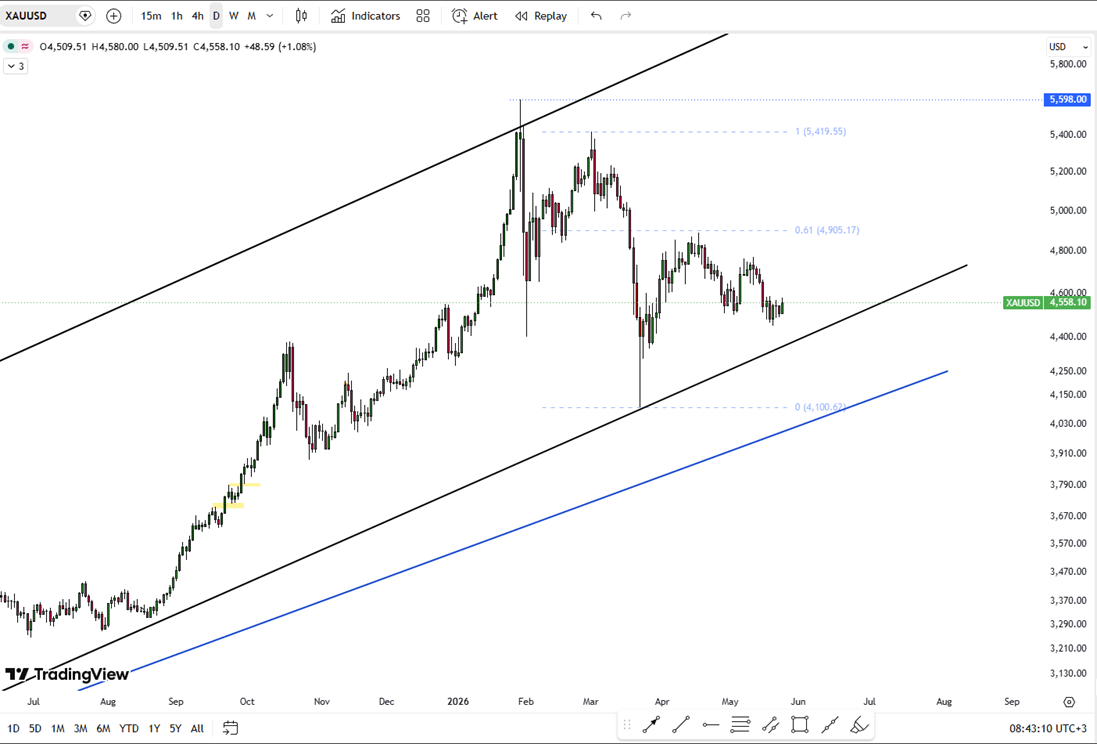
Gold moved back toward the $4,600 mark, recovering after last week’s pullback as expectations for a potential US-Iran agreement improved market sentiment. Reports indicated the proposal could reopen the Strait of Hormuz, facilitate the release of frozen Iranian assets, reduce regional conflict, and establish a framework for future discussions on Iran’s nuclear activities.
With concerns surrounding energy disruptions easing, the metal regained traction after several sessions of weakness.
First resistance is seen at $4590, with initial support near $4500.
| R1: 4590 | S1: 4500 |
| R2: 4650 | S2: 4450 |
| R3: 4740 | S3: 4310 |
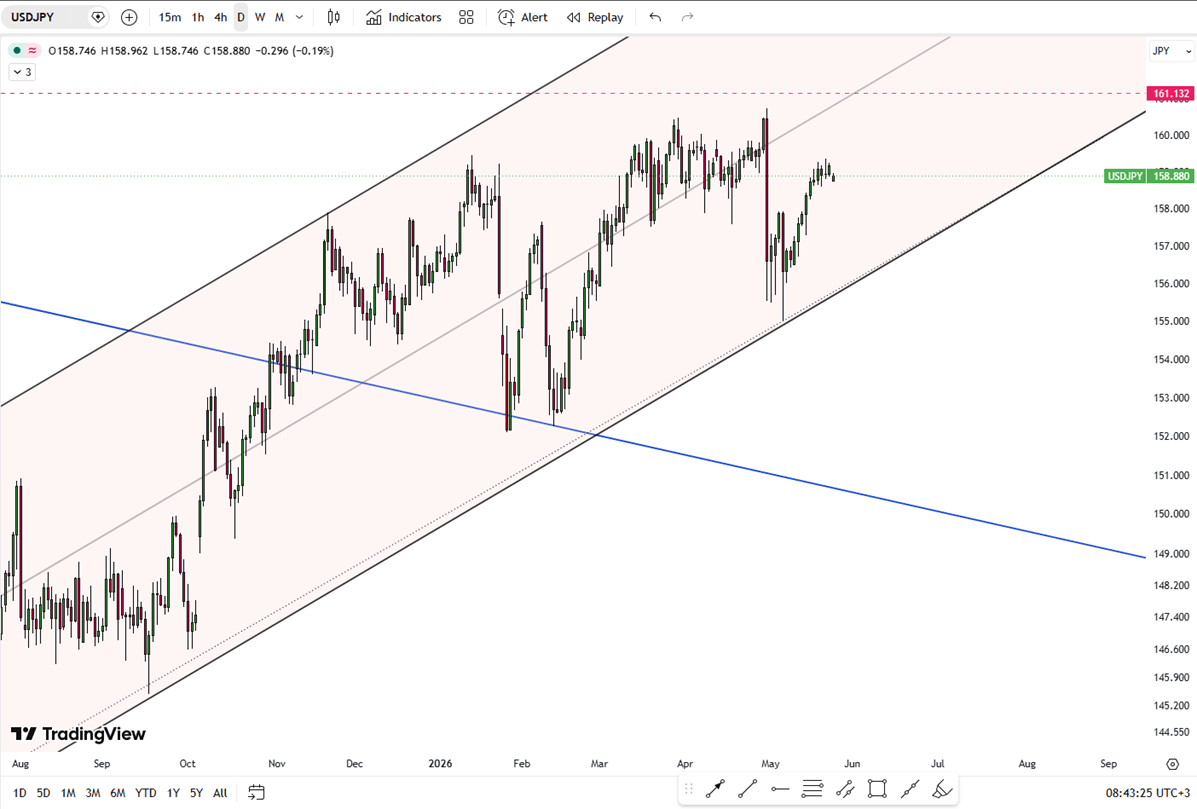
The Japanese yen strengthened beyond 159 per dollar at the start of the week, recovering from its weakest level in three weeks. A decline in oil prices and broad-based dollar weakness improved sentiment toward the Japanese currency.
The prospect of smoother crude flows helped ease pressure on economies heavily reliant on imported oil.
Initial resistance stands at 159.50, while the first support is located at 158.20.
| R1: 159.50 | S1: 158.20 |
| R2: 161.50 | S2: 157.20 |
| R3: 163.20 | S3: 156.00 |
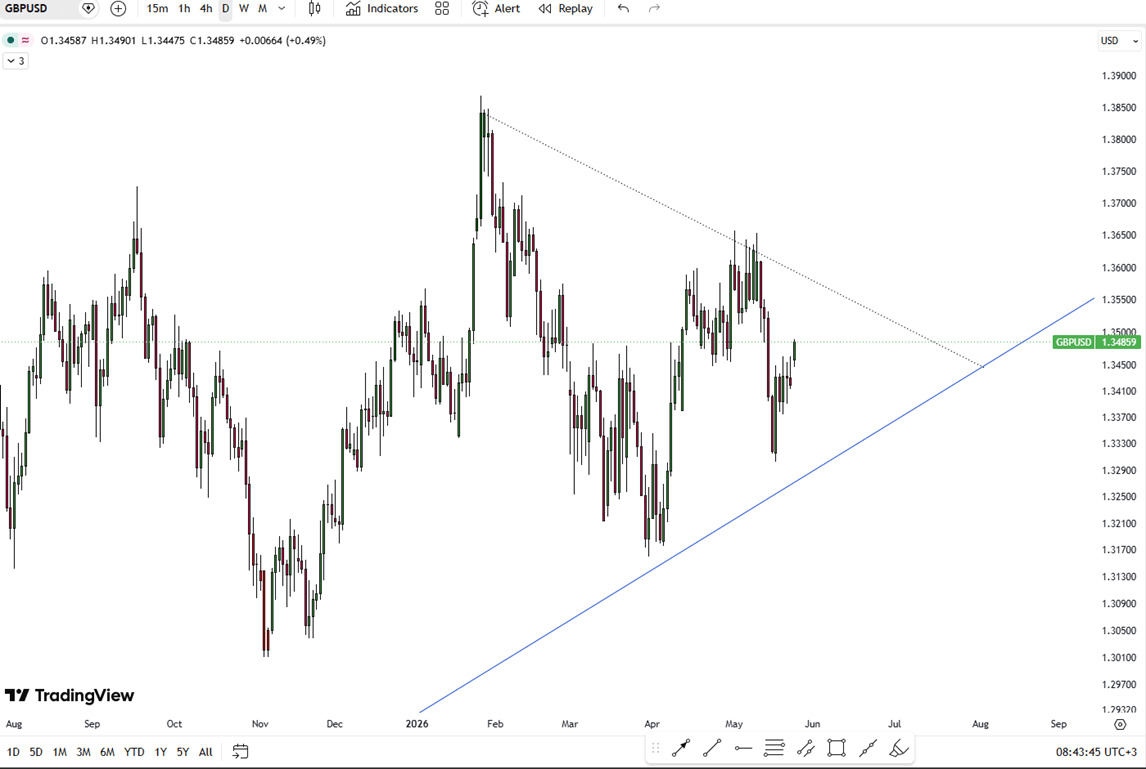
The British pound remained comfortably above $1.34 despite a series of weaker-than-expected economic releases. Retail sales fell 1.3% in April, more than double the forecast decline of 0.6%, largely driven by reduced fuel purchases as higher prices weighed on demand.
Public finances also deteriorated, with the budget deficit widening to £24.3 billion. The figure exceeded forecasts and represented the largest April shortfall since 2020, highlighting ongoing pressure on government finances.
From a technical view, resistance stands near 1.3520, with support around 1.3440.
| R1: 1.3250 | S1: 1.3440 |
| R2: 1.3580 | S2: 1.3350 |
| R3: 1.3630 | S3: 1.3200 |
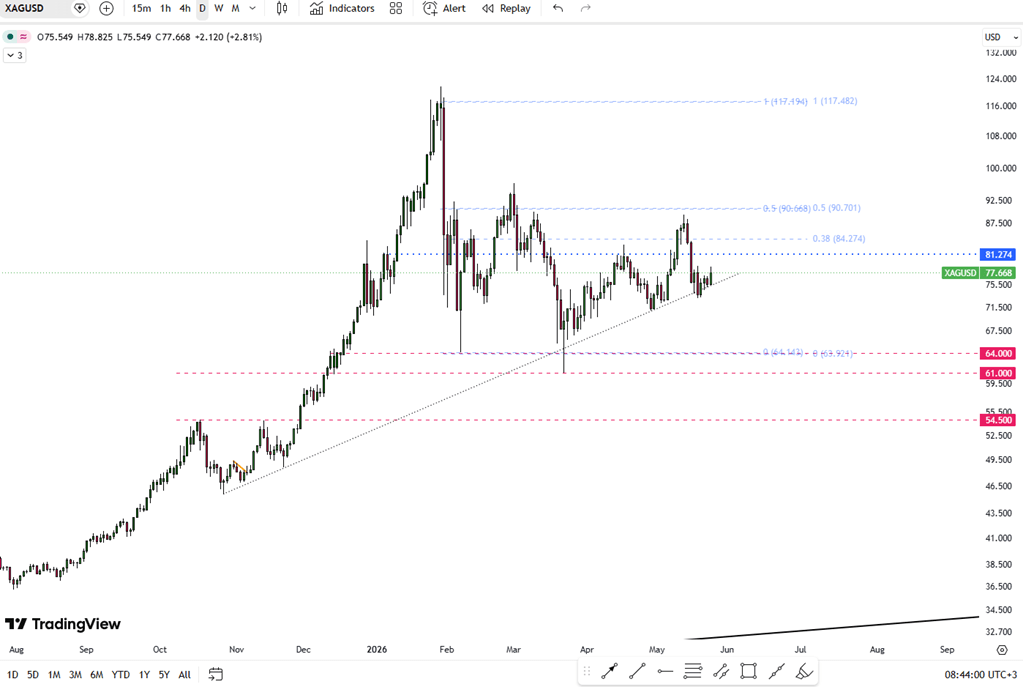
Silver advanced toward $78 per ounce, reversing part of last week’s decline as confidence improved around a potential US-Iran agreement.
The improvement in geopolitical dialogue supported demand for precious metals and helped silver regain momentum after a softer finish to the previous week.
From a technical view, resistance stands near $78.70 while support is located around $75.
| R1: 78.70 | S1: 75.00 |
| R2: 80.50 | S2: 72.80 |
| R3: 82.50 | S3: 69.00 |
 US Inflation Hits 3.7% as Energy Prices Surge
September’s inflation report reveals new price pressures across the US economy.
Detail Dollar Retreat Supports Metals (10.15.2026)A softer US dollar and declining Treasury yields offered some relief to financial markets as Federal Reserve officials signaled a willingness to pause rate adjustments.
Houthi missile attacks on Saudi Aramco and stepped-up Iranian strikes on tankers in Hormuz deepened worries over supply, while the IMF flagged threats to global growth from the Middle East conflict, high debt levels and a potential AI-boom reversal.
DetailThen Join Our Telegram Channel and Subscribe Our Trading Signals Newsletter for Free!
Join Us On Telegram!


