


Markets remained risk-averse as geopolitical tensions and anticipation of key U.S. labor data supported the dollar.
EUR/USD stayed under pressure with a bearish outlook as investors focused on upcoming Nonfarm Payrolls and ongoing Middle East uncertainty. The Japanese yen strengthened beyond the 160 level amid rising intervention warnings, while sterling weakened further as confidence data deteriorated. In commodities, gold rebounded toward $4,500 on safe-haven demand, and silver remained volatile as the conflict showed no signs of easing. Overall, sentiment continues to favor the dollar as traders await clearer signals from economic data and geopolitical developments.
| Time | Cur. | Event | Forecast | Previous |
| 0.2% | ||||
| Fed Chair Powell Speaks |
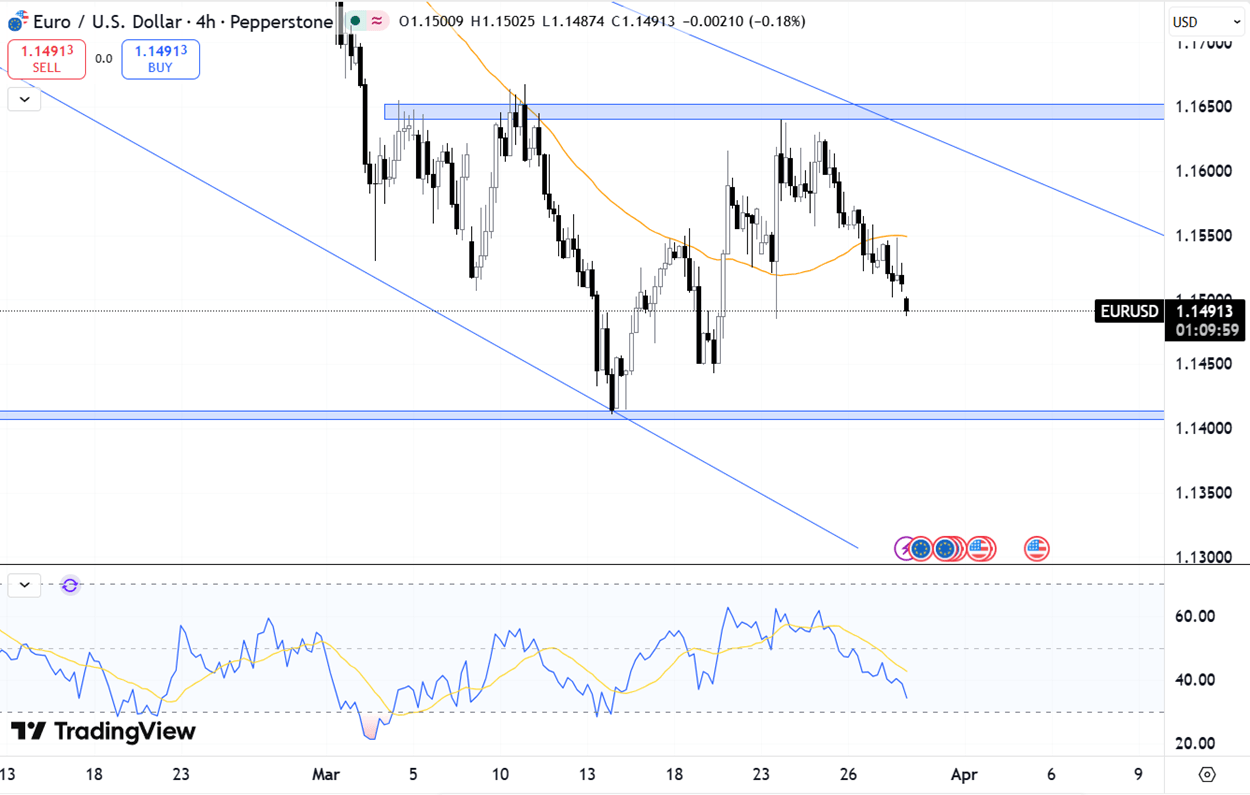
The EUR/USD pair remains under significant pressure as markets shift their focus to upcoming U.S. labor data, specifically Friday’s Nonfarm Payrolls (NFP) report. Despite a temporary pause in U.S. strikes on Iranian energy infrastructure, Middle East tensions continue to discourage investor sentiment. Traders are closely monitoring preliminary employment indicators for hints regarding labor market resilience. In this risk-averse climate, safe-haven demand for the U.S. dollar is reinforcing a increasingly bearish long-term outlook for the euro.
For EUR/USD, the initial resistance is seen at 1.1560, while the closest support is positioned at 1.1460.
| R1: 1.1560 | S1: 1.1460 |
| R2: 1.1630 | S2: 1.1410 |
| R3: 1.1710 | S3: 1.1350 |
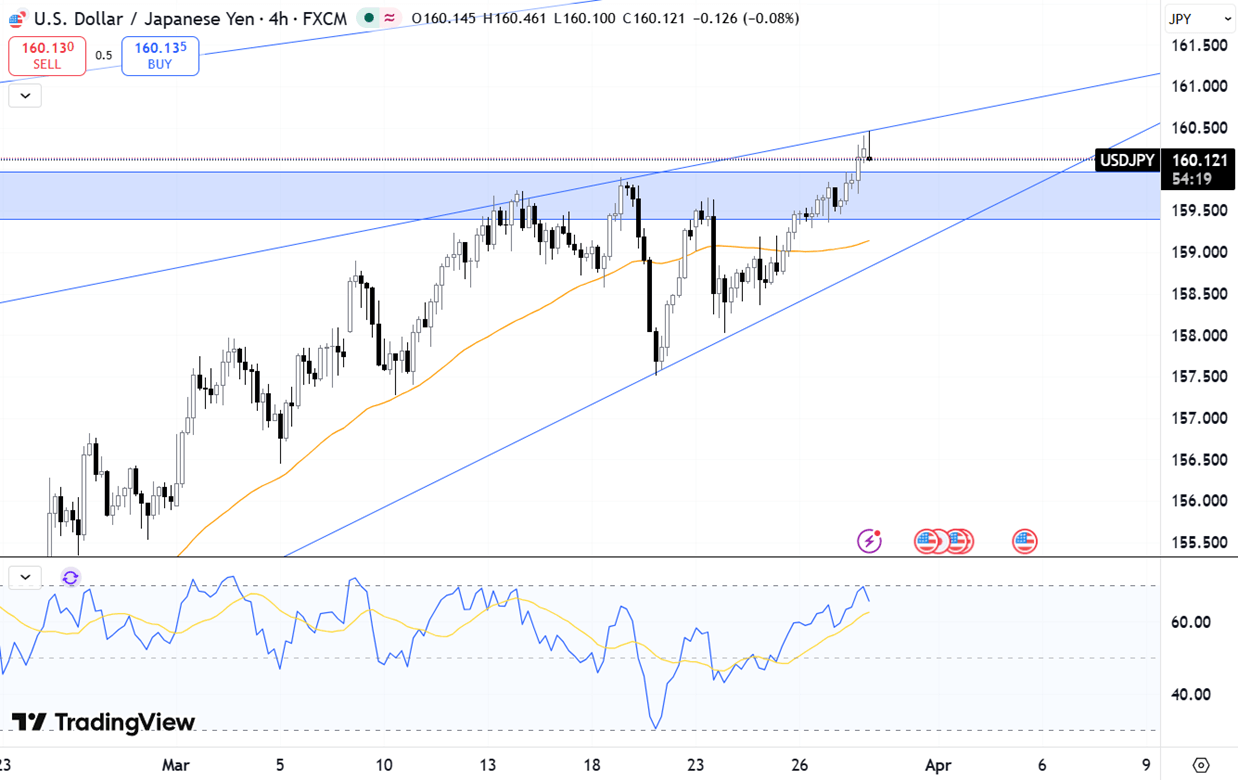
The Japanese yen surged beyond 160 per dollar on Monday, recovering from earlier losses as officials ramped up verbal warnings. Vice Finance Minister Atsushi Mimura expressed growing concern over speculative spikes in both currency and crude oil futures. His comments signaled that authorities remain on high alert and are prepared to take direct action to stabilize the market.
Technically, resistance stands near 160.50, while support is firm at 159.30.
| R1: 160.50 | S1: 159.30 |
| R2: 161.70 | S2: 158.40 |
| R3: 162.30 | S3: 157.60 |
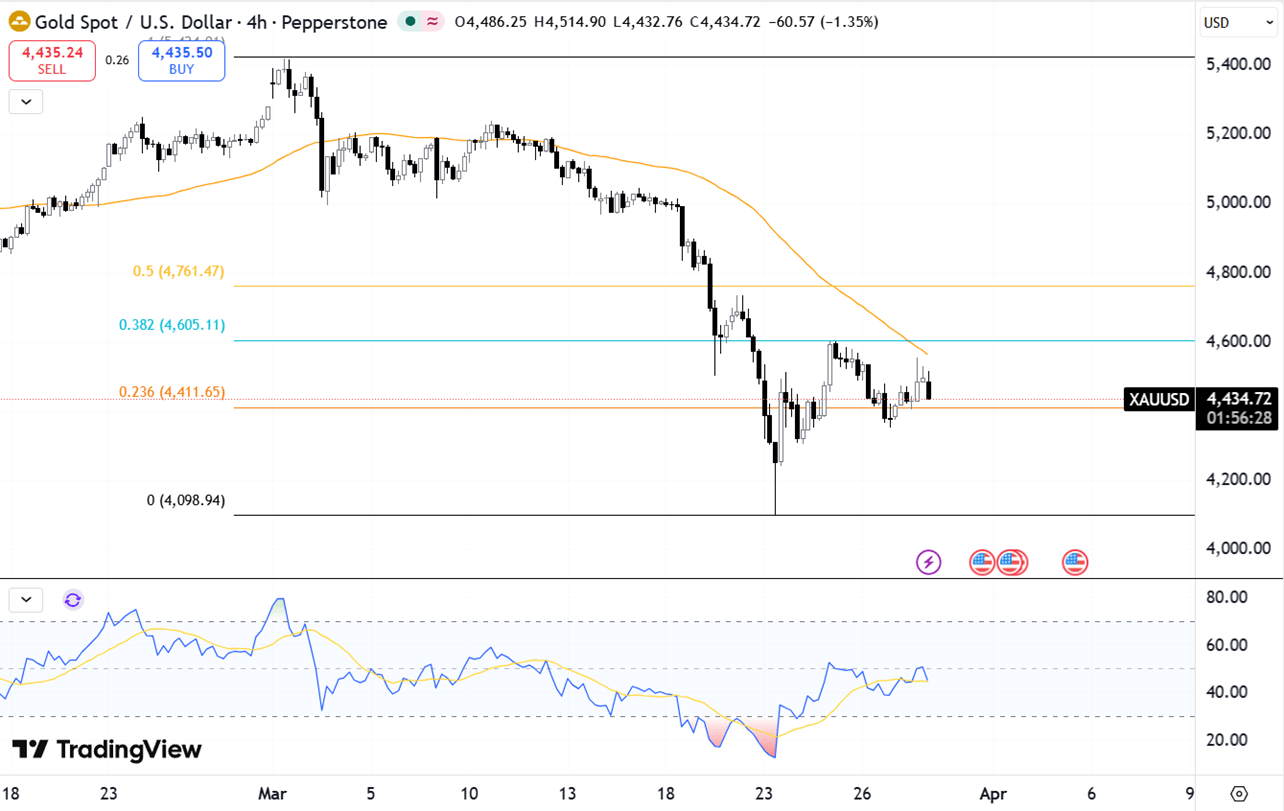
Gold climbed back to $4,500 per ounce on Monday, recovering from earlier losses as the Middle East conflict entered a volatile fifth week. Tensions surged as Yemen’s Houthi forces launched attacks on Israel, threatening critical Red Sea shipping lanes and Saudi energy infrastructure. This expansion of the war front continues to drive haven demand amid persistent geopolitical uncertainty.
Gold sees support near $4350, while resistance is around $4520.
| R1: 4250 | S1: 4350 |
| R2: 4580 | S2: 4270 |
| R3: 4650 | S3: 4200 |
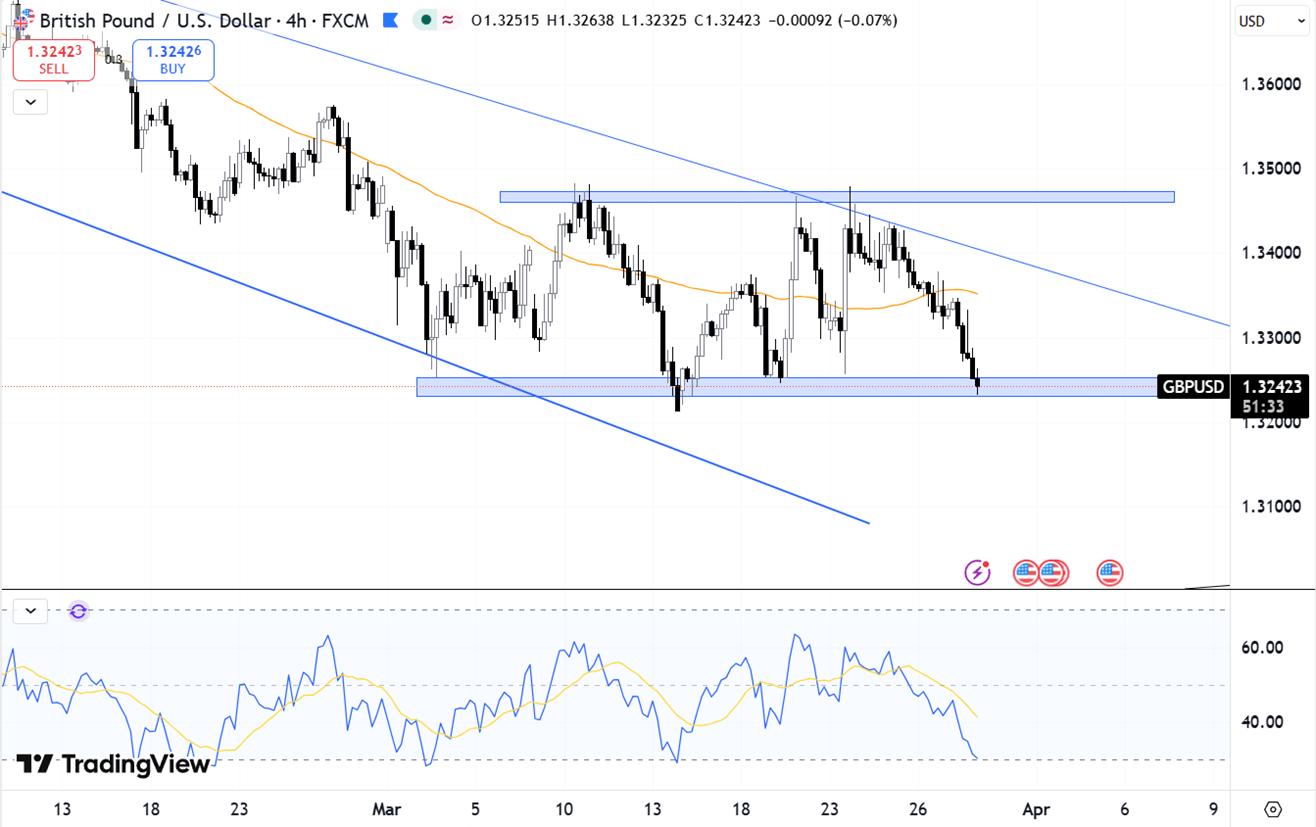
The British pound fell toward $1.33 as investors sought safety amid escalating US-Iran tensions. UK consumer confidence dropped to record lows in March, fueling inflation worries. Markets now price in two to three Bank of England rate hikes, with a 70% probability of one next month and a second expected by July.
From a technical view, support stands near 1.3220, with resistance around 1.3300.
| R1: 1.3300 | S1: 1.3220 |
| R2: 1.3350 | S2: 1.3100 |
| R3: 1.3430 | S3: 1.3000 |
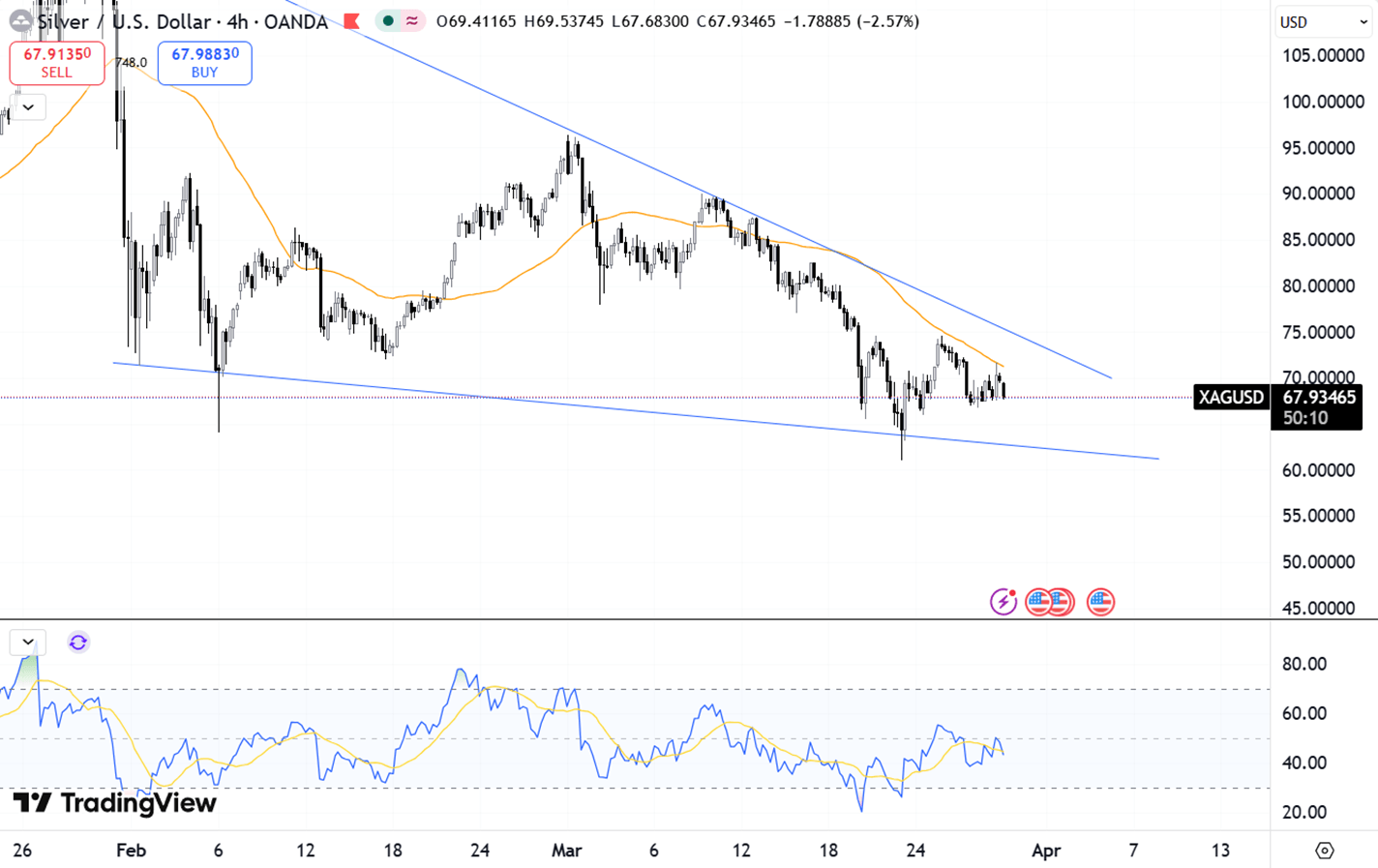
Silver recovered to around $70 per ounce on Monday after earlier losses, but remained highly volatile as the Middle East conflict is not close to resolution. Tensions escalated as Iran-backed Houthi militants. Reports also indicate the US military is preparing for extended ground operations in Iran following the deployment of additional troops.
From a technical view, resistance stands near $70.00 while support is located around $67.20.
| R1: 70.00 | S1: 67.20 |
| R2: 72.50 | S2: 65.00 |
| R3: 74.50 | S3: 63.50 |
Markets remain volatile as Trump orders a prolonged naval blockade of the Strait of Hormuz to pressure Iran, further restricting global oil shipments.
Detail Growth Slows, Inflation Lingers (04.28.2026)The Bank of Japan held its policy rate at 0.75% in April, keeping borrowing costs at their highest level since 1995.
Detail Oil Surge and Stalled Talks Fuel Tension (27 April – 1 May)
Global markets moved into a risk-sensitive phase this week as stalled US–Iran negotiations and renewed tensions in the Strait of Hormuz reshaped sentiment. Safe-haven demand returned as reports of naval activity and continued blockades signaled that a quick resolution remains unlikely. With the key shipping route still largely restricted, energy prices surged, feeding directly into inflation concerns and shifting expectations across currencies, commodities, and bond markets.
DetailThen Join Our Telegram Channel and Subscribe Our Trading Signals Newsletter for Free!
Join Us On Telegram!


