


Markets turned more optimistic as easing geopolitical tensions reduced safe-haven demand for the U.S. dollar.
EUR/USD climbed above 1.1550, supported by improved risk appetite and expectations of a more hawkish ECB stance amid energy-driven inflation. The Japanese yen held near 160 with continued intervention signals, while sterling rebounded after recent losses as the dollar softened. In commodities, gold rallied toward $4,700 on easing rate expectations, whereas silver remained under pressure despite brief stabilization, reflecting the broader impact of higher-for-longer interest rate outlooks. Overall sentiment improved, though markets remain sensitive to upcoming U.S. data and geopolitical developments.
| Time | Cur. | Event | Forecast | Previous |
| 15:15 | USD | ADP Nonfarm Employment Change (Mar) | 41K | 63K |
| 15:30 | USD | Retail Sales (MoM) (Feb) | 0.5% | -0.2% |
| 15:30 | USD | Core Retail Sales (MoM) (Feb) | 0.3% | 0.0% |
| 16:45 | USD | S&P Global Manufacturing PMI (Mar) | 52.4 | 51.6 |
| 17:00 | USD | ISM Manufacturing PMI (Mar) | 52.3 | 52.4 |
| 17:00 | USD | ISM Manufacturing Prices (Mar) | 73.8 | 70.5 |
| 17:30 | USD | Crude Oil Inventories | -1.300M | 6.926M |
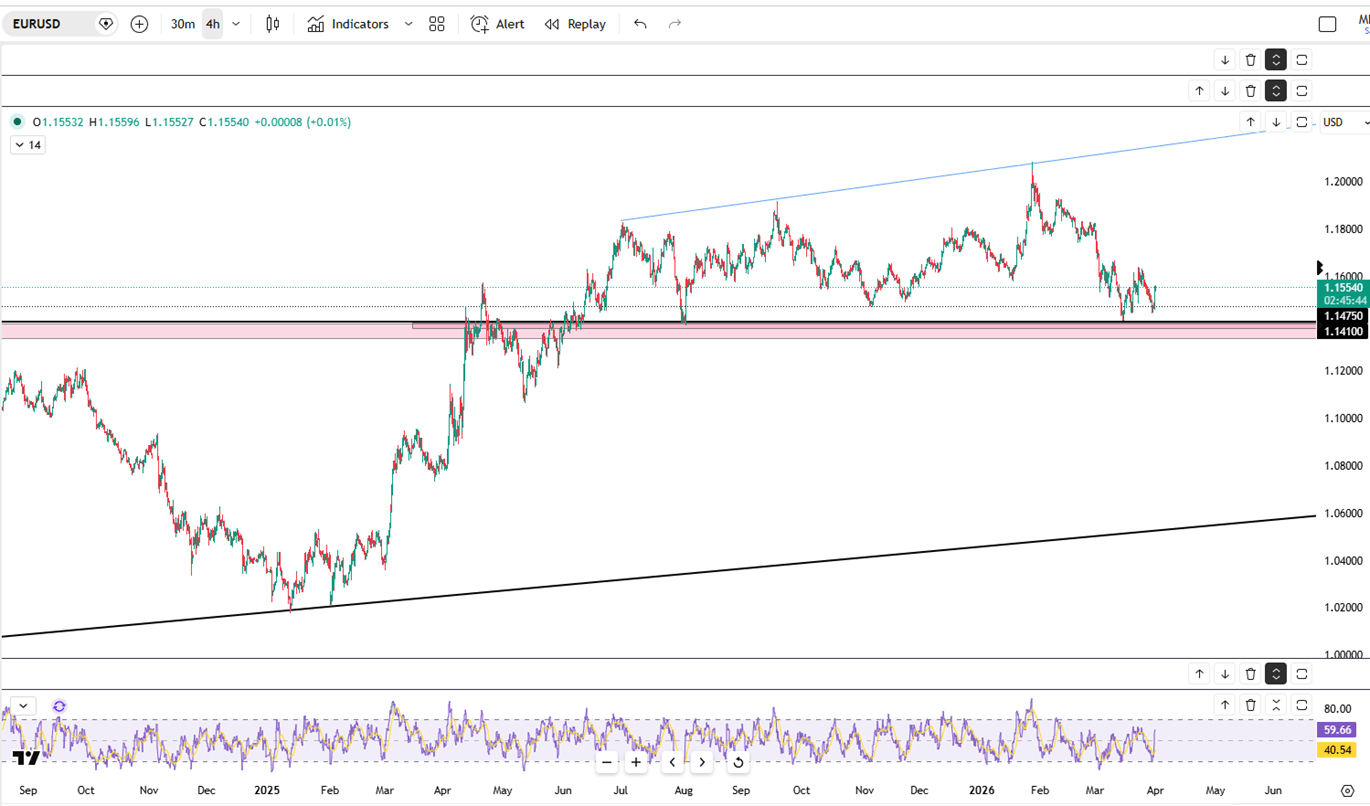
EUR/USD climbed past 1.1550 as the US dollar retreated amid improving risk appetite. Optimism surged following Donald Trump’s signals of a potential withdrawal from the Iran conflict within three weeks, dampening safe-haven demand. The euro found support as ECB officials suggested that heightened energy-driven inflation risks might necessitate a more hawkish policy. This combination of easing geopolitical tensions and shifting interest rate expectations continues to drive the pair’s recovery.
For EUR/USD, the initial resistance is seen at 1.1570, while the closest support is positioned at 1.1510.
| R1: 1.1570 | S1: 1.1510 |
| R2: 1.1610 | S2: 1.1450 |
| R3: 1.1650 | S3: 1.1410 |
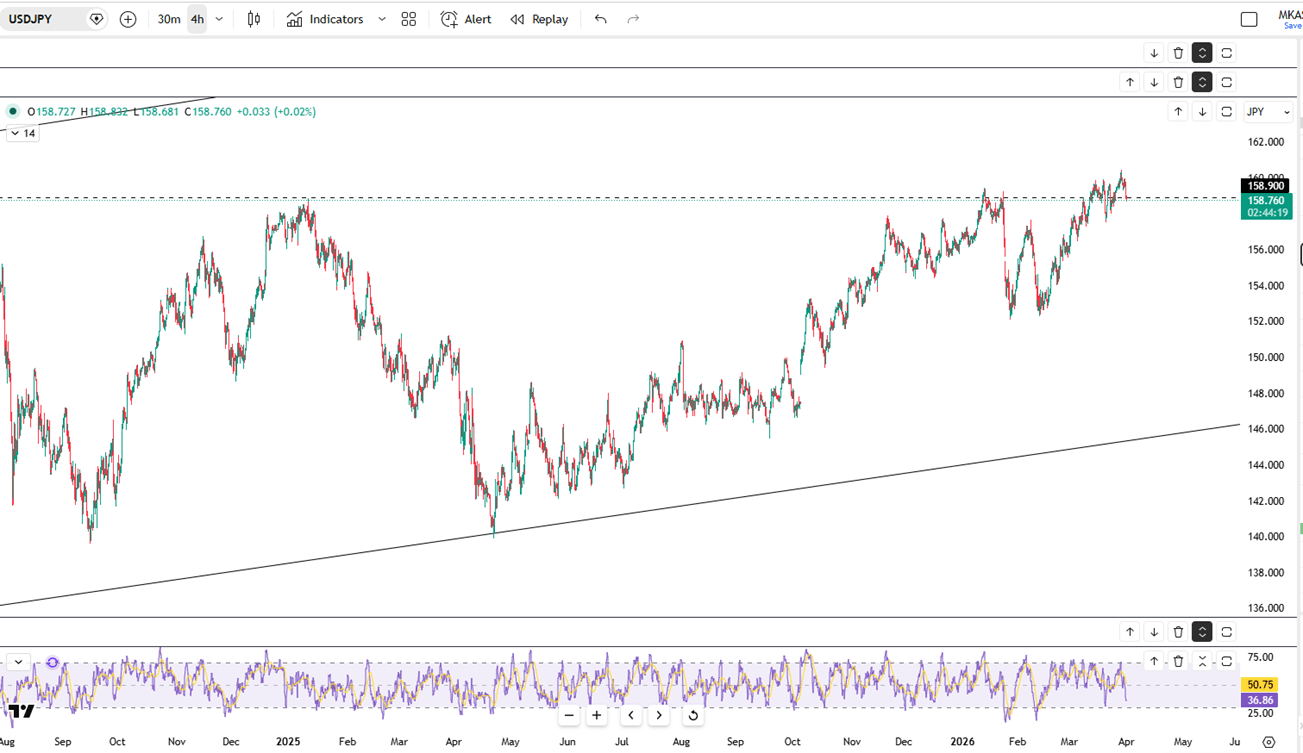
The Japanese yen stabilized near 159.6 per dollar on Tuesday, maintaining gains as intensified verbal warnings from Tokyo raised intervention expectations. Currency official Atsushi Mimura reaffirmed the government’s readiness to act decisively, echoing recent stances from Finance Minister Satsuki Katayama. These official cautions followed the yen’s brief slide beyond the critical 160 level, a threshold that previously triggered market intervention in July 2024. Despite this support, the currency remains pressured by surging oil prices fueled by the Middle East conflict, which disproportionately impacts Japan due to its heavy reliance on energy imports.
Technically, resistance stands near 160.50, while support is firm at 158.50.
| R1: 160.50 | S1: 158.50 |
| R2: 161.70 | S2: 158.10 |
| R3: 162.30 | S3: 157.60 |
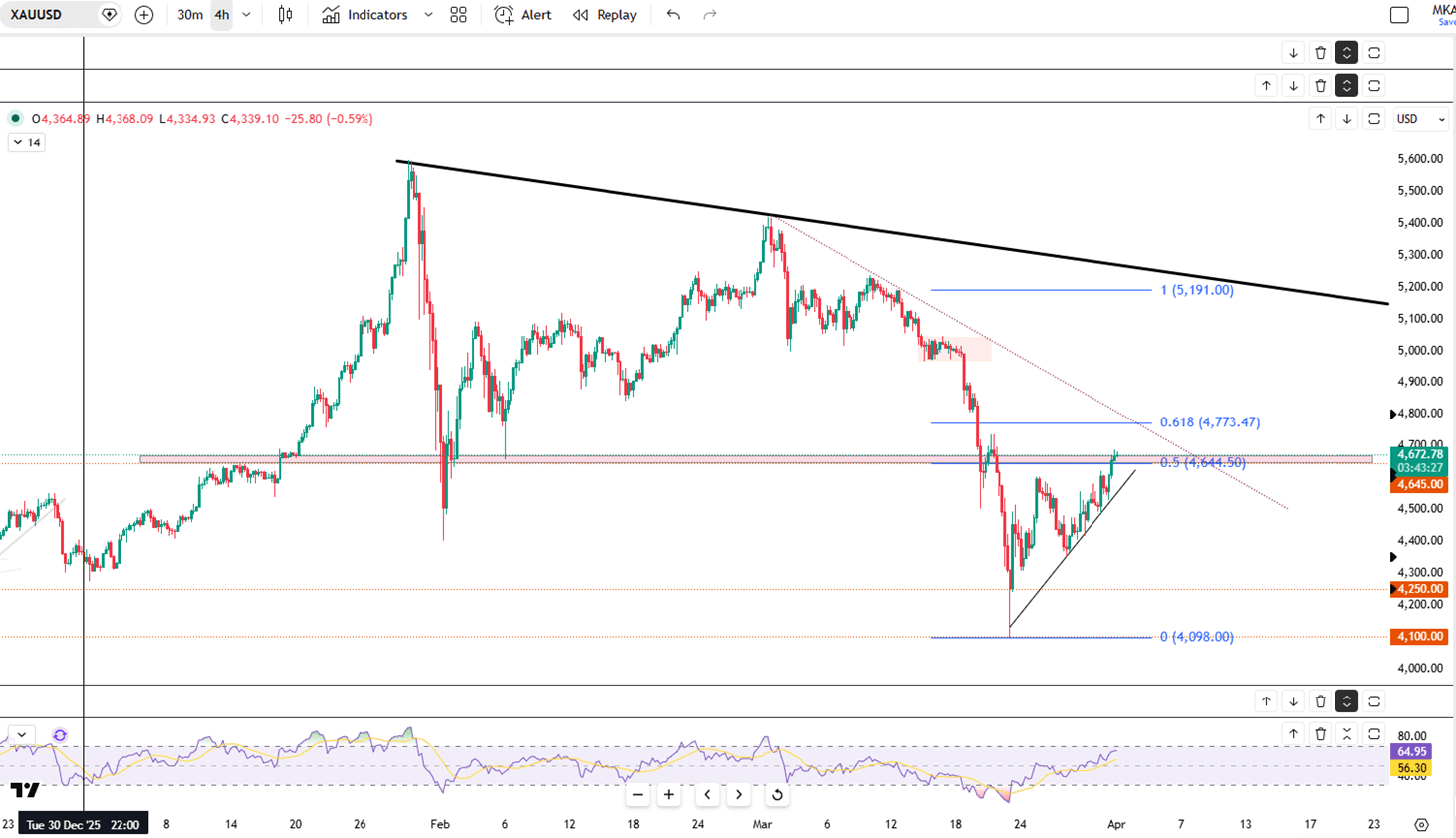
Gold climbed near $4,700 per ounce on Wednesday as signs of de-escalation in the Middle East improved market sentiment. Hopes for lower oil prices have reduced fears of further interest rate hikes, providing a tailwind for the metal. Optimism grew following reports that Donald Trump is open to ending the Iran conflict even with the Strait of Hormuz restricted, while Iranian President Masoud Pezeshkian signaled a potential willingness to negotiate a resolution.
First resistance is seen at $4720, with initial support near $4650.
| R1: 4720 | S1: 4650 |
| R2: 4900 | S2: 4580 |
| R3: 5000 | S3: 4420 |
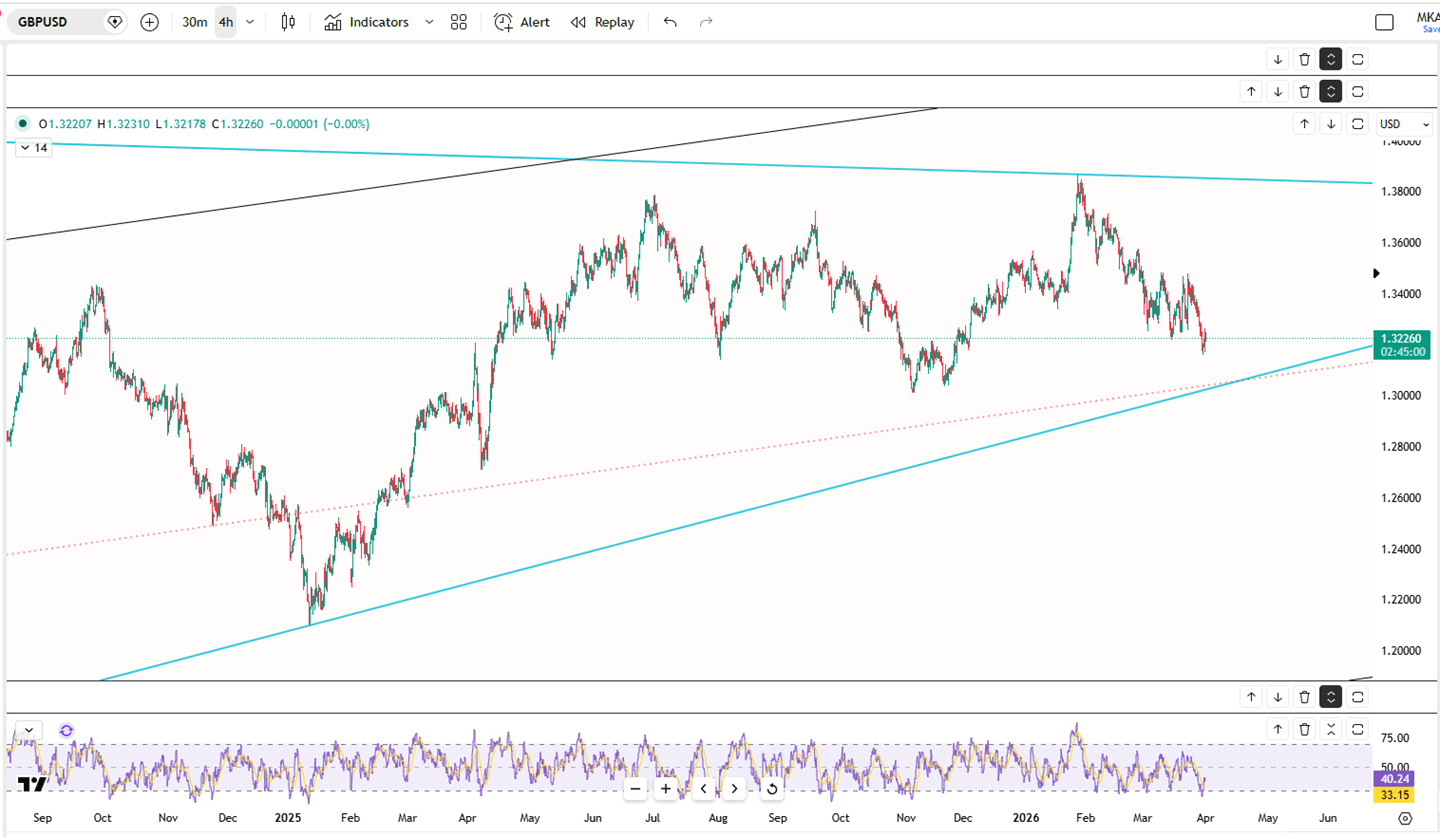
GBP/USD snapped a five-day losing streak as shifting sentiment surrounding the Iran conflict weighed on the US dollar. Markets reacted positively to reports that Donald Trump is open to ending hostilities, though Iran’s core demands persist. The pair climbed 0.32% on Tuesday amid volatile trading as dollar selling pressure eased. Near-term direction now hinges on a heavy slate of US data, including ADP employment and ISM PMI, ahead of Friday’s Nonfarm Payrolls release during the holiday.
From a technical view, support stands near 1.3100, with resistance around 1.3250.
| R1: 1.3250 | S1: 1.3100 |
| R2: 1.3300 | S2: 1.3030 |
| R3: 1.3380 | S3: 1.2970 |
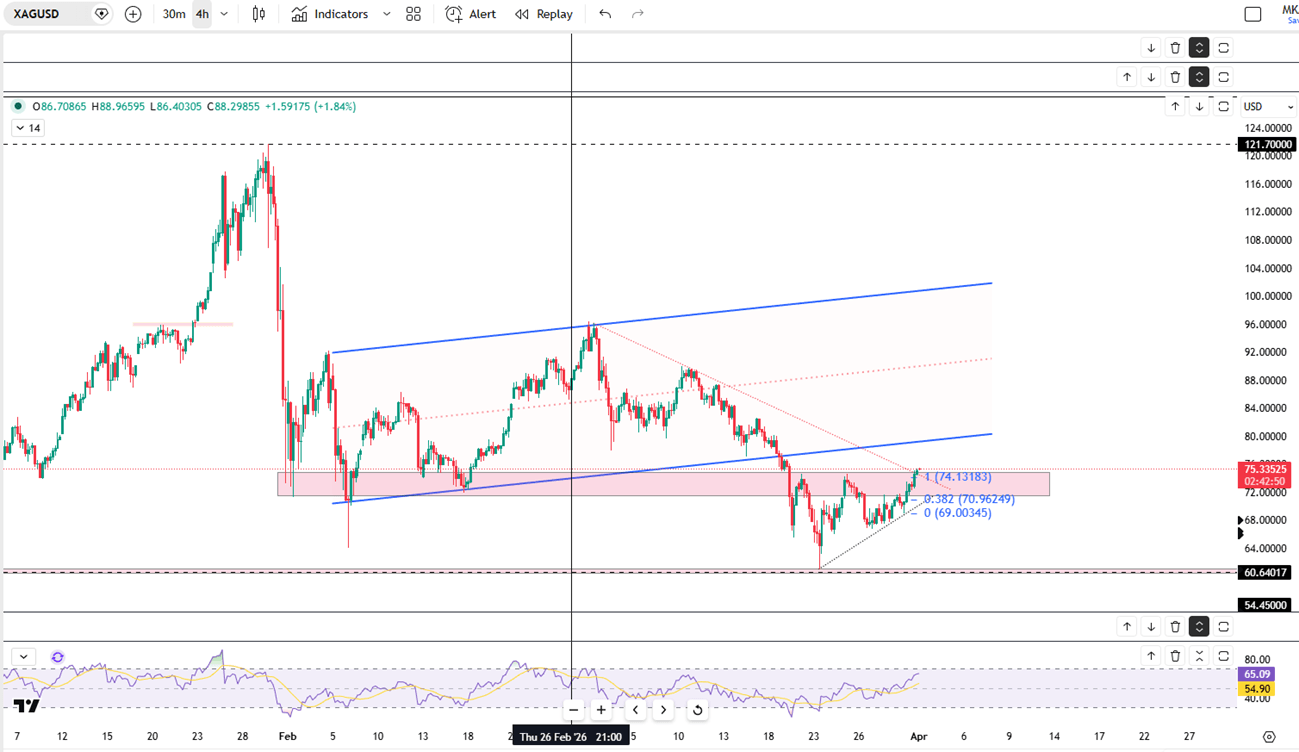
Silver retreated toward $74 per ounce on the first trading day of April, extending a dramatic 20% decline from March, its sharpest monthly drop since September 2011. The metal now sits nearly 40% below its January peak, pressured by energy-led inflation that has forced central banks to adopt a more aggressive interest rate stance. Investors have abandoned previous forecasts for two US rate cuts in 2026, pivoting instead toward higher for longer expectations. Although easing Middle East tensions offered brief stability, overall market sentiment remains remarkably fragile.
From a technical view, resistance stands near $78.50 while support is located around $74.00.
| R1: 78.50 | S1: 74.00 |
| R2: 80.20 | S2: 73.20 |
| R3: 85.00 | S3: 72.50 |
Markets remain volatile as Trump orders a prolonged naval blockade of the Strait of Hormuz to pressure Iran, further restricting global oil shipments.
Detail Growth Slows, Inflation Lingers (04.28.2026)The Bank of Japan held its policy rate at 0.75% in April, keeping borrowing costs at their highest level since 1995.
Detail Oil Surge and Stalled Talks Fuel Tension (27 April – 1 May)
Global markets moved into a risk-sensitive phase this week as stalled US–Iran negotiations and renewed tensions in the Strait of Hormuz reshaped sentiment. Safe-haven demand returned as reports of naval activity and continued blockades signaled that a quick resolution remains unlikely. With the key shipping route still largely restricted, energy prices surged, feeding directly into inflation concerns and shifting expectations across currencies, commodities, and bond markets.
DetailThen Join Our Telegram Channel and Subscribe Our Trading Signals Newsletter for Free!
Join Us On Telegram!


