




Global markets saw holiday volatility as the euro held near $1.18 on ECB-Fed policy divergence and the pound hit a three-month high above $1.35 against a weaker dollar.
The euro held just below 1.18 during thin holiday trading, supported by a widening policy gap between a steady ECB and rising expectations for lower US rates next year. The yen recovered on speculation of further BOJ tightening and possible intervention, while gold stabilized after a sharp profit-driven correction despite ongoing geopolitical risks. Sterling climbed to a three-month high on dollar weakness, and silver rebounded after a steep selloff as safe-haven demand returned.
| Time | Cur. | Event | Forecast | Previous |
| USD | Chicago PMI (Dec) | 39.6 | 36.3 | |
| USD | FOMC Meeting Minutes |
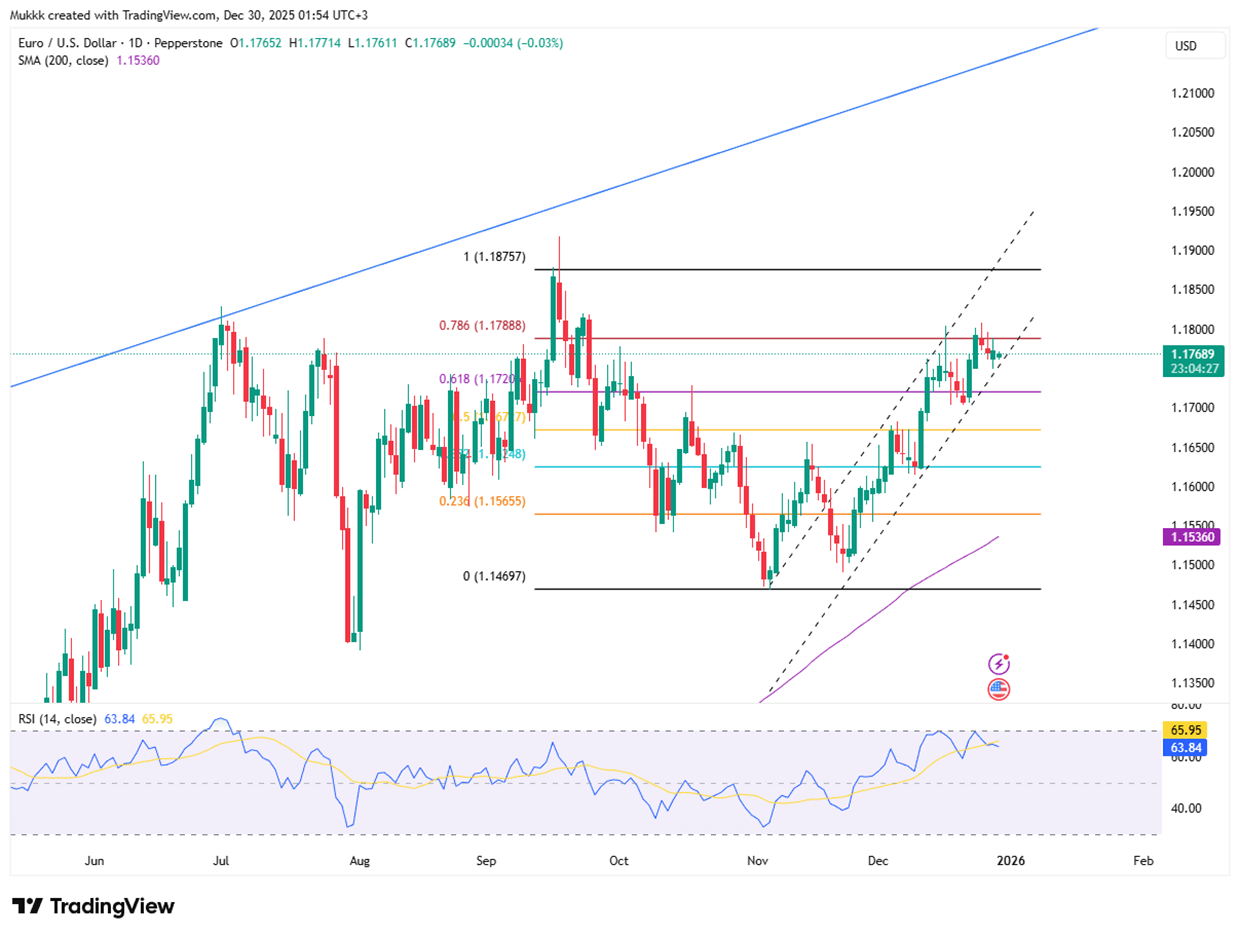
The euro held just under $1.18 in a quiet holiday week, remaining near its highest mark since late September and eyeing a 14.7% surge for 2025. This strength stems from a split between central banks: the ECB maintained rates in December with an outlook of staying on hold, despite President Lagarde noting high future uncertainty. Meanwhile, expectations that Donald Trump will appoint a new Fed chair in May to replace Jerome Powell have fueled bets on lower US rates.
Technically, 1.1720 is the key support, while resistance is seen at 1.1800.
| R1: 1.1800 | S1: 1.1720 |
| R2: 1.1840 | S2: 1.1630 |
| R3: 1.1890 | S3: 1.1570 |
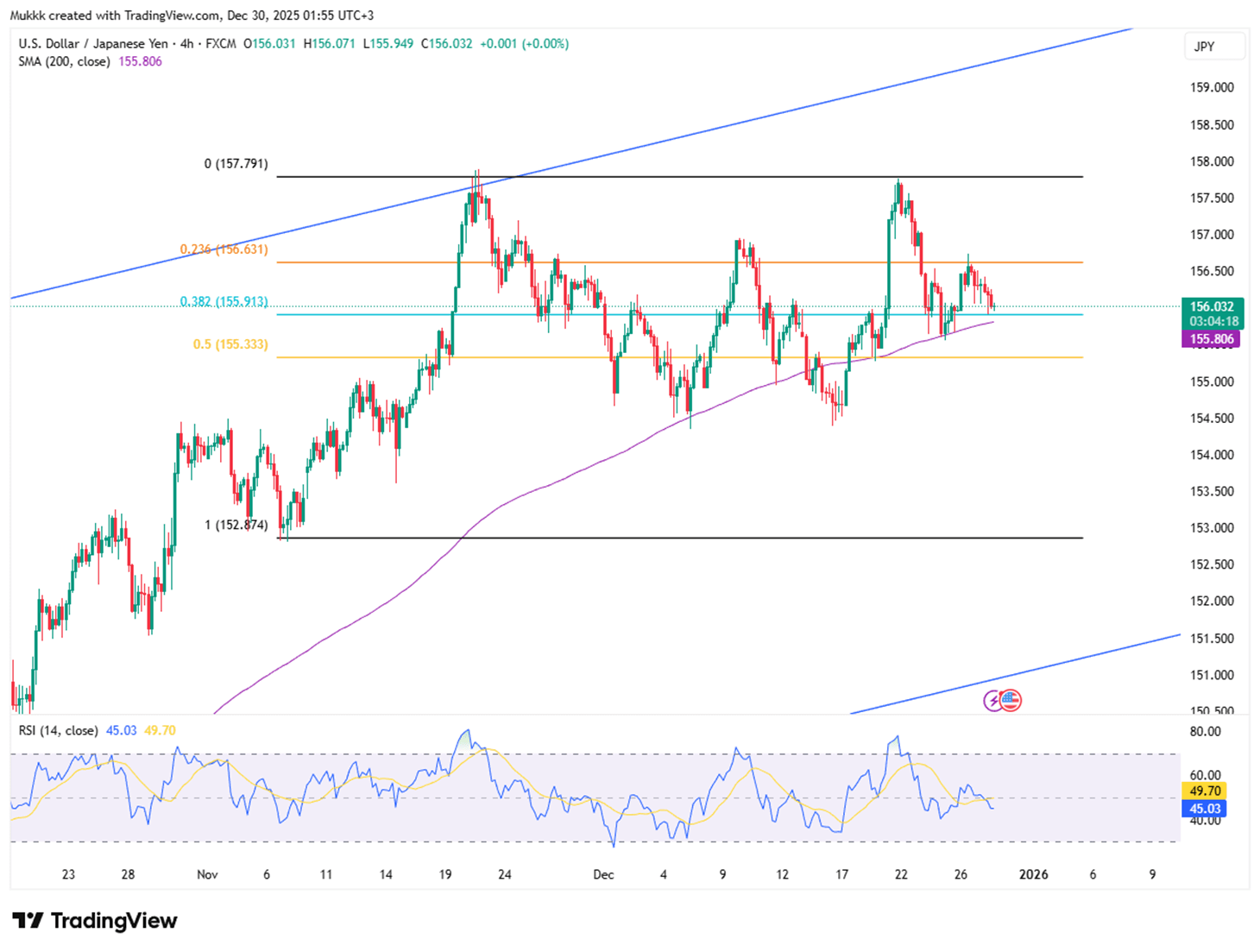
The Japanese yen rose past 156.2 per dollar on Tuesday, reversing some recent losses as investors weighed future rate hikes and potential government intervention during quiet year-end trading. Bank of Japan meeting minutes revealed that officials are still considering further tightening, even after raising rates to a multi-decade high last month. Policymakers argued that interest rates remain too low to be considered neutral, advocating for steady increases to proactively manage inflation risks and normalize monetary policy.
Technically, resistance stands near 156.50, while support is firm at 155.40.
| R1: 156.50 | S1: 155.40 |
| R2: 157.00 | S2: 154.50 |
| R3: 157.80 | S3: 153.70 |
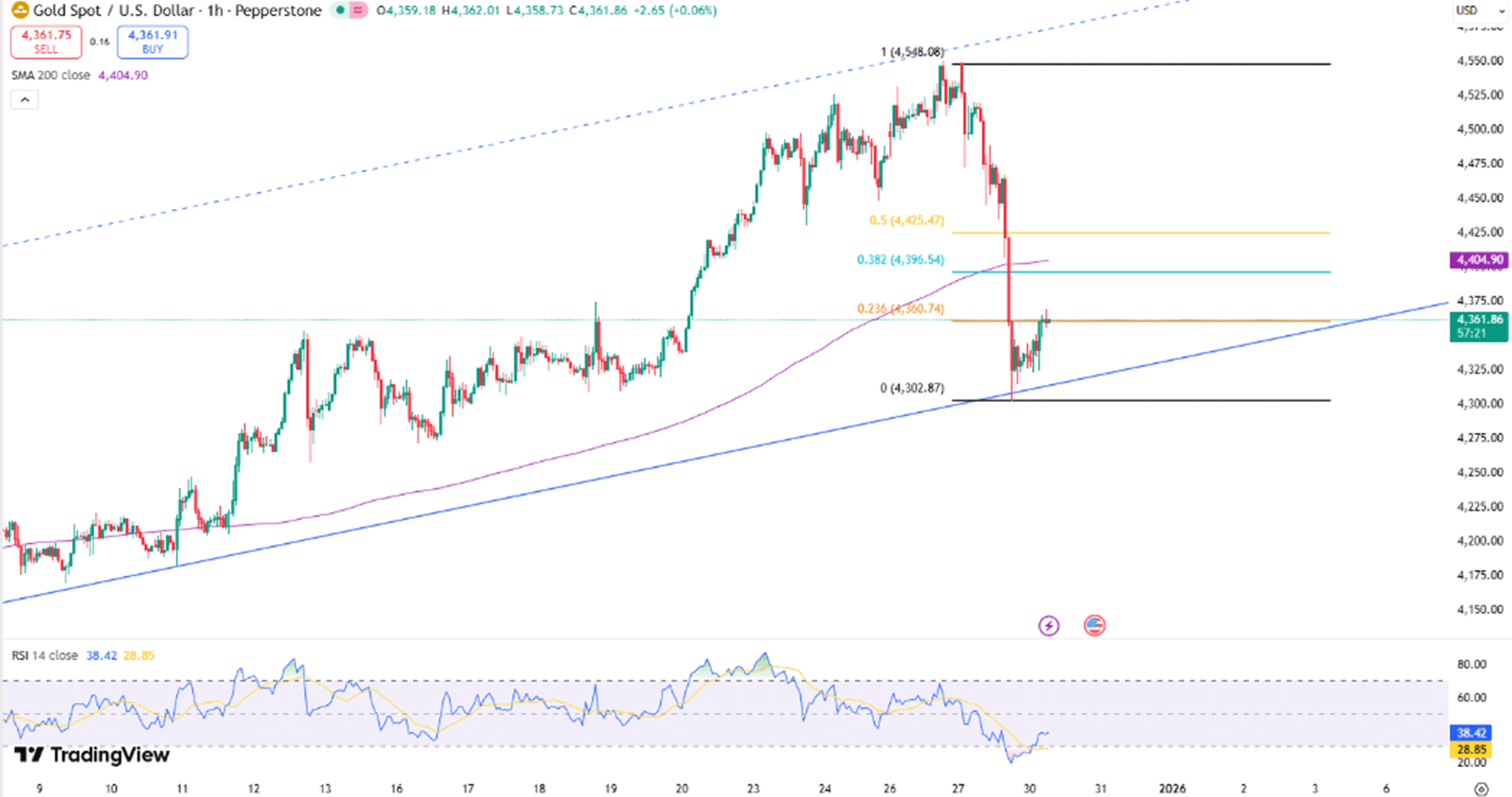
Gold settled above $4,360 on Tuesday after a 4% plunge triggered by profit-taking. Monday’s sell-off was the metal's steepest one-day decline since October, occurring just after it reached record highs. However, safe-haven demand remains firm due to persistent global tensions. Doubts have resurfaced regarding Russia–Ukraine peace talks following reports that Vladimir Putin may rethink Moscow’s position after alleged Ukrainian drone strikes targeted his residence, causing a fresh rift in negotiations with Donald Trump.
Gold sees support near $4300, while resistance is around $4390.
| R1: 4390 | S1: 4300 |
| R2: 4440 | S2: 4240 |
| R3: 4500 | S3: 4170 |
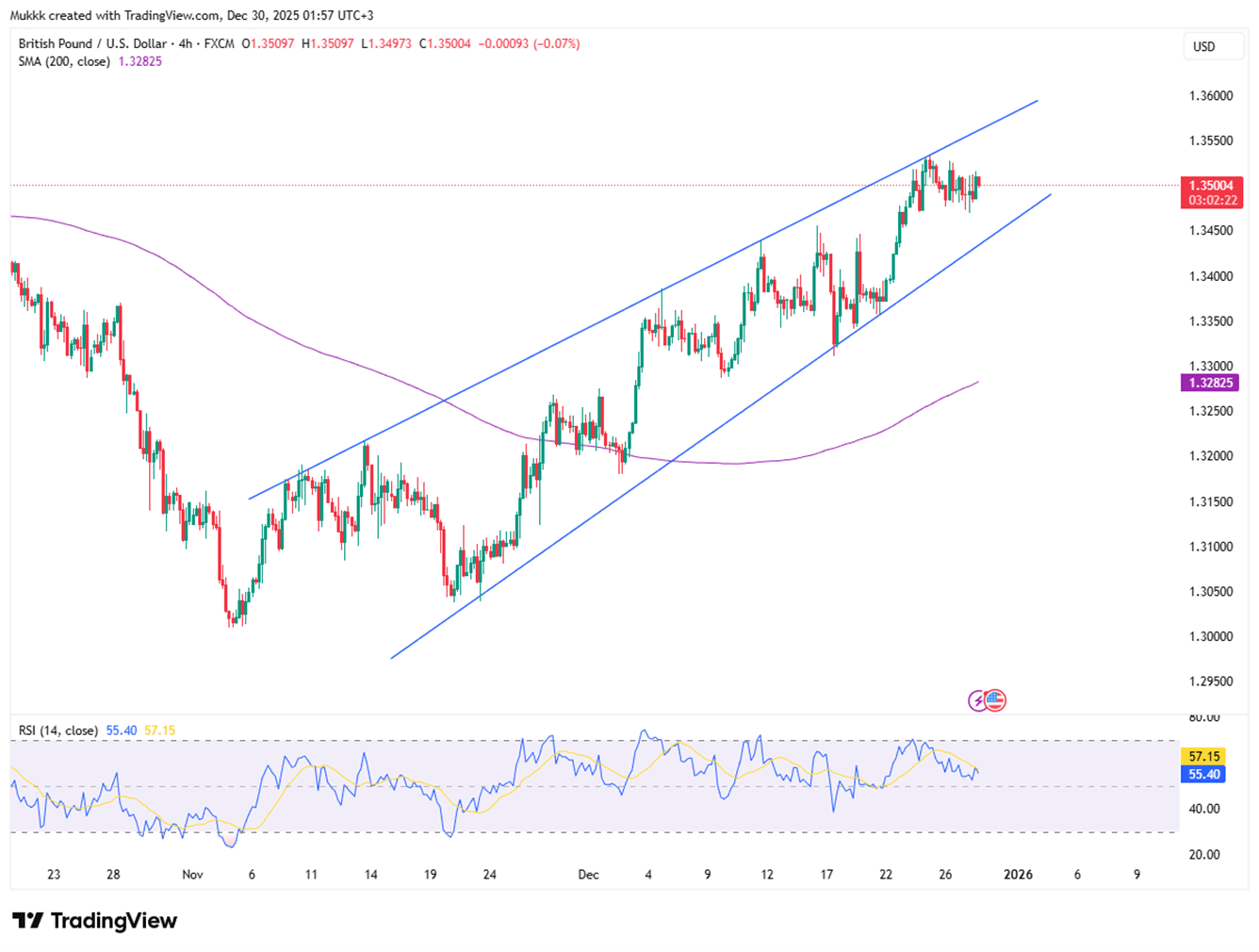
The British pound rose above $1.35, hitting a three-month high as a weaker US dollar narrowed its yield advantage. Markets now expect at least two Federal Reserve rate cuts in 2026. Meanwhile, the Bank of England lowered its rate to 3.75% in December via a tight 5–4 vote. Despite inflation slowing to 3.2% in November, it remains above the 2% target. Governor Andrew Bailey suggested that while rates will fall, the pace will likely be slower than investors anticipate.
From a technical view, support stands near 1.3450, with resistance around 1.3540.
| R1: 1.3540 | S1: 1.3450 |
| R2: 1.3580 | S2: 1.3360 |
| R3: 1.3620 | S3: 1.3290 |
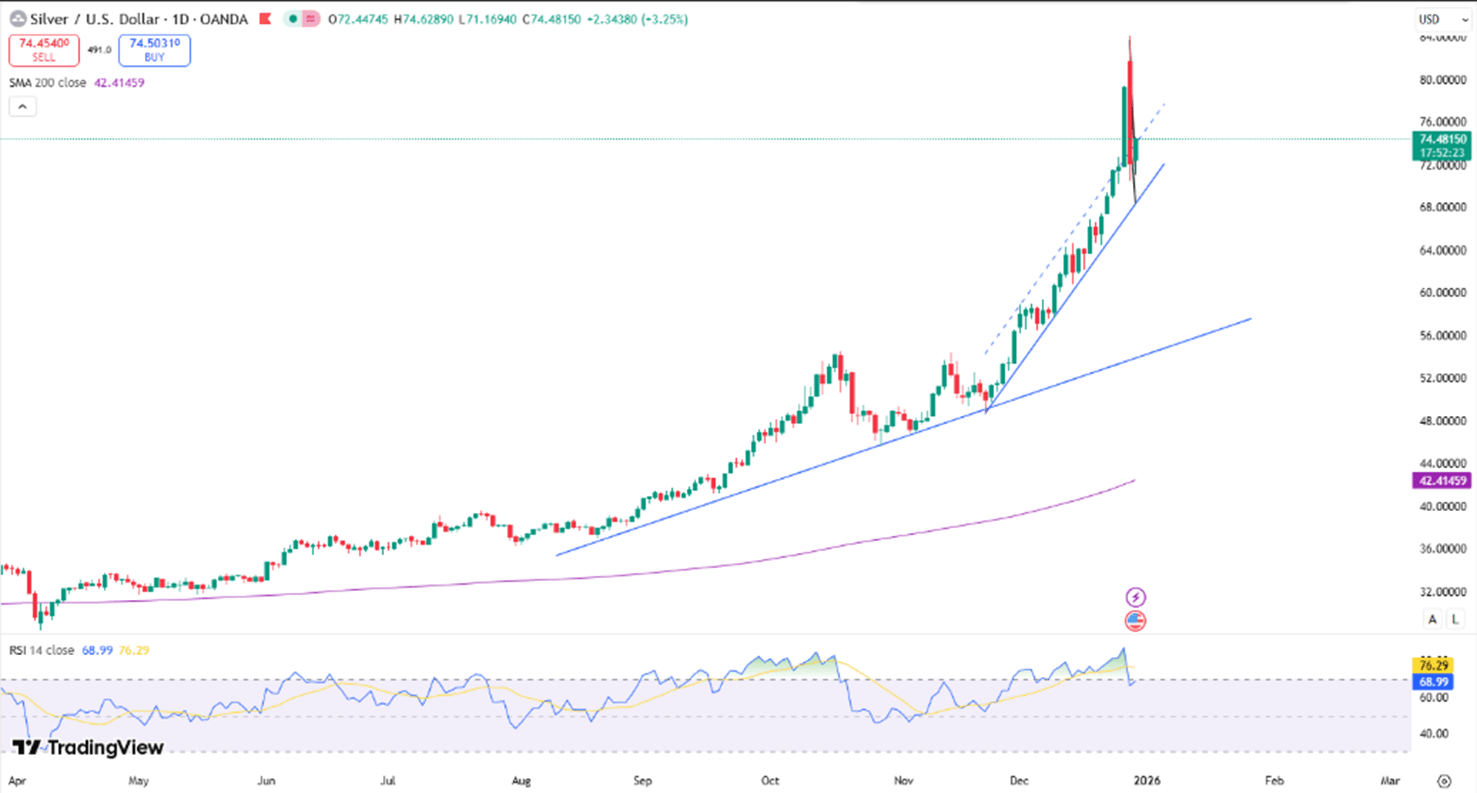
Silver rose over 1% toward $73 per ounce on Tuesday, recovering from an 8% plunge, its steepest daily drop in five years. That selloff resulted from heavy profit-taking intensified by low holiday trading volumes. However, fresh geopolitical friction has renewed safe-haven demand; tensions flared between Russia and Ukraine, while China’s extended military drills near Taiwan encouraged investors to return to precious metals.
From a technical view, resistance stands near $74.90 while support is located around $70.70.
| R1: 74.90 | S1: 70.70 |
| R2: 76.00 | S2: 69.50 |
| R3: 78.40 | S3: 68.10 |
Global markets remain dominated by geopolitical risk as escalating conflict between the United States, Israel, and Iran fuels a strong shift toward safe-haven assets. The dollar index hit 99.3 Wednesday, rising for a third day as conflict concerns fueled inflation and shifted Fed rate cut expectations from July to September.
A US court rejected Trump's tariff refund delay as the Dollar (98.5) and 10 year yield (4.04%) held gains amid Middle East escalation and inflation fears.
 After Khamenei: Who Will Lead Iran Next?
Following the death of Supreme Leader Ali Khamenei, Iran has entered a pivotal transition phase. Senior officials in Tehran are acting swiftly to uphold the existing structure of the Islamic Republic, prioritizing continuity to head off potential internal instability. Despite these efforts, the sudden leadership vacuum has sparked intense political and military maneuvering behind the scenes.
DetailThen Join Our Telegram Channel and Subscribe Our Trading Signals Newsletter for Free!
Join Us On Telegram!


