


The United States and Iran remain locked in a standoff over the Strait of Hormuz, restricting access following failed peace talks.
Trump confirmed that the ceasefire will stay in place without a fixed timeline as Washington awaits Tehran’s proposal, while Iran continues to resist negotiations under current conditions.The ongoing disruption has pushed oil prices higher, pushing inflation concerns worldwide and raising fresh worries about supply shortages and broader economic strain.
With energy risks still in focus, inflation pressures remain persistent, strengthening expectations that the Federal Reserve will keep interest rates unchanged while markets look to upcoming economic data for clearer direction.
| Time | Cur. | Event | Forecast | Previous |
| 12:30 | USD | Initial Jobless Claims | 212K | 207K |
| 13:45 | USD | S&P Global Services PMI (Apr) | 50.1 | 49.8 |
| 13:45 | USD | S&P Global Manufacturing PMI (Apr) | 52.5 | 52.3 |
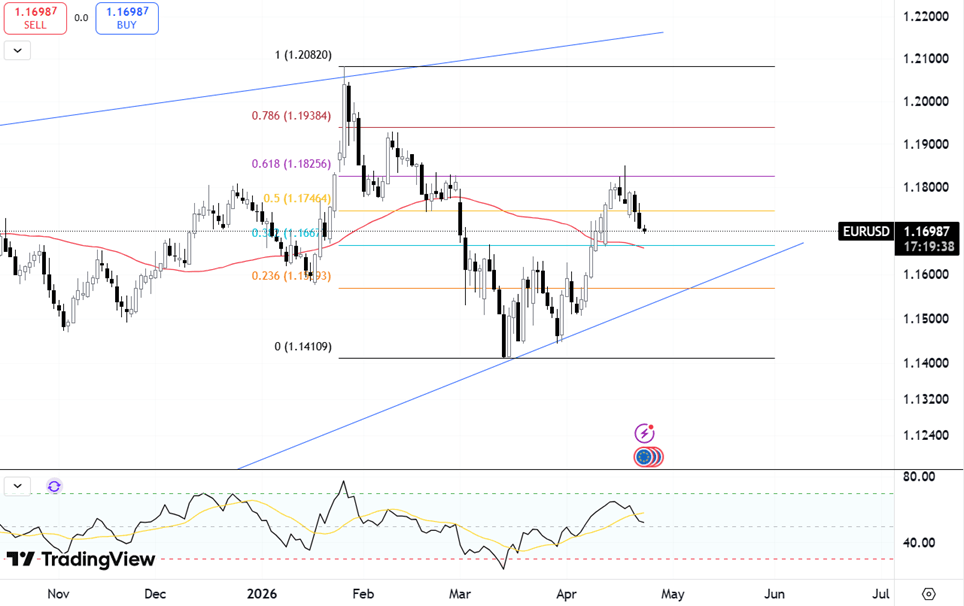
EUR/USD traded just above the 1.1700 threshold, hovering near 1.1710 after the extension of the U.S.–Iran ceasefire reduced immediate pressure on markets. Trump indicated that Iran faces no strict timeline to submit its proposal, allowing sentiment to stabilize.
ECB policymaker Martins Kazaks signaled that officials are comfortable waiting for more decisive economic evidence before reconsidering interest rates.
The pair faces resistance at 1.1760, while the nearest support stands at 1.1640.
| R1: 1.1760 | S1: 1.1640 |
| R2: 1.1800 | S2: 1.1590 |
| R3: 1.1850 | S3: 1.1550 |
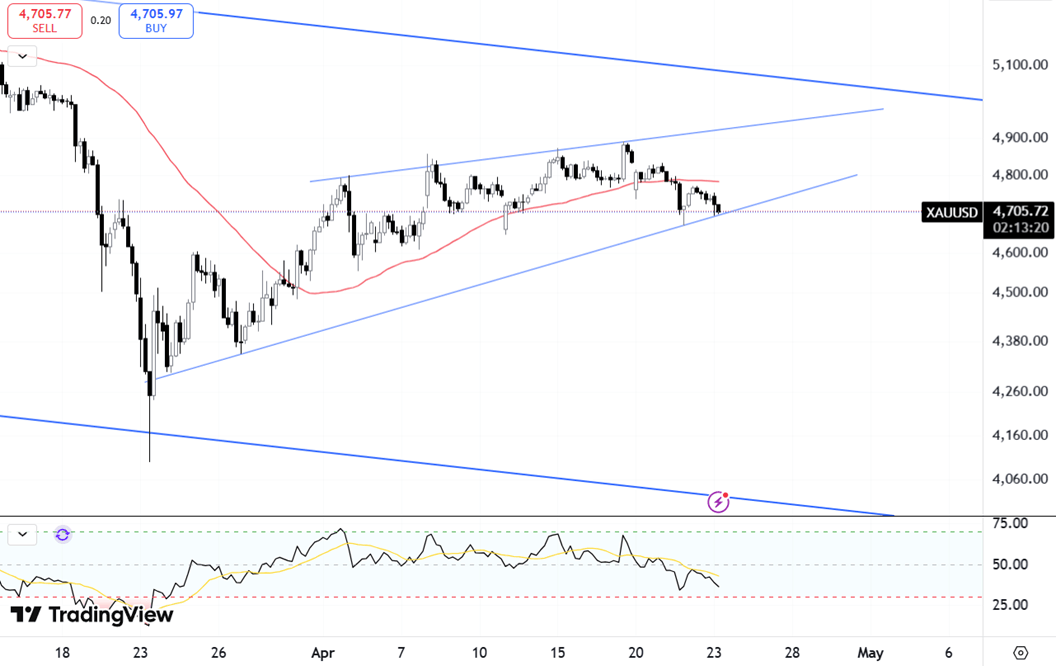
Gold retreated toward $4,700 per ounce, surrendering earlier strength as persistent strain around the Strait of Hormuz continued to push energy costs higher. Iran’s firm control over the route and ongoing U.S. restrictions have tightened shipping flows, reinforcing inflation concerns and weighing on demand for precious metals.
The prolonged standoff has left the metal roughly 10% lower since the conflict began despite the open-ended ceasefire.
The metal’s first resistance is seen at $4770, with initial support near $4640.
| R1: 4770 | S1: 4640 |
| R2: 4860 | S2: 4580 |
| R3: 4950 | S3: 4520 |
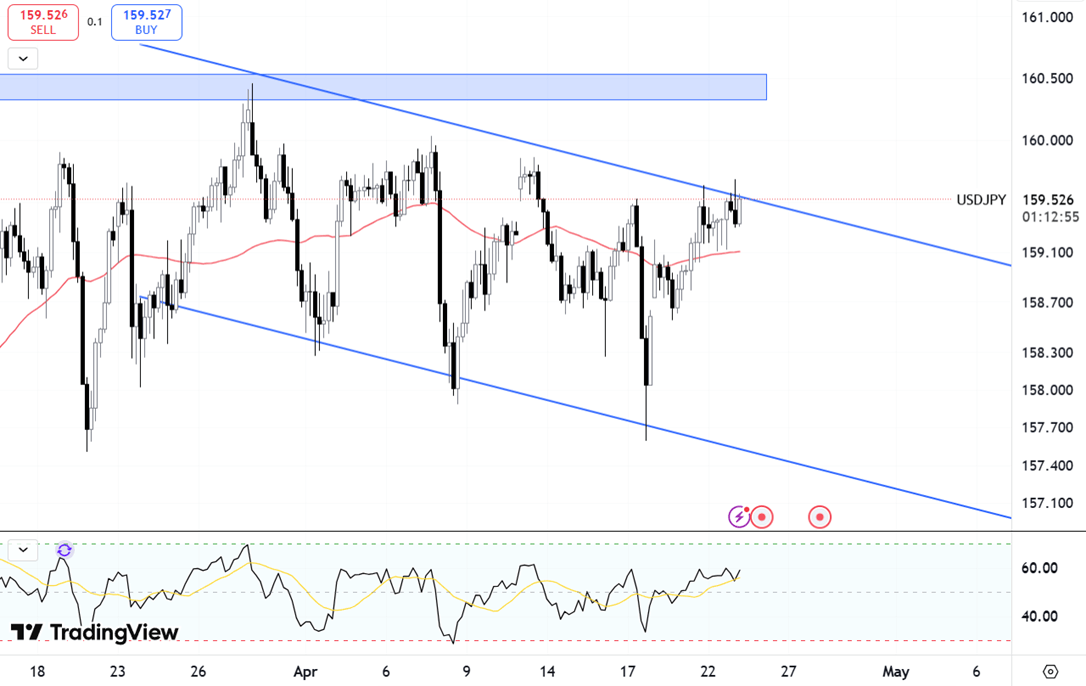
USD/JPY held steady as attention shifted to upcoming economic releases from Japan and the United States. Japan reported a ¥667 billion trade surplus in March, driven by 11.7% annual export growth, while imports climbed due to higher fuel costs.
Rising oil prices tied to disruptions in the Strait of Hormuz continue to weigh on the yen, keeping markets focused on forthcoming CPI figures, U.S. PMI data, and inflation expectations for direction.
Initial resistance stands at 159.70, while the first support is located at 159.00.
| R1: 159.70 | S1: 159.00 |
| R2: 160.50 | S2: 158.60 |
| R3: 161.30 | S3: 157.80 |
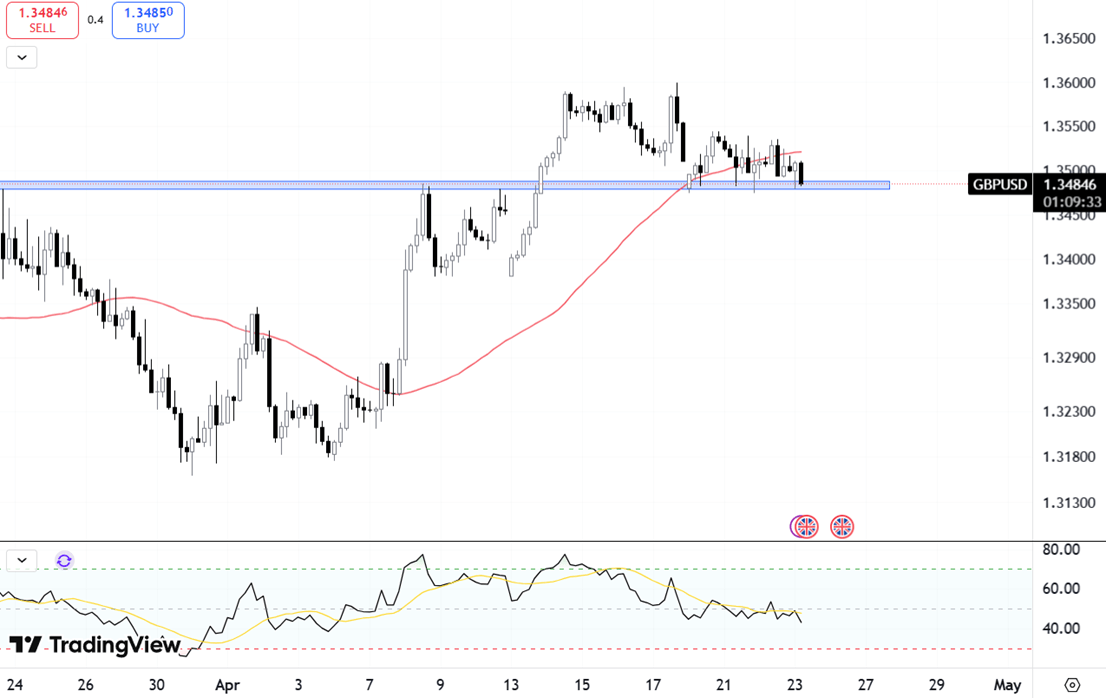
GBP/USD slipped below 1.3500, now hovering around the nine-day EMA near 1.3493 after a brief pullback. Even with the recent decline, the broader structure still allows room for a recovery toward the 1.3599 peak if support remains intact. The 14-day RSI near 56 suggests momentum is still constructive, though a sustained break below the moving average could open the door to a deeper correction.
The pair’s support stands near 1.3550, with resistance around 1.3440.
| R1: 1.3550 | S1: 1.3440 |
| R2: 1.3590 | S2: 1.3350 |
| R3: 1.3650 | S3: 1.3280 |
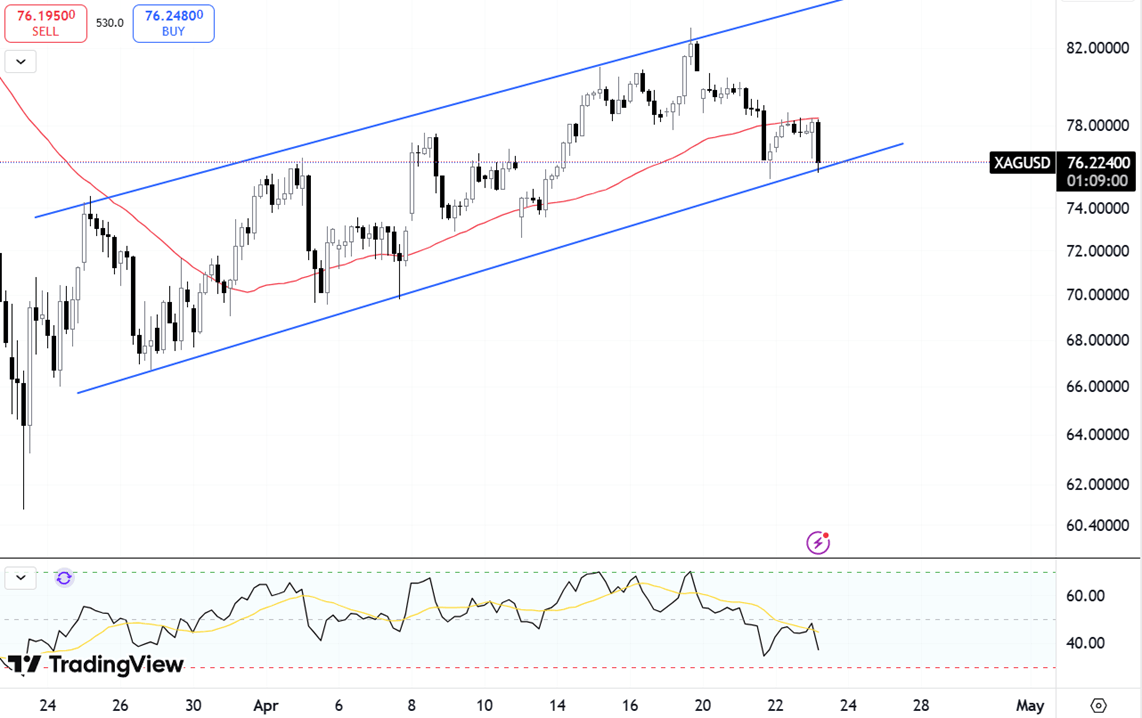
Silver slipped to roughly $76 per ounce, reversing the previous session’s advance as continued restrictions in the Strait of Hormuz kept energy markets tight.
Iran’s control of the waterway and the ongoing blockade of its ports have disrupted global shipping and sustained upward pressure on fuel costs, intensifying inflation concerns and weighing on industrial metals.
Silver’s resistance stands near $77.80 while support is located around $74.00.
| R1: 77.80 | S1: 74.00 |
| R2: 80.50 | S2: 72.50 |
| R3: 82.80 | S3: 70.00 |
Declining Treasury yields and rising geopolitical tensions supported precious metals as an equity market selloff increased demand for safe-haven assets.
 US Inflation Hits 3.7% as Energy Prices Surge
September’s inflation report reveals new price pressures across the US economy.
Detail Dollar Retreat Supports Metals (10.15.2026)A softer US dollar and declining Treasury yields offered some relief to financial markets as Federal Reserve officials signaled a willingness to pause rate adjustments.
Then Join Our Telegram Channel and Subscribe Our Trading Signals Newsletter for Free!
Join Us On Telegram!


