


The euro dipped to $1.13 after a strong April, while the yen hovered near 146 amid fading safe-haven demand. Gold and silver extended losses as President Trump voiced optimism over trade deals with key Asian partners, easing tariff concerns.
Despite a Q1 contraction in the U.S. economy, the dollar gained on renewed confidence. The British pound rose to $1.332, supported by lower tariff exposure and cautious BoE outlook.
| Time | Cur. | Event | Forecast | Previous |
| 12:00 | EUR | CPI (YoY) (Apr) | 2.1% | 2.2% |
| 15:30 | USD | Average Hourly Earnings (MoM)(Apr) | 0.3% | 0.3% |
| 15:30 | USD | Nonfarm Payrolls (Apr) | 133K | 228K |
| 15:30 | USD | Unemployment Rate (Apr) | 4.2% | 4.2% |
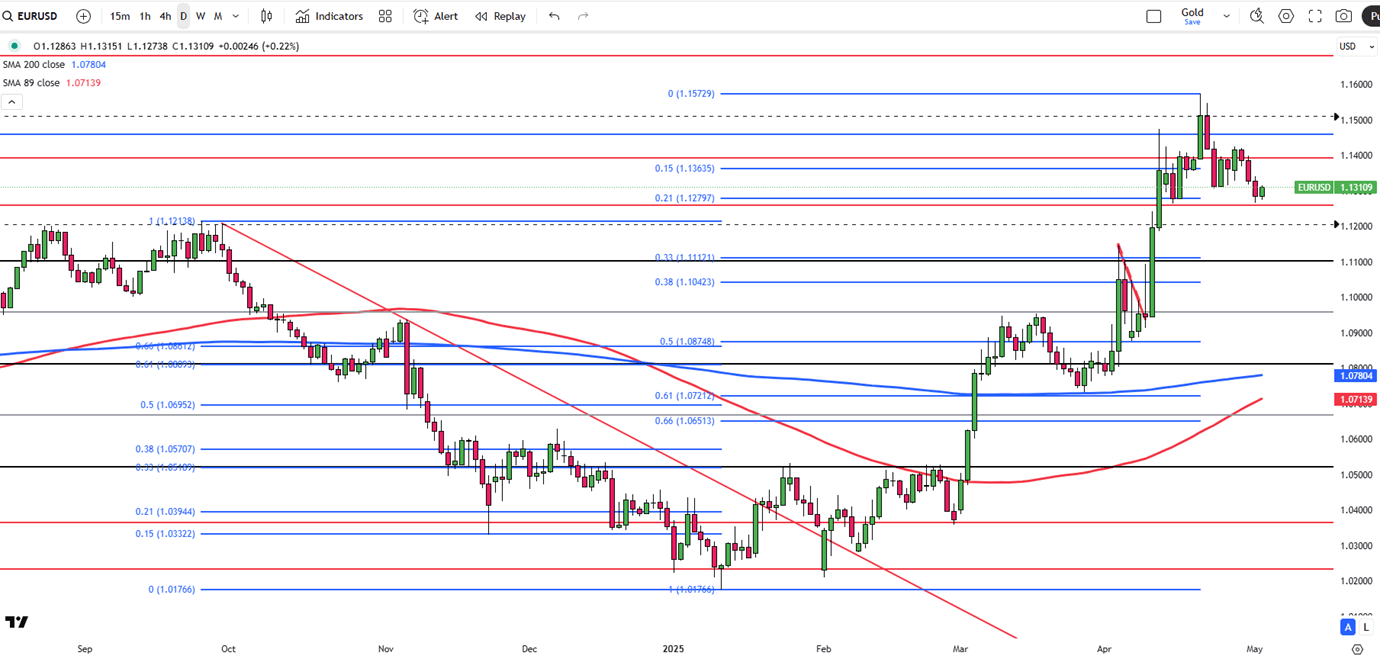
The euro dipped toward $1.13 on May 1 after a 5% April gain, as the dollar found support in Trump’s optimism about trade deals with India, Japan, South Korea, and China. Markets awaited Friday’s U.S. jobs data for Fed policy clues. The U.S. economy shrank 0.3% in Q1, partly due to import spikes ahead of expected tariffs. Meanwhile, the Eurozone grew 0.4%, driven by strong domestic demand. German inflation eased to 2.1%, though core rose slightly, while France’s annual rate held at 0.8%.
Resistance levels are seen at 1.1460, then 1.1580 and 1.1680, while support rests at 1.1260, followed by 1.1200 and 1.1150.
| R1: 1.1460 | S1: 1.1260 |
| R2: 1.1580 | S2: 1.1200 |
| R3: 1.1680 | S3: 1.1150 |
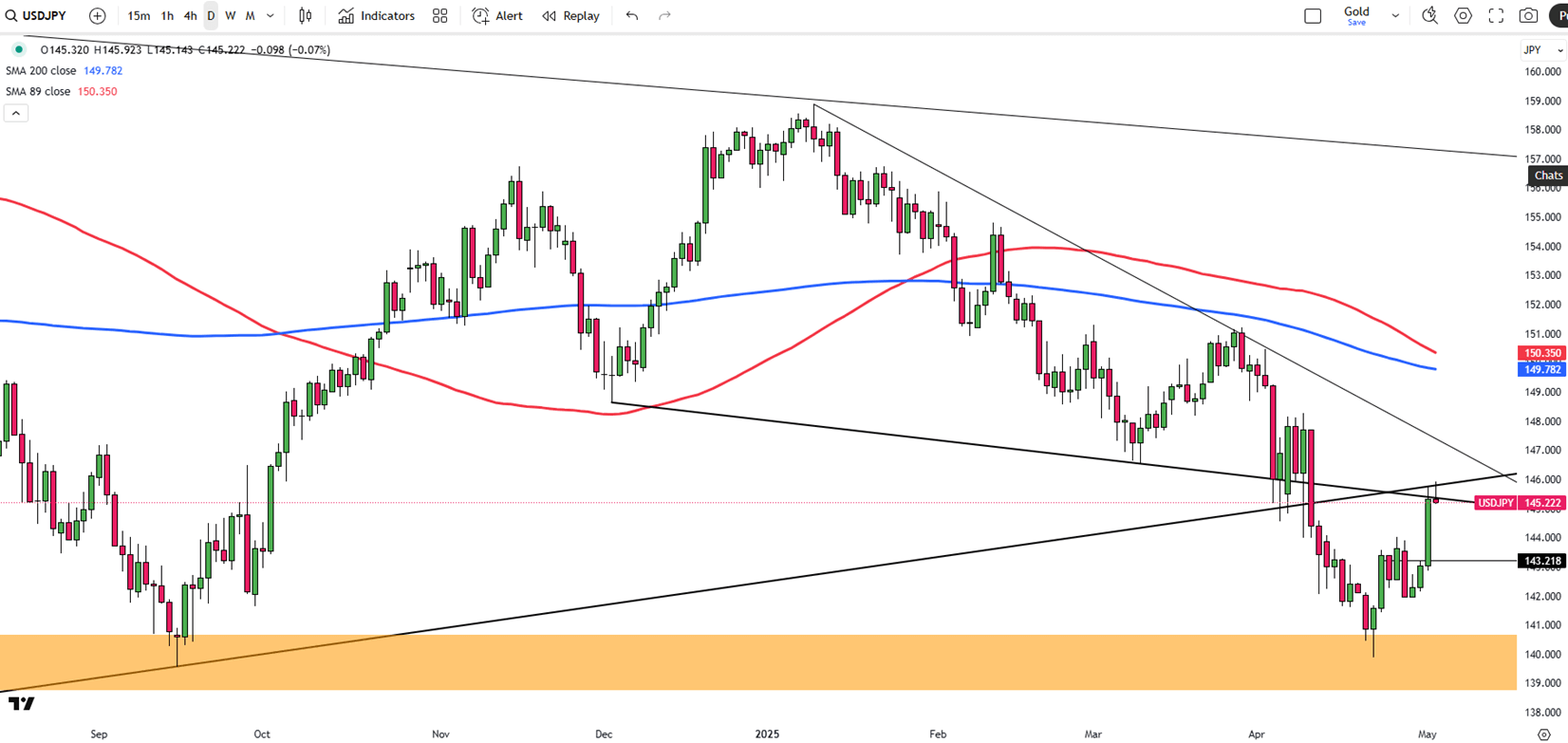
The yen hovered near 146 per dollar Friday after a 1.6% drop, pressured by weaker safe-haven demand amid improving US-China trade prospects. China is open to talks after repeated U.S. outreach, while Japan and the U.S. wrapped up a second round of bilateral talks, aiming for a June deal. Domestically, Japan’s jobless rate rose to 2.5% in March, but the labor market stayed tight. The Bank of Japan held rates at 0.5% and cut its growth and inflation outlooks, signaling limited chances of near-term hikes.
Resistance is located at 145.90, followed by 146.75 and 149.80. On the downside, support levels are at 139.70, then 137.00 and 135.00.
| R1: 145.90 | S1: 139.70 |
| R2: 146.75 | S2: 137.00 |
| R3: 149.80 | S3: 135.00 |
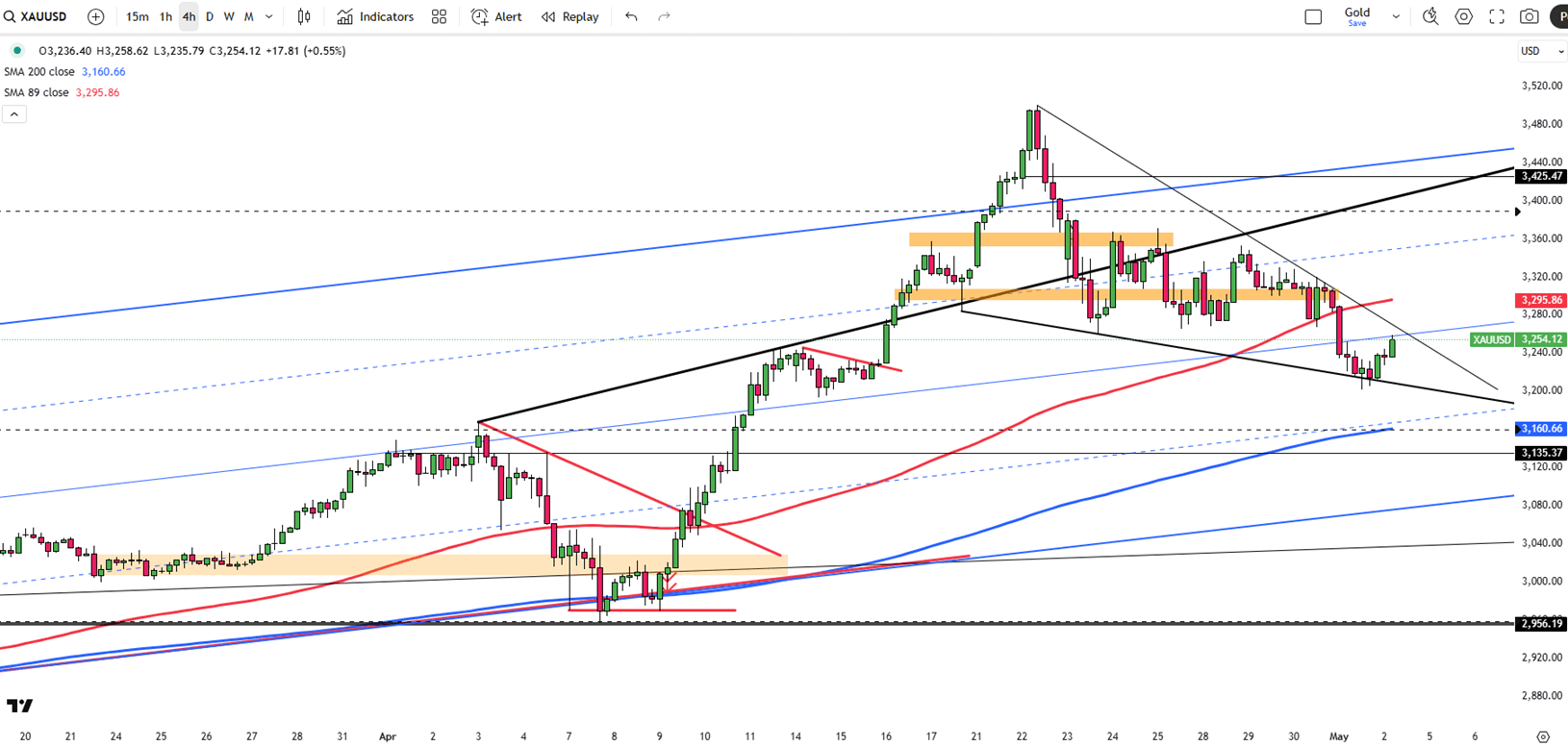
Gold hovered near $3,250 on Friday, close to a two-week low and set for a second weekly loss, as easing trade tensions reduced safe-haven demand. China said it may start trade talks with the U.S., following Trump’s comments on potential deals with India, Japan, South Korea, and a "very good chance" with China. Trump also signed an order easing tariffs on autos and parts. U.S. data showed a Q1 economic contraction and flat March PCE inflation. Markets now await the nonfarm payrolls report for Fed policy signals.
Resistance is expected at $3,365, then $3,405 and $3,500. Support stands at $3,210, followed by $3,165 and $3,050.
| R1: 3365 | S1: 3250 |
| R2: 3405 | S2: 3165 |
| R3: 3500 | S3: 3050 |
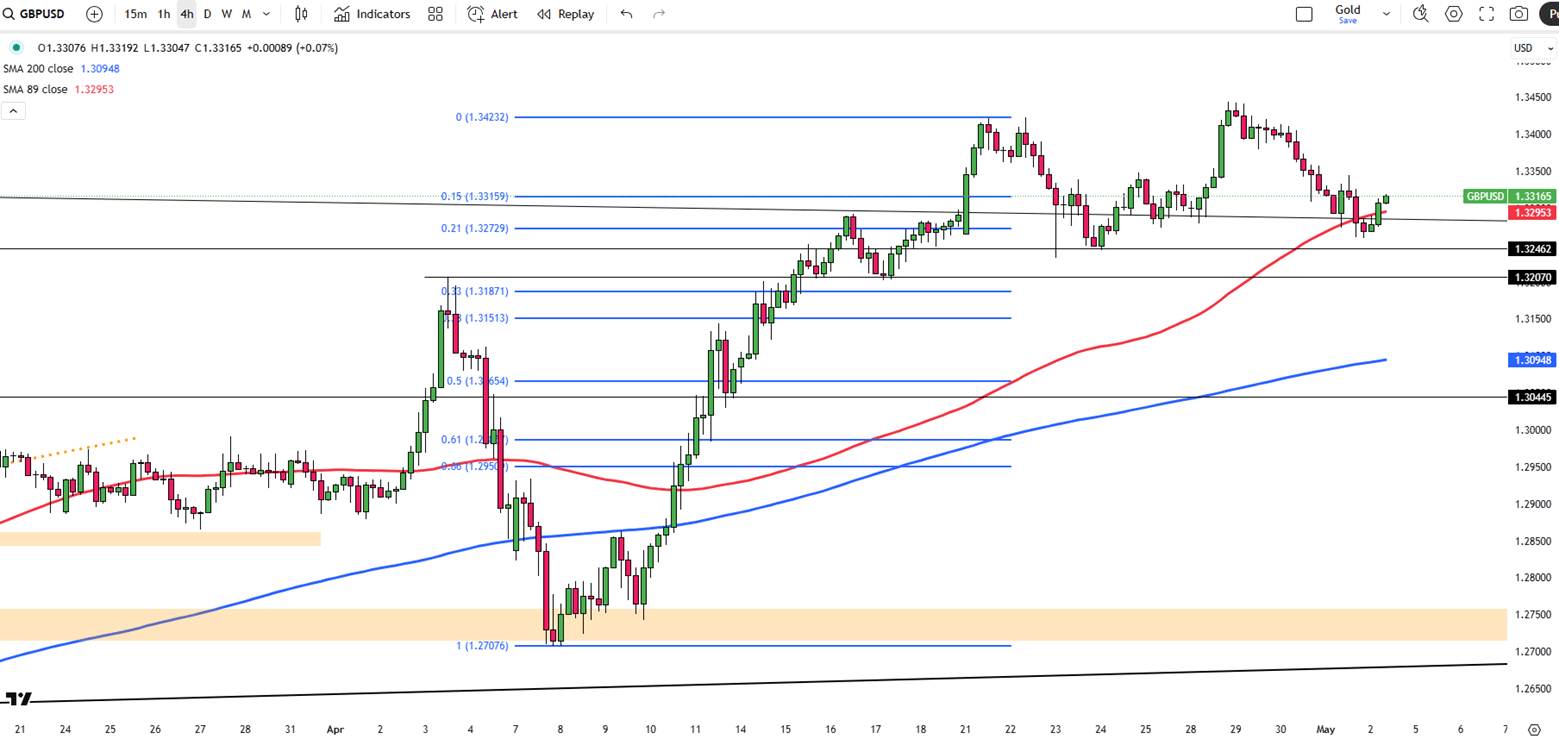
The British pound rose to $1.332, near its highest level since February 2022, supported by a weaker U.S. dollar. Sterling gained 3.2% in April, its best month since November 2023. The UK is seen as less exposed to U.S. tariffs, which President Trump has delayed until July. In 2024, the U.S. ran a $12 billion goods surplus with the UK, unlike its deficits with China and the EU, reducing trade risk. The pound also benefits from expectations that the Bank of England will be more cautious than others in cutting rates. Markets expect about 85 basis points of easing this year, which is in line with the Fed. Investors now await key U.S. jobs and inflation data for dollar direction.
If GBP/USD breaks above 1.3430, the next resistance levels are 1.3500 and 1.3550. Support levels are at 1.3200, followed by 1.3050 and 1.2960.
| R1: 1.3430 | S1: 1.3200 |
| R2: 1.3500 | S2: 1.3050 |
| R3: 1.3550 | S3: 1.2960 |
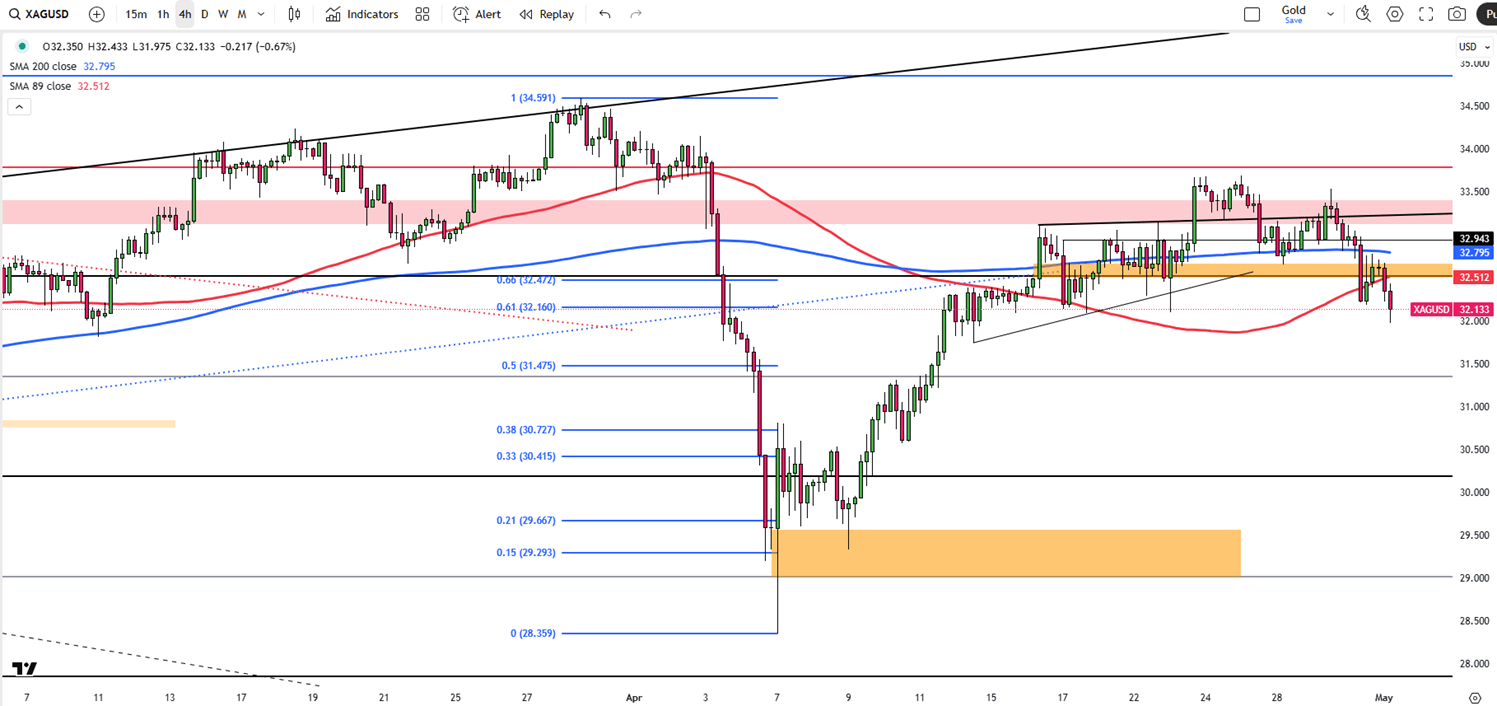
Silver fell over 1% to near $32 per ounce on Thursday, its third straight drop, as easing trade tensions reduced safe-haven demand. President Trump signaled possible trade deals with India, Japan, and South Korea, and voiced optimism about China. Silver’s industrial outlook also weakened after the U.S. economy shrank 0.3% in Q1. This was its first contraction in three years, and China’s NBS manufacturing PMI fell to a 16-month low, with export orders plunging most since 2022.
The first resistance is seen at $33.80, with higher levels at $34.20 and $34.85 if momentum builds. Support begins at $32.00, followed by $31.40 and $30.20.
| R1: 33.80 | S1: 32.00 |
| R2: 34.20 | S2: 31.40 |
| R3: 34.85 | S3: 30.20 |
A deepening sell-off in technology and artificial intelligence stocks pressured financial markets, forcing investors to liquidate precious metals holdings to cover losses elsewhere.
Escalating Middle East tensions pushed oil prices higher following a deadly drone strike on Saudi Aramco's Shaybah facility, renewing inflation concerns and expectations for further Federal Reserve tightening.
Rising oil prices renewed inflation concerns as uncertainty surrounding the US-Iran conflict and continued disruptions in the Strait of Hormuz reinforced expectations for further monetary tightening.
Then Join Our Telegram Channel and Subscribe Our Trading Signals Newsletter for Free!
Join Us On Telegram!


