




Global markets remained dominated by dollar strength as geopolitical tensions and rising energy prices reshaped monetary expectations.
The euro fell toward $1.15, its weakest level in months, as traders fully priced in upcoming ECB rate hikes in response to inflation risks. Meanwhile, the Japanese yen weakened toward levels that previously triggered government intervention, highlighting growing pressure from surging oil prices and imported inflation. Precious metals showed mixed performance, with gold recovering modestly despite a strong dollar and rising yields, while silver rebounded toward $85. Sterling remained subdued near multi-month lows as investors reassessed the outlook for Bank of England policy amid persistent energy-driven inflation concerns.
| Time | Cur. | Event | Forecast | Previous |
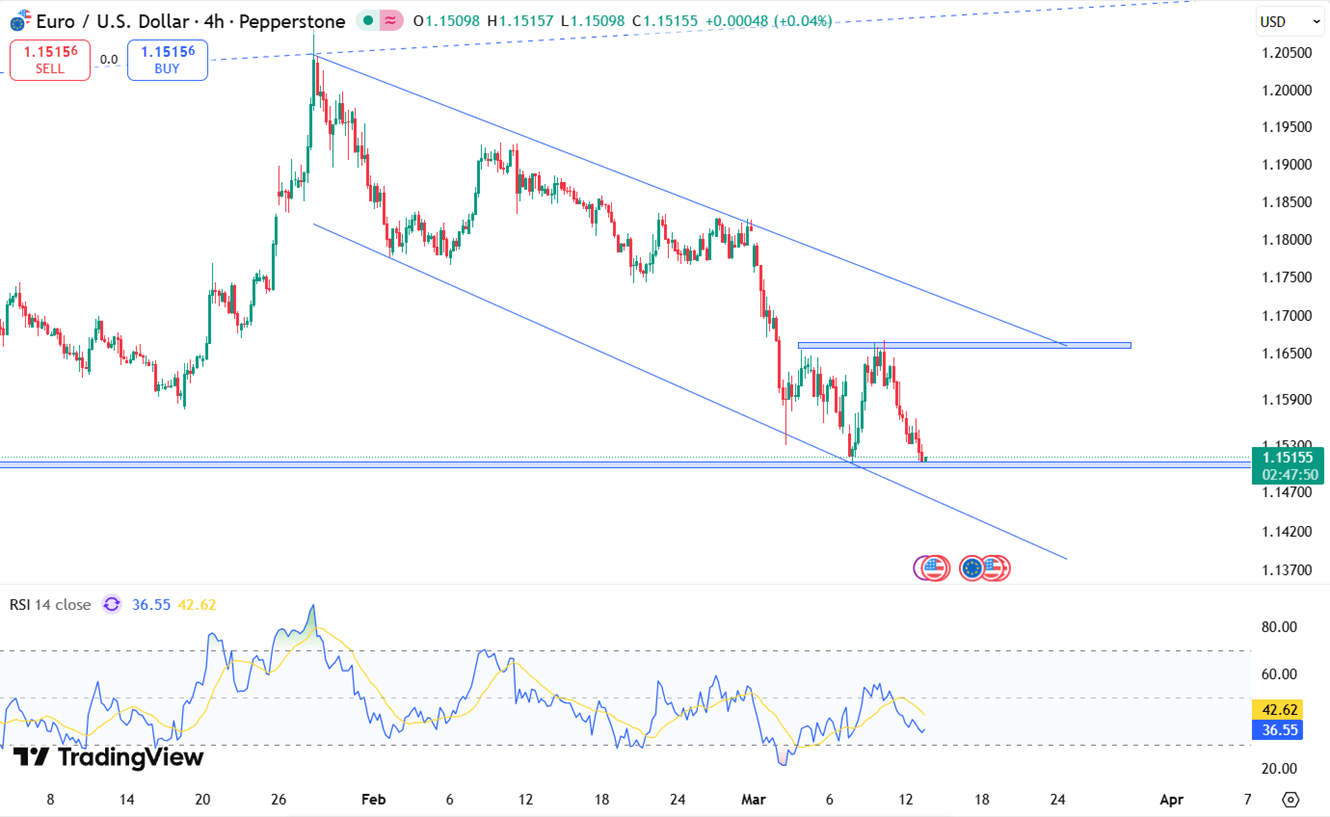
The euro dropped toward $1.15, hitting its lowest mark since late November as geopolitical strife favored the US dollar and stoked eurozone inflation. Markets now fully price in an ECB rate hike by July, with an 85% chance of a second increase by December, a total reversal from earlier rate-cut forecasts.
For EUR/USD, the initial resistance is seen at 1.1580, while the closest support is positioned at 1.1470.
| R1: 1.1580 | S1: 1.1470 |
| R2: 1.1650 | S2: 1.1400 |
| R3: 1.1710 | S3: 1.1350 |
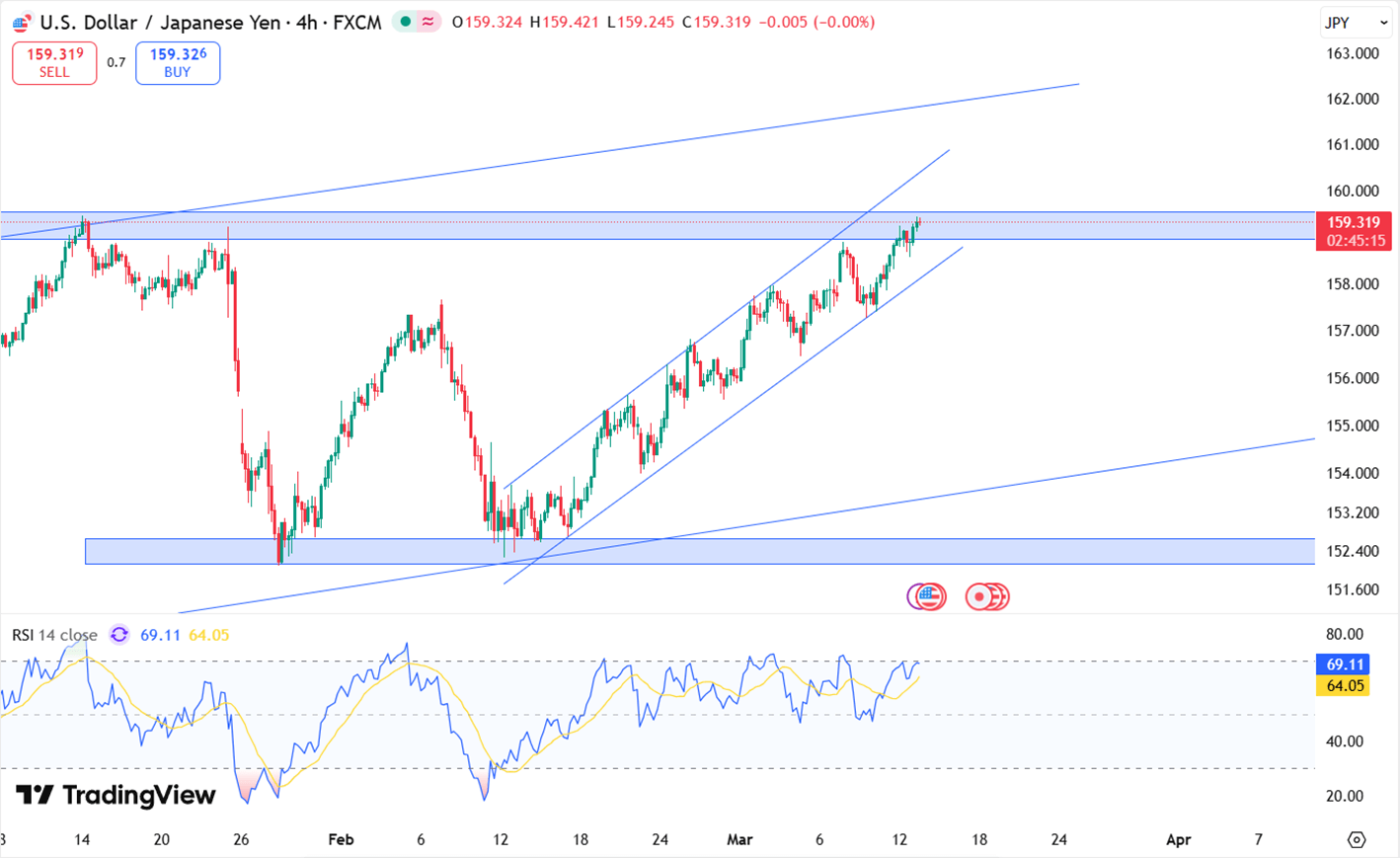
The Japanese yen traded near 159.4 per dollar on Friday, remaining at its weakest level since July 2024. Finance Minister Satsuki Katayama signaled that officials are prepared to intervene in currency markets to curb further declines. BoJ Governor Kazuo Ueda warned that a devalued yen, coupled with surging oil prices, could sharply drive up imported inflation. He noted that exchange rates now significantly influence monetary policy decisions.
Technically, resistance stands near 160.40, while support is firm at 158.30.
| R1: 160.40 | S1: 158.30 |
| R2: 161.30 | S2: 157.20 |
| R3: 162.10 | S3: 156.50 |
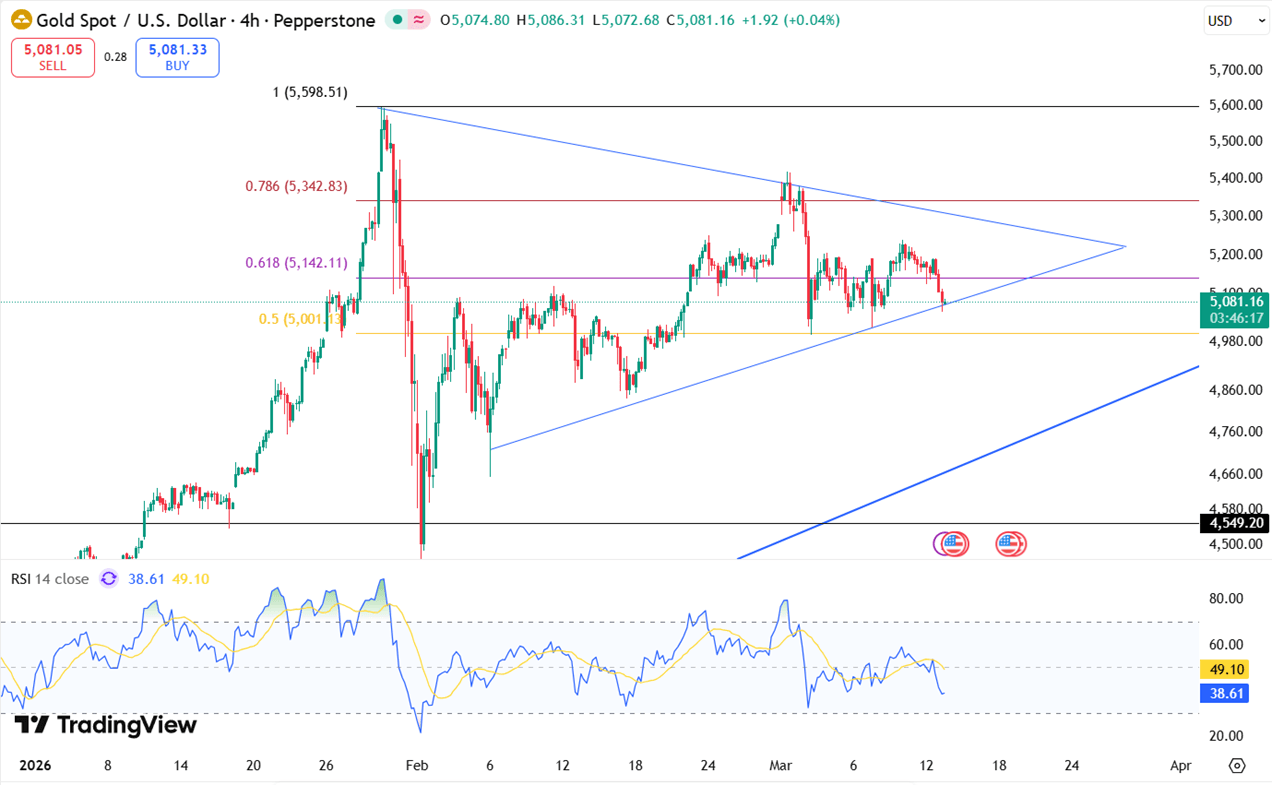
Gold prices climbed to approximately $5,110 per ounce on Friday, recovering after two days of declines. Investors are weighing geopolitical instability against inflation fears driven by surging energy costs. On the thirteenth day of the conflict, Washington and Tehran remain entrenched; President Trump prioritized preventing a nuclear Iran over oil prices, while Supreme Leader Khamenei vowed to keep the Strait of Hormuz closed. These tensions have escalated expectations for Federal Reserve rate cuts. Markets currently price in a 0% chance of a near-term reduction and only a 70% probability of a cut later in 2026.
Gold sees support near $5180, while resistance is around $5000.
| R1: 5180 | S1: 5000 |
| R2: 5270 | S2: 4920 |
| R3: 5380 | S3: 4850 |
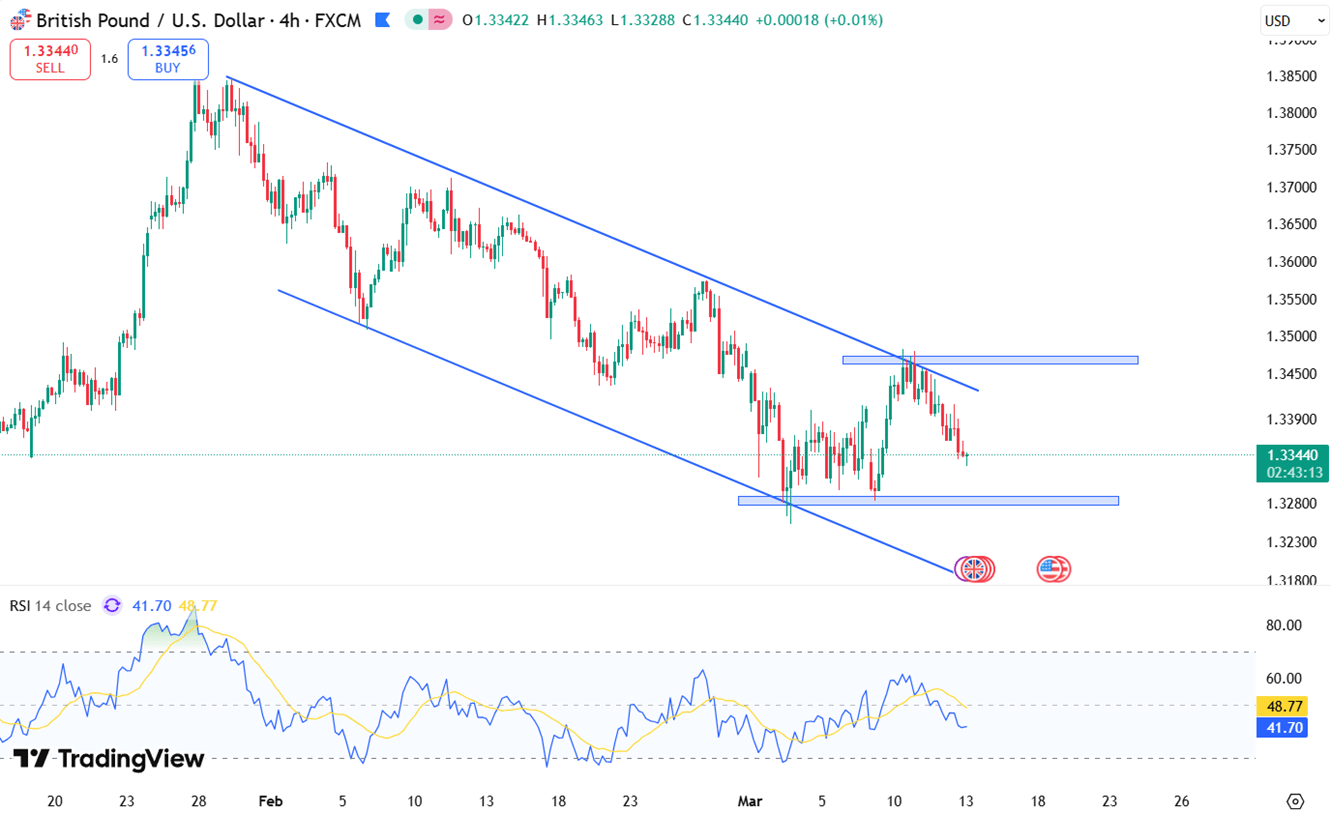
The British pound traded around $1.338, remaining near its lowest level in three months. A surging US dollar and elevated energy prices have heightened UK inflation fears, leading to a dramatic shift in monetary expectations. Money markets now price in a greater than 50% probability of a 25-basis-point Bank of England rate hike in December. Investors are currently pivoting their attention toward upcoming monthly GDP figures to gauge the economy's resilience.
From a technical view, support stands near 1.3280, with resistance around 1.3430.
| R1: 1.3430 | S1: 1.3280 |
| R2: 1.3500 | S2: 1.3220 |
| R3: 1.3550 | S3: 1.3170 |
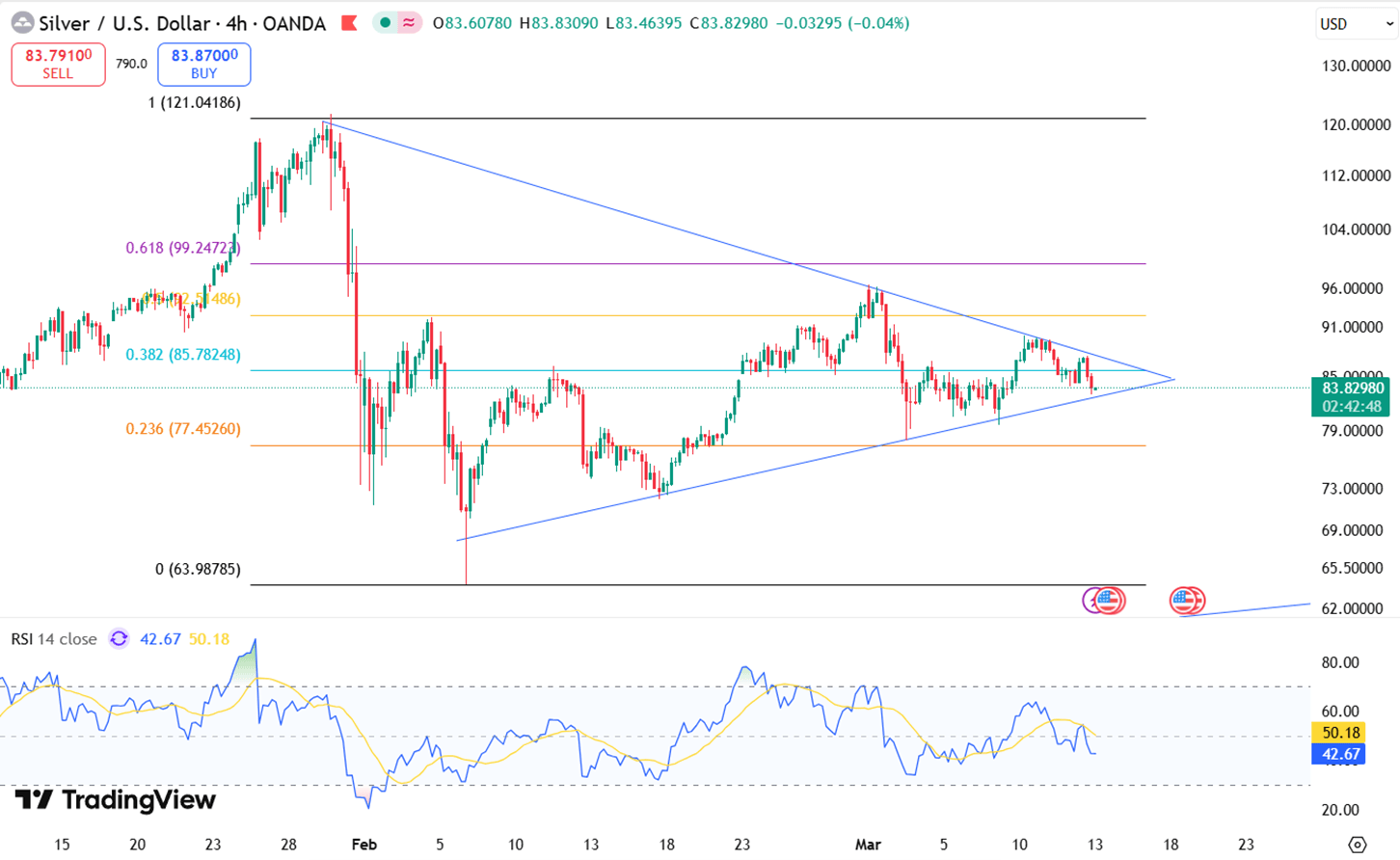
Silver prices rose toward $85 per ounce after two days of declines, leaving the metal largely flat for the week. A strengthening US dollar, driven by Middle East instability continues to affect the market. After nearly two weeks of fighting, rhetoric from Washington and Tehran suggests no immediate de-escalation. These persistent inflation fears have pushed expectations for the next Federal Reserve rate cut from July out to September. Investors are now focused on the January PCE price index, though this data won't yet capture the conflict's full economic impact.
From a technical view, resistance stands near $86.70 while support is located around $81.50.
| R1: 86.70 | S1: 81.50 |
| R2: 89.40 | S2: 80.00 |
| R3: 92.50 | S3: 78.20 |
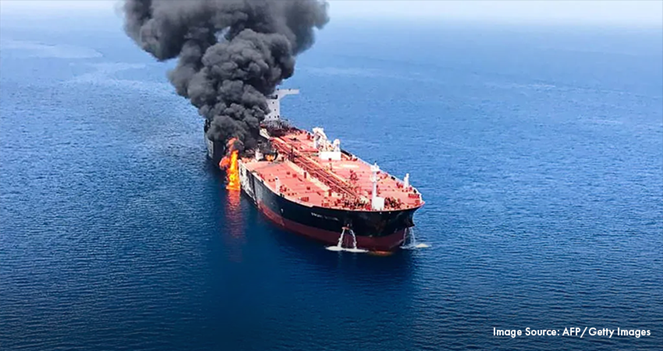 Oil Tanker Attacks Create Volatility
Recent strikes on oil tankers in the Persian Gulf have exposed the extreme vulnerability of global energy supplies. Footage of burning vessels near the Iraqi coastline has saturated financial media, serving as a reminder to market participants of the risks inherent in the region. Whenever tensions escalate in this region, energy traders immediately begin pricing in the possibility of supply disruptions.
Detail Dollar Leads as Markets Reprice Risk (03.12.2026)Currency markets remained under pressure as energy-driven inflation concerns and ongoing geopolitical tensions continued to support the U.S. dollar.
Then Join Our Telegram Channel and Subscribe Our Trading Signals Newsletter for Free!
Join Us On Telegram!


