


Global bond markets are under strain as long-term yields surge to multi-decade highs.
Global bond markets came under renewed pressure on Wednesday as long-term yields climbed sharply, reflecting investor unease over rising government debt burdens and strained fiscal positions. The moves highlight a disconnect between central banks’ recent easing cycles and market sentiment, with investors demanding higher compensation for holding sovereign debt.
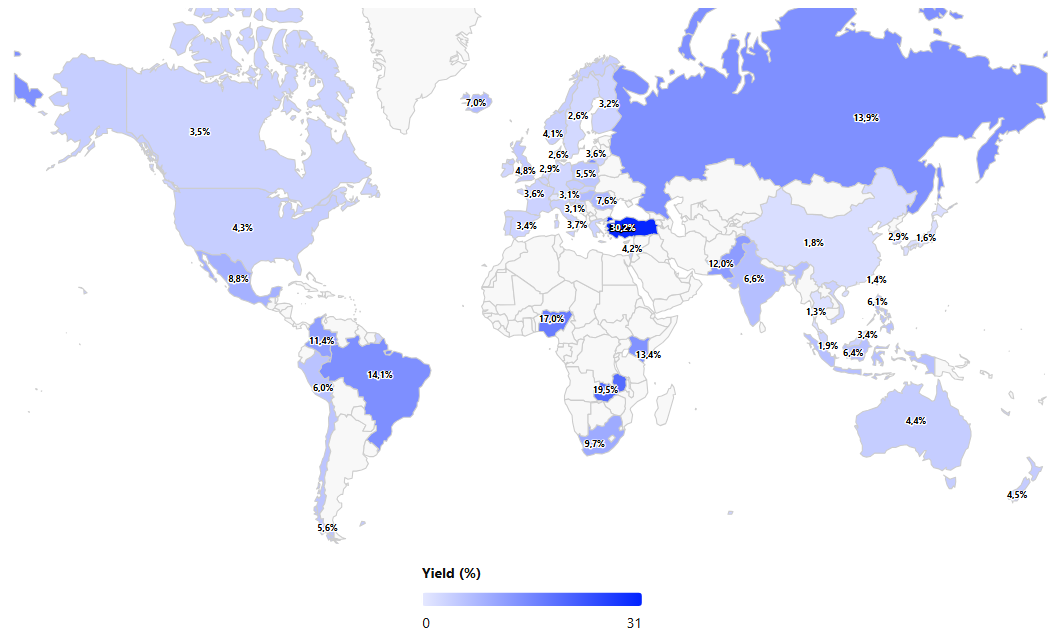
In the United Kingdom, the yield on 30-year gilts rose to its highest level since 1998, underscoring concerns about widening budget deficits and the sustainability of fiscal policy.
Similar dynamics emerged in Asia, where Japan’s 20-year government bond yield reached its highest level since 1999. The development signals growing anxiety over debt sustainability in one of the world’s most heavily indebted economies.
The United States also saw a sharp shift. The 30-year Treasury yield edged closer to the 5% threshold, a level not tested in years. The move reflects growing concerns that Washington’s expanding deficit and substantial issuance program could continue to exert upward pressure on borrowing costs.
For markets, such levels carry wide implications, from higher mortgage rates to tighter corporate financing conditions, potentially dampening global risk appetite.
The surge in long-dated yields signals a broader repricing of risk across global markets. While central banks continue to pursue stabilization through rate cuts and liquidity support, the bond market is painting a different picture, one of structural fiscal stress and reduced investor confidence.
Key Highlights:
Unless governments implement credible measures to reassure markets about their debt trajectories, pressure on long-term yields may persist. For policymakers, this leaves limited room to maneuver as fiscal stress competes with monetary easing.
 Fed, BOJ Hikes Lift Dollar as Oil Falls (21 – 25 September)
Global markets entered the week balancing tighter monetary policy against signs of easing Middle East energy risks. The Federal Reserve remains the main macro driver after raising rates to 3.75%–4.00%, its first hike since 2023, and signaling that another increase remains possible this year. The Dollar Index advanced to 100.4, while Treasury yields remained elevated. The Bank of Japan also tightened policy, raising rates to 1.25%, although dissent within the board suggested that future increases could come at a slower pace.
Detail Falling Oil Prices Support Metals (09.21.2026)Easing oil prices offered some relief to financial markets as renewed diplomatic efforts in the Middle East reduced immediate inflation concerns.
 BOJ Takes Rates to a 31-Year High
The Bank of Japan raised its key short-term interest rate by 25 basis points to 1.25% in September, pushing borrowing costs to their highest level since April 1995 and taking another step away from decades of ultra-loose monetary policy.
DetailThen Join Our Telegram Channel and Subscribe Our Trading Signals Newsletter for Free!
Join Us On Telegram!


