


In November 2024, the annual inflation rate in the euro area increased to 2.2%, up from 2.0% in October, but slightly lower than the 2.4% recorded a year earlier, according to Eurostat.
In November 2024, the annual inflation rate in the euro area increased to 2.2%, up from 2.0% in October, but slightly lower than the 2.4% recorded a year earlier, according to Eurostat. In the European Union, inflation rose to 2.5% in November, compared to 2.3% in October and 3.1% a year ago.
The lowest inflation rates were observed in Ireland (0.5%), Lithuania, and Luxembourg (1.1%). In contrast, the highest rates were recorded in Romania (5.4%), Belgium (4.8%), and Croatia (4.0%). Compared to October, inflation decreased in 4 countries, remained stable in 3, and increased in 20.
The primary contributors to euro area inflation in November were:
Meanwhile, energy prices continued to have a moderating effect, subtracting -0.19 percentage points from the overall rate.
The November data reflects sustained inflationary pressures in services and food categories, while energy prices provided some relief to the overall inflation rate.
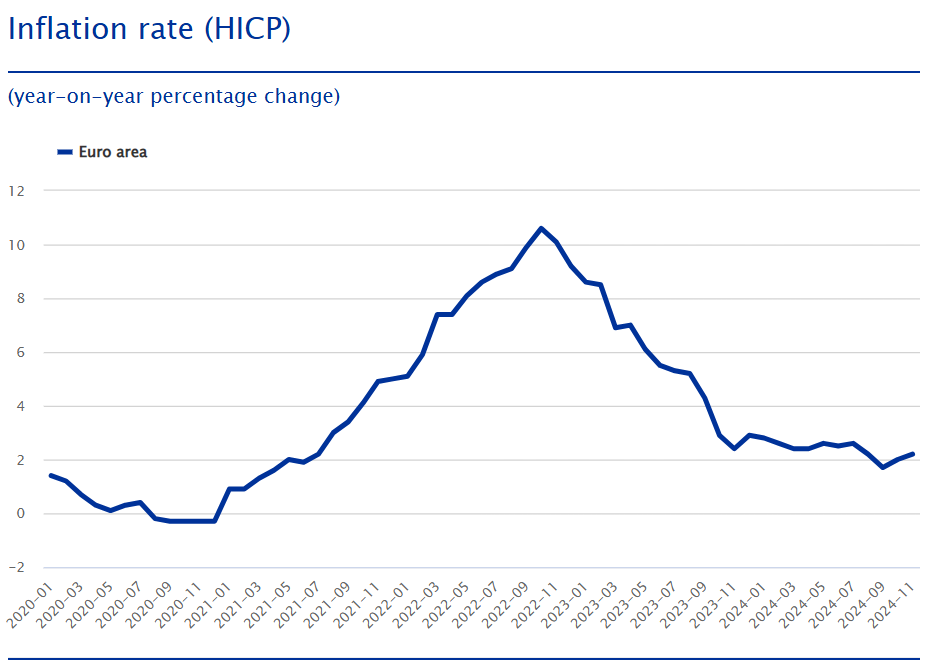
Source: ECB
A deepening sell-off in technology and artificial intelligence stocks pressured financial markets, forcing investors to liquidate precious metals holdings to cover losses elsewhere.
Escalating Middle East tensions pushed oil prices higher following a deadly drone strike on Saudi Aramco's Shaybah facility, renewing inflation concerns and expectations for further Federal Reserve tightening.
Rising oil prices renewed inflation concerns as uncertainty surrounding the US-Iran conflict and continued disruptions in the Strait of Hormuz reinforced expectations for further monetary tightening.
Then Join Our Telegram Channel and Subscribe Our Trading Signals Newsletter for Free!
Join Us On Telegram!


