


Inflation in the euro area rose slightly to 2.5% in January 2025, up from 2.4% in December 2024, according to Eurostat, the statistical office of the European Union.
This marks a decline from the 2.8% inflation rate recorded in January 2024, indicating a continued slowdown in price growth. Meanwhile, the European Union’s overall inflation rate stood at 2.8%, rising from 2.7% the previous month but down from 3.1% a year earlier.
The core Consumer Price Index (CPI), which excludes volatile food and energy prices, remained unchanged at 2.7% in January, aligning with both market forecasts and the previous month's reading.
Inflation levels varied significantly across EU member states, with Denmark recording the lowest rate at 1.4%, followed by Ireland, Italy, and Finland, each at 1.7%. On the higher end, Hungary saw the steepest inflation at 5.7%, while Romania (5.3%) and Croatia (5.0%) also registered elevated levels.
Compared to December 2024:
Breaking down inflation by sector:
The rise in headline inflation, along with the stable core CPI, suggests persistent price pressures in the eurozone. While energy prices saw a modest increase, services inflation remains the primary driver of overall price growth. The European Central Bank (ECB) continues to monitor inflation trends closely as policymakers assess the timing of potential interest rate adjustments in 2025.
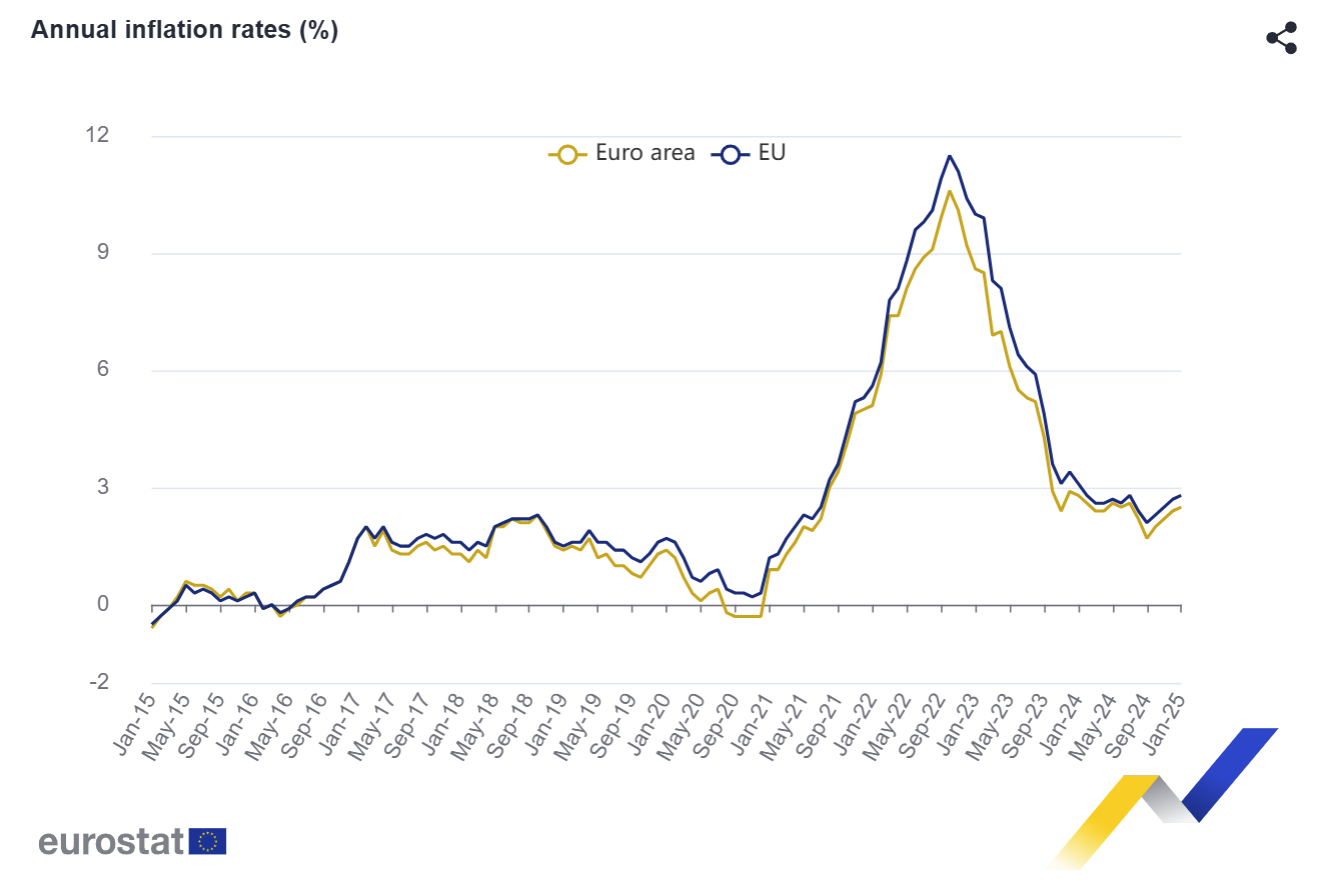
Source: Eurostat
Renewed expectations for further Federal Reserve tightening kept the dollar supported as policymakers continued to warn about persistent inflation risks.
 Fed, BOJ Hikes Lift Dollar as Oil Falls (21 – 25 September)
Global markets entered the week balancing tighter monetary policy against signs of easing Middle East energy risks. The Federal Reserve remains the main macro driver after raising rates to 3.75%–4.00%, its first hike since 2023, and signaling that another increase remains possible this year. The Dollar Index advanced to 100.4, while Treasury yields remained elevated. The Bank of Japan also tightened policy, raising rates to 1.25%, although dissent within the board suggested that future increases could come at a slower pace.
Detail Falling Oil Prices Support Metals (09.21.2026)Easing oil prices offered some relief to financial markets as renewed diplomatic efforts in the Middle East reduced immediate inflation concerns.
Then Join Our Telegram Channel and Subscribe Our Trading Signals Newsletter for Free!
Join Us On Telegram!


