




The euro area’s trade surplus with non-EU countries fell to €9.9 billion in April 2025, down from €13.6 billion a year earlier, according to Eurostat. This marks a sharp drop from March’s €37.3 billion surplus, largely driven by a 1.4% decline in exports to €243.0 billion. Imports remained steady at €233.1 billion.
A significant contributor to the decline was the chemicals sector. Its trade surplus shrank to €22.1 billion in April, nearly half of the €42.8 billion recorded in March. Additionally, the surplus in the machinery and vehicles category also fell year-over-year, further dampening the trade balance.
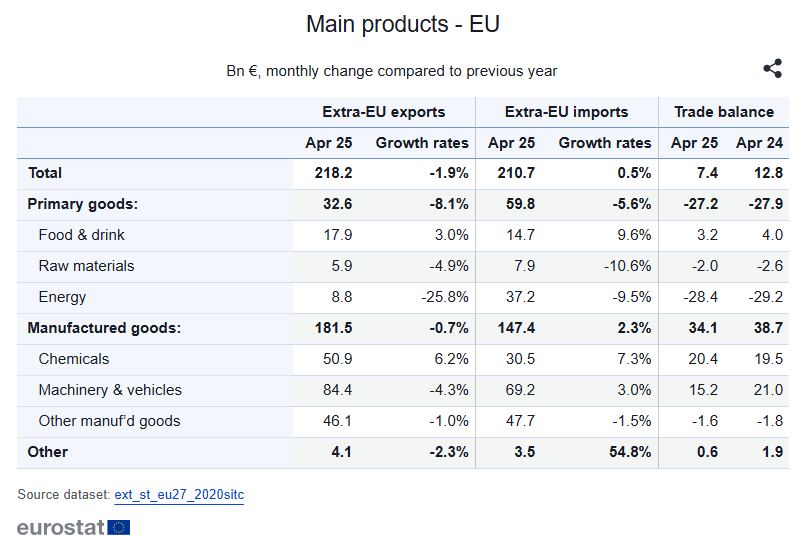
The broader European Union also experienced a trade surplus reduction. In April, the EU27 recorded a €7.4 billion surplus with non-EU countries, compared to €12.8 billion in April 2024. Exports rose 1.1% to €228.4 billion, but imports increased at a faster rate of 3.7%, reaching €221.0 billion.
Despite the weaker April figures, the first four months of 2025 indicate overall resilience. The euro area posted a €71.0 billion cumulative trade surplus, up from €68.6 billion in the same period last year. The EU’s year-to-date surplus reached €58.9 billion, slightly below 2024’s €63.7 billion.
Year-on-year, both exports and imports grew more than 5 percent across the euro area and the EU. This suggests that while sector-specific pressures have emerged, global demand has remained relatively strong so far in 2025.
Markets saw a short-lived recovery after the U.S. delayed planned strikes on Iranian energy infrastructure, easing immediate geopolitical pressure.
Detail Dollar Dominance Deepens (03.23.2026)Global markets remained under pressure as inflation fears tied to the ongoing Iran conflict strengthened the U.S. dollar and reshaped investor positioning.
Detail Energy Shock Drives Hawkish Shift (23-27 March)
Global markets remained under pressure as the conflict in the Middle East entered a more volatile phase, driving Brent crude past $110/barrel, which is its highest level since mid-2022.
DetailThen Join Our Telegram Channel and Subscribe Our Trading Signals Newsletter for Free!
Join Us On Telegram!


