


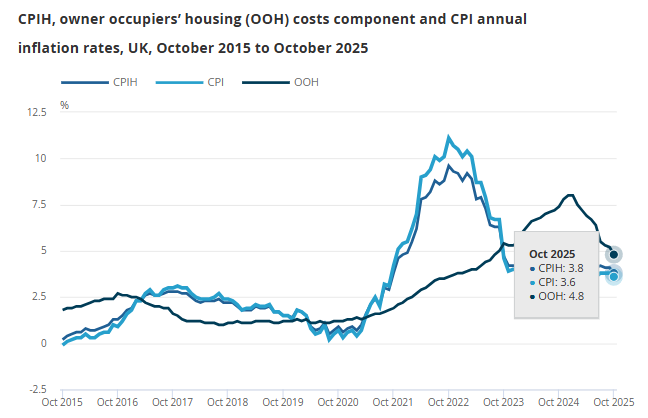
The UK’s annual inflation rate eased to 3.6% in October 2025, its lowest level in four months, offering a clear sign that price pressures are slowly calming.
The result matched expectations from the Bank of England and market forecasts, indicating that the recent easing in energy costs is finally making its way through the wider economy. Housing and utility prices showed significant slowing, with gas and electricity inflation dropping sharply after the regulator’s latest price-cap revision.
Several categories that have remained stubbornly elevated over the past year also softened. Services inflation slipped to 4.5%, and hotels, restaurants, clothing, and footwear posted gentler price increases. These movements are important for policymakers, as they signal early signs of relief in areas that have kept overall inflation elevated.
Not all components moved lower, however. Food and non-alcoholic beverages climbed to 4.9%, while recreation and culture also picked up. The uneven pattern indicates that the disinflation process still has work to do.
CPI rose 0.4% monthly, matching forecasts and rebounding from September’s flat reading. Core inflation eased to 3.4%, its lowest in six months, reinforcing the view that underlying pressures are gradually losing strength, even though the journey back to the Bank of England’s 2% target remains slow and uncertain.
For financial markets, the data strengthened expectations that the Bank of England may start easing policy before year-end. Pricing now reflects nearly 20 basis points of cuts for the December meeting, pointing to growing confidence that a shift in monetary conditions is close. At the same time, rising gilt yields and ongoing concerns about the UK’s fiscal direction continue to shape the wider backdrop.
 Fed, BOJ Hikes Lift Dollar as Oil Falls (21 – 25 September)
Global markets entered the week balancing tighter monetary policy against signs of easing Middle East energy risks. The Federal Reserve remains the main macro driver after raising rates to 3.75%–4.00%, its first hike since 2023, and signaling that another increase remains possible this year. The Dollar Index advanced to 100.4, while Treasury yields remained elevated. The Bank of Japan also tightened policy, raising rates to 1.25%, although dissent within the board suggested that future increases could come at a slower pace.
Detail Falling Oil Prices Support Metals (09.21.2026)Easing oil prices offered some relief to financial markets as renewed diplomatic efforts in the Middle East reduced immediate inflation concerns.
 BOJ Takes Rates to a 31-Year High
The Bank of Japan raised its key short-term interest rate by 25 basis points to 1.25% in September, pushing borrowing costs to their highest level since April 1995 and taking another step away from decades of ultra-loose monetary policy.
DetailThen Join Our Telegram Channel and Subscribe Our Trading Signals Newsletter for Free!
Join Us On Telegram!


