


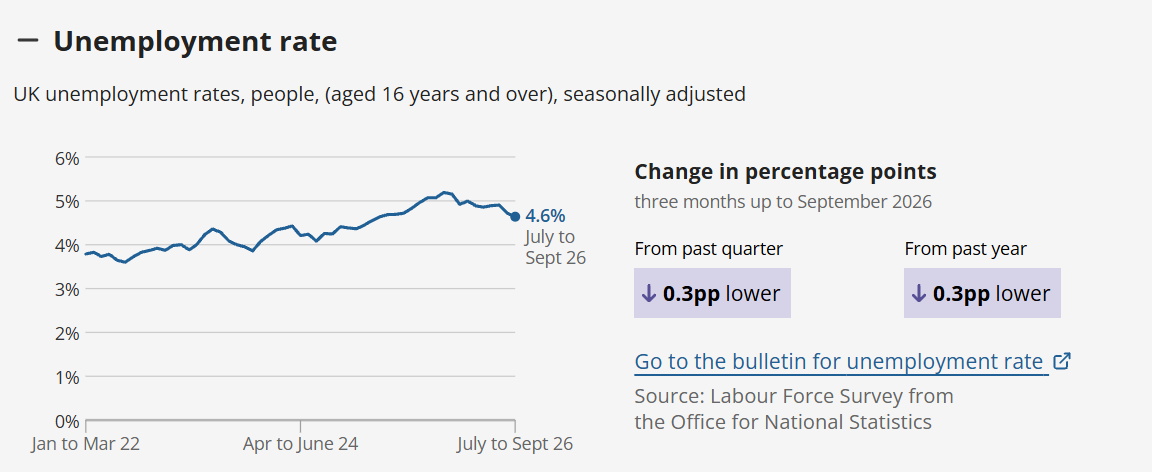
The UK unemployment rate declined to 4.6% in the three months ending September 2026, compared with 4.7% in the previous period. The figure came in below market expectations of an unchanged reading and marked the lowest unemployment rate since April 2025.
The improvement suggests that Britain's labor market remains resilient despite concerns about slowing economic growth.
The number of unemployed people fell by 88,000 during the quarter and by 102,000 compared with the previous year, bringing total unemployment to 1.684 million.
Employment also increased, with 155,000 additional people entering work during the quarter. The total number of employed individuals reached 34.625 million, representing an annual increase of 427,000.
Meanwhile, the employment rate rose from 75.1% to 75.4%.
The number of economically inactive people aged 16 to 64 decreased by 42,000 to 9.069 million, pushing the inactivity rate down to 20.8%.
However, total weekly working hours declined by 3.3 million to 1,101.8 million. This suggests that stronger employment figures have not translated into a corresponding increase in overall working activity.
The latest employment figures could influence the Bank of England's monetary policy outlook.
Lower unemployment may support household spending and maintain upward pressure on wages, complicating efforts to control inflation.
The data could reinforce expectations that the central bank will keep interest rates elevated for longer.
For the British pound, continued labor market strength may provide support, although upcoming wage growth and inflation figures will remain important in shaping interest rate expectations.
The US dollar climbed to a 19-month high as persistent inflation and hawkish Federal Reserve expectations continued to pressure major currencies and precious metals.
Detail Strong US Inflation Lifts Dollar and Bond Yields (16 – 20 November)
The US dollar remained strong as persistent inflation reinforced expectations for further Federal Reserve tightening. The Dollar Index traded above 103, its highest level since March 2025, while the US 10-year Treasury yield climbed to 5.15% following a 30-basis-point weekly increase. October producer inflation reached 6.5% annually, its fastest pace since 2022, adding to concerns raised by stronger consumer inflation earlier in the week. Investors are now assessing the possibility of a larger Fed rate increase in December.
DetailThen Join Our Telegram Channel and Subscribe Our Trading Signals Newsletter for Free!
Join Us On Telegram!


