


For the week ending October 19, initial claims for U.S. unemployment benefits, seasonally adjusted, decreased by 15,000 to 227,000, according to the latest report.
For the week ending October 19, initial claims for U.S. unemployment benefits, seasonally adjusted, decreased by 15,000 to 227,000, according to the latest report. This marks a notable drop from the previous week's revised figure of 242,000, which had been adjusted upward by 1,000. Despite this decline, the four-week moving average rose to 238,500, reflecting a 2,000 increase from the previous week's revised average of 236,500.
In addition, the advance seasonally adjusted insured unemployment rate for the week ending October 12 climbed to 1.3%, up by 0.1 percentage points from the prior week. The number of insured unemployed individuals reached 1,897,000, an increase of 28,000 from the previous week's revised total of 1,869,000. This represents the highest level of insured unemployment since November 2021, when the figure stood at 1,974,000. The four-week moving average for insured unemployment also increased, rising to 1,860,750, up by 17,500 from the prior week's revised average.
These figures suggest a mixed labor market picture, with initial claims decreasing but longer-term unemployment metrics continuing to rise.
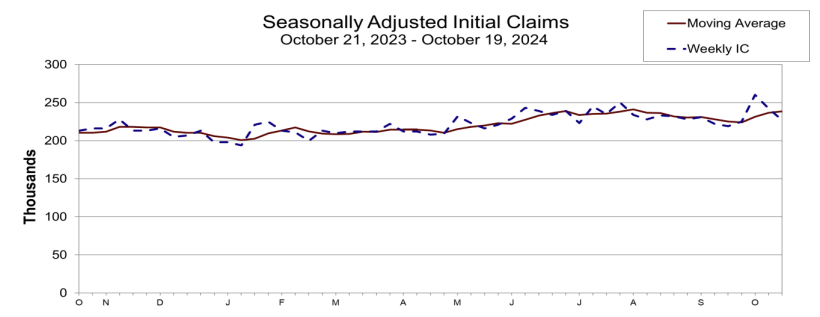
Source: U.S. Department of Labor
Escalating Middle East tensions pushed oil prices higher following a deadly drone strike on Saudi Aramco's Shaybah facility, renewing inflation concerns and expectations for further Federal Reserve tightening.
Rising oil prices renewed inflation concerns as uncertainty surrounding the US-Iran conflict and continued disruptions in the Strait of Hormuz reinforced expectations for further monetary tightening.
Elevated oil prices and rising Treasury yields weighed on precious metals as persistent geopolitical tensions reinforced inflation concerns and expectations for further Federal Reserve tightening.
Then Join Our Telegram Channel and Subscribe Our Trading Signals Newsletter for Free!
Join Us On Telegram!


