


The number of Americans filing for unemployment benefits increased slightly for the week ending February 15, with initial jobless claims reaching 219,000, up 5,000 from the previous week’s revised figure, according to the U.S. Department of Labor. The prior week's claims were adjusted upward by 1,000, bringing the total from 213,000 to 214,000.
Despite this uptick, the four-week moving average, which smooths out short-term fluctuations, declined by 1,000, reaching 215,250. The previous week's average was revised up by 250 to 216,250, indicating that broader labor market trends remain largely unchanged.
For the week ending February 8, the insured unemployment rate remained stable at 1.2%, the same as the previous week. The total number of insured unemployed individuals rose slightly to 1,869,000, an increase of 24,000 from the prior week's revised figure.
Revisions also played a role in the latest data, as the previous week’s insured unemployment figure was adjusted downward by 5,000, from 1,850,000 to 1,845,000. Meanwhile, the four-week moving average of insured unemployment declined by 7,750, reaching 1,862,500 after a slight downward revision of the prior week’s average.
While jobless claims saw a modest increase, the overall labor market continues to show stability, with unemployment rates holding steady and insured unemployment levels remaining within recent trends. Employers appear to be maintaining workforce levels, even as broader economic factors such as interest rates and inflation influence business conditions.
Analysts will continue to monitor jobless claims and employment trends in the coming weeks to assess whether these fluctuations signal any shifts in labor market dynamics or are simply part of normal variations in unemployment data.
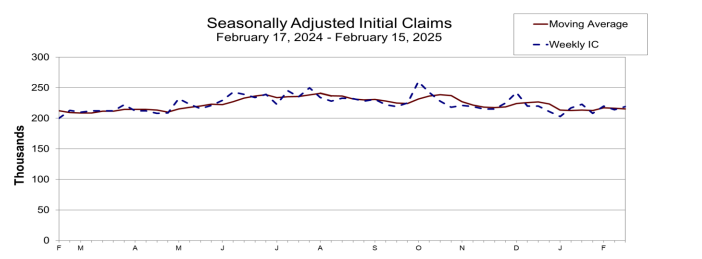
Source: U.S. Department of Labor
Escalating Middle East tensions pushed oil prices higher following a deadly drone strike on Saudi Aramco's Shaybah facility, renewing inflation concerns and expectations for further Federal Reserve tightening.
Rising oil prices renewed inflation concerns as uncertainty surrounding the US-Iran conflict and continued disruptions in the Strait of Hormuz reinforced expectations for further monetary tightening.
Elevated oil prices and rising Treasury yields weighed on precious metals as persistent geopolitical tensions reinforced inflation concerns and expectations for further Federal Reserve tightening.
Then Join Our Telegram Channel and Subscribe Our Trading Signals Newsletter for Free!
Join Us On Telegram!


