


Initial jobless claims edged higher, but continuing claims declined, suggesting a modest improvement in the labor market's overall resilience.
The U.S. labor market showed mixed signals last week as initial jobless claims increased slightly while insured unemployment declined, according to the latest report released by the U.S. Department of Labor.
For the week ending April 5, seasonally adjusted initial jobless claims rose to 223,000, an increase of 4,000 from the previous week’s revised figure of 219,000. Despite the uptick, the 4-week moving average remained steady at 223,000, indicating a relatively stable trend in new unemployment claims.
The seasonally adjusted insured unemployment rate for the week ending March 29 remained unchanged at 1.2%. However, the prior week’s rate was revised downward from 1.3%, suggesting slightly improved labor market conditions than initially estimated.
The number of continuing claims, also known as seasonally adjusted insured unemployed individuals, fell to 1,850,000 for the week ending March 29. This reflects a decrease of 43,000 from the revised figure of 1,893,000. The previous week’s figure was revised down by 10,000, further supporting signs of labor market resilience.
The 4-week moving average for continuing claims also showed a modest improvement, falling by 250 to 1,867,750. The prior week’s average was revised down from 1,870,500 to 1,868,000.
Despite the minor increase in initial claims, the steady moving average and declining continuing claims suggest that the U.S. job market remains relatively strong. Economists will continue to watch for any emerging trends as policymakers assess the overall health of the labor market in the face of broader economic uncertainties.
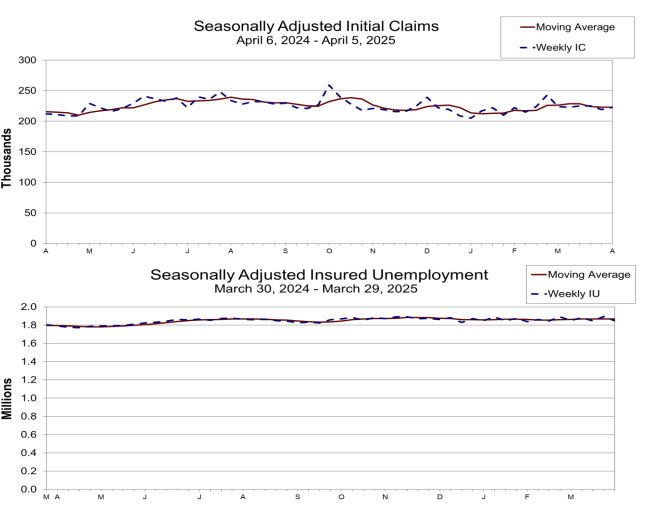
Source: US Bureau of Labor
Houthi missile attacks on Saudi Aramco and stepped-up Iranian strikes on tankers in Hormuz deepened worries over supply, while the IMF flagged threats to global growth from the Middle East conflict, high debt levels and a potential AI-boom reversal.
Detail Fed Hike Bets Lift Dollar (10.13.2026)The US dollar climbed to an 18-month high as investors awaited key inflation reports and weighed expectations for another Federal Reserve rate hike in December.
Detail Easing Oil Prices Support Markets (10.12.2026)Energy markets cooled on Monday as Brent crude slipped toward $103 a barrel, ending a two-session rally. Declining oil prices and easing Treasury yields provided support to major currencies and precious metals as investors awaited upcoming US inflation data.
Then Join Our Telegram Channel and Subscribe Our Trading Signals Newsletter for Free!
Join Us On Telegram!


