


Output slips, hiring stagnates, and cost pressures mount as policy uncertainty weighs on factories.
The US manufacturing sector lost steam in March, with growth stalling amid rising input costs and growing concerns over upcoming tariffs. According to the latest data from S&P Global, the seasonally adjusted Manufacturing PMI® dipped to 50.2 from 52.7 in February, marking the weakest improvement in factory conditions so far in 2025.
Though the PMI reading stayed above the neutral 50.0 level for the third month in a row, the slowdown was notable. Factory output contracted for the first time since December, ending the strong expansion seen in February. Businesses cited fading momentum from earlier tariff-related production increases and growing uncertainty around federal government policies.
Backlogs of work continued to decline, reflecting ongoing weak demand. March also marked the fastest drop in outstanding orders since December, adding to signs of a cooling manufacturing environment.
Manufacturing in the US entered a slower gear in March, as rising costs, trade policy uncertainty, and softer demand combined to weigh on business conditions. While some manufacturers saw modest export growth and signs of domestic resilience, the broader outlook remains clouded by inflationary pressures and cautious investment behavior.
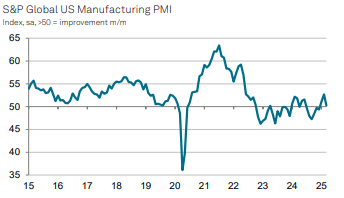
Source: SP Global
 Fed, BOJ Hikes Lift Dollar as Oil Falls (21 – 25 September)
Global markets entered the week balancing tighter monetary policy against signs of easing Middle East energy risks. The Federal Reserve remains the main macro driver after raising rates to 3.75%–4.00%, its first hike since 2023, and signaling that another increase remains possible this year. The Dollar Index advanced to 100.4, while Treasury yields remained elevated. The Bank of Japan also tightened policy, raising rates to 1.25%, although dissent within the board suggested that future increases could come at a slower pace.
Detail Falling Oil Prices Support Metals (09.21.2026)Easing oil prices offered some relief to financial markets as renewed diplomatic efforts in the Middle East reduced immediate inflation concerns.
 BOJ Takes Rates to a 31-Year High
The Bank of Japan raised its key short-term interest rate by 25 basis points to 1.25% in September, pushing borrowing costs to their highest level since April 1995 and taking another step away from decades of ultra-loose monetary policy.
DetailThen Join Our Telegram Channel and Subscribe Our Trading Signals Newsletter for Free!
Join Us On Telegram!


