


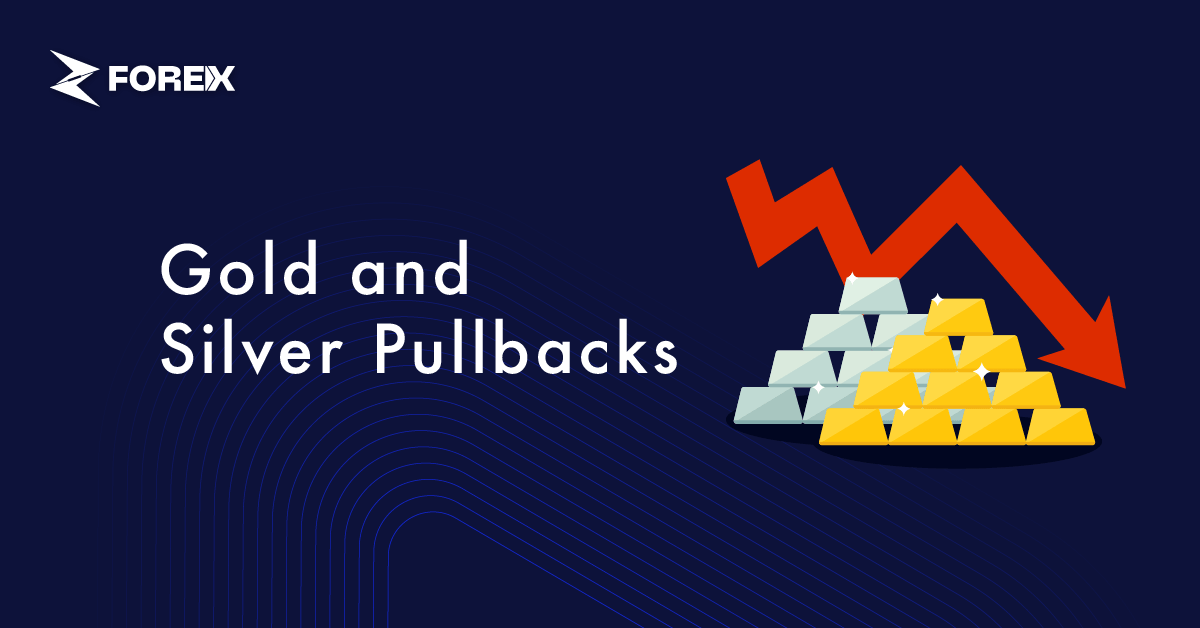
Gold and silver are pulling back at a time when many investors expected the opposite. Risks across nations are high, oil is moving, inflation fears are rising, and precious metals are under pressure.
That does not mean the trade is over. In past crisis periods, gold and silver weakened first before the bigger move began. To understand why, we need to look at the market mechanics behind the correction.
A crisis does not always send gold higher immediately. First, oil can rise. Then inflation expectations rise with it. That makes central banks less willing to cut rates.
Once the market understands this, bond yields can move higher. A stronger dollar usually follows as investors move into US Treasuries. For gold and silver, that creates short-term pressure.
So, the pullback is not as strange as it looks. Higher yields, a stronger dollar, and profit-taking can hit metals at the same time, even while the headlines look supportive.
This pattern is not new. In past oil shocks, gold struggled first, even when the crisis looked bullish for safe-haven assets.
The same sequence appeared around the 1973 OPEC embargo, the 1979 Iranian Revolution, the Gulf War, 2001, and the Russia-Ukraine shock in 2022. Oil moved first, inflation fears followed. Yields and the dollar created pressure. Then gold recovered later as the bigger macro story became clearer.
That is why the first reaction can be misleading. A drop during a crisis may look like weakness, but in previous cycles, it came before the next phase of the metals trade.
One level many large investors watch is the 200-day moving average. It shows the broader trend and helps markets judge whether a pullback is normal or more serious.
When gold or silver drops well below this line, it can look bearish at first. But in previous cycles, deep moves below the 200-day average appeared near better long-term entry zones.
That does not mean prices must recover immediately. It simply shows that the current weakness should be studied carefully, not judged only by the fear in the headlines.
The current backdrop is heavier than many older pullbacks. US debt is much larger, interest costs are rising, and inflation is still sensitive to energy prices.
There is also a change in central bank behavior. In earlier cycles, central banks were sellers of gold. Today, many are holding or adding physical reserves, especially when confidence in paper assets becomes weaker.
That does not remove short-term pressure from gold and silver. But it does make the bigger setup different. The setback is happening in a market where debt, inflation, and reserve diversification are all part of the same story.
A cooling phase in metals rarely happens in one clean move. The process starts with emotional selling, continues with technical pressure, then shifts into quiet accumulation before the recovery becomes obvious.
The first phase is driven by fear. Headlines turn negative, prices drop fast, and retail investors lock in losses too early.
After the first panic, prices can stay weak for a while. This is where gold and silver may remain under pressure from higher yields, a stronger dollar, and poor sentiment.
Once the selling pressure slows, longer-term buyers start paying attention again. Central banks, institutions, and patient investors usually move before the broader market feels confident.
By the time prices recover strongly, the story becomes popular again. That is often when late buyers return, after the better setup has already passed.
The biggest risk in this kind of pullback is reacting too late. Many investors buy gold and silver when the story is already popular, then panic when the market finally corrects.
This is how the trap works: the crowd chases strength, gets shaken out during weakness, and only returns when prices are already recovering. The better approach is to understand the sequence first, instead of trading only from headlines and fear.
The next signal is not only the gold price. The broader setup depends on whether pressure from yields and the dollar starts to ease, or whether it keeps metals under stress for longer.
Watch these key areas:
The gold and silver profit-taking phase can feel confusing when the world looks risky. The first reaction, however, is shaped by yields, the dollar, oil prices, and forced selling, not only by safe-haven demand.
That is why this move should be studied carefully. It may still be a breakdown, but the bigger pattern suggests it could also be the setup phase before the market narrative changes again.
Sign up in seconds for free, access your platform, and start trading with ease.

 How Index Futures Influence the Stock Market Open
How do index futures influence the stock market open? Learn what pre-market moves reveal about opening prices, market sentiment, and trader psychology.
Detail What Is the Nasdaq?
What is the Nasdaq? Learn how the Nasdaq Composite Index works, which stocks it includes, and what influences its performance.
Detail What Is the FTSE 100?
The FTSE 100 tracks the largest companies listed on the London Stock Exchange. Explore how it is calculated and what influences its performance.
DetailThen Join Our Telegram Channel and Subscribe Our Trading Signals Newsletter for Free!
Join Us On Telegram!


