


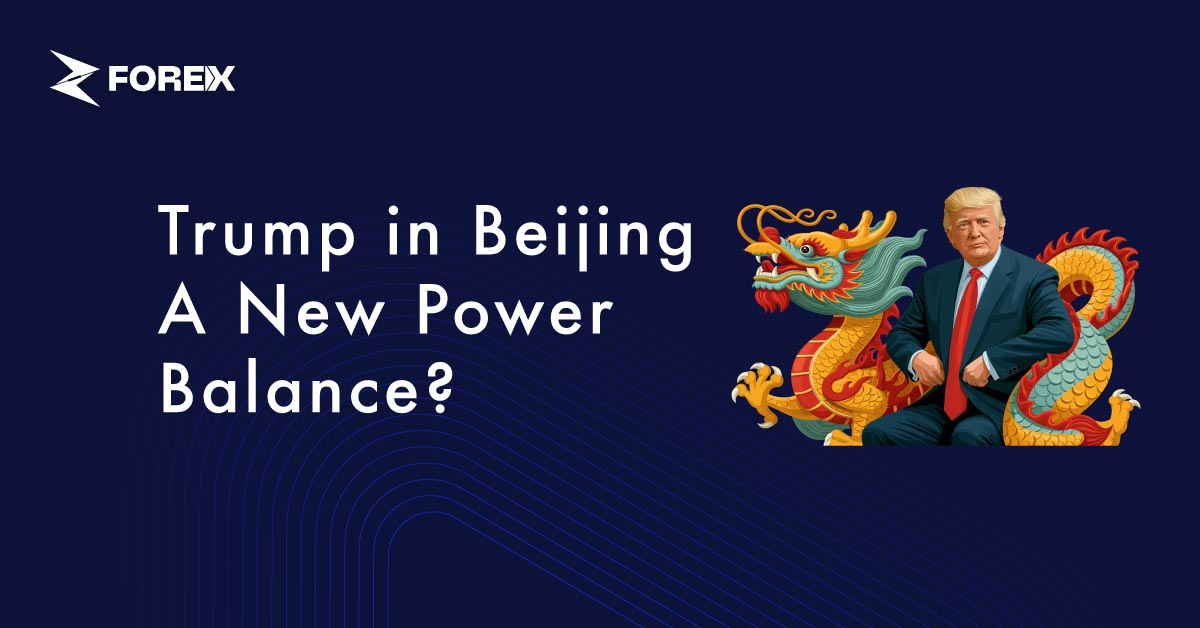
Donald Trump’s visit to Beijing was not just another diplomatic meeting. The United States arrived with its corporate giants behind it.
China hosted the meeting from a position of growing industrial and geopolitical strength. This is what makes the meeting important. It showed how the global order is changing.
The U.S. still holds unmatched military, financial and technological power, but China has become the center of global production, infrastructure and supply-chain control.
The real question is whether this was a show of American strength, or a sign that Washington now must negotiate with Beijing on more equal terms.
Trump did not arrive in Beijing with only diplomats, he came with executives from technology, finance, manufacturing, payments and aviation, including names linked to Nvidia, Apple, Tesla, BlackRock, Goldman Sachs, Boeing, Visa and Mastercard. That made the visit look like a political summit and a business roadshow at the same time.
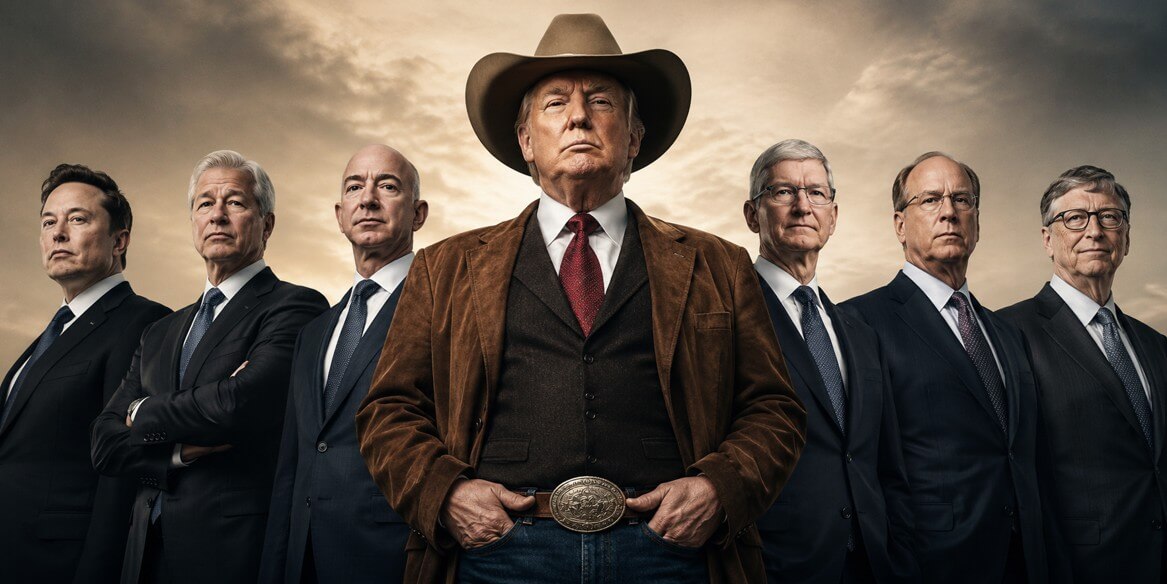
The message was clear: American power is not only military. It also comes from capital markets, AI chips, software, payment systems, global brands and financial institutions.
This delegation can be seen as a form of soft pressure. Trump was effectively showing that the U.S. still has the companies China wants access to, whether in semiconductors, electric vehicles, aircraft, payments or investment flows.
It was not a direct threat. It was more like a reminder: if China wants stable access to American technology, capital and consumer brands, it needs a workable relationship with Washington.
The message was not one-sided. These executives were in Beijing because China still matters deeply to their businesses. Apple depends heavily on Chinese production. Tesla needs the Chinese EV market. Nvidia wants access to Chinese demand, even under chip restrictions. Financial firms want deeper access to Chinese capital markets.
So, the summit also exposed America’s dependency. The U.S. came with powerful companies, but many of those companies still need China’s factories, consumers, suppliers and approvals.
The presence of CEOs helped both leaders. Trump could show that corporate America supports engagement. Xi could show that China remains attractive to global business, despite political tension and slower growth.
That is why the meeting was bigger than trade. It was a stage where both sides tried to prove the same thing: “You still need us.”
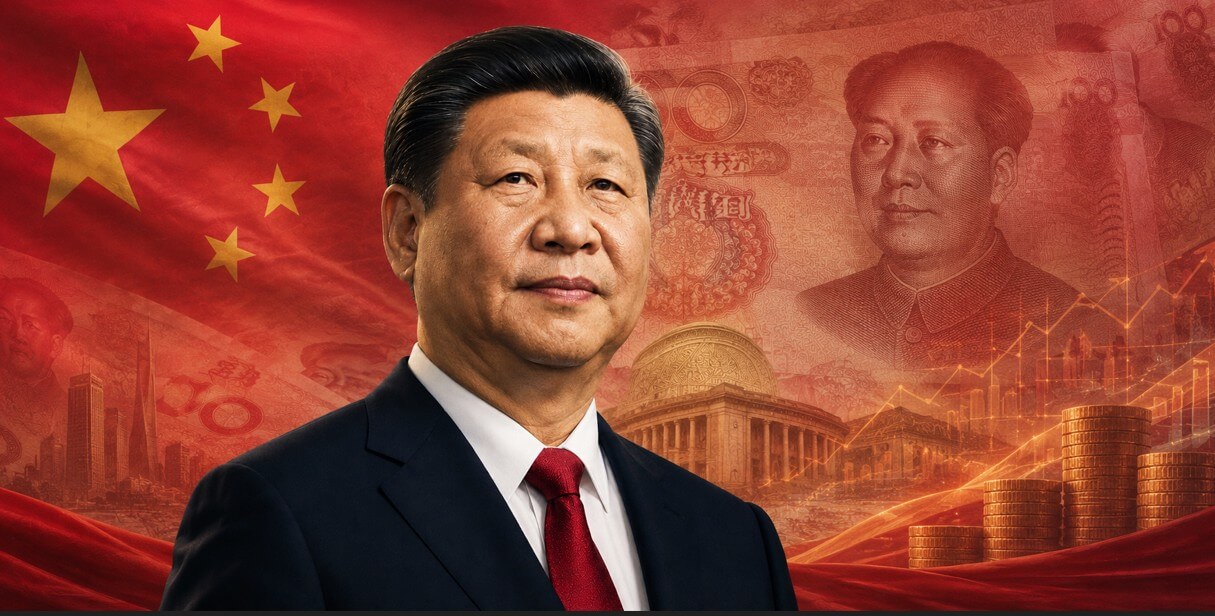
China had its own reason to welcome Trump and the American business delegation. It allowed Beijing to show that global companies still want access to China, even after years of trade wars, sanctions and supply-chain tensions.
This matters because China wants to protect its image as a reliable business hub. Hosting U.S. CEOs sends a simple message to investors: China is still open, still powerful and still too large to ignore.
The U.S. brought capital, technology and famous brands. China answered with production scale, infrastructure, logistics and market size.
This is China’s strongest card. Many American companies can reduce their China exposure, but they cannot replace China overnight. Factories, suppliers, ports, skilled labor and industrial networks took decades to build.
The location also matters. Trump went to Beijing, and China controlled the diplomatic setting. That gives the meeting symbolic weight.
It does not mean the U.S. became weaker overnight. But it does show that Washington can no longer deal with China as a secondary power. Beijing is now a central table where global decisions are negotiated.
There is a strong reason this question is being asked. China is no longer just a low-cost manufacturing base. It has become the center of global production, infrastructure, logistics, batteries, solar panels, rare earth processing and industrial supply chains.
For many countries and companies, China is now too large to bypass. This gives Beijing real leverage. When global CEOs go to China, they are not only chasing sales. They are protecting supply chains, factory networks and long-term access to one of the world’s most important markets.
Still, saying the power center has fully shifted to Beijing would be too simple. The U.S. remains stronger in military reach, the dollar system, capital markets, software, advanced technology, global alliances and financial influence.
China can manufacture at massive scale, but the U.S. still controls many of the systems that price, finance and secure the global economy. That is why Washington can still pressure China through sanctions, export controls, chip restrictions and access to capital.
The world is not moving from American dominance to Chinese dominance in a straight line. It is moving toward a more balanced and more competitive structure.
The U.S. still has the strongest global power network. China now has enough economic and industrial weight to resist pressure and force negotiation. This meeting showed that neither side can ignore the other, and neither side can fully control the game alone.
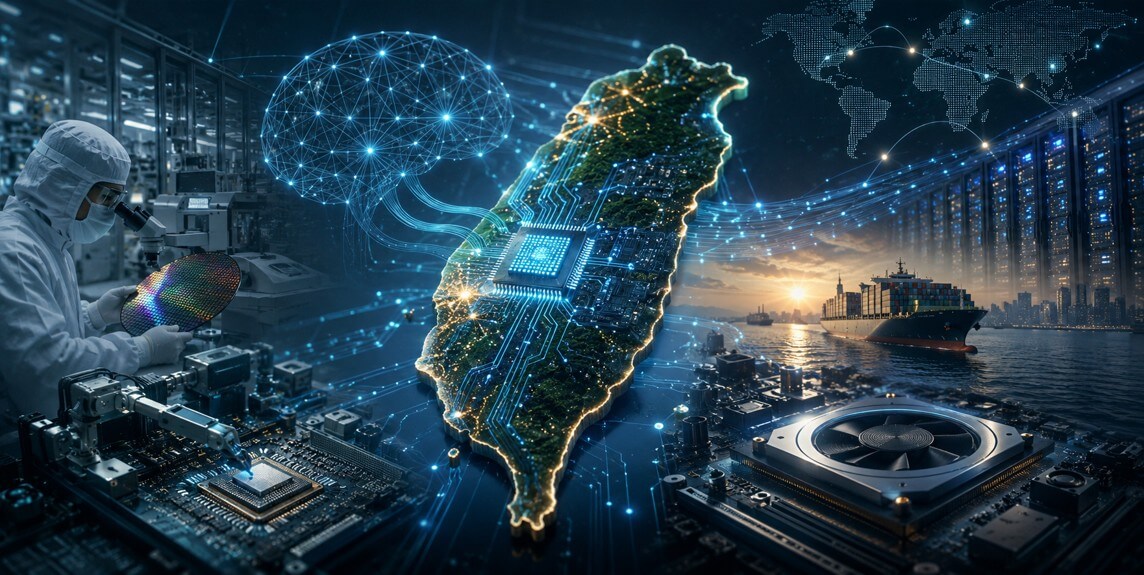
Taiwan remains the most sensitive issue between the U.S. and China. Trade disputes can be negotiated. Technology restrictions can be adjusted. But Taiwan sits at the center of China’s sovereignty claims and America’s security commitments in Asia.
That is why Xi’s warning on Taiwan matters. Beijing is signaling that business cooperation has limits. If Washington crosses China’s red line on Taiwan, the whole relationship can quickly move from competition to crisis.
Even with a warmer diplomatic tone, the trade relationship remains full of pressure points. Tariffs, market access, export rules, investment restrictions and supply-chain security are still unresolved.
The two sides may reach selective deals, especially in agriculture, aviation, energy or financial services. But the deeper issue is trust. Both countries want trade, but both also want to reduce dependence on the other.
Technology is now one of the most important parts of the rivalry. Nvidia’s presence in the delegation made this clear. AI chips, semiconductor equipment, data centers and advanced computing are no longer just business topics. They are national security issues. Reuters reported that Nvidia’s Jensen Huang joined the trip as companies pushed to resolve China-related business problems.
For the U.S., chip controls are a way to slow China’s military and AI progress. For China, chip independence has become a national priority. This is where competition will stay intense, even if both leaders speak positively in public.
The old trade war was mostly about tariffs. The new one is about control: who controls chips, batteries, rare earths, factories, ports, payment systems and data infrastructure.
This is why the meeting matters beyond the headlines. The U.S. and China are not only negotiating prices or import rules. They are negotiating the structure of the next global economy.
The U.S. and China are powerful enough to hurt each other badly, but that is exactly why direct military conflict remains unlikely. A war between them would not stay local for long. It would hit global trade, shipping, technology, energy, currencies and investor confidence at the same time.
The U.S. still has the larger military budget by far. SIPRI data for 2025 shows U.S. military spending at $954 billion, compared with China’s estimated $336 billion. But China’s military capacity is growing, especially around its own region, where distance gives Beijing a natural advantage.
If there is a serious military crisis, Taiwan remains the most likely trigger. Beijing sees Taiwan as a sovereignty issue, while Washington sees it as central to the security balance in Asia.
Neither side wants a direct war, but both sides are preparing for the possibility. That is what makes the situation unstable. Deterrence can prevent war, but it also keeps military pressure high.
The more likely future is not a direct U.S.-China war. It is a long rivalry below the level of war: sanctions, export controls, cyber pressure, naval activity, chip restrictions, defense partnerships and influence battles across Asia, the Middle East and Africa.
This is already visible. The U.S. tries to limit China’s access to advanced technology. China tries to reduce dependence on U.S. systems and build its own industrial and military depth. Both sides are competing hard but still leaving space for business deals.
So, the answer is yes and no. They are too strong to treat war casually, but not too strong to avoid confrontation entirely.
The most realistic scenario is managed tension: business where possible, pressure where necessary, and military deterrence in the background. That may prevent direct conflict, but it also means U.S.-China relations will remain one of the biggest risks in the global economy.
The meeting does not prove that a completely new world order has arrived. But it does show that the old U.S.-led system is becoming harder to manage alone.
China now has enough economic, industrial and diplomatic weight to force negotiation. The U.S. still leads in military power, finance and global alliances, but it can no longer treat China as just another trading partner.
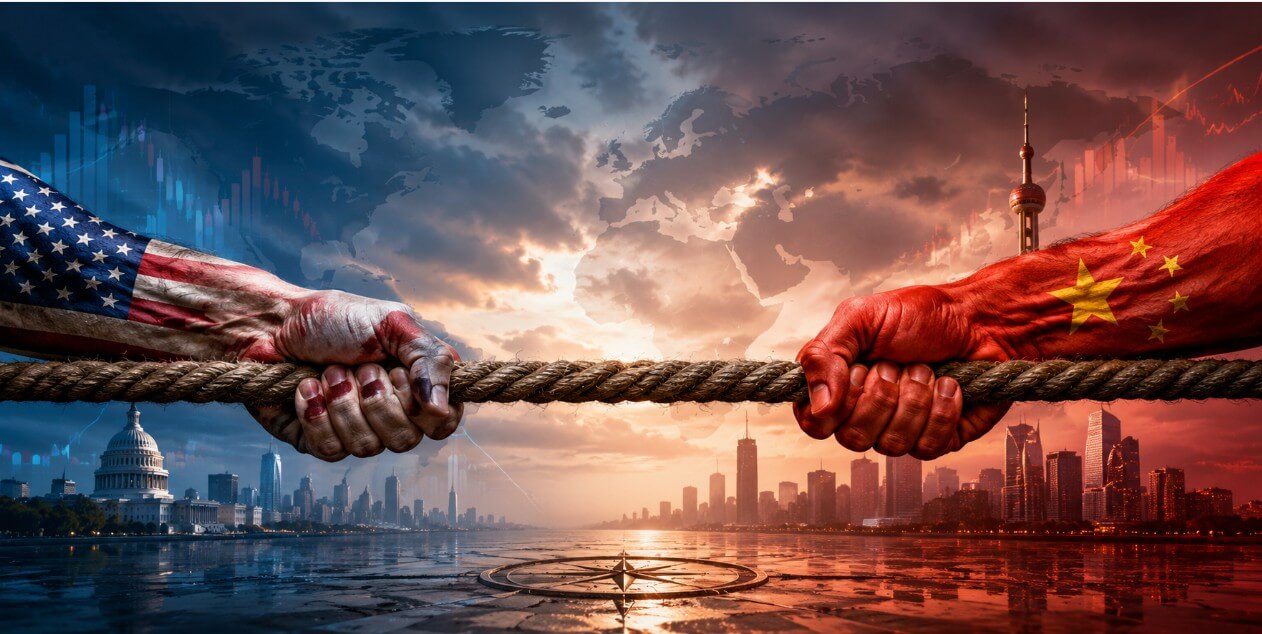
The U.S. and China are not likely to “share the wealth of the world” in a friendly way. Their relationship is too competitive for that.
What they may do is divide influence more clearly. The U.S. will try to protect its role in finance, technology, defense and the dollar system. China will keep expanding through production, infrastructure, energy routes, industrial exports and emerging-market partnerships.
For the rest of the world, this rivalry creates both risk and opportunity. Countries in Asia, the Middle East, Africa and Latin America can use the competition to negotiate better trade deals, investment flows, infrastructure support and security partnerships.
Many countries will avoid choosing one side permanently. They will work with the U.S. where it offers capital and security, and with China where it offers infrastructure, manufacturing and trade.
The real change is not that China has replaced the U.S. It is that global power is no longer organized around one center.
Washington and Beijing are now sitting at the same bargaining table, each with different strengths. That table may shape trade, technology, defense and investment decisions for years to come.
Technology will be the first market area to react. Any softer tone on chip restrictions could support Nvidia, Apple suppliers, semiconductor names and the broader AI trade.
But if the meeting ends with tougher language on technology controls, investors may quickly reprice the sector. AI stocks are already priced for strong future growth, so even small policy shifts can create large moves.
Chinese equities, yuan sentiment and companies exposed to Chinese demand should also be watched closely. A constructive meeting could improve confidence in China’s market, especially after years of weak investor sentiment.
However, investors should separate political headlines from real policy action. A positive photo or speech may lift markets for a few sessions, but long-term confidence needs actual progress on trade, investment access and regulatory stability.
China remains one of the biggest drivers of global commodity demand. If U.S.-China relations improve, it may support expectations for stronger trade, industrial activity and infrastructure demand.
That would matter for copper, oil, LNG, iron ore and industrial metals. On the other hand, renewed tension could hurt global growth expectations and push investors back toward defensive assets.
Gold should also stay on the radar. If the meeting lowers geopolitical tension, safe-haven demand may ease for a while. But if Taiwan, sanctions or chip restrictions return to the center of the story, gold can quickly regain support.
The same logic applies to the dollar, Treasury bonds and the Japanese yen. Markets will watch whether this meeting reduces risk or simply delays the next round of confrontation.
For investors, the key question is not whether Trump and Xi sound friendly in public. The real question is whether the meeting changes the rules of the game.
Any progress on tariffs, chip access, rare earths, financial market access or Taiwan-related language could move markets. Without that, the summit may become another short-term relief moment inside a much longer U.S.-China rivalry.
Sign up in seconds for free, access your platform, and start trading with ease.

 PAMM vs MAM vs Copy Trading: Key Differences
With PAMM, money participates in a managed pool. MAM keeps client accounts separate but gives the manager a central way to trade them. Copy Trading leaves the follower with an independent account and reproduces another trader’s positions there.
Detail What Happens When a Company Joins or Leaves the S&P 500?
How companies join or leave the S&P 500, what happens before and after the change, and the key announcement and effective dates that matter.
Detail What Is PAMM and How Does It Work?
Learn how PAMM accounts work, how profits, losses and manager fees are calculated, and what to check before allocating funds to a trading strategy.
DetailThen Join Our Telegram Channel and Subscribe Our Trading Signals Newsletter for Free!
Join Us On Telegram!


