


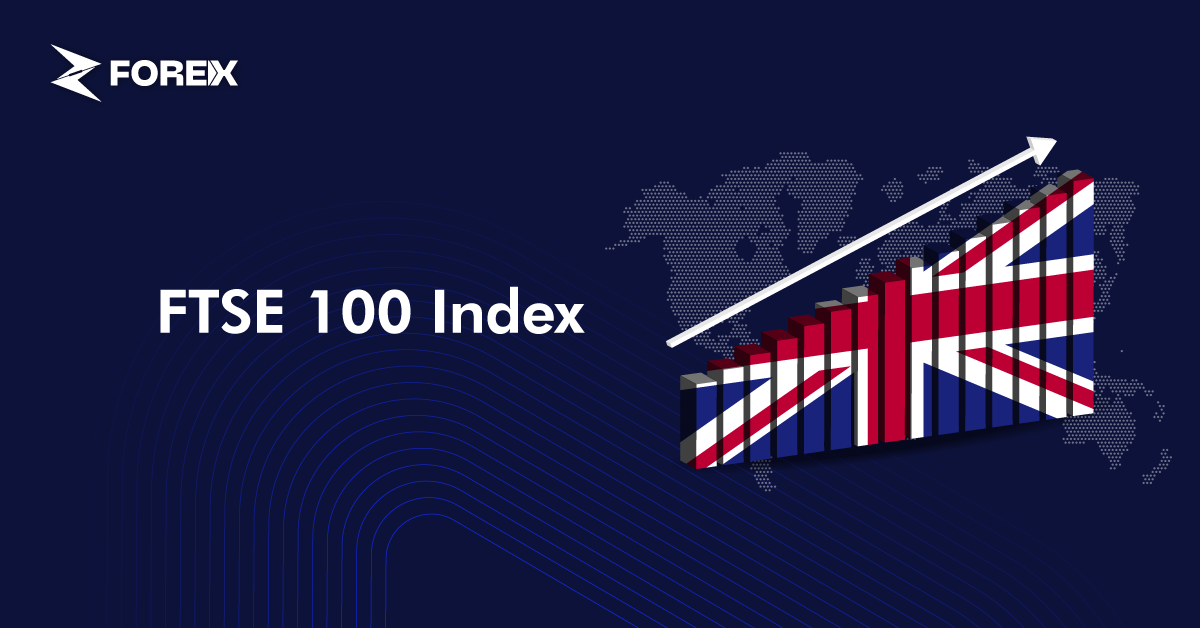
The FTSE 100 is the leading index for large UK-listed companies, covering 100 major businesses traded on the London Stock Exchange. Commonly known as the “Footsie,” the index is used to track the performance of Britain’s largest listed stocks.
Its constituents stretch across banking, energy, mining, pharmaceuticals and consumer goods, including internationally known companies such as HSBC, Shell, AstraZeneca and Unilever.
The name can be slightly misleading, however. The FTSE 100 may be based in London, but many of its companies do business across the world. That means a move in the index can have as much to do with oil prices, currencies or overseas demand as with the British economy. On trading platforms, products linked to the index may also appear as UK 100.
A company can be listed in London without relying heavily on British customers. This distinction is especially important for the FTSE 100, where multinational businesses account for a substantial part of the index.
The sources of revenue vary widely:
As a result, weaker UK growth does not automatically translate into weaker FTSE 100 earnings. For some of its largest companies, developments in the U.S., China or commodity markets can have a much greater impact.
The FTSE 100 includes 100 companies, but some have more influence on the index than others. Larger companies generally have a greater impact on its movements.
This puts companies such as AstraZeneca, Shell and HSBC in a stronger position to affect the headline index than smaller constituents. Only shares available for public trading are considered when calculating the weights, rather than every share a company has issued.
The lineup is not permanent either. The FTSE 100 is reviewed quarterly, and companies can move in or out as their market values change. A company that grows large enough may enter the index, while one that falls down the rankings can be replaced.
So when the FTSE moves sharply, it is worth checking which companies and sectors are doing the heavy lifting.
One of the FTSE 100’s more unusual relationships is with the British pound. Because many constituents earn money overseas, changes in sterling can alter the value of those revenues when they are converted back into pounds.
A weaker pound can make foreign earnings worth more in sterling terms, potentially supporting multinational companies. A stronger pound can reduce that translation effect.
This helps explain why sterling and the FTSE 100 can sometimes move in opposite directions. But the relationship is not automatic. Currency hedging, production costs and the reason behind the pound’s move can all change the impact from one company to another.
For the FTSE 100, the pound is therefore more than a reflection of the UK economy. It can directly change the earnings outlook for some of the index’s largest companies.
The FTSE 100 has strong exposure to energy and mining, giving commodity prices an important role in its performance. Companies such as Shell, BP, Rio Tinto and Glencore connect the index to oil, metals and global demand for raw materials.
Higher oil prices can improve the earnings outlook for energy producers, while mining companies are more sensitive to changes in prices for copper, iron ore and other metals.
China also enters the equation here. As one of the world’s largest consumers of commodities, changes in Chinese construction, manufacturing and industrial activity can affect mining shares in London. This gives the FTSE 100 a direct connection to economic developments far beyond the UK.
Banks respond to a different set of forces than the FTSE 100’s energy and mining companies. Their performance can depend on:
This gives financial stocks their own set of drivers within the FTSE 100, rather than tying them entirely to the British economy.
The FTSE 100 and the UK economy do not always move together. A large part of the index is made up of multinational companies whose earnings depend on customers and operations overseas.
This can produce seemingly contradictory moves. Weak UK economic data may put pressure on the pound, but a weaker currency can increase the sterling value of foreign earnings. Large international companies may therefore receive some support even while domestic conditions are deteriorating.
Companies that depend more heavily on British consumers and businesses can react very differently. A strong FTSE 100 should not automatically be read as a strong UK economy.
The FTSE 100 is only one part of the UK equity market. The FTSE 250 covers the next 250 companies below the FTSE 100 and often provides a different perspective.
Many FTSE 250 companies have greater exposure to the UK economy, making areas such as domestic spending, housing, business activity and interest rates more relevant to their performance.
Looking at the two indices together can therefore add context. If the FTSE 100 is rising while the FTSE 250 is struggling, international companies may be behind the strength. When gains extend further into the FTSE 250, the move may reflect healthier conditions across a wider range of British businesses.
The headline number only tells you where the index went. Understanding why it moved usually requires looking at the companies behind it.
If energy and mining stocks are leading, oil and metal prices may provide the explanation. If banks are driving the move, interest rates and bond yields may be more relevant. A sharp change in sterling can point toward the index’s large international companies.
The FTSE 250 can provide another useful clue. When the FTSE 100 rises but the FTSE 250 does not, the strength may be concentrated among large global businesses rather than companies with closer links to the British economy.
The FTSE 100 is an index, so it cannot be bought directly. Instead, there are several financial products designed to follow its movements.
ETFs and index funds can provide exposure to the companies within the index, while futures and options are commonly used to trade or manage exposure to changes in its value. Trading platforms may also offer index-linked instruments under names such as UK 100.
The product chosen can change the costs, risks and way the position behaves, even when each one is linked to the same underlying index.
The FTSE 100 carries a British name, but many of the forces moving it originate elsewhere. Oil prices can affect its energy companies, Chinese demand can reach its miners, and changes in sterling can alter the value of earnings generated around the world.
UK interest rates and economic conditions still have a role, particularly for banks and more domestically exposed businesses. But reading the FTSE 100 purely as a measure of Britain can miss much of what is happening underneath. It is a London-listed index shaped by both the UK and the global economy.
Sign up in seconds for free, access your platform, and start trading with ease.

 PAMM vs MAM vs Copy Trading: Key Differences
With PAMM, money participates in a managed pool. MAM keeps client accounts separate but gives the manager a central way to trade them. Copy Trading leaves the follower with an independent account and reproduces another trader’s positions there.
Detail What Happens When a Company Joins or Leaves the S&P 500?
How companies join or leave the S&P 500, what happens before and after the change, and the key announcement and effective dates that matter.
Detail What Is PAMM and How Does It Work?
Learn how PAMM accounts work, how profits, losses and manager fees are calculated, and what to check before allocating funds to a trading strategy.
DetailThen Join Our Telegram Channel and Subscribe Our Trading Signals Newsletter for Free!
Join Us On Telegram!


