


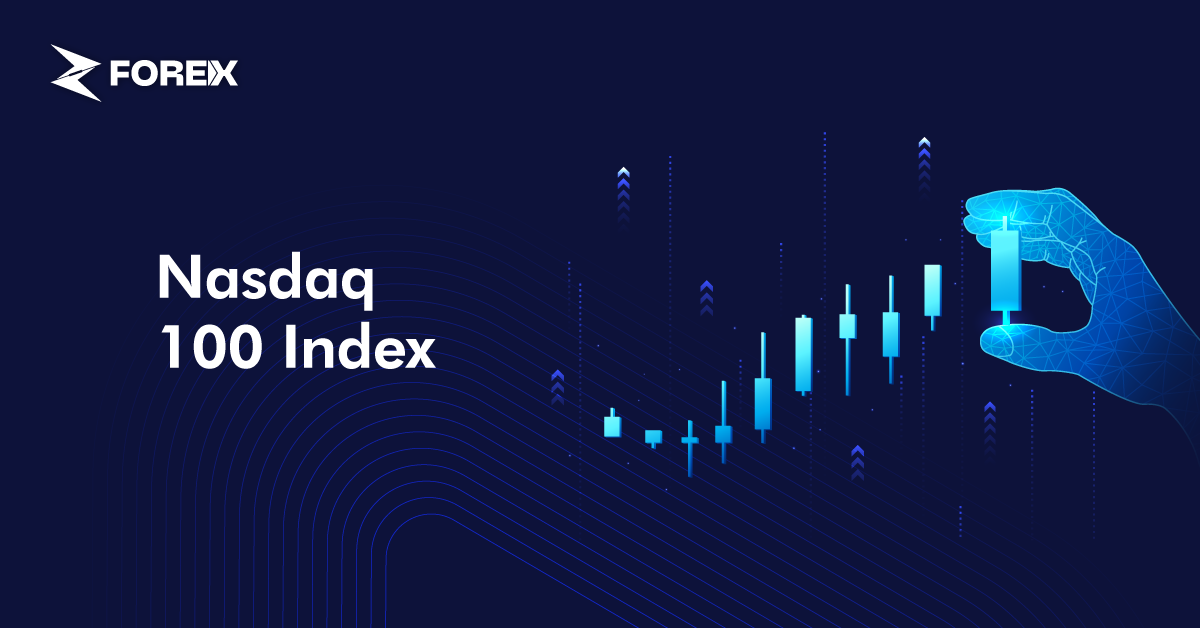
Nasdaq is one of the most recognizable names in finance, but it does not refer to just one thing. Nasdaq is a stock exchange, home to companies ranging from global technology leaders to smaller businesses in healthcare, consumer services and other industries. The same name is also attached to several stock indices.
The Nasdaq Composite casts a wide net, covering thousands of stocks listed on the Nasdaq exchange. This includes companies of very different sizes and extends beyond technology into areas such as healthcare, financials and consumer businesses.
The Nasdaq-100 is much more selective. It follows 100 of the largest eligible non-financial companies listed on Nasdaq, creating a more concentrated group of major businesses.
|
Nasdaq Composite |
Nasdaq-100 |
|
|---|---|---|
| Coverage | Thousands of Nasdaq-listed stocks | 100 large non-financial companies |
| Financial companies | Included | Excluded |
| Company mix | Broad range of sizes and sectors | Concentrated in large companies |
| Common reference | “The Nasdaq” in financial news | NAS100 or US100 on many trading platforms |
The distinction becomes especially useful during volatile sessions. The Nasdaq-100 can make a strong move because of a handful of large companies, while the broader Composite may show a more mixed performance across Nasdaq-listed stocks.
The index is not exclusively about technology, but some of the world’s largest technology companies have made the sector central to its identity. Apple, Microsoft, Nvidia, Amazon, Alphabet and Meta are among the major names associated with the Nasdaq-100.
Their businesses also connect the index to several of the industries driving changes in the global economy:
This concentration helps explain why developments in artificial intelligence, semiconductor demand or cloud spending can quickly reach the index. Nasdaq is not a pure technology index, but technology has far more influence over its direction than the name alone suggests.
A strong day for the Nasdaq-100 does not mean all 100 companies are rising. Its modified market-cap weighting gives larger companies more influence, while adjustments help limit excessive concentration.
As a result, sharp moves in a few mega-cap stocks can pull the entire index higher or lower even when many others move differently. Looking beneath the headline can show whether the move is broad or driven by a small group of giants.
Nasdaq companies are often valued on the profits they are expected to generate well into the future. That makes interest rates particularly important. When bond yields rise, those future earnings become less valuable in today’s terms, which can put pressure on growth-stock valuations.
Technology companies can therefore react sharply to changes in Treasury yields and Federal Reserve expectations. But the relationship is not automatic. Strong earnings can sometimes outweigh the pressure from higher rates, especially when companies are growing faster than expected.
This is why Nasdaq can be highly sensitive to rates without simply moving in the opposite direction every time yields change.
Artificial intelligence reaches the Nasdaq in many ways. The investment cycle stretches across chips, cloud computing, data centers and digital infrastructure, connecting several of the index’s largest companies to the same trend.
Semiconductor companies supply the computing power, cloud providers build the infrastructure, and major technology groups spend heavily to develop and run AI products. A change in expectations for AI spending can therefore affect several large companies within the index at once.
That connection can strengthen an index rally when enthusiasm spreads across the AI ecosystem. It can also work in reverse if spending slows or earnings fail to match high expectations.
Interest rates and economic data can move the Nasdaq quickly, but company results can change the direction just as fast. With several mega-cap businesses carrying significant weight, a few major earnings reports can have an outsized effect.
For these companies, the headline profit number is only part of the focus. Results can reveal changes in:
Strong growth in these areas can support the index even when the economic backdrop looks less favorable. Weak guidance, on the other hand, can pressure it even if broader economic data is relatively supportive.
Nasdaq can climb while many of its stocks are having a much less impressive day. The reason comes back to size: strong gains in a few highly influential companies can outweigh weakness elsewhere.
Looking beyond the headline index can show how widely a move is shared. If semiconductors, software and other growth stocks are all advancing, the rally has broader participation. If gains are concentrated in only a few mega-cap names, the index may be giving a stronger impression than the average stock.
This makes market breadth especially useful when reading Nasdaq moves. The direction of the index tells you what happened; the number and type of companies participating can tell you much more about how it happened.
Instead of focusing only on the headline number, a few areas can provide useful context:
These signals can help separate a broad move from one driven mainly by a small number of influential companies.
Because “Nasdaq” can refer to different indices, the first step is knowing which one a product actually follows.
Nasdaq-100 ETFs and index funds provide exposure to its large non-financial companies, while futures and options offer other ways to follow changes in the index. Products linked to the Nasdaq-100 may also appear as NAS100 or US100 on trading platforms.
The Nasdaq Composite covers a much wider group of companies, so products tracking it will not behave exactly like those linked to the Nasdaq-100.
The index’s connection to technology is impossible to miss, but technology alone does not explain its movements. Interest rates, earnings, semiconductor demand, AI investment and the influence of mega-cap companies can all change the direction of the index.
Just as important is knowing which Nasdaq is being discussed. The Nasdaq Composite and Nasdaq-100 measure different groups of stocks, and understanding that distinction makes the headline number far more useful.
Sign up in seconds for free, access your platform, and start trading with ease.

 How Index Futures Influence the Stock Market Open
How do index futures influence the stock market open? Learn what pre-market moves reveal about opening prices, market sentiment, and trader psychology.
Detail What Is the FTSE 100?
The FTSE 100 tracks the largest companies listed on the London Stock Exchange. Explore how it is calculated and what influences its performance.
DetailThen Join Our Telegram Channel and Subscribe Our Trading Signals Newsletter for Free!
Join Us On Telegram!


