


A new wave of mega IPOs could soon test market liquidity. SpaceX, OpenAI, and Anthropic are all linked to major listing plans, with total funding needs discussed around the $200 billion mark. Meanwhile, Big Tech companies continue to raise fresh capital to support growing AI investment.
That money has to come from somewhere. If fund managers need cash for new listings, they may sell the stocks they own the most and can trade the easiest. Today, that points directly to mega-cap tech, the same group that has driven much of the S&P 500’s recent gains.
The first pressure point is the possible IPO wave itself. SpaceX, OpenAI, and Anthropic are all connected to major listing plans, and each one could demand a huge amount of capital from the market.
SpaceX is expected to be the largest name in this group, with the video framing its possible raise around $75 billion. OpenAI and Anthropic are each discussed around the $60 billion level. Put together, that brings the total close to $200 billion.
This is where liquidity becomes a key question. Many investors will want exposure to these IPOs, but funding those purchases could require selling other holdings first.
The key question is simple: where does this money come from?
Fund managers do not keep hundreds of billions of dollars in cash waiting for new IPOs. If they want to buy SpaceX, OpenAI, or Anthropic, they may need to sell something first. And in most cases, they sell what is easiest to sell.
That means the biggest and most liquid stocks in the market. Names like Apple, Nvidia, Microsoft, Amazon, Alphabet, and Meta can be traded quickly because there is always demand for them. The problem is that these are also the same stocks carrying much of the market’s recent performance.
So, the IPO wave could create a strange setup. Investors may sell today’s winners to buy tomorrow’s growth stories.
The IPO wave is only one side of the story. At the same time, some of the biggest technology companies are raising fresh capital by issuing new shares.
Alphabet has already been discussed in the video with an $85 billion share offering, mainly linked to the huge cost of AI investment. Meta is also reportedly moving in a similar direction. This matters because issuing new shares can dilute existing shareholders.
In simple terms, the company creates more pieces of the same pie. The business may raise cash, but current investors now own a smaller slice unless that money creates enough future growth. For Big Tech, the bet is clear: spend heavily on AI today and hope the returns justify it later.
One obvious question is why these companies do not simply raise debt instead. Until recently, that was often the most attractive solution. Cheap financing allowed technology giants to invest aggressively while preserving shareholder ownership.
The environment, however, has changed. Borrowing costs are higher, and AI-related companies have already raised large amounts of debt this year. At some point, the debt market can become too crowded, especially when many companies are trying to fund the same AI race at the same time.
That is why equity becomes the next option. Instead of taking on more debt, companies can sell new shares and use that money to fund data centers, chips, cloud infrastructure, and AI models. It may help the company finance future growth, but it also shifts part of the cost to existing shareholders.
Many investors feel safe because they own an S&P 500 index fund. On paper, that means exposure to 500 companies. In practice, the market has become much more concentrated than that.
The largest technology stocks now carry a huge weight in the index. According to the video, the top 10 stocks account for around 40% of the S&P 500 and have driven about 72% of its recent gains. So even a passive index investor may be more exposed to Big Tech than they realize.
This matters because the same stocks that lifted the market could also face pressure from several sides: fund selling, new share issuance, and index rebalancing. When the market depends heavily on a small group of winners, any pressure on that group can quickly affect the broader index.
This is where the setup becomes more sensitive. The same group of stocks may be hit from several directions at the same time.
First, fund managers may sell liquid mega-cap stocks to raise cash for new IPOs. Then, some of those same companies may issue new shares to fund AI spending, which can dilute existing shareholders. On top of that, index funds may be forced to rebalance when large new companies enter major indexes.
So, the pressure is not coming from one place. It is a mix of cash needs, new share supply, and automatic fund flows. When all three point toward the same crowded Big Tech names, even a strong market can start to feel heavy.
The market has seen this kind of excitement before. In 2021, companies like Rivian, Coinbase, and Robinhood went public during a period of cheap money and strong investor appetite. Valuations were stretched, liquidity was easy, and new listings attracted huge attention.
Then conditions changed. Interest rates moved higher, easy money started to fade, and many of those high-profile IPOs lost a large part of their value. The lesson is not that every IPO wave ends the same way. The lesson is that timing matters.
When too many expensive companies come to the market at once, they need a lot of fresh capital. If that happens while liquidity is tightening or valuations are already high, the pressure can spread beyond the new listings and reach the wider market.
Confidence in AI has not disappeared. What is being tested is the pace at which massive investments can be converted into revenue growth, profitability, and shareholder value.
Big Tech is pouring money into data centers, chips, cloud capacity, and AI models. These investments may shape the next decade, but they are also expensive today. If the payoff takes longer than expected, investors may start questioning the valuations built around that growth.
There is also another risk. AI tools may become much cheaper over time. Some consumer AI services could even become free or supported by advertising, just like searching on Google. If that happens, the market may need to rethink how much future revenue these companies can generate from today’s massive AI spending.
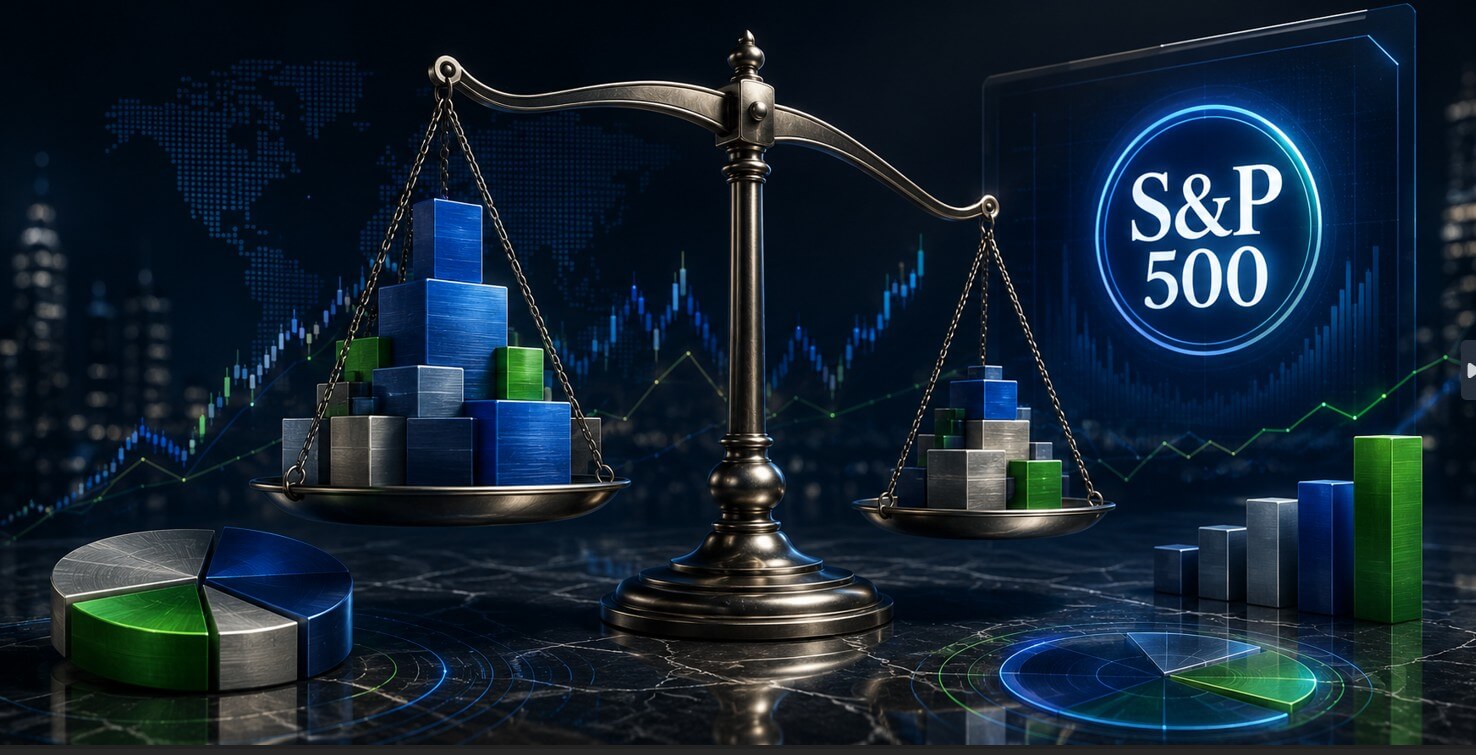
There is also a third pressure that many investors do not think about: index rebalancing. This part happens quietly inside index funds. Investors do not vote on it, and they may not even notice it at first.
When a very large company enters a major index, funds that track that index may need to buy it. If they do not have enough cash, they have to make room by trimming existing holdings. That can mean selling parts of Microsoft, Nvidia, Apple, Alphabet, or other large stocks already inside the fund.
So even passive investors can be exposed to this mechanism. If SpaceX, OpenAI, or Anthropic eventually enter major indexes, index funds may need to adjust automatically. That does not guarantee a market drop, but it can add another layer of selling pressure on the same mega-cap names already carrying the market.
This kind of setup does not mean investors should panic. It simply means they should understand their exposure before volatility arrives.
Start with one basic question: how much of your portfolio depends on the same mega-cap names? If most of your money is in index funds, you may have more exposure to Big Tech than you think.
When money leaves one part of the market, it does not disappear. It often moves into other sectors. Energy, basic materials, transportation, and selected defensive areas may be worth watching if investors begin reducing crowded tech exposure.
The key is not predicting the precise turning point. It is knowing which companies you want to own and at what price. Some of the strongest opportunities tend to appear after enthusiasm gives way to a more balanced assessment of value.
A market correction and a market crisis are not the same thing. The AI narrative is still supported by long-term trends, but liquidity and positioning may become more important in the months ahead.
As attention shifts from excitement to fundamentals, new opportunities could begin to emerge.
Sign up in seconds for free, access your platform, and start trading with ease.

 PAMM vs MAM vs Copy Trading: Key Differences
With PAMM, money participates in a managed pool. MAM keeps client accounts separate but gives the manager a central way to trade them. Copy Trading leaves the follower with an independent account and reproduces another trader’s positions there.
Detail What Happens When a Company Joins or Leaves the S&P 500?
How companies join or leave the S&P 500, what happens before and after the change, and the key announcement and effective dates that matter.
Detail What Is PAMM and How Does It Work?
Learn how PAMM accounts work, how profits, losses and manager fees are calculated, and what to check before allocating funds to a trading strategy.
DetailThen Join Our Telegram Channel and Subscribe Our Trading Signals Newsletter for Free!
Join Us On Telegram!


