


The US dollar strengthened on Friday after President Trump announced a 35% tariff on Canadian imports and signaled potential EU tariffs, increasing safe-haven demand.
EUR/USD fell below 1.167, while the yen weakened to near 147 as Japan warned of economic impacts. Gold rose toward $3,330 on trade tensions and Fed rate cut speculation, while silver topped $37 amid falling yields and tariff-driven uncertainty. The pound slipped near 1.355 as dollar strength weighed ahead of UK GDP data.
| Time | Cur. | Event | Forecast | Previous |
| 06:00 | GBP | UK GDP(MoM)(May) | 0.10% | -0.30% |
| 06:45 | EUR | French CPI(MoM)(Jun) | 0.30% | -0.10% |
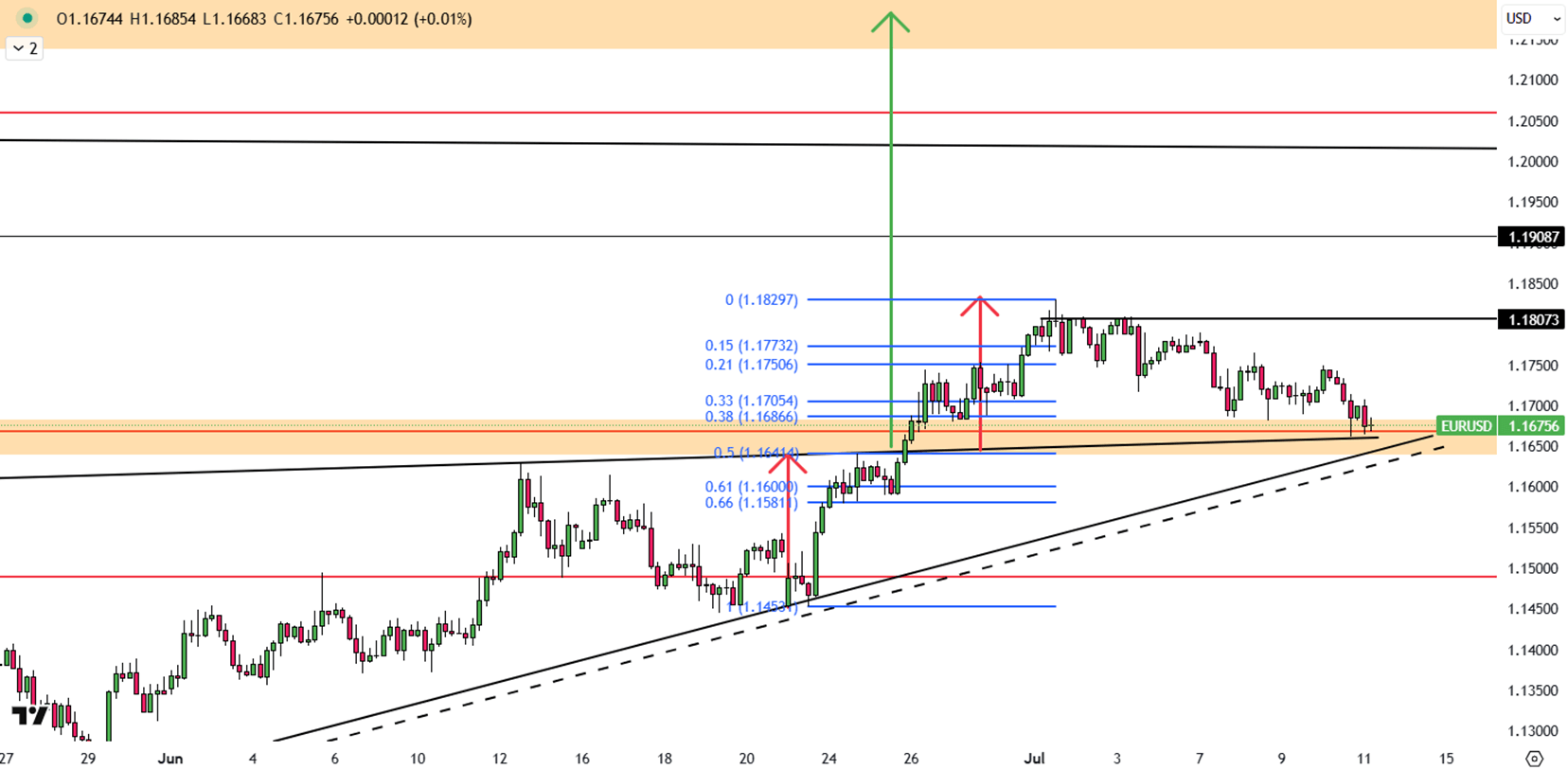
EUR/USD declined by 0.3% to 1.1668 on Friday as the U.S. dollar gained after President Trump announced a 35% tariff on Canadian imports and signaled potential tariffs on the EU. Rising trade tensions increased safe-haven demand for the dollar, while stronger U.S. jobless claims data added support. Meanwhile, the euro slipped as investors grew cautious over the eurozone’s vulnerability to U.S. tariffs and possible countermeasures.
Resistance for the pair is at 1.1750, while support is at 1.1685.
| R1: 1.1750 | S1: 1.1685 |
| R2: 1.1810 | S2: 1.1600 |
| R3: 1.1830 | S3: 1.1545 |
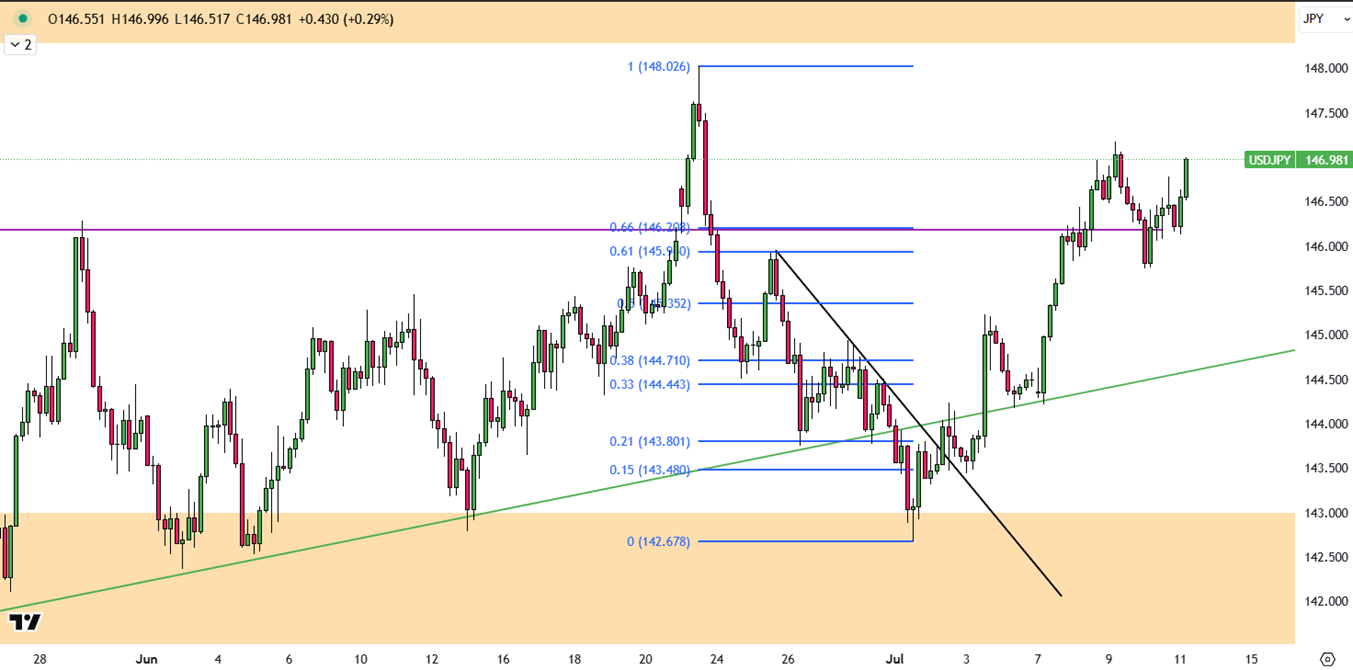
The yen weakened toward 147 per dollar on Friday, and neared a three-week low as the U.S. dollar strengthened amid rising trade tensions. President Trump’s new tariffs, including a 25% duty on Japanese goods, added strain to U.S.-Japan relations. Prime Minister Ishiba urged reducing dependence on the U.S., while a think tank warned the tariffs could lower Japan’s GDP by 0.8% in 2025.
Resistance is at 147.00, with major support at 144.85.
| R1: 147.00 | S1: 144.85 |
| R2: 148.15 | S2: 143.55 |
| R3: 148.65 | S3: 142.40 |
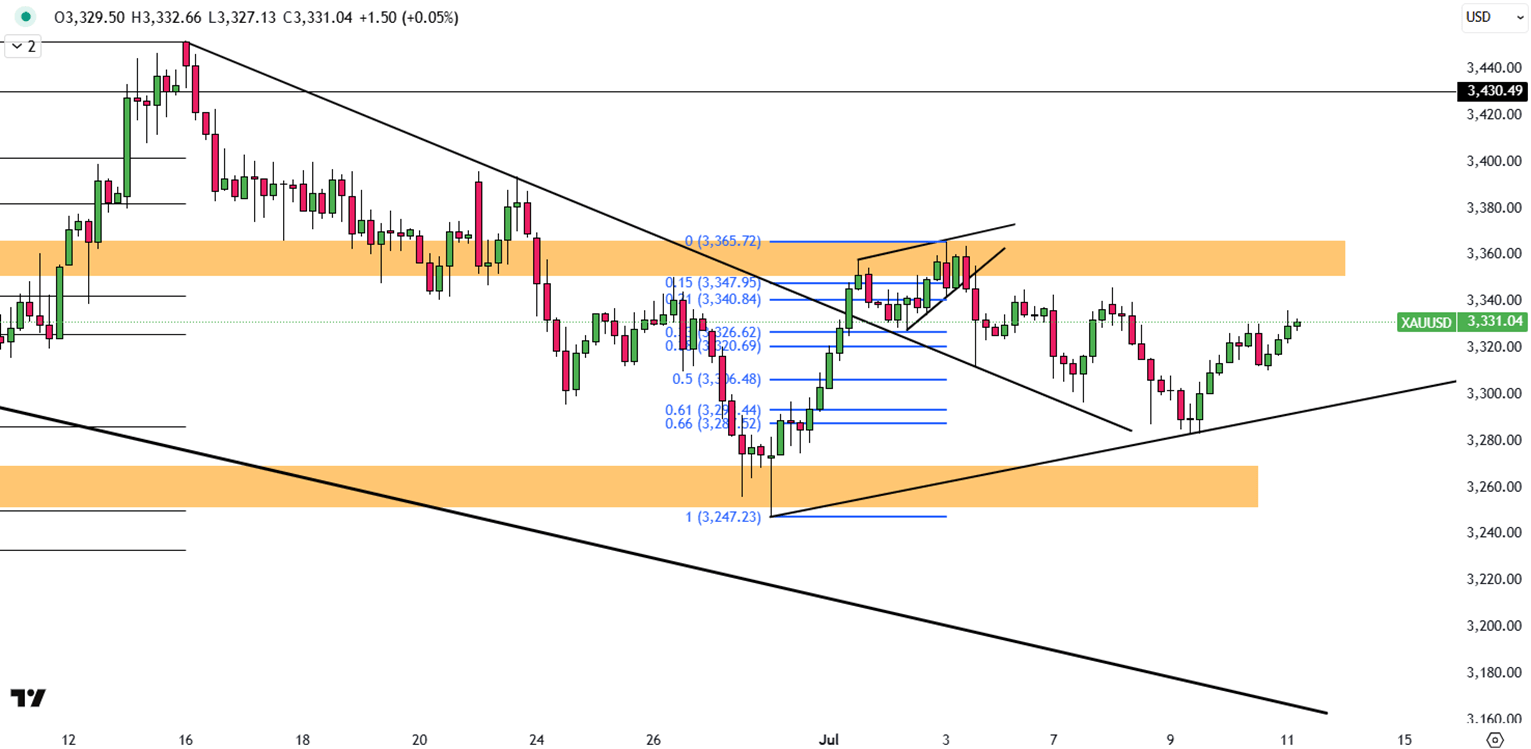
Gold climbed to around $3,330 per ounce on Friday, marking a third day of gains as safe-haven demand increased amid rising trade tensions. President Trump announced a 35% tariff on Canadian imports and hinted at broader 15–20% tariffs on other partners, adding to earlier threats on Brazil and sectors like copper and semiconductors. His call for a 300 bps rate cut fueled speculation about a dovish Fed pick and inflation risks. Meanwhile, jobless claims fell again, highlighting labor market strength. Despite recent gains, gold is on track to end the week flat.
Resistance is at $3,365, while support holds at $3,285.
| R1: 3365 | S1: 3285 |
| R2: 3395 | S2: 3250 |
| R3: 3430 | S3: 3205 |
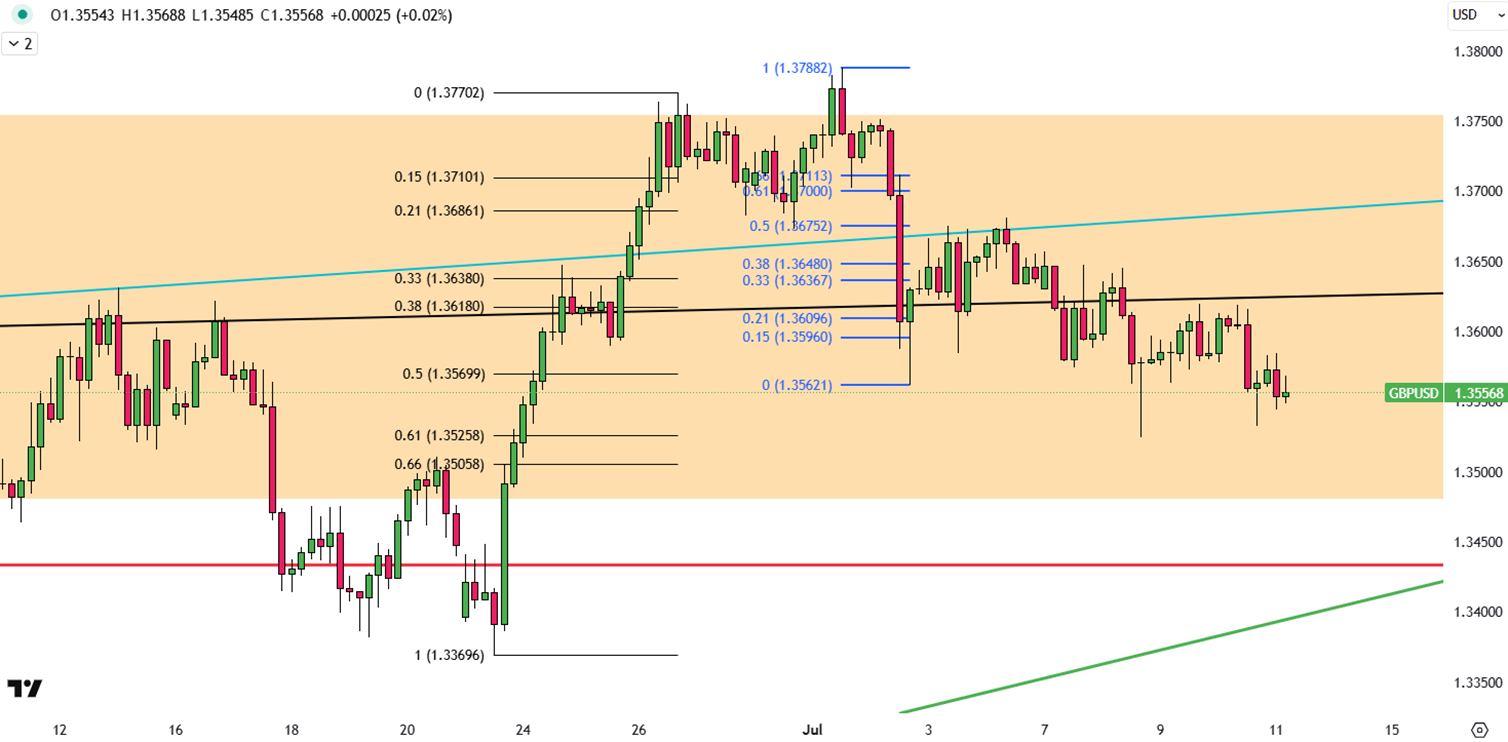
GBP/USD is trading around 1.355, down 0.15%, as risk sentiment softens following Trump’s tariff threats on Canada and the EU, which lifted the dollar. The pound remains under pressure ahead of the UK GDP release, which may offer brief support if the data exceeds expectations. However, persistent trade tensions and solid U.S. economic signals are likely to keep the dollar strong, limiting any significant recovery in sterling.
Resistance is at 1.3600, while support holds at 1.3500.
| R1: 1.3600 | S1: 1.3500 |
| R2: 1.3700 | S2: 1.3430 |
| R3: 1.3760 | S3: 1.3380 |
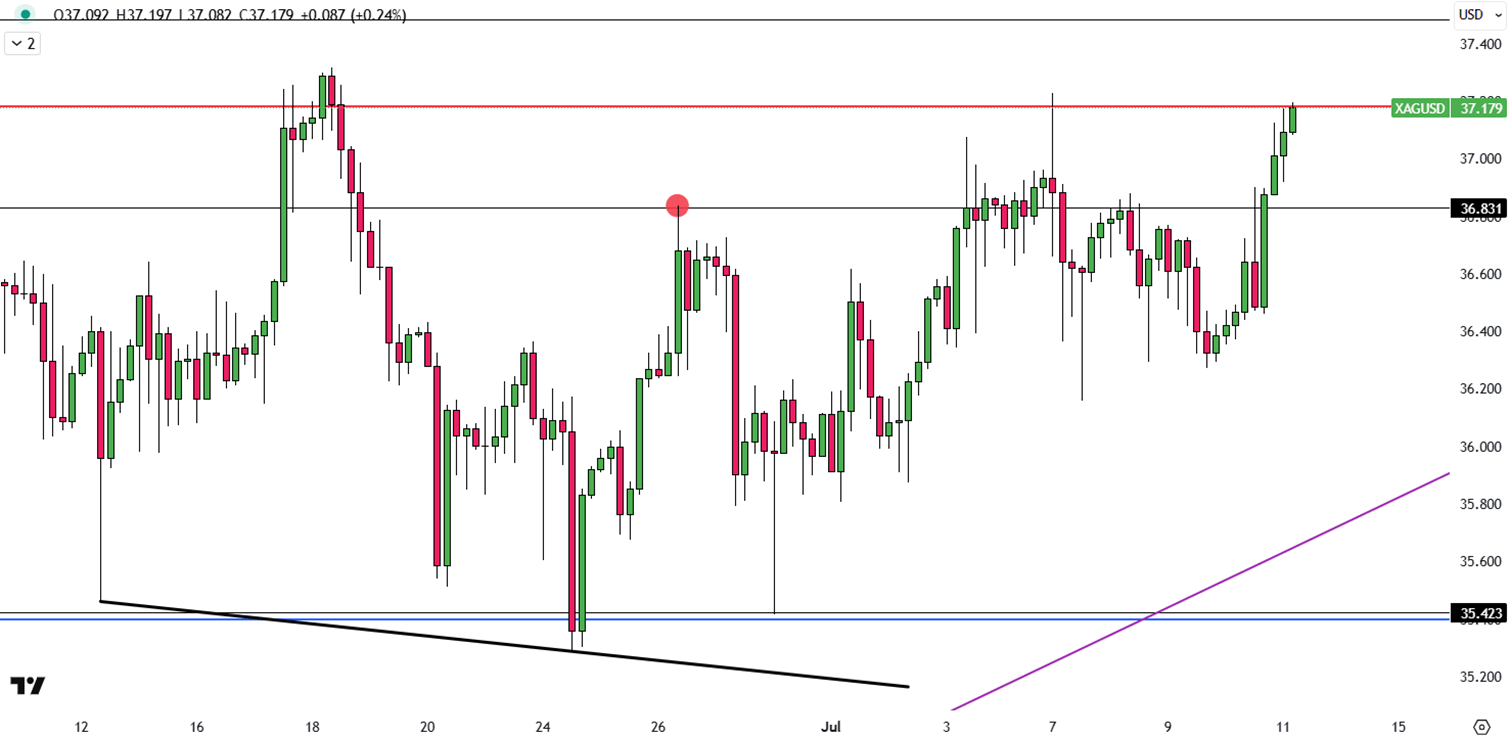
Silver climbed above $37 per ounce on Friday, supported by a weaker U.S. dollar and falling Treasury yields, which lifted demand for precious metals. The gains followed Fed minutes showing most policymakers are open to rate cuts this year. Markets also focused on trade tensions after Trump announced new tariffs on 21 countries, confirmed a 50% tariff on Brazilian imports, and imposed a 50% tariff on copper.
Resistance is at 37.50, while support holds at 35.40.
| R1: 37.50 | S1: 35.40 |
| R2: 39.00 | S2: 34.85 |
| R3: 41.00 | S3: 33.80 |
A deepening sell-off in technology and artificial intelligence stocks pressured financial markets, forcing investors to liquidate precious metals holdings to cover losses elsewhere.
Escalating Middle East tensions pushed oil prices higher following a deadly drone strike on Saudi Aramco's Shaybah facility, renewing inflation concerns and expectations for further Federal Reserve tightening.
Rising oil prices renewed inflation concerns as uncertainty surrounding the US-Iran conflict and continued disruptions in the Strait of Hormuz reinforced expectations for further monetary tightening.
Then Join Our Telegram Channel and Subscribe Our Trading Signals Newsletter for Free!
Join Us On Telegram!


