


Reports suggesting that Iran could suspend discussions with the United States and consider restrictions on the Strait of Hormuz revived concerns about energy supplies, inflation, and global growth.
The stronger dollar weighed on major currencies, pushing the euro and pound closer to recent lows, while the yen moved toward levels that previously triggered intervention warnings from Japanese authorities. Precious metals showed mixed performance, with gold remaining below $4,500 and silver holding near $75 as traders assessed the implications of a prolonged standoff.
| Time | Cur. | Event | Forecast | Previous |
| 10:00 | EUR | CPI (YoY) (May) | 3.3% | 3.0% |
| 15:00 | USD | JOLTS Job Openings (Apr) | 6.870M | 6.866M |
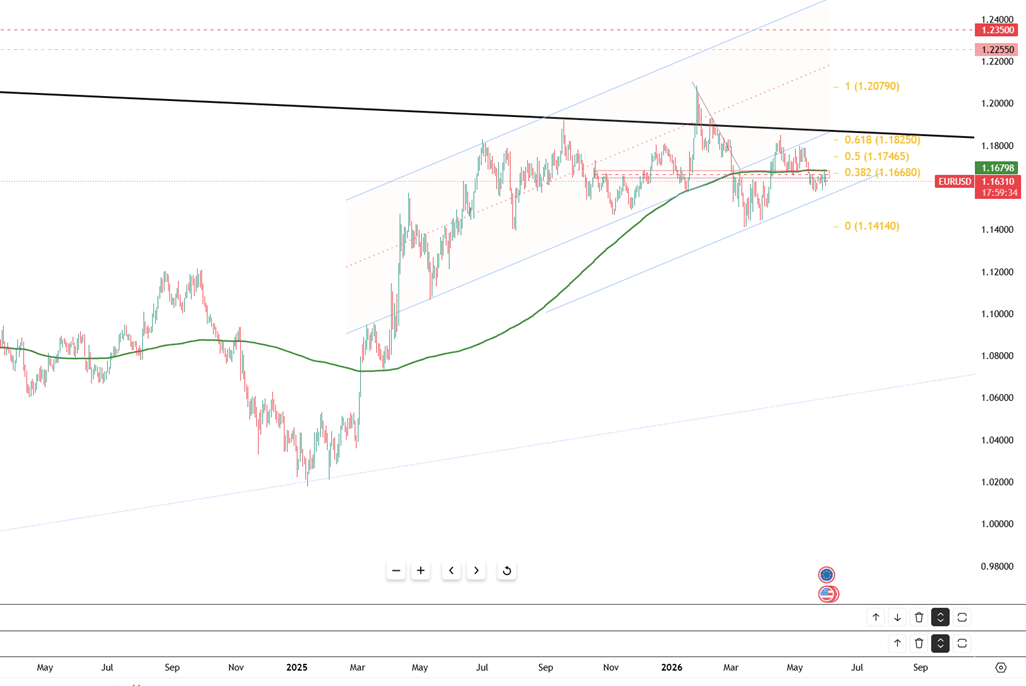
EUR/USD drifted toward the 1.16 level as renewed tensions in the Middle East weighed on sentiment toward the single currency. Expectations of a quick breakthrough faded after reports suggested Iran could suspend discussions with Washington and move toward closing the Strait of Hormuz, citing alleged ceasefire violations following recent Israeli operations in Lebanon.
The developments revived concerns about energy costs and their potential impact on the Eurozone economy, pushing the euro closer to its lowest levels since early April.
For EUR/USD, the first resistance stands at 1.1670, while the nearest support is located at 1.1600.
| R1: 1.1670 | S1: 1.1600 |
| R2: 1.1700 | S2: 1.1550 |
| R3: 1.1750 | S3: 1.1500 |
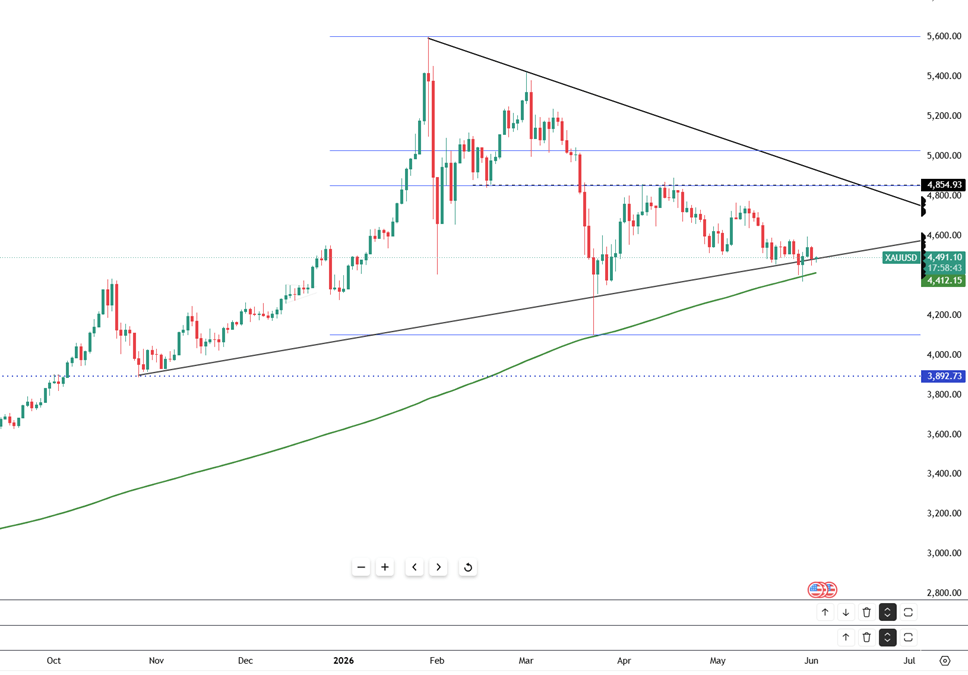
Gold remained below $4,500 as the diplomatic outlook between Washington and Tehran deteriorated. Reports from Iranian media indicated that communication with the United States had been suspended following recent Israeli strikes in Lebanon, adding another obstacle to an already fragile negotiation process.
First resistance is seen at $4570, with initial support near $4460.
| R1: 4570 | S1: 4460 |
| R2: 4620 | S2: 4420 |
| R3: 4700 | S3: 4350 |
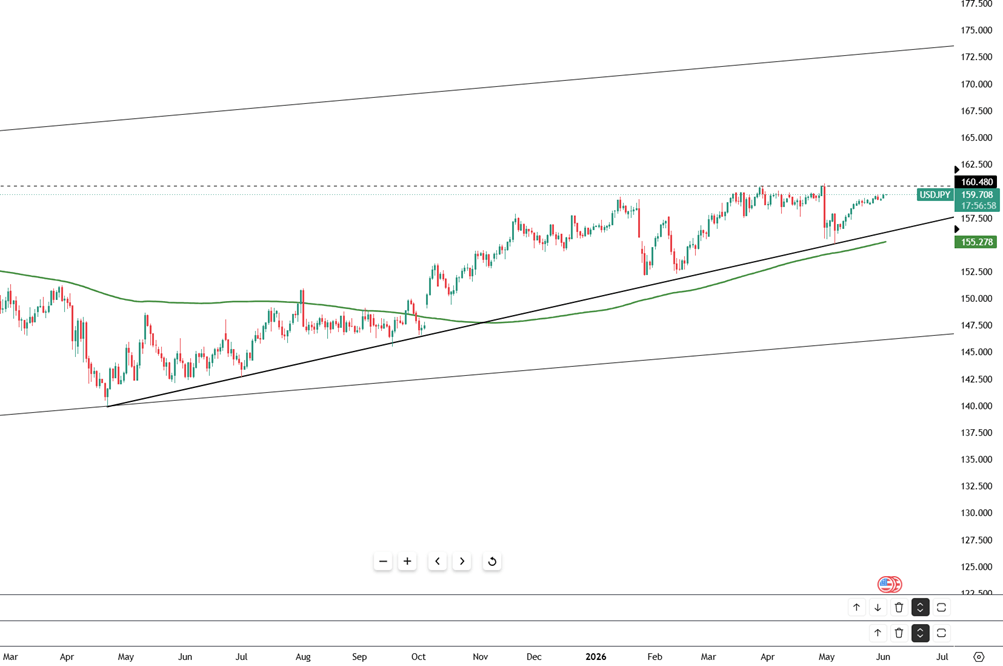
The yen weakened beyond 159.5 per dollar, drifting ever closer to a level that has repeatedly drawn the attention of Japanese authorities. Each move toward 160 revives memories of past intervention efforts, and this time is no different.
Finance Minister Satsuki Katayama reminded markets that officials remain ready to act if currency swings become excessive.
Initial resistance stands at 159.95, while the first support is located at 159.00.
| R1: 159.95 | S1: 159.00 |
| R2: 160.50 | S2: 158.30 |
| R3: 161.20 | S3: 157.50 |
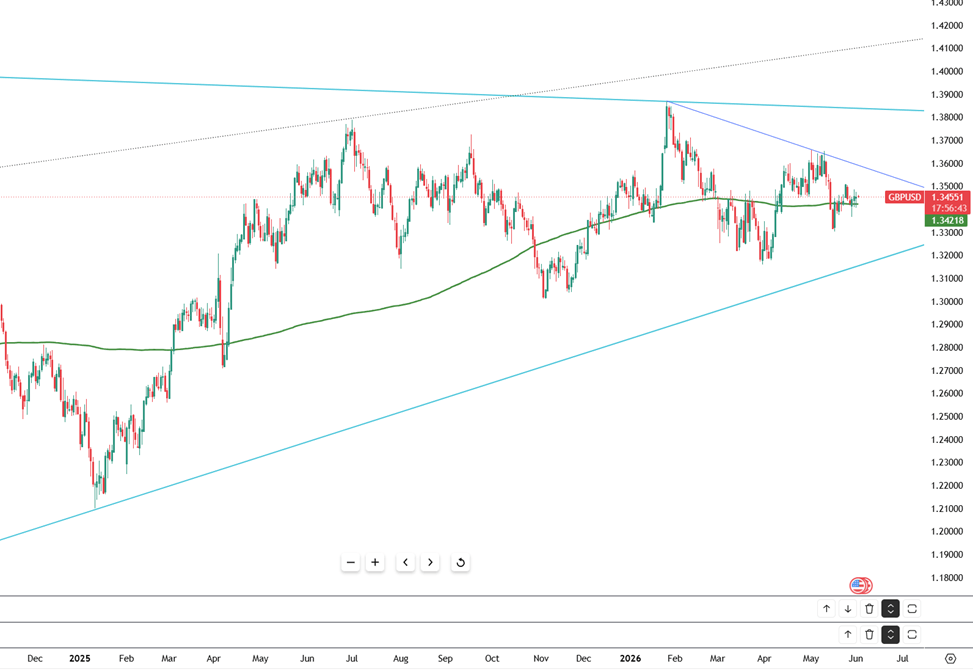
Sterling drifted toward $1.34, touching its weakest level since May 19 as concerns over Middle East developments and energy markets resurfaced.
With few factors supporting the currency, the pound extended its decline from earlier monthly highs.
From a technical view, resistance stands near 1.3510, with support around 1.3410.
| R1: 1.3510 | S1: 1.3410 |
| R2: 1.3560 | S2: 1.3360 |
| R3: 1.3630 | S3: 1.3300 |
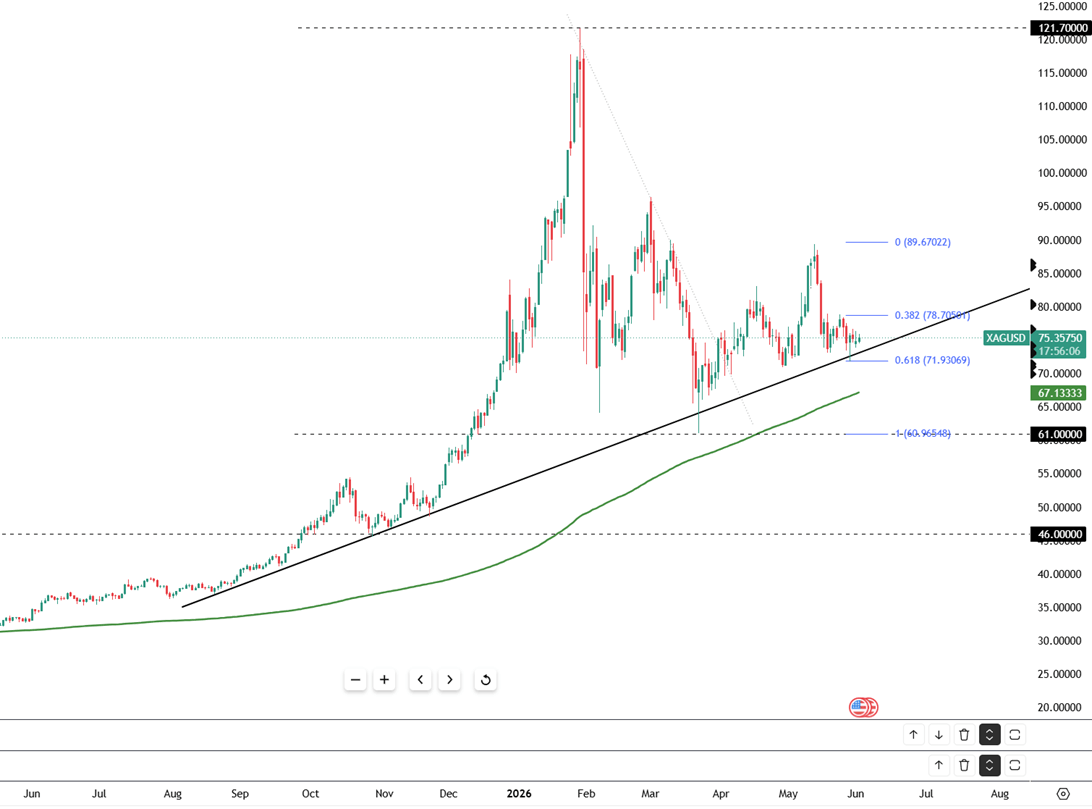
Silver hovered near $75 as Iranian media reported that contacts with the United States had been suspended following recent Israeli strikes in Lebanon. Trump maintained that negotiations were still underway and expressed confidence that an agreement involving the reopening of the Strait of Hormuz could be reached in the coming week.
With uncertainty surrounding inflation and interest-rate expectations still unresolved, silver remained largely range-bound.
From a technical view, resistance stands near $77.20, while support is located around $73.90.
| R1: 77.20 | S1: 73.90 |
| R2: 78.80 | S2: 72.40 |
| R3: 80.50 | S3: 68.30 |
Easing oil prices and retreating Treasury yields (around 5.23% ) provided some relief to financial markets as improving US-Iran diplomatic prospects reduced immediate inflation concerns.
Hawkish Federal Reserve meeting minutes reinforced expectations for another rate hike this year, pushing Treasury yields higher and supporting the US dollar.
Oil inventories are nearing depletion, increasing supply risks and supporting prices. Aramco estimates less than 6 billion barrels remain after over 1 billion barrels were drawn this year, while the IEA is preparing a 100-million-barrel release. The US 10-year Treasury yield stabilized near 5.31% on Wednesday, close to 24-year peaks, as markets awaited the Fed's minutes.
Then Join Our Telegram Channel and Subscribe Our Trading Signals Newsletter for Free!
Join Us On Telegram!


