


EUR/USD rose to 1.047 on optimism over a Ukraine peace deal and European fiscal spending, though gains were capped ahead of the U.S. jobs report.
The Japanese yen strengthened toward 149 per dollar while the BOJ is expected to maintain rate hikes. Gold held at $2,880 per ounce, supported by trade war concerns and weak U.S. factory data. GBP/USD surpassed $1.27, driven by UK-Ukraine support and hopes of a U.S.-UK trade deal. Silver also gained, climbing above $31.6 per ounce.
| Time | Cur. | Event | Forecast | Previous |
| 13:00 | EUR | Unemployment Rate (Jan) | 6.3% | 6.3% |
| 19:20 | USD | FOMC Member Williams Speaks |
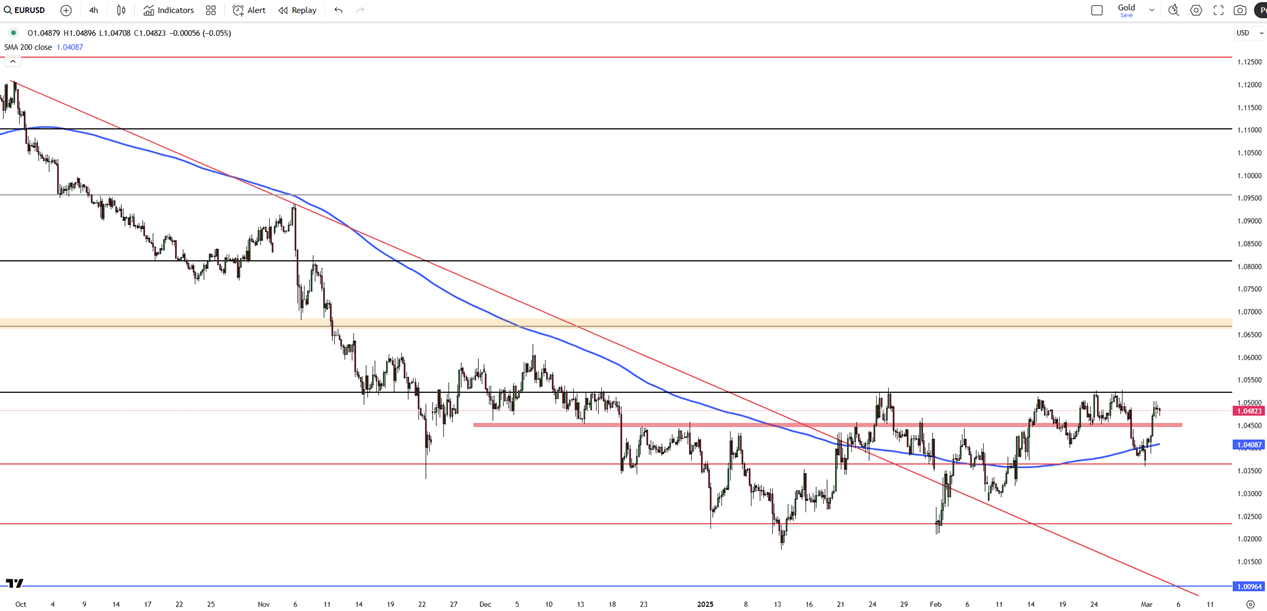
EUR/USD rose to 1.047, supported by optimism over a Ukraine peace deal and increased European fiscal spending. The dollar weakened due to Fed rate cut expectations with U.S. economic concerns and a sharper manufacturing slowdown.
Gains were limited as traders awaited Friday’s non-farm payrolls report for labor market signals. A weak report could boost Fed cut bets, pressuring the dollar and lifting EUR/USD, while strong data may cap gains. Geopolitical developments and potential ECB policy shifts also remain key.
Key resistance is at 1.0530, followed by 1.0600 and 1.0660. Support stands at 1.0450, with further levels at 1.0350 and 1.0275.
| R1: 1.0530 | S1: 1.0450 |
| R2: 1.0600 | S2: 1.0350 |
| R3: 1.0660 | S3: 1.0275 |
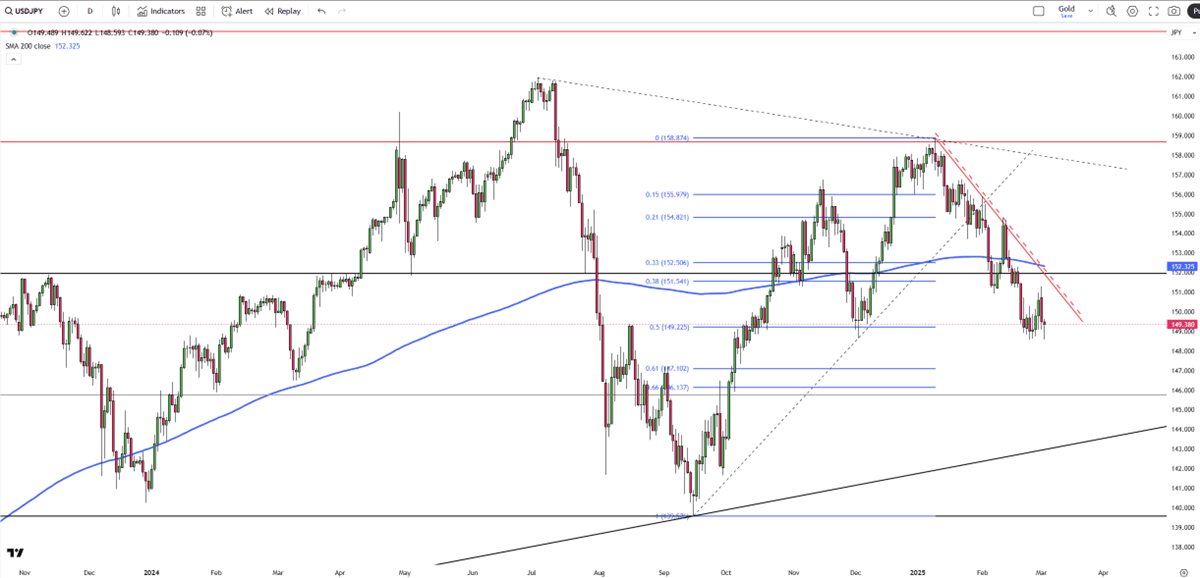
The Japanese yen strengthened toward 149 per dollar, nearing a five-month high. Trump confirmed 25% tariffs on Mexico and Canada, along with a 10% duty on Chinese goods.
The yen also gained on weak U.S. data, increasing Fed rate cut expectations, while the BOJ is predicted to continue rate hikes amid strong economic conditions. However, Japan’s unemployment rate rose to 2.5% in January from 2.4%, and Q4 capital spending declined.
Key resistance is at 154.90, with further levels at 156.00 and 157.00. Support stands at 148.60, followed by 147.10 and 145.80.
| R1: 154.90 | S1: 148.60 |
| R2: 156.00 | S2: 147.10 |
| R3: 157.00 | S3: 145.80 |
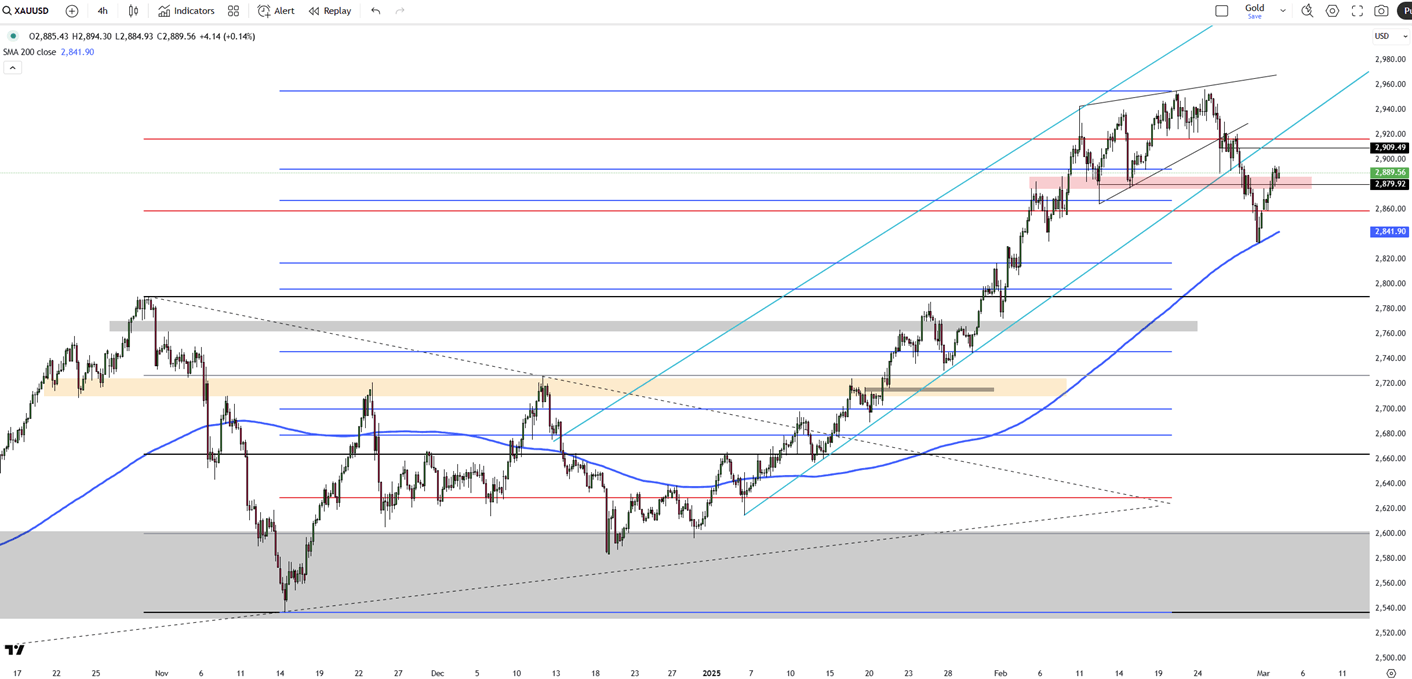
Gold held steady at $2,880 per ounce as Trump confirmed 25% tariffs on Mexico and Canada and raised Chinese tariffs to 20%, with reciprocal tariffs set for April 2. This fueled global trade war fears, adding to inflation and slowing growth, which supported gold as a trusted asset. Weak U.S. factory data heightened concerns that tariffs could further slow the economy. Investors now await the ADP jobs report on Wednesday and non-farm payrolls on Friday for Fed rate clues.
Key resistance stands at $2,895, with further levels at $2,917 and $2,949. Support is at $2,830, followed by $2,790 and $2,760.
| R1: 2895 | S1: 2830 |
| R2: 2917 | S2: 2790 |
| R3: 2949 | S3: 2760 |
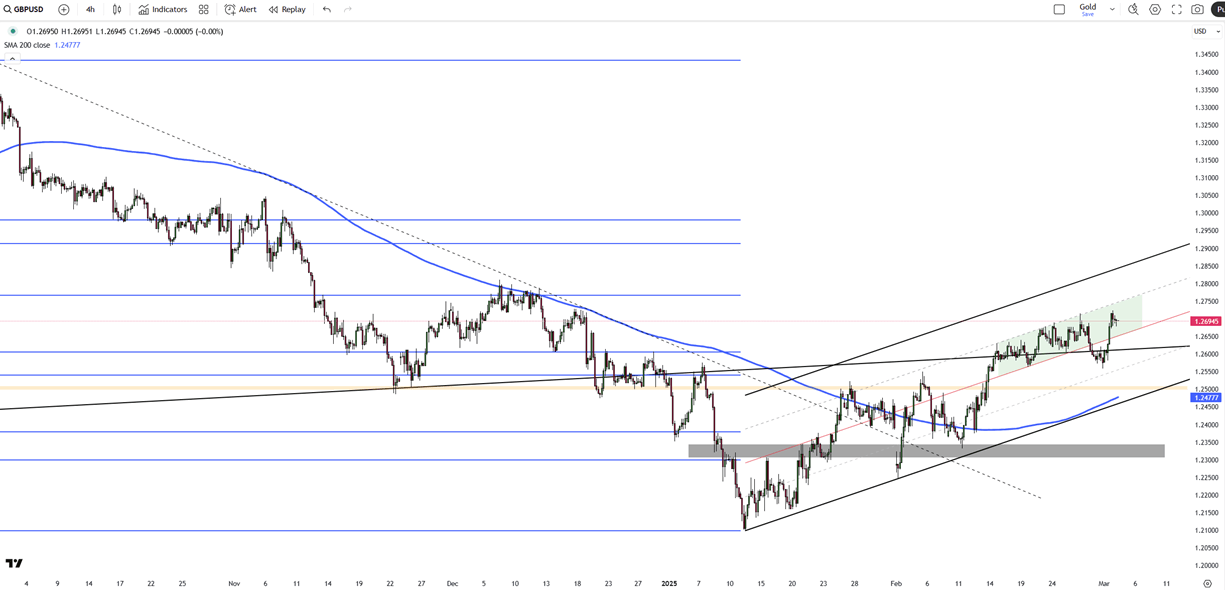
The British pound rose above $1.27, its highest since December 17, driven by optimism over a Ukraine peace deal and UK rate stability. PM Starmer confirmed a $2 billion missile deal for Ukraine, while BoE’s Ramsden warned wage pressures could keep inflation high. Sterling saw its first monthly gain against the dollar since September, further supported by Trump’s suggestion that a US-UK trade deal could prevent tariffs.
If GBP/USD breaks above 1.2720, the next resistance levels to watch are 1.2770 and 1.2840. On the downside, initial support is at 1.2615, with further levels at 1.2500 and 1.2475 if selling pressure intensifies.
| R1: 1.2720 | S1: 1.2615 |
| R2: 1.2770 | S2: 1.2500 |
| R3: 1.2840 | S3: 1.2475 |
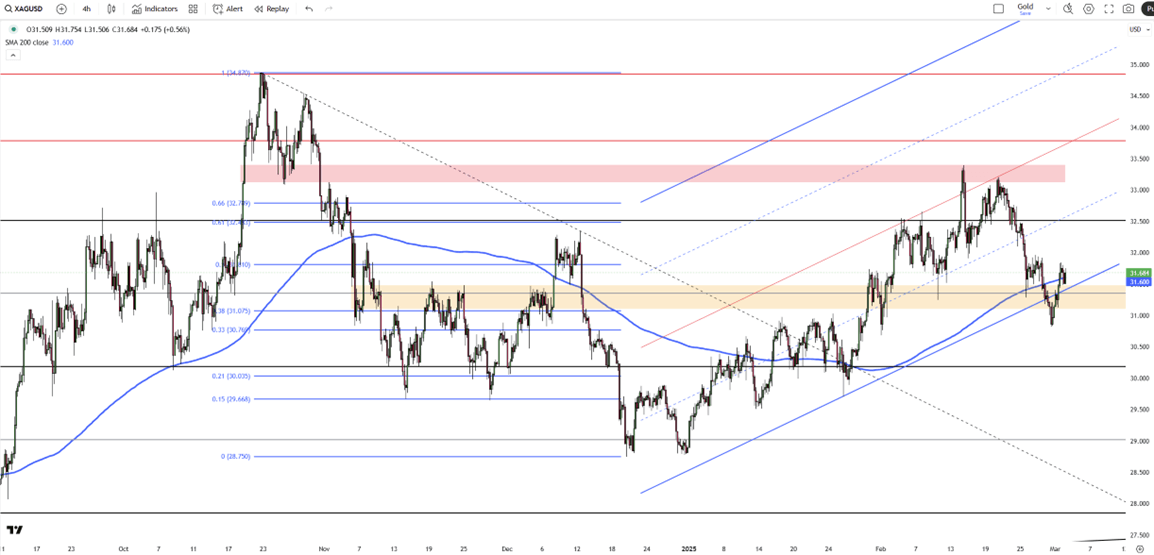
Silver climbed above $31.6 per ounce with a weaker dollar followed by US trade policy concerns. President Trump confirmed tariffs on Canadian, Mexican, and Chinese imports, prompting reports of potential Chinese countermeasures. Supply and demand uncertainties also impacted sentiment.
Technically, the first resistance level is 33.15, with the next levels at 33.80 and 34.50 if breached. On the downside, support stands at 31.00, followed by 30.20 and 29.75 if further declines occur.
| R1: 33.15 | S1: 31.00 |
| R2: 33.80 | S2: 30.20 |
| R3: 34.50 | S3: 29.75 |
 Panic Across Markets: Where to Put Money?
Markets are selling off across stocks, crypto, gold and FX. See what is driving the move and where investors may look next.
Detail Strong Dollar Extends Pressure Across Markets (06.26.2026)Global markets ended the week under pressure as expectations of prolonged Federal Reserve tightening continued to strengthen the U.S. dollar.
 Oil Falls as US-Iran Deal Eases Supply Concerns
Oil prices moved lower after a new agreement between the United States and Iran reduced concerns about disruptions to global energy supplies. The deal, announced by President Trump, aims to end recent hostilities, fully reopen the Strait of Hormuz, and prevent Iran from advancing its nuclear program.
DetailThen Join Our Telegram Channel and Subscribe Our Trading Signals Newsletter for Free!
Join Us On Telegram!


