


Markets turned cautious as fragile US–Iran ceasefire conditions and fading diplomatic momentum supported the US dollar.
EUR/USD slipped toward 1.1750, while gold and silver extended their declines amid rising yields and reduced demand for non-yielding assets. The Japanese yen remained under pressure due to Bank of Japan uncertainty and stronger dollar flows, while sterling hovered near $1.35 with limited direction. Despite a temporary extension of the ceasefire, persistent geopolitical risks and hawkish policy signals continue to weigh on sentiment across global markets.
| Time | Cur. | Event | Forecast | Previous |
| 06:00 | GBP | CPI (YoY) (Mar) | 3.3% | 3.0% |
| 14:30 | USD | Crude Oil Inventories | -1.000M | -0.913M |
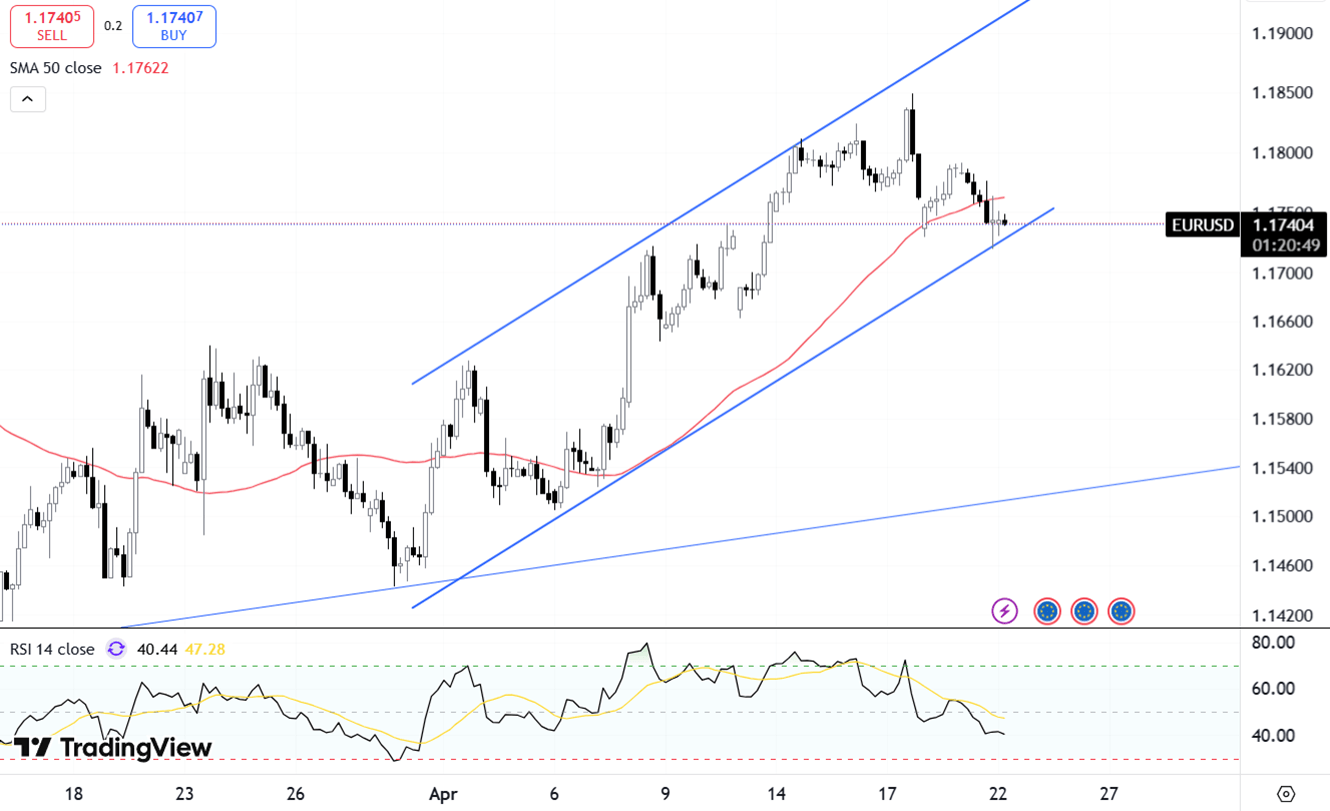
EUR/USD drifted toward 1.1750 as persistent uncertainty regarding the US–Iran standoff supported the dollar. While President Trump extended the current ceasefire to facilitate further diplomacy, the environment remains volatile. Recent warnings from Iran’s military about potential responses to perceived threats underscore the fragility of the ceasefire. This blend of short term calm and underlying geopolitical risk continues to fuel safe-haven demand for the dollar, capping any significant gains for the euro.
For EUR/USD, the initial resistance is seen at 1.1800, while the closest support is positioned at 1.1680.
| R1: 1.1800 | S1: 1.1680 |
| R2: 1.1840 | S2: 1.1640 |
| R3: 1.1880 | S3: 1.1590 |
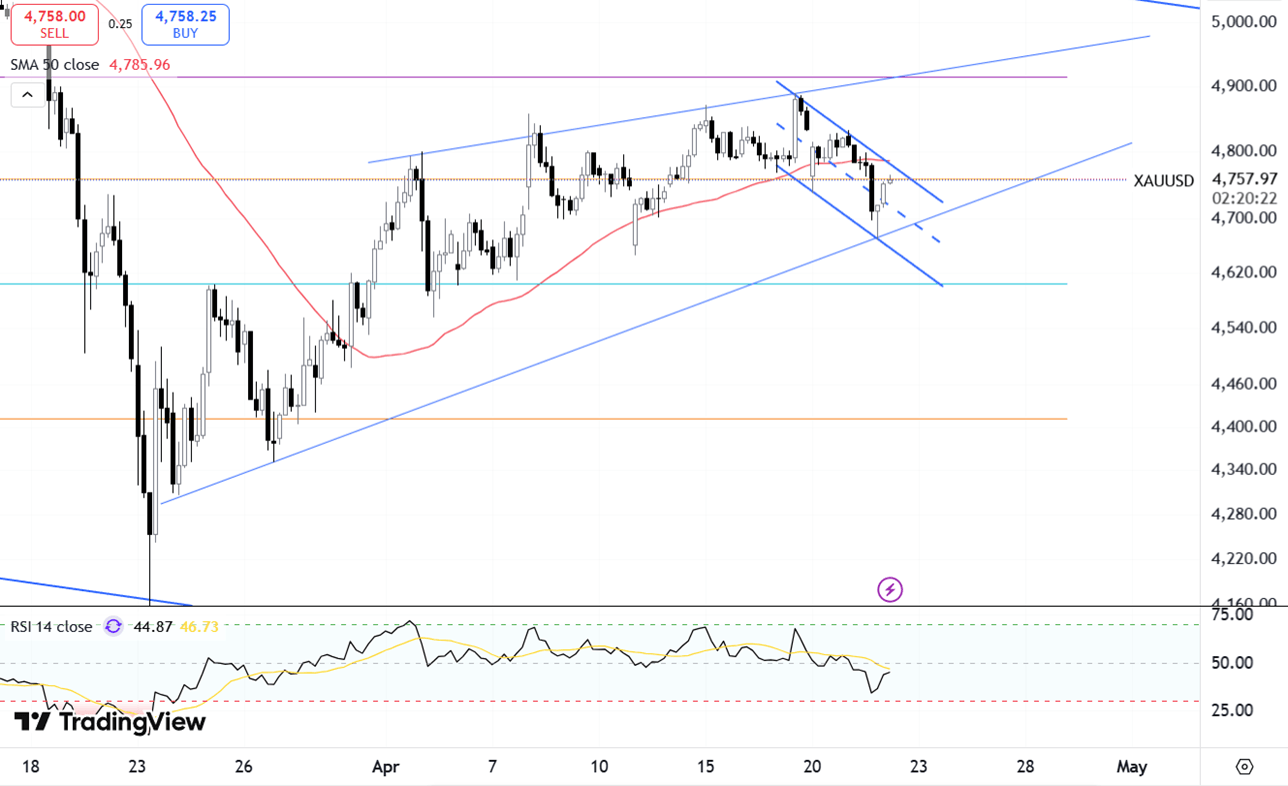
Gold remained under $4,750 per ounce on Wednesday, continuing its decline as diplomatic prospects between the US and Iran faded. The cancellation of JD Vance’s Pakistan trip following Tehran's refusal to negotiate, coupled with ongoing Strait of Hormuz tensions, weighed on the metal. Despite President Trump extending the ceasefire, Kevin Warsh’s hawkish signals further dampened demand for the non-yielding asset amid high uncertainty.
First resistance is seen at $4840, with initial support near $4715.
| R1: 4840 | S1: 4715 |
| R2: 4960 | S2: 4630 |
| R3: 5020 | S3: 4580 |
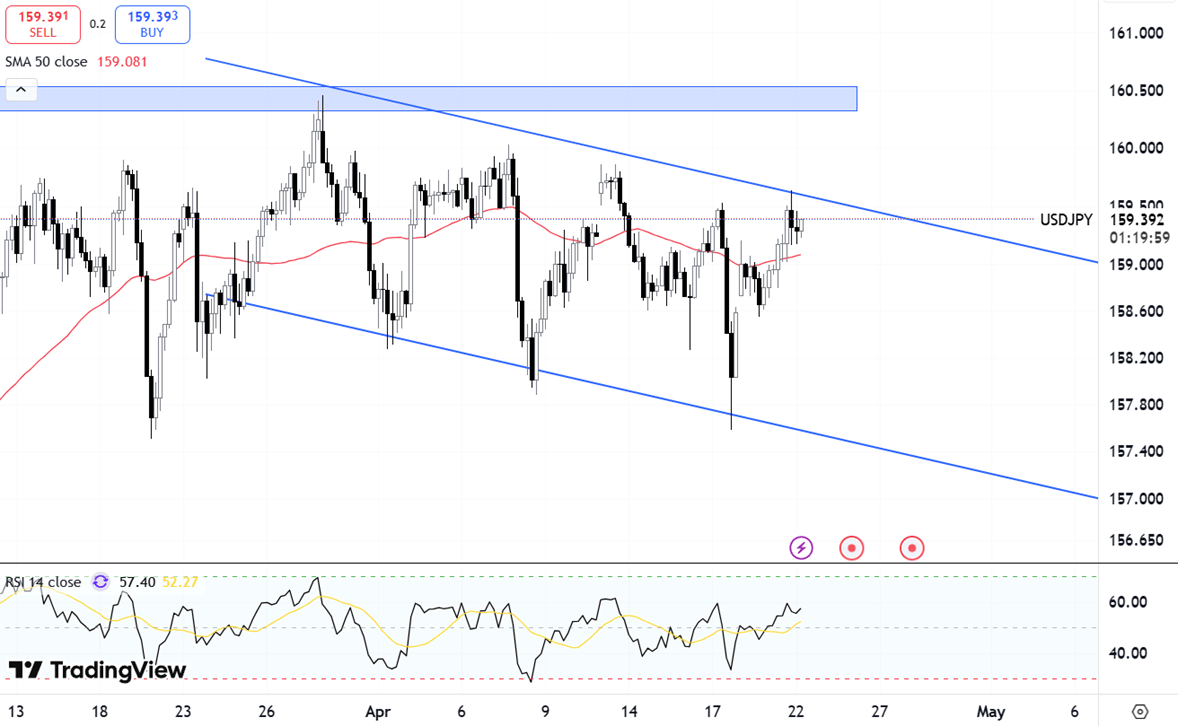
The Japanese yen hovered near 159.2 per dollar on Wednesday, pressured by ambiguity surrounding the Bank of Japan’s upcoming policy meeting. The BOJ is anticipated to hold interest rates steady to weigh the economic consequences of the Middle East conflict, though it may signal a shift toward normalization in June. Markets expect the bank to hike inflation forecasts while cutting growth outlooks due to high energy costs. Additionally, the yen suffered as the dollar strengthened following the collapse of planned US–Iran peace talks, despite President Trump’s extension of the current ceasefire.
Initial resistance stands at 159.70, while the first support is located at 159.00.
| R1: 159.70 | S1: 159.00 |
| R2: 160.50 | S2: 158.60 |
| R3: 161.30 | S3: 157.80 |
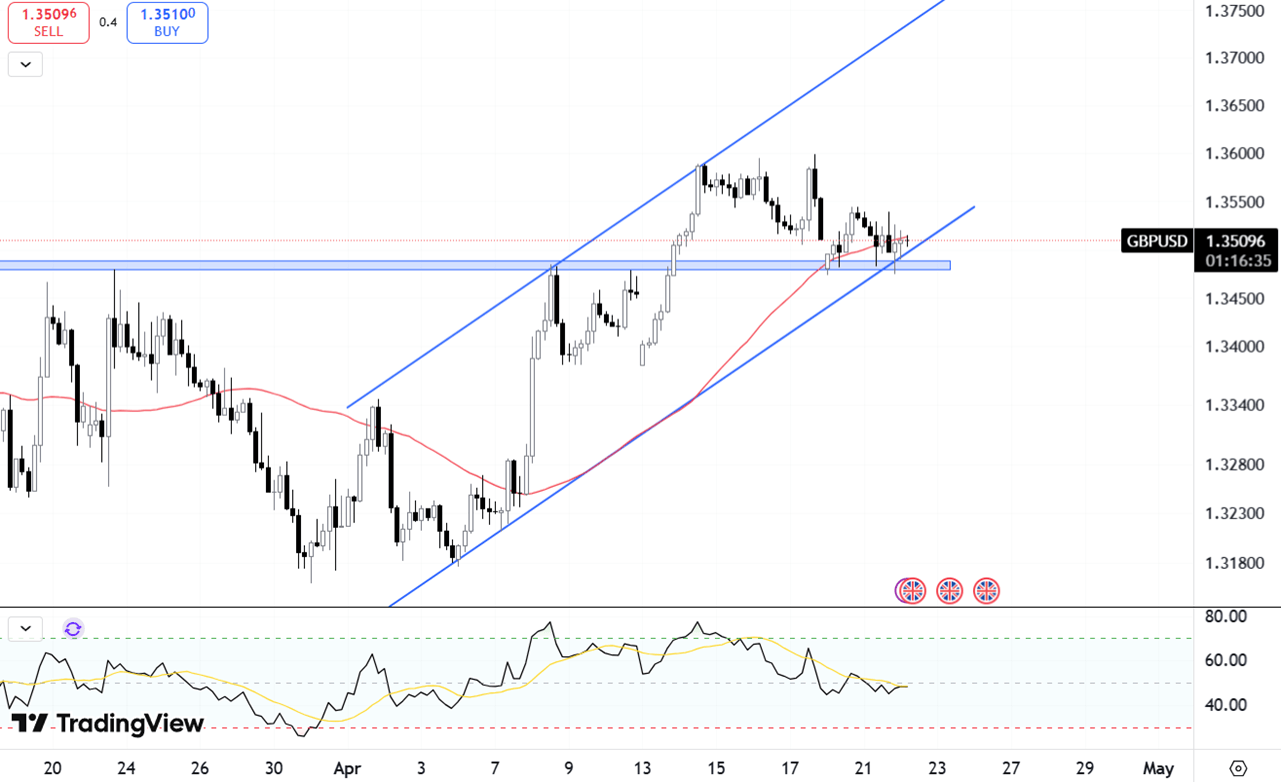
The British pound remained near $1.35, retreating slightly from a three-week peak as investors balanced domestic political noise with global friction. Sentiment was influenced by Olly Robbins’ clarifications regarding Peter Mandelson’s vetting process, alongside Iran’s refusal to engage in negotiations, which sparked criticism from Donald Trump. Despite mixed signals from recent UK labor data, the reports had little effect on the currency’s movement.
From a technical view, resistance stands near 1.3550, with support around 1.3440.
| R1: 1.3550 | S1: 1.3440 |
| R2: 1.3590 | S2: 1.3350 |
| R3: 1.3650 | S3: 1.3280 |
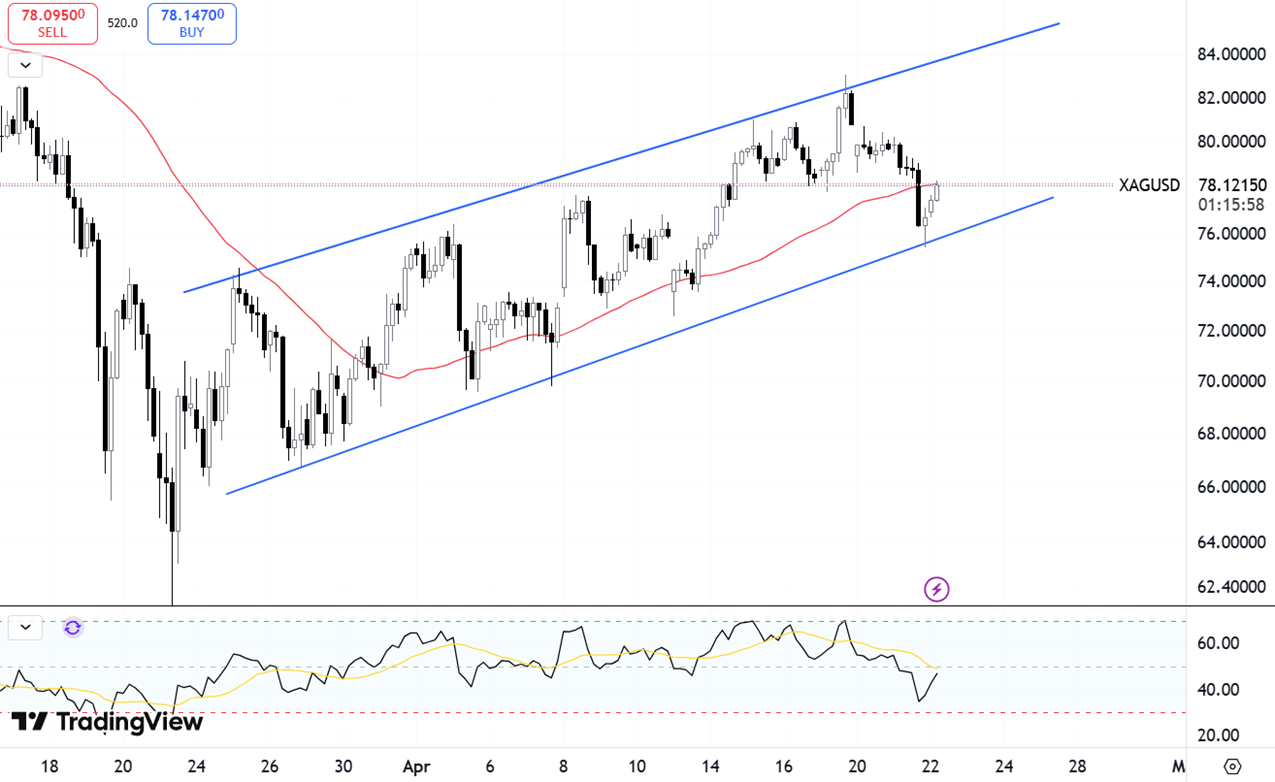
Silver stayed below $78 per ounce on Wednesday, extending losses as hopes for a US–Iran diplomatic breakthrough faded. The cancellation of JD Vance’s Islamabad trip following Iran’s refusal to negotiate, combined with ongoing tensions in the Strait of Hormuz, weighed on the metal. Despite President Trump prolonging the ceasefire, hawkish signals from Kevin Warsh added further downward pressure amid high market uncertainty.
From a technical view, resistance stands near $80.40 while support is located around $76.20.
| R1: 80.40 | S1: 76.20 |
| R2: 82.80 | S2: 74.00 |
| R3: 85.10 | S3: 72.50 |
Declining Treasury yields and rising geopolitical tensions supported precious metals as an equity market selloff increased demand for safe-haven assets.
 US Inflation Hits 3.7% as Energy Prices Surge
September’s inflation report reveals new price pressures across the US economy.
Detail Dollar Retreat Supports Metals (10.15.2026)A softer US dollar and declining Treasury yields offered some relief to financial markets as Federal Reserve officials signaled a willingness to pause rate adjustments.
Then Join Our Telegram Channel and Subscribe Our Trading Signals Newsletter for Free!
Join Us On Telegram!


