


Global markets delivered a mixed performance as geopolitical risks subsided.
The euro hit a one-month low near $1.165 on expectations of a cautious Fed and a steady ECB, while the yen rebounded to 158 following official warnings against its depreciation. Sterling held steady at 1.3430 as weak UK hiring data offset growth optimism. In commodities, gold dropped to $4,590 on profit-taking, and silver plunged 5% below $89 after the U.S. delayed new mineral tariffs.
| Time | Cur. | Event | Forecast | Previous |
| 10:00 | GBP | BoE Gov Bailey Speaks | - | - |
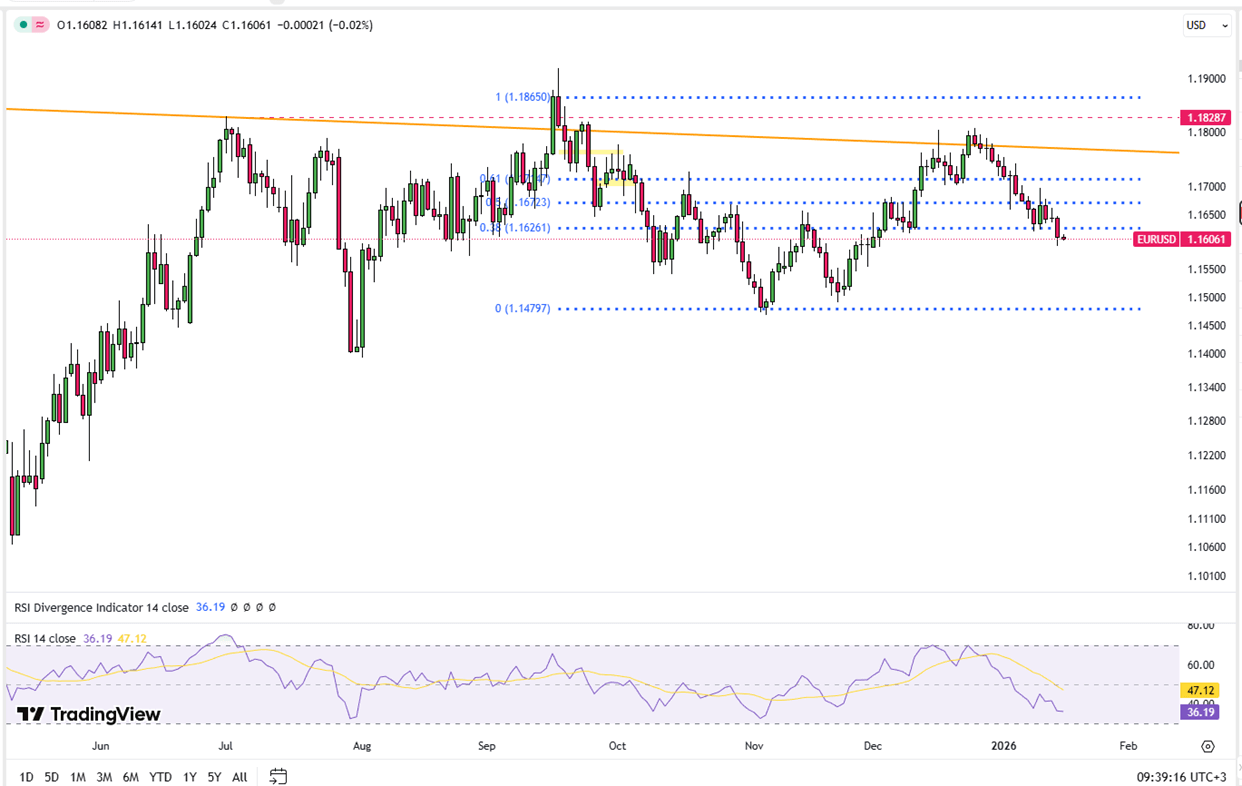
EURUSD stabilized near 1.1610 this Friday, halting a three-day decline. Support was found as Germany reported a 0.2% expansion for 2025, ending a two-year recession thanks to resilient household and government spending. With Eurozone inflation hitting the ECB's 2.0% target in December, interest rates are expected to remain unchanged, even as a persistent manufacturing slump limits the currency's recovery.
Technically, 1.1590 is the key support, while resistance is seen at 1.1660.
| R1: 1.1660 | S1: 1.1590 |
| R2: 1.1710 | S2: 1.1510 |
| R3: 1.1800 | S3: 1.1440 |

The Japanese yen advanced toward 158 per dollar on Friday, as traders look to the Bank of Japan’s meeting next week for signals on future policy. Although the BOJ is expected to hold rates steady at 0.75% in January, many investors are now pricing in a hike for June. Governor Kazuo Ueda has reaffirmed that the bank is prepared to act if economic growth and inflation stay on track, helping provide a lift to the currency.
Technically, resistance stands near 158.80, while support is firm at 157.50.
| R1: 158.80 | S1: 157.50 |
| R2: 159.40 | S2: 156.80 |
| R3: 160.00 | S3: 154.70 |
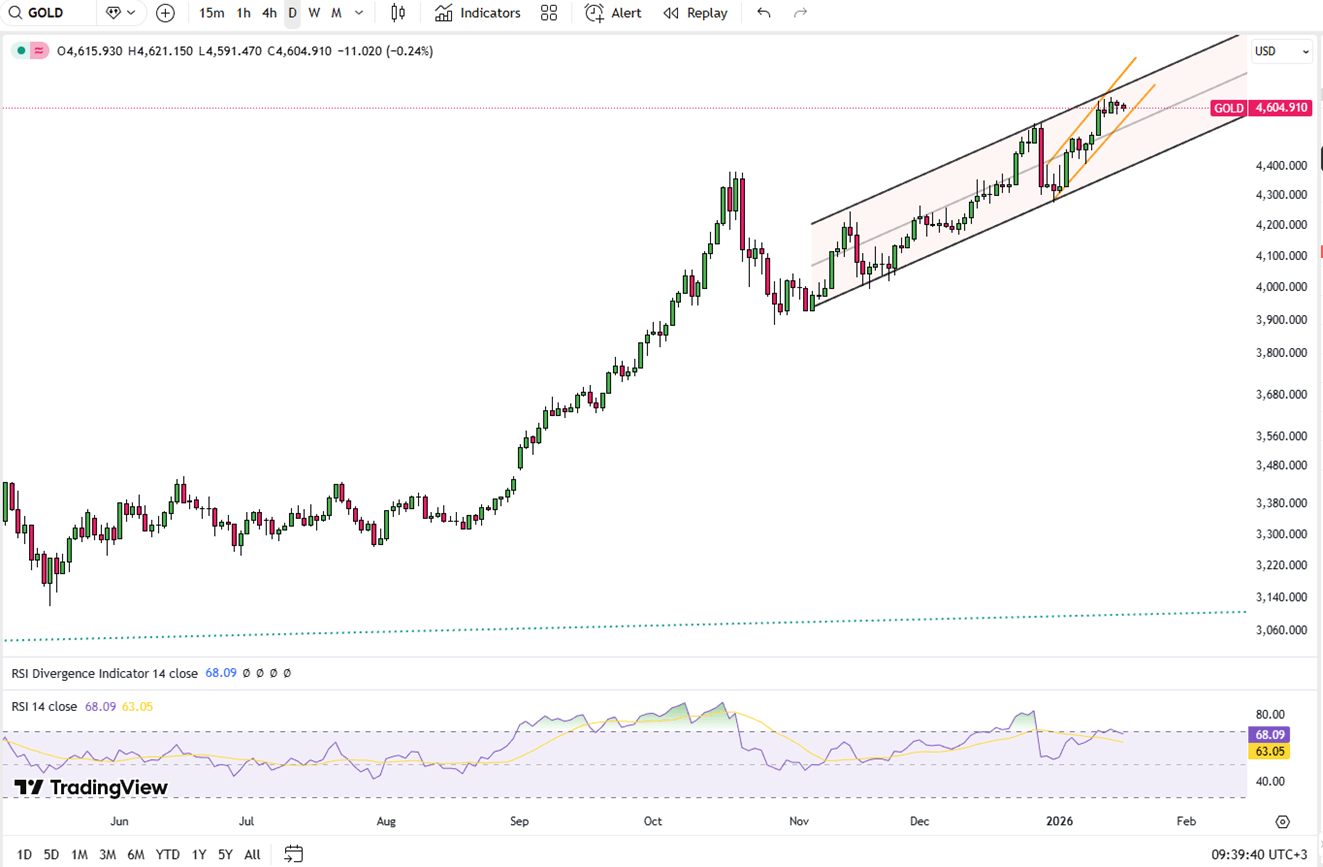
Gold prices softened toward $4,600 on Friday, continuing a retreat from recent highs as the "fear premium" evaporated. Safe-haven demand diminished after President Trump hinted at delaying military action against Tehran. Reports that Israel and key Arab allies, including Saudi Arabia, urged Washington to pause strikes to avoid regional chaos have further cooled the market, even as Fed rate-cut hopes begin to dim.
Gold sees support near $4570, while resistance is around $4620.
| R1: 4620 | S1: 4570 |
| R2: 4642 | S2: 4490 |
| R3: 4700 | S3: 4300 |
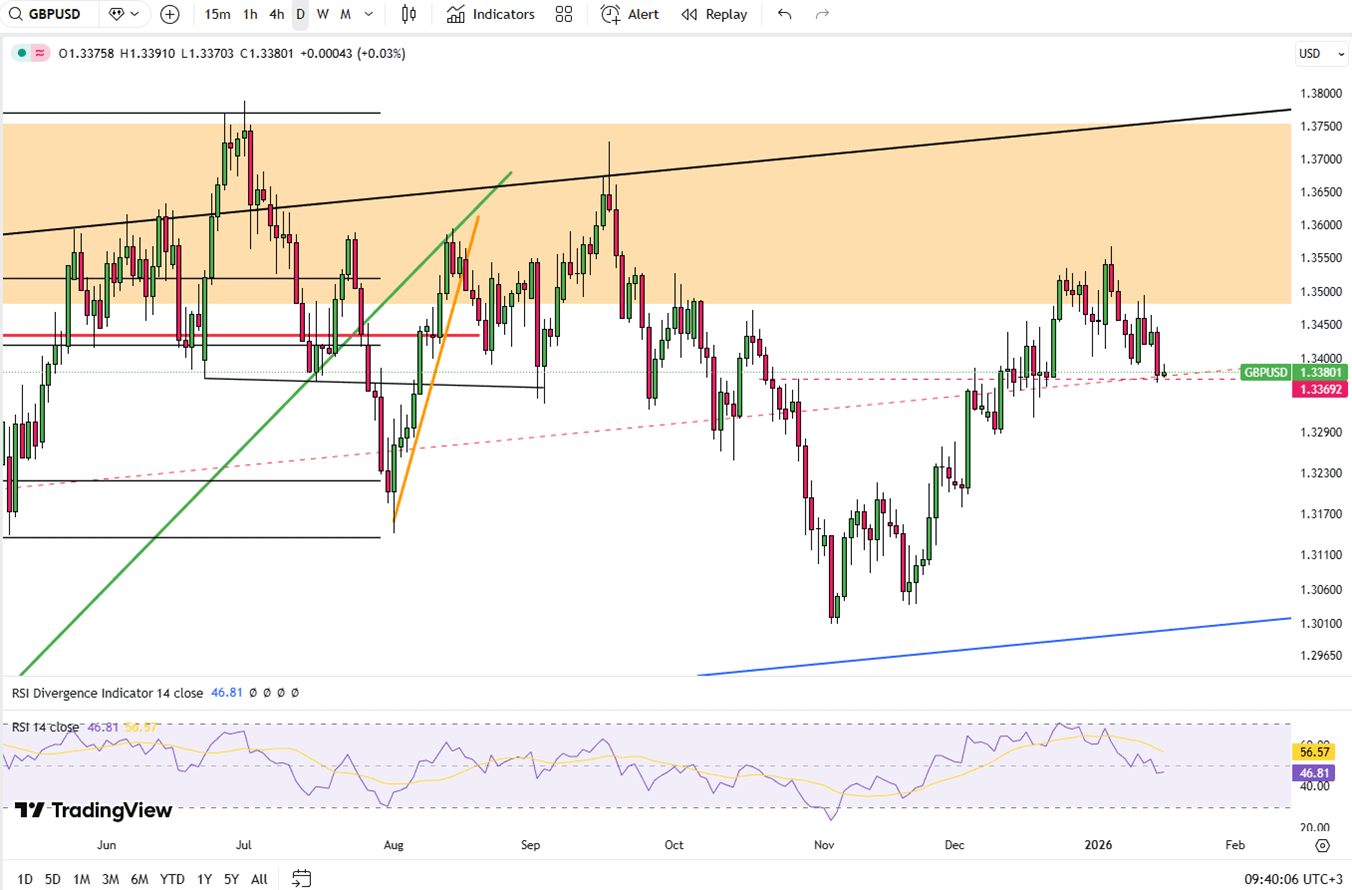
The British pound found solid ground near $1.34 following a stronger-than-anticipated UK GDP report. Economic output grew 0.3% in November, reversing October’s contraction and surpassing market forecasts. This resilience has tempered expectations for aggressive interest rate cuts, with traders now pricing in roughly 46 basis points of total easing for 2026 and an 84% chance of a final quarter-point reduction in December.
From a technical view, support stands near 1.3360, with resistance around 1.3450.
| R1: 1.3450 | S1: 1.3360 |
| R2: 1.3510 | S2: 1.3300 |
| R3: 1.3620 | S3: 1.3240 |
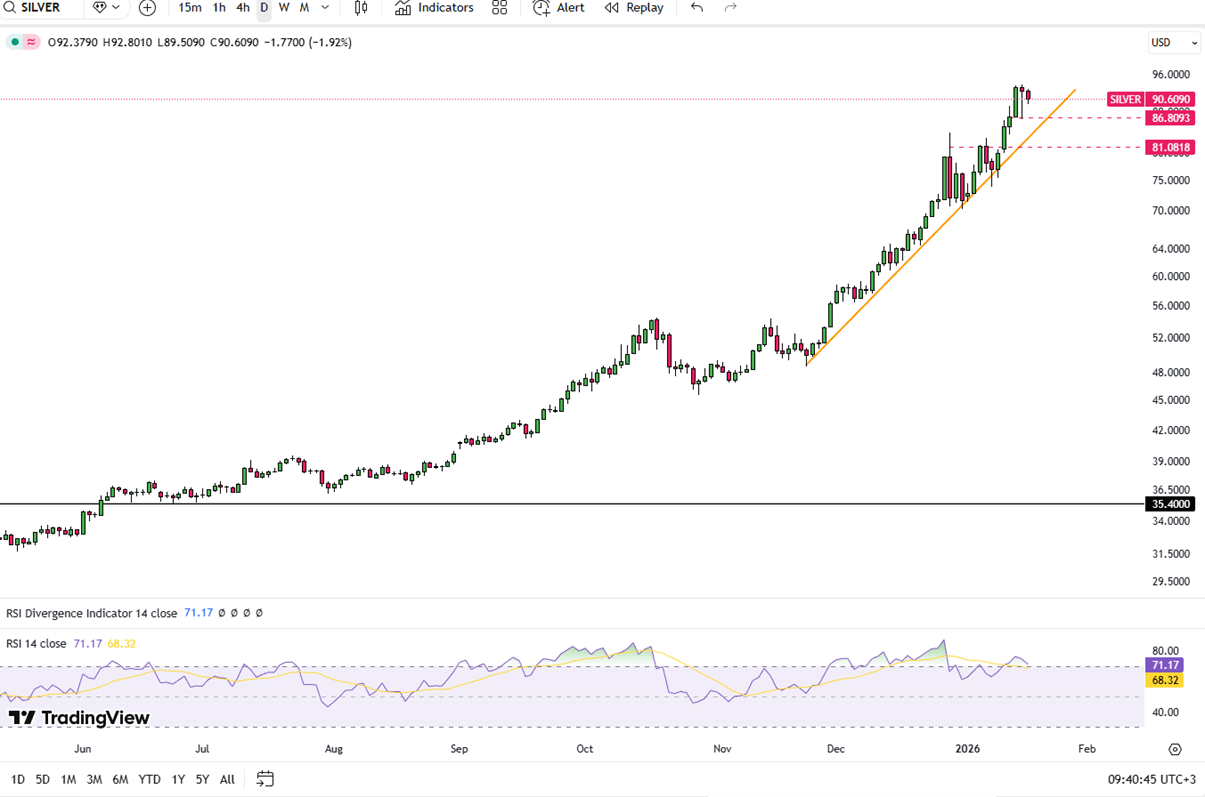
Silver slipped below $91 per ounce on Friday, resuming its downturn after sharp volatility in the prior session, as the US opted not to impose tariffs on critical minerals. Earlier fears of potential import levies had driven a broad commodities rally, lifting silver, copper, and other metals to record highs as traders rushed shipments into the US ahead of possible duties.
From a technical view, resistance stands near $91.25 while support is located around $88.95.
| R1: 91.25 | S1: 88.95 |
| R2: 93.20 | S2: 86.00 |
| R3: 95.00 | S3: 82.50 |
Rising oil prices renewed inflation concerns as uncertainty surrounding the US-Iran conflict and continued disruptions in the Strait of Hormuz reinforced expectations for further monetary tightening.
Elevated oil prices and rising Treasury yields weighed on precious metals as persistent geopolitical tensions reinforced inflation concerns and expectations for further Federal Reserve tightening.
 European Daylight Saving Time (October 25, 2026)
We would like to inform you of upcoming adjustments to the trading schedule for selected instruments due to the end of Daylight Saving Time (DST) in Europe on October 25, 2026.
DetailThen Join Our Telegram Channel and Subscribe Our Trading Signals Newsletter for Free!
Join Us On Telegram!


