


Global markets traded cautiously as investors balanced easing U.S. inflation against persistent geopolitical tensions in the Middle East.
Cooling price pressures reduced expectations for aggressive Federal Reserve tightening, supporting gold and silver, while elevated oil prices continued to underpin inflation concerns and keep the dollar resilient. Traders are also monitoring diverging central bank outlooks, with the Fed maintaining a cautious stance and the ECB and Bank of England navigating slowing inflation alongside geopolitical risks.
| Time | Cur. | Event | Forecast | Previous |
| 02:00 | CNY | GDP (YoY) (Q2) | 4.3% | 5.0% |
| 12:30 | USD | PPI (MoM) (Jun) | 0.0% | 1.1% |
| 13:45 | CAD | BoC Interest Rate Decision | 2.25% | 2.25% |
| 14:30 | USD | Crude Oil Inventories | -1.800M | 2.998M |
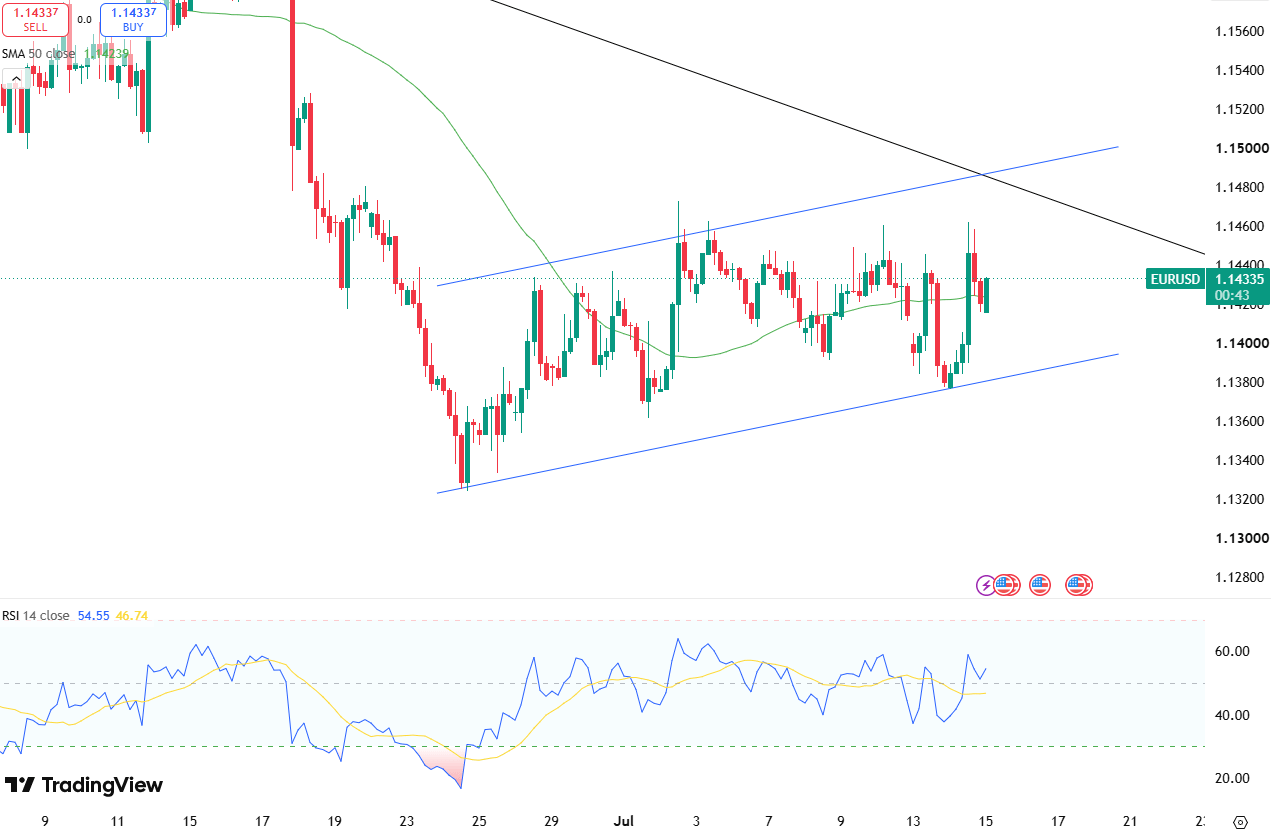
EUR/USD is trading near 1.1420, pinned by Middle East geopolitical risks and diverging central bank policies. Safe-haven demand and persistent inflation worries keep the Fed's "higher-for-longer" narrative intact, while cooling Eurozone inflation caps Euro recoveries. Technically, the pair remains below its 50-day EMA, with an RSI near 45 signaling weak upward momentum within a consolidating range.
The first resistance is positioned at 1.1465 while the support starts from 1.1400.
| R1: 1.1465 | S1: 1.1400 |
| R2: 1.1500 | S2: 1.1360 |
| R3: 1.1530 | S3: 1.1300 |
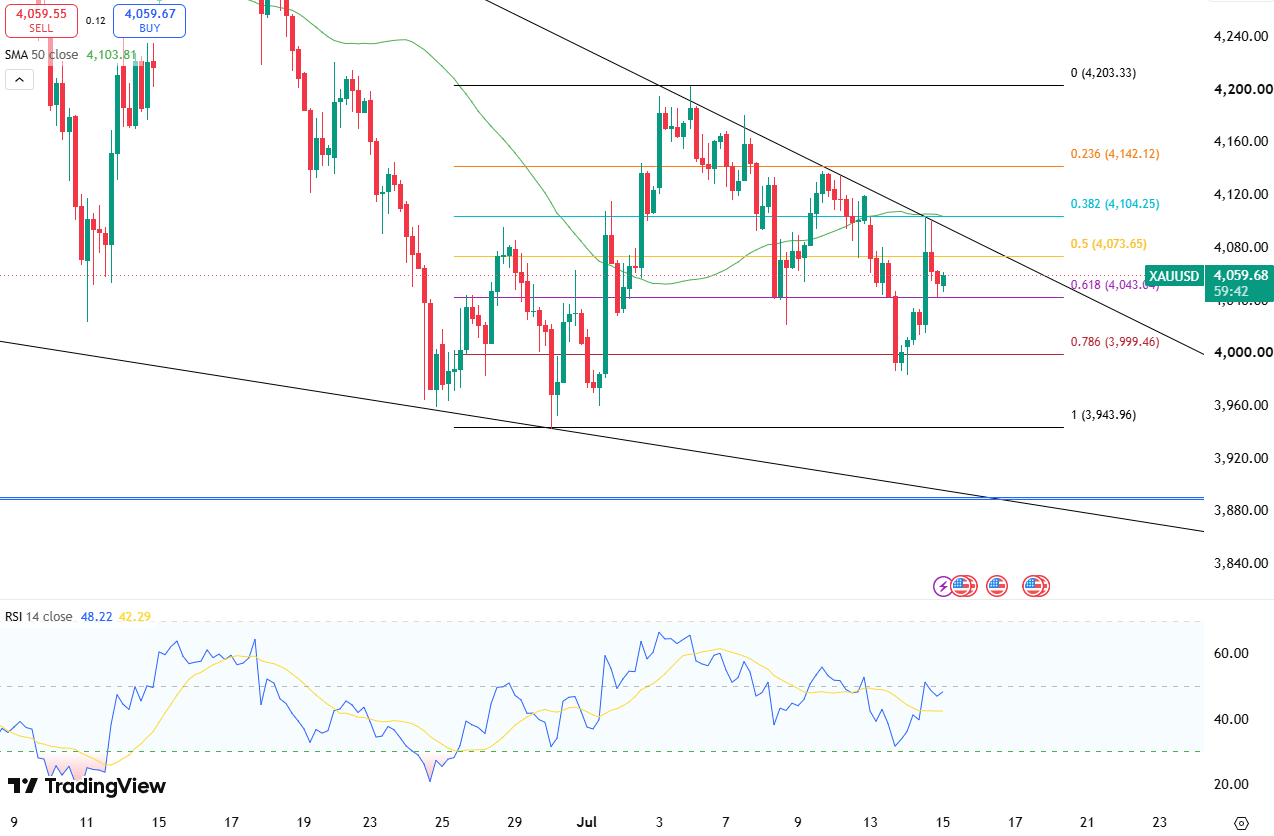
Gold held near $4,050, rising over 1% after June inflation cooled to a below-forecast 3.5%, marking the first monthly consumer price drop since 2020. This eased Fed rate hike expectations, with Chair Warsh reaffirming a commitment to price stability without signaling further tightening. Markets now price in a 50% chance of a September hike as U.S.–Iran friction keeps energy costs elevated.
First resistance is seen at $4100, with initial support near $4000.
| R1: 4100 | S1: 4000 |
| R2: 4150 | S2: 3950 |
| R3: 4200 | S3: 3900 |
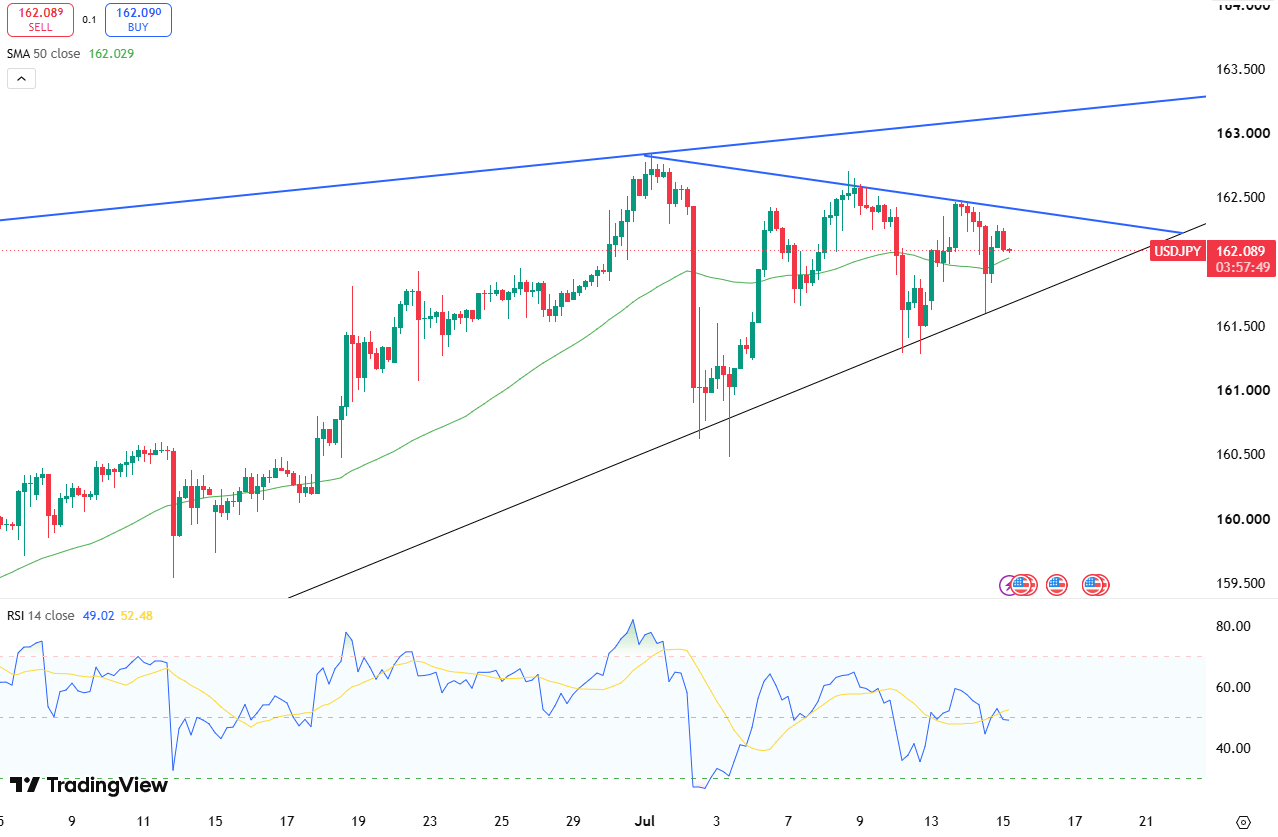
USD/JPY is consolidating near 162.15, holding multi-decade highs. Structural Yen selling persists, driven by wide interest rate differentials between the Fed and the Bank of Japan, alongside energy shocks from the Strait of Hormuz that are widening Japan's trade deficit. Technically, moving averages remain bullish, but an RSI near 52 suggests flattening momentum. Meanwhile, the threat of Bank of Japan intervention looms large above the 162.00 threshold.
Initial resistance stands at 162.80, while the first support is at 161.50.
| R1: 162.80 | S1: 161.50 |
| R2: 163.50 | S2: 160.70 |
| R3: 164.00 | S3: 160.00 |
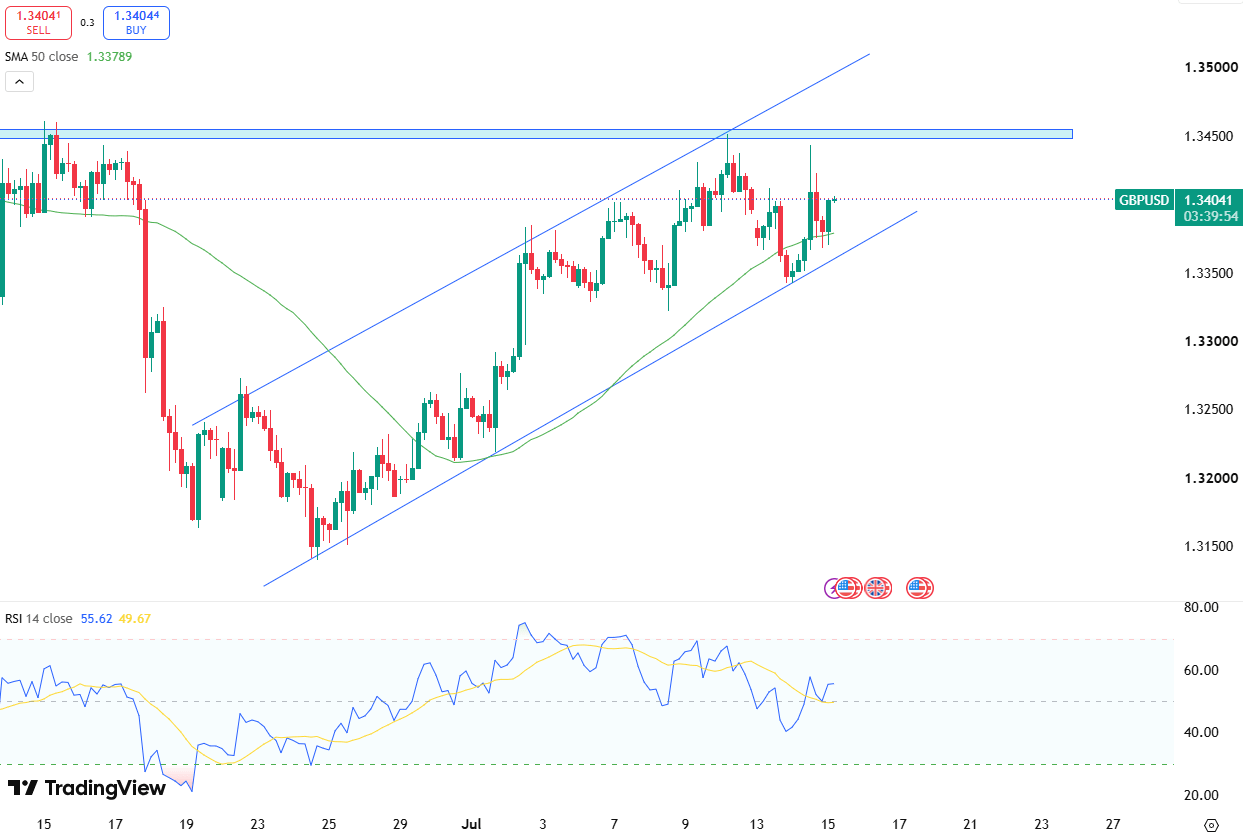
The British Pound traded steadily near $1.34 as Hormuz-related U.S. airstrikes on Iran pushed crude oil higher, renewing inflation fears and cementing Bank of England rate-hike expectations. Meanwhile, rapid political changes unfold at home: Andy Burnham is poised to secure the Labour leadership on Friday and become Prime Minister by Monday. Sterling's resilience suggests markets have largely priced in the turbulence.
From a technical view, resistance stands near 1.3440, with support around 1.3370.
| R1: 1.3440 | S1: 1.3370 |
| R2: 1.3500 | S2: 1.3320 |
| R3: 1.3530 | S3: 1.3260 |
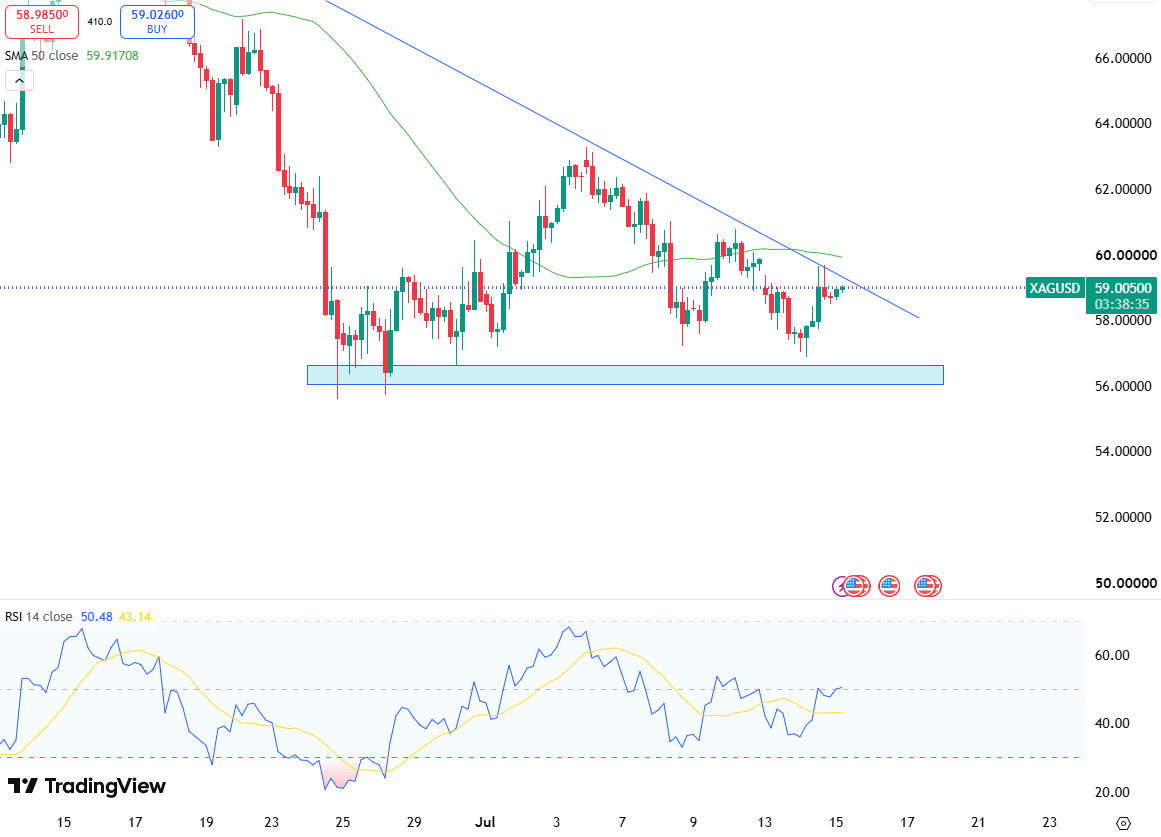
Silver climbed nearly 2% to trade just below $59 after June inflation slowed to a below-forecast 3.5%, marking the first monthly CPI drop since 2020. This eased aggressive Fed rate-hike expectations. Although Fed Chair Warsh pledged price stability without adding further tightening, persistent U.S.-Iran frictions keep energy prices elevated, leaving September hike odds at 50%.
From a technical view, resistance stands near $59.70, while support is located around $57.40.
| R1: 59.70 | S1: 57.40 |
| R2: 61.00 | S2: 56.00 |
| R3: 63.10 | S3: 54.50 |
Rising oil prices renewed inflation concerns as uncertainty surrounding the US-Iran conflict and continued disruptions in the Strait of Hormuz reinforced expectations for further monetary tightening.
Elevated oil prices and rising Treasury yields weighed on precious metals as persistent geopolitical tensions reinforced inflation concerns and expectations for further Federal Reserve tightening.
 European Daylight Saving Time (October 25, 2026)
We would like to inform you of upcoming adjustments to the trading schedule for selected instruments due to the end of Daylight Saving Time (DST) in Europe on October 25, 2026.
DetailThen Join Our Telegram Channel and Subscribe Our Trading Signals Newsletter for Free!
Join Us On Telegram!


