


Global markets advanced as Trump scrapped February 1 tariffs after Davos talks with NATO's Mark Rutte produced a "framework" deal over Greenland, though details remain vague and Denmark still refuses to negotiate sovereignty.
EUR/USD slipped below 1.17 as easing U.S.–EU trade tensions revived dollar demand and improved risk appetite. The yen softened amid fiscal uncertainty and Japan’s snap election call, while gold and silver pulled back from record highs as safe-haven demand faded. Sterling held steady after an upside inflation surprise, with markets now focused on U.S. GDP, PCE data, and ECB policy signals for direction.
| Time | Cur. | Event | Forecast | Previous |
| 4.3% | 3.8% | |||
| Initial Jobless Claims | 209K | 198K | ||
| 0.2% | 0.2% | |||
| 2.7% | 2.8% | |||
| -2.500M | 3.391M |
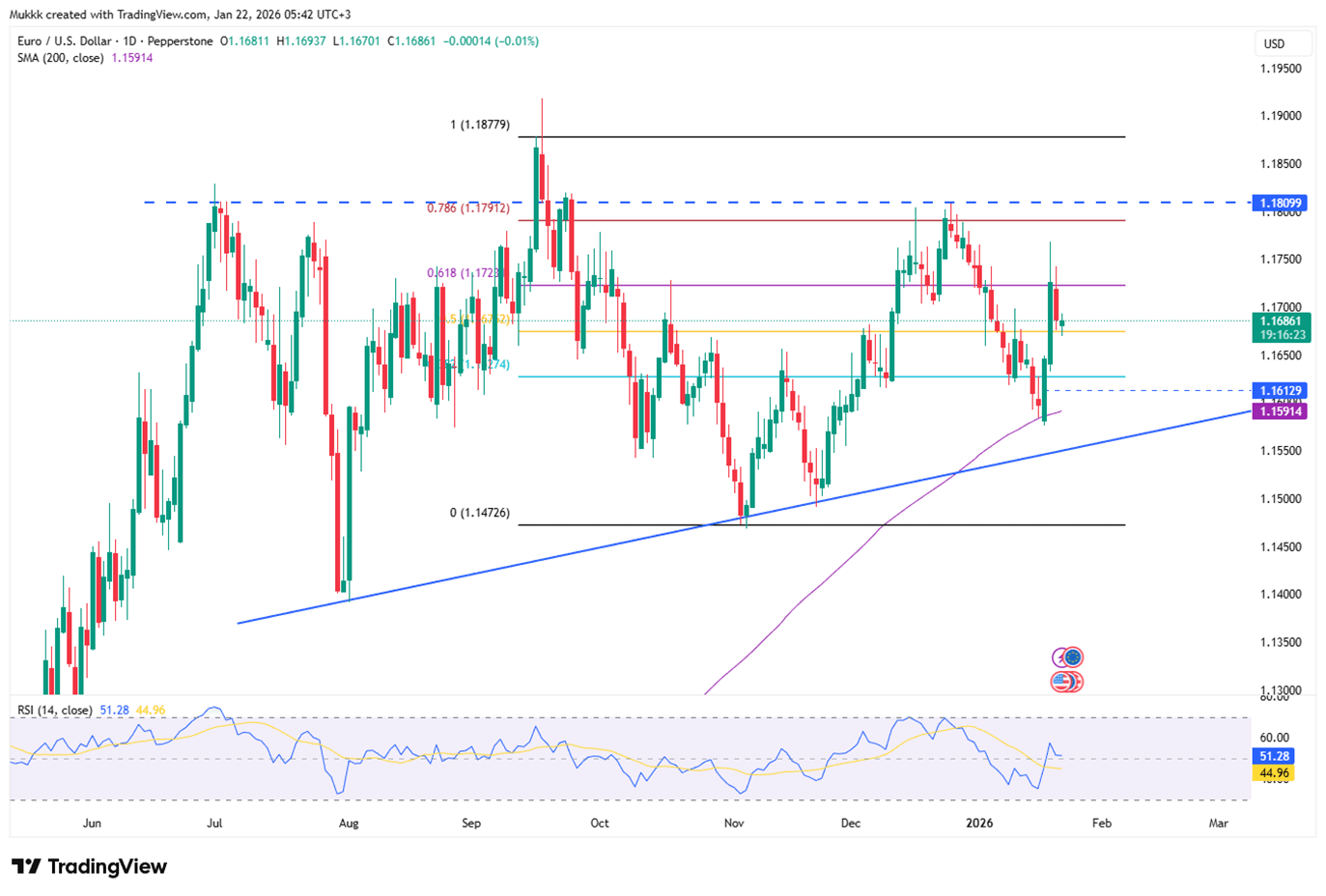
The euro weakened toward 1.1675 on Thursday as a thaw in U.S.–EU relations revived dollar demand. President Trump’s decision to drop Greenland-related tariff threats following NATO talks has improved risk appetite and lifted U.S. equities. This shift has driven the pair below the 1.1700 support level. Markets now shift their focus to today's U.S. GDP and Core PCE inflation data, along with the ECB’s latest policy accounts, for fresh direction.
Technically, 1.1650 is the key support, while resistance is seen at 1.1720.
| R1: 1.1720 | S1: 1.1650 |
| R2: 1.1760 | S2: 1.1610 |
| R3: 1.1800 | S3: 1.1570 |
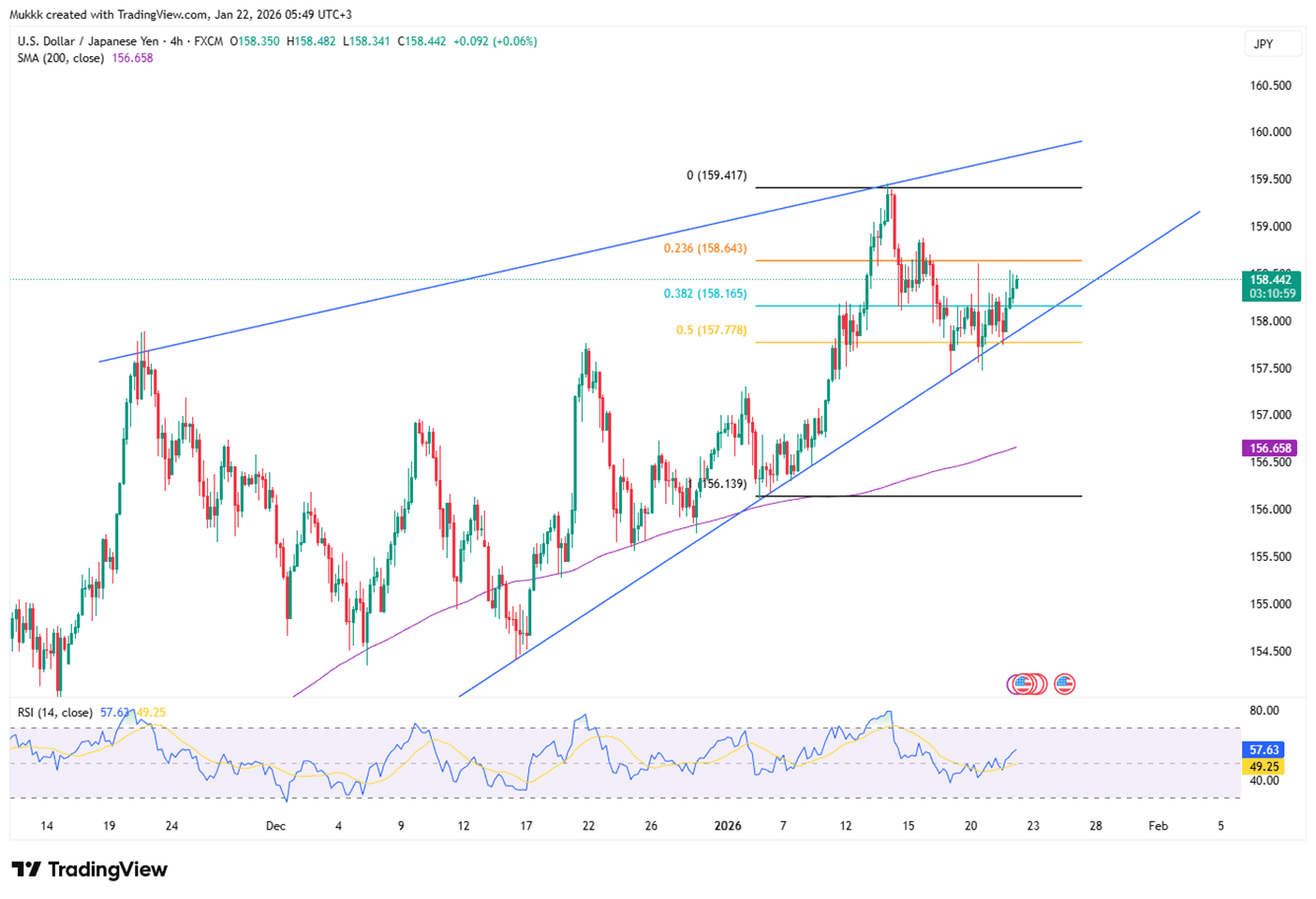
The yen weakened toward 158.5 per dollar on Thursday as the Bank of Japan began its policy meeting. Fiscal uncertainty spiked following Prime Minister Sanae Takaichi’s call for a February 8 snap election and her plan to scrap the food sales tax. While the BOJ is expected to hold rates at 0.75%, intervention fears remain high. Despite record exports in December, a double-digit drop in U.S.-bound shipments continues to weigh on the outlook.
Technically, resistance stands near 158.70, while support is firm at 158.10.
| R1: 158.70 | S1: 158.10 |
| R2: 159.00 | S2: 157.70 |
| R3: 159.40 | S3: 157.30 |
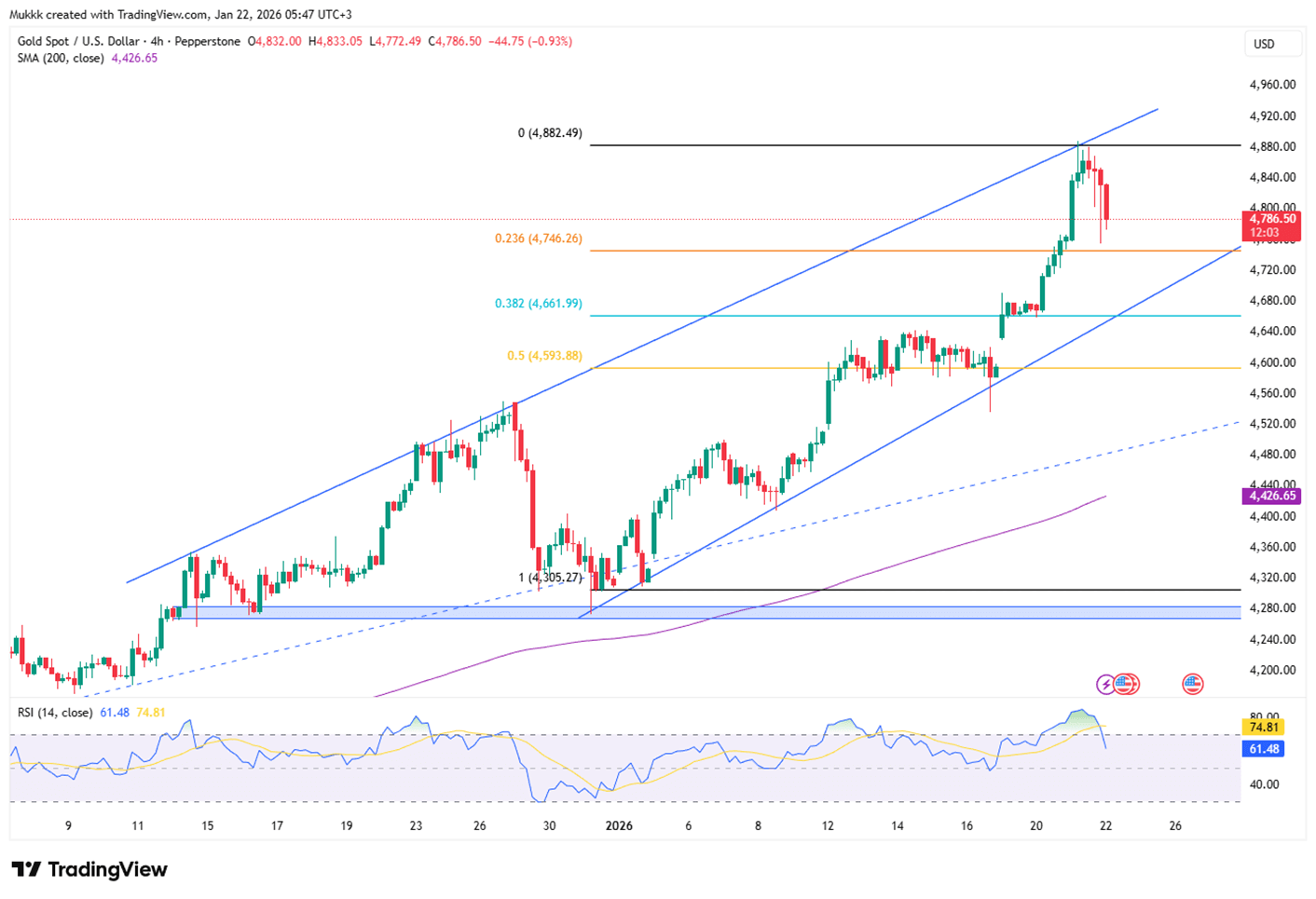
Gold prices dropped over 1% to $4,780 on Thursday, retreating from record highs as geopolitical tensions softened. At Davos, President Trump ruled out using force to acquire Greenland and suspended tariff threats against Europe, citing a new "framework" deal with NATO. While this de-escalation reduced safe-haven demand, uncertainty remains after EU lawmakers delayed a major U.S. trade pact. Investors are now focused on delayed U.S. PCE data for hints on the Federal Reserve’s next move.
Gold sees support near $4740, while resistance is around $4830.
| R1: 4830 | S1: 4740 |
| R2: 4890 | S2: 4660 |
| R3: 4950 | S3: 4590 |
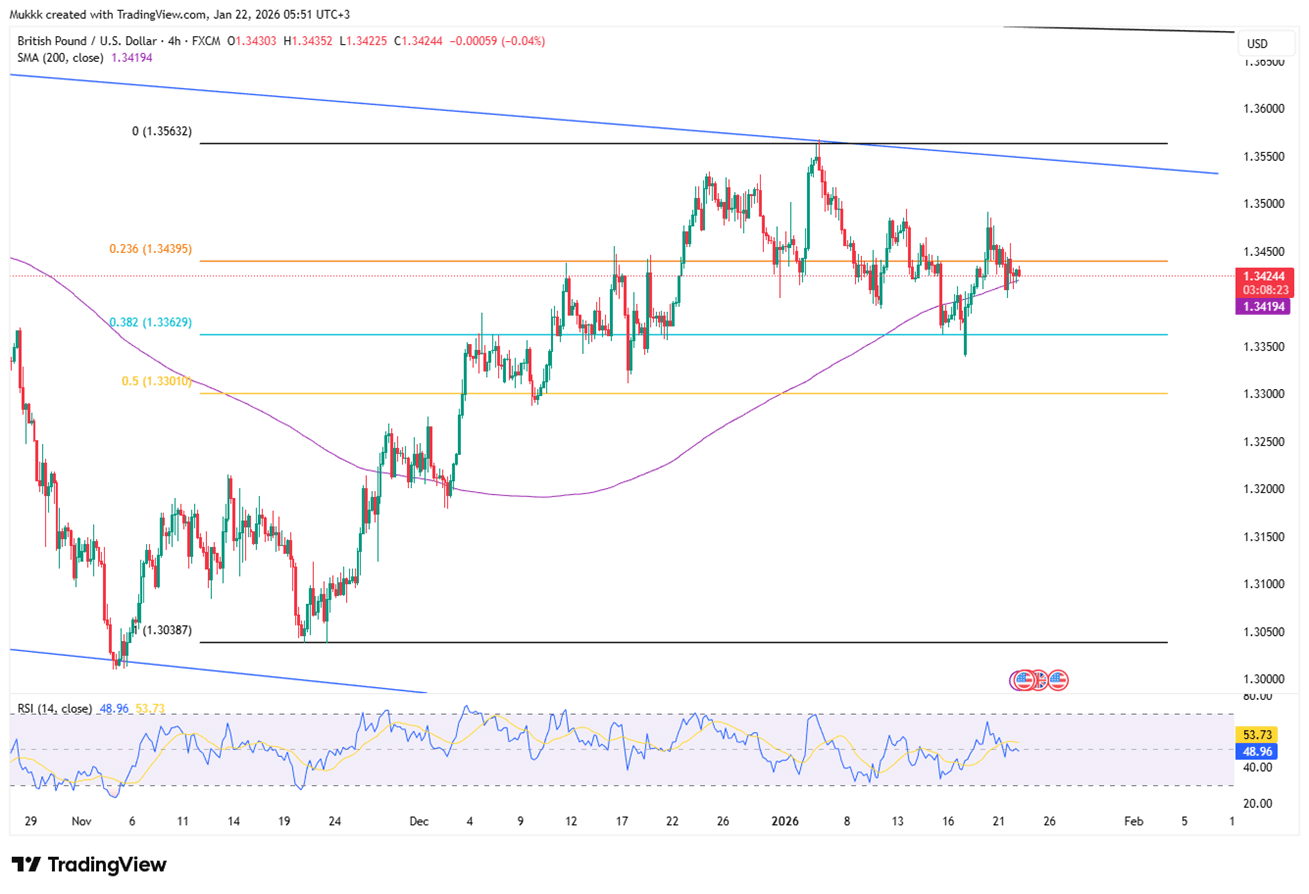
Sterling traded around $1.3430 on Thursday, holding above recent lows. Higher UK inflation, which climbed to 3.4% in December, has limited the case for immediate Bank of England rate cuts. While the labor market remains soft with unemployment at 5.1%, the pound found additional support from a weaker dollar. Global sentiment remains sensitive to the U.S.–EU standoff over Greenland, which continues to overshadow domestic economic data.
From a technical view, support stands near 1.3400, with resistance around 1.3460.
| R1: 1.3460 | S1: 1.3400 |
| R2: 1.3510 | S2: 1.3350 |
| R3: 1.3570 | S3: 1.3300 |
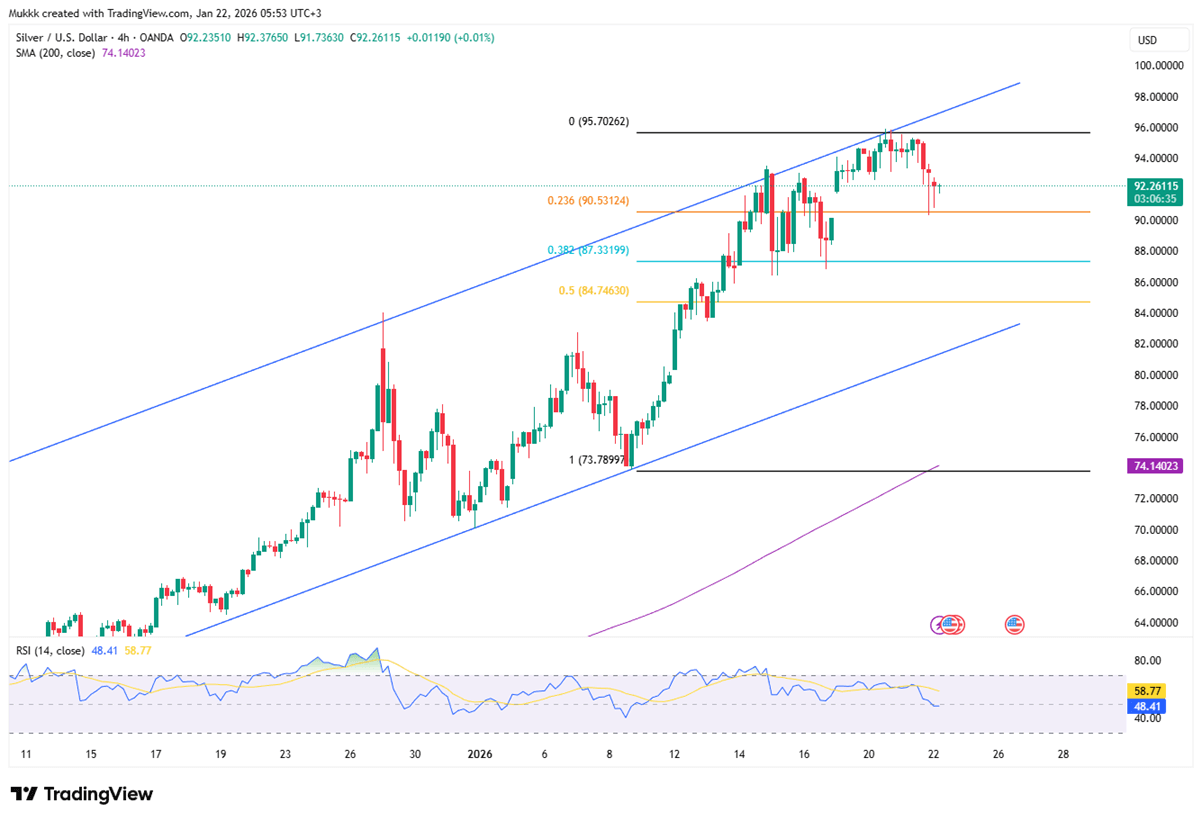
Silver slipped toward $92 on Thursday, retreating from recent records as President Trump’s pivot on Greenland eased immediate geopolitical fears. After announcing a preliminary framework with NATO and ruling out military force, Trump suspended his February tariff threats against Europe. While Denmark continues to reject any territorial talks, silver remains fundamentally supported by a fourth year of global supply deficits and persistent physical market tightness.
From a technical view, resistance stands near $95.00 while support is located around $91.00.
| R1: 95.00 | S1: 91.00 |
| R2: 97.20 | S2: 88.70 |
| R3: 100.00 | S3: 86.40 |
The US dollar climbed to an 18-month high as investors awaited key inflation reports and weighed expectations for another Federal Reserve rate hike in December.
Detail Easing Oil Prices Support Markets (10.12.2026)Energy markets cooled on Monday as Brent crude slipped toward $103 a barrel, ending a two-session rally. Declining oil prices and easing Treasury yields provided support to major currencies and precious metals as investors awaited upcoming US inflation data.
 Dollar Keeps Firm Ahead of US Inflation (12 – 16 October)
The dollar held firm heading into the new week as investors awaited key US inflation figures to guide Federal Reserve policy. The Dollar Index held above 102 after four consecutive weekly gains, while the euro and yen remained under pressure from wide interest rate differentials and persistent fiscal concerns. September’s consumer and producer inflation reports will be closely watched as markets assess whether the Fed has room to pause its tightening cycle.
DetailThen Join Our Telegram Channel and Subscribe Our Trading Signals Newsletter for Free!
Join Us On Telegram!


